Quick Answer
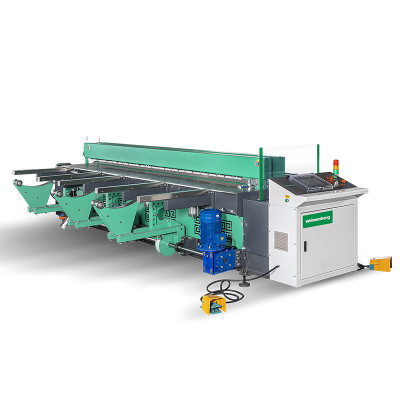
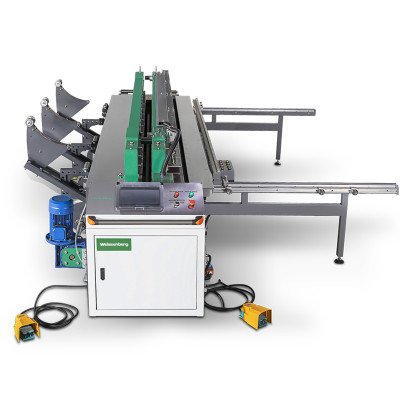
Ventilation and exhaust duct fabrication is the manufacture of the air-handling ductwork, hoods, and connected components that capture, convey, and discharge industrial air — and when the airstream is chemically aggressive, that ductwork is built from welded thermoplastic sheet (most often PP, PVC-U, or PVDF) instead of sheet metal. The three things that define good duct work are material selection matched to the chemistry and temperature of the airstream, fully fused, airtight welded joints along every seam, flange, and branch (an exhaust duct that leaks can reduce capture performance in negative-pressure sections and release contaminated air where sections operate under positive pressure, not just an efficiency loss), and efficient forming so straight runs, elbows, transitions, and round sections can be produced in the sizes a duct network actually needs. The practical answer for a fabrication shop is a pair of complementary machines — a welding-and-bending machine for duct sides, elbows, and flanges (for example Weissenberg’s WeiForm Pro 3000, a 3,000 mm-wide unit that welds 3–30 mm sheet and bends 3–20 mm sheet at 5°–95°) and a large-format butt welder for flat panel and longitudinal seams (such as the WeiBond 3000, which welds 3–40 mm PE, PP and PVDF sheet up to 3,000 mm wide). This guide covers the materials, the welding and bending techniques for each duct component, large-diameter duct fabrication, quality standards, efficiency, and how ductwork integrates with PP scrubber systems as a complete air-quality solution.
What Is Ventilation and Exhaust Duct Fabrication?
Definition: Ventilation and Exhaust Duct Fabrication
Ventilation and exhaust duct fabrication is the manufacture of the ductwork and associated components that move air through an industrial ventilation, fume-extraction, or process-exhaust system: straight duct runs, elbows and bends, tees and branches, transitions and reducers, hoods and capture points, connecting flanges, dampers, inspection and cleaning ports, and the duct-to-equipment connections that tie into fans, scrubbers, and stacks. Where general ventilation of clean spaces is usually built from galvanized or stainless sheet metal, corrosive exhaust — acid and alkali vapours, plating and pickling mists, solvent fumes, and process off-gases — is commonly handled with thermoplastic ductwork: PP (polypropylene), PVC-U (unplasticized polyvinyl chloride), and PVDF (polyvinylidene fluoride) sheet. Fabrication is plastic sheet processing: sheet is cut to accurate development shapes (frequently on a CNC router), bent into duct sides and transitions on a line-bending or welding-and-bending machine, curved into round sections by rolling, joined into straight runs, elbows, and branches by heated-tool butt welding and extrusion welding, and fitted with flanges and ports so the sections assemble into a leak-tight network on site. Because exhaust ductwork carries contaminated air and is commonly operated under suction so that any leakage is inward rather than outward, the quality of every welded joint — its fusion, its airtightness, and its resistance to the airstream chemistry — is what determines whether the system protects people and equipment or becomes a persistent capture-loss and maintenance problem. This guide covers the materials, the techniques for each component, large-diameter duct fabrication, the quality standards that apply to duct welds, efficiency practices, and integration with PP scrubber systems.
It is written for plastic fabrication shops moving into industrial ventilation work, ductwork and air-quality contractors, and plant engineers specifying corrosion-resistant exhaust systems. For the treatment and vessel side of the same systems, see our PP scrubber manufacturing guide and PP scrubber welding solutions; for the wider context of welded thermoplastic process equipment, see chemical storage tank manufacturing.
Why Industry Is Moving to Welded Thermoplastic Ductwork
Ductwork is only one part of an industrial air-quality system, but it is the part that has to survive the airstream everywhere between the capture point and the discharge. A complete exhaust system has four functions — capture (hoods and enclosures at the source), conveyance (the duct network), treatment (scrubbers, filters, or separators), and discharge (fan and stack) — and the duct network connects all of them. In clean-air ventilation, galvanized or stainless steel ductwork is cheap, familiar, and adequate. In corrosive or contaminated exhaust, metal ductwork is frequently the wrong choice, and this is where plastic duct fabrication has grown.
The drivers are consistent across industries:
- Corrosion resistance is the primary reason. Acid vapours, chloride mists, alkaline dusts, and process off-gases attack galvanized steel quickly and can pit even stainless grades. PP, PVC-U, and PVDF resist a broad range of acids, alkalis, and salt solutions, so the duct lasts far longer in aggressive duty — and does not shed corroded metal particles into the airstream or the surrounding area.
- Chemical plants, surface finishing, and metal treatment. Plating, pickling, anodizing, and etching lines produce acid and caustic mists that are routinely exhausted through PP and PVC ductwork into scrubbers. Our plating tank fabrication guide covers the tank side of the same wet-process environment.
- Laboratories, semiconductor, and pharmaceutical facilities. Fume hood exhaust and process-vapour extraction demand ductwork that neither corrodes nor contaminates the airstream; PVDF is common where aggressive or high-temperature vapours are present.
- Wastewater treatment and water industry. Hydrogen sulphide and other odorous or corrosive gases from treatment processes attack steel ductwork and are increasingly handled with plastic duct and scrubber systems — see water treatment equipment fabrication.
- Battery, chemical, and new-energy manufacturing. Rapid expansion in battery and specialty-chemical production has created strong demand for corrosion-resistant exhaust ductwork and the scrubbers that treat it.
- Hygiene, cleanability, and weight. Smooth plastic duct interiors resist build-up and are easy to clean, and plastic ducting weighs far less than steel of comparable size, which simplifies supports and site installation.
The common thread is that the duct has to be as chemically durable as the process it serves, and it has to be leak-tight because it is carrying something the plant does not want in the workplace. A single unfused seam or a poorly sealed flange undermines both properties at once, which is why duct buyers tend to care about weld quality and joint testing more, not less, than general ventilation customers.
Material Selection: PP, PVC-U and PVDF for Exhaust Ductwork
The material decision comes before the machine decision, and for ductwork it is driven by three questions: what is in the airstream, how hot is it, and how will the duct be welded and supported. The table below compares the three workhorse thermoplastics. Treat the temperature guidance as a directional comparison rather than a fixed limit — published continuous-service temperatures vary by grade and formulation, so always confirm the specific grade against the supplier’s data sheet and the actual airstream conditions before quoting.
| Consideration |
PP (PP-H) |
PVC-U |
PVDF |
| Chemical resistance in exhaust duty |
Excellent across a broad range of acids, alkalis, and salts; the default workhorse for chemical-fume ductwork |
Very good for many acids and alkalis, but less tolerant of some solvents and of high temperature |
Excellent, including aggressive solvents and oxidising media where PP and PVC-U are marginal |
| Temperature capability (directional) |
Higher continuous-service capability than PVC-U |
Lower continuous-service capability; the limiting material in hot exhaust |
Highest of the three; chosen for hot or highly aggressive exhaust |
| Weldability and applicable DVS 2207 hot-tool part |
Excellent, well-characterized; DVS 2207-11 |
Good; DVS 2207-12 for PVC-U |
Weldable but more demanding on temperature and technique; heated-tool procedure DVS 2207-15; follow the material supplier’s procedure |
| Toughness, stiffness and forming |
Good toughness and stiffness; bends and rolls cleanly for duct sides and round sections |
Rigid but more brittle, especially cold; requires care in bending, handling and support |
Tough and rigid; cedes little to PP on handling but costs more |
| Fire behaviour and UV |
Combustible; requires UV stabilization for outdoor runs |
Often self-extinguishing in many grades; requires UV stabilization outdoors |
Excellent intrinsic UV and weathering resistance; many PVDF grades do not require added UV stabilizers for outdoor service — verify the specific grade |
| Typical duct use |
General chemical-fume exhaust, scrubber inlet/outlet ducting, plating and pickling lines, large-diameter ducts |
Laboratory and general fume exhaust, lower-temperature runs, smaller ducts and fittings |
Semiconductor and specialty-chemical exhaust, hot or highly aggressive vapour streams, critical duty |
| Relative material cost |
Moderate |
Lower |
Highest |
For most chemical-fume duct networks, PP-H is the common starting material: it combines strong chemical resistance, good stiffness and toughness, availability in large sheets, and excellent weldability, which keeps fabrication straightforward. PVC-U is often chosen for lower-temperature and less aggressive runs and is widely used in laboratory fume exhaust. PVDF is reserved for the streams that defeat the other two — hot, solvent-laden, or strongly oxidising vapours — where its cost is justified by the duty. Because a duct network usually mixes diameters, fittings, and sometimes locations (indoor and outdoor), it is common to see more than one material in a single plant; the important discipline is to keep each material’s welding procedure, supports, and expansion allowances consistent with its own properties.
Welding and Bending Techniques for Duct Components
Duct fabrication is not one operation but a sequence of matched operations, and each component of a duct network is best made a particular way. Running the right technique on the right component is what makes a duct network both tight and economical.
Cutting and fit-up
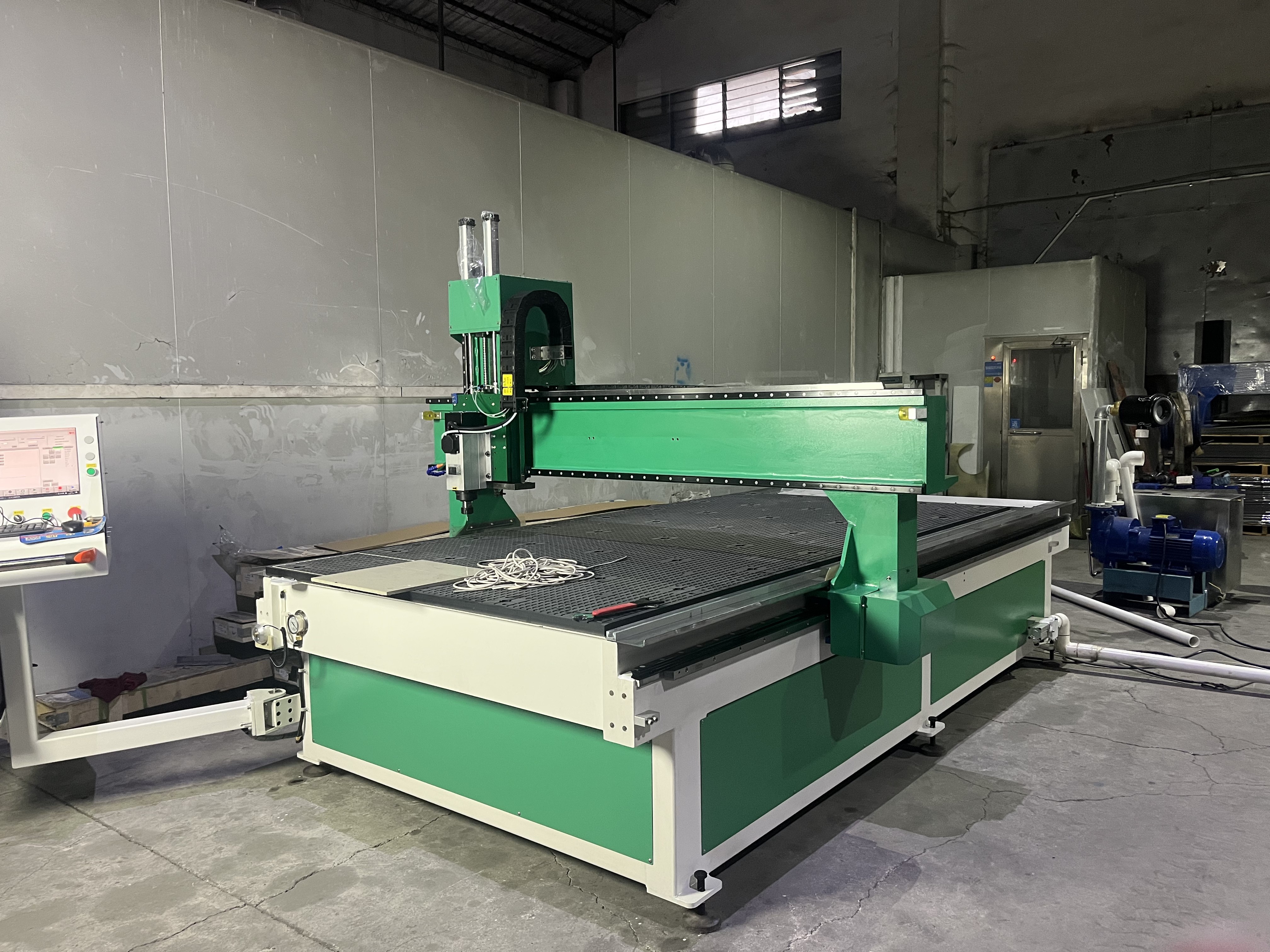
Everything starts with accurate cutting. Duct components — especially transitions, elbows, and branches — are complex development (unfolded) shapes, and the fit-up gap between mating edges has a direct effect on weld quality. A CNC router cuts panels and development shapes accurately and repeatably, giving square edges and tight, uniform gaps, which is the foundation of a good weld. Clean, square edges matter more in ductwork than in tank work because many components are small and the seam-to-surface ratio is high. Weissenberg supplies CNC routers sized to plastic sheet processing.
Bending duct sides, transitions, and flanges
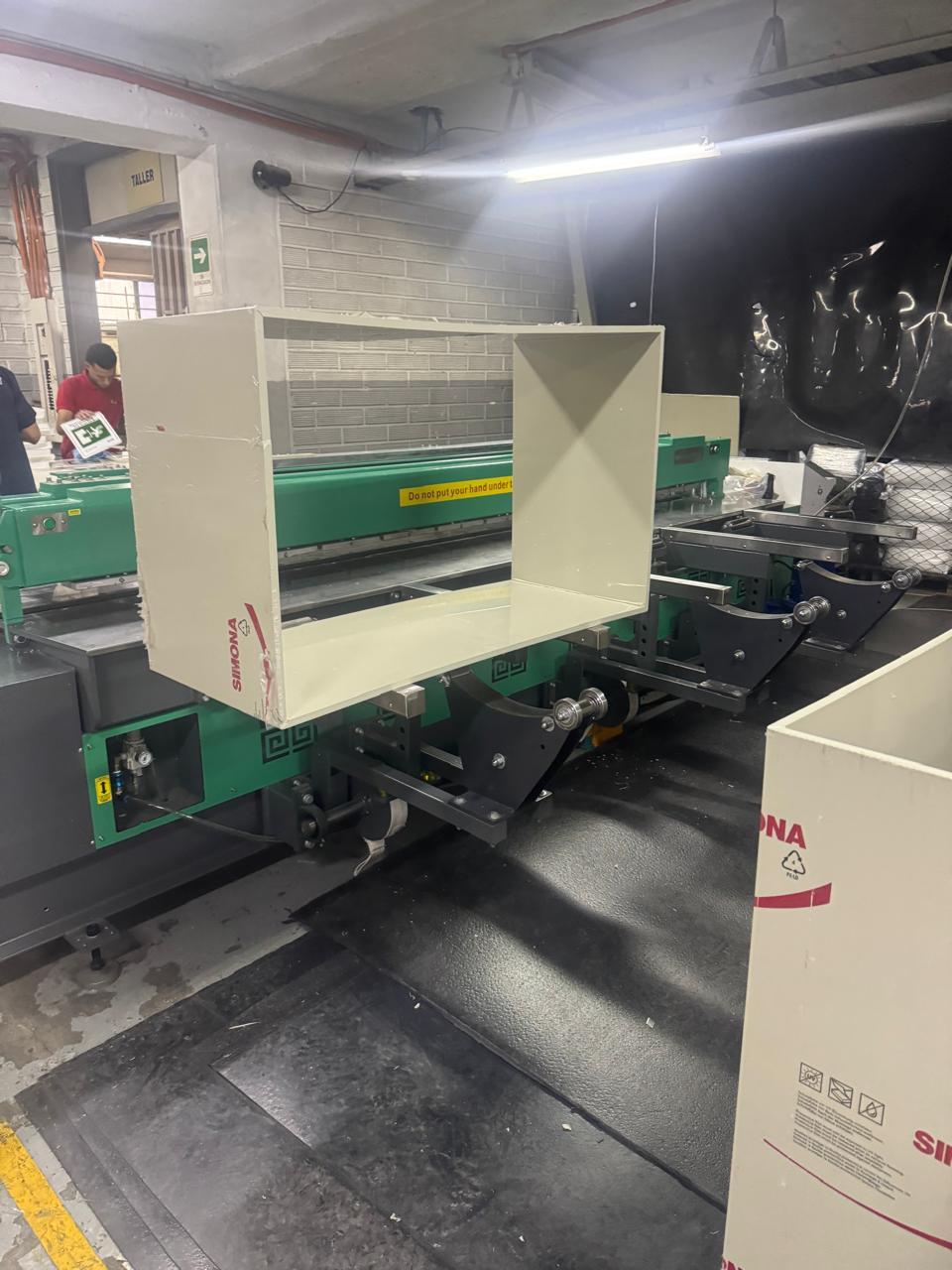
Rectangular duct sides, transitions, hoods, and flange strips are formed by line bending: the sheet is heated along a narrow line and folded to the required angle. A welding-and-bending machine such as the WeiForm Pro 3000 does both jobs in one unit, which is efficient for ductwork because a single duct section may need a folded corner, a welded seam, and a flanged end. Bending removes entire seams: a properly formed corner eliminates a welded seam and therefore removes one potential weld-related leakage path, whereas a fabricated corner adds a welded seam and its own potential leakage paths. For the principles of forming thermoplastics, see our plastic sheet bending guide.
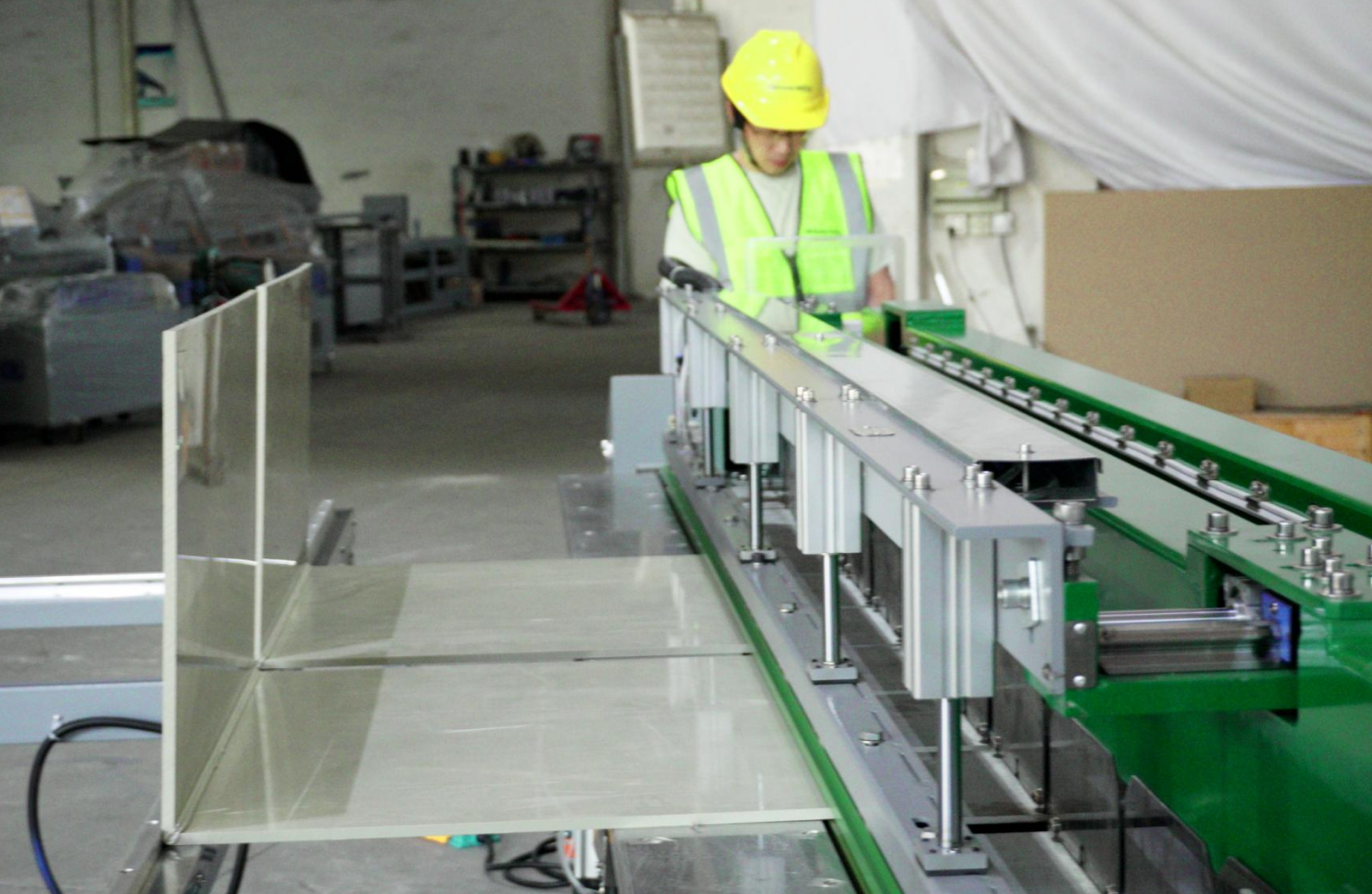
Flat panel and longitudinal seam welding
Where a duct panel is too large to fold, or where flat sheet must be joined into a bigger blank, panels are butt-welded on a large-format heated-tool welder. The same machine welds the longitudinal seam of a round duct section after the sheet has been rolled or curved. Uniform heating and uniform clamp pressure across the full seam are what prevent the weak, under-fused ends that later leak under suction; machine control keeps the cycle identical from section to section.
Forming round duct sections
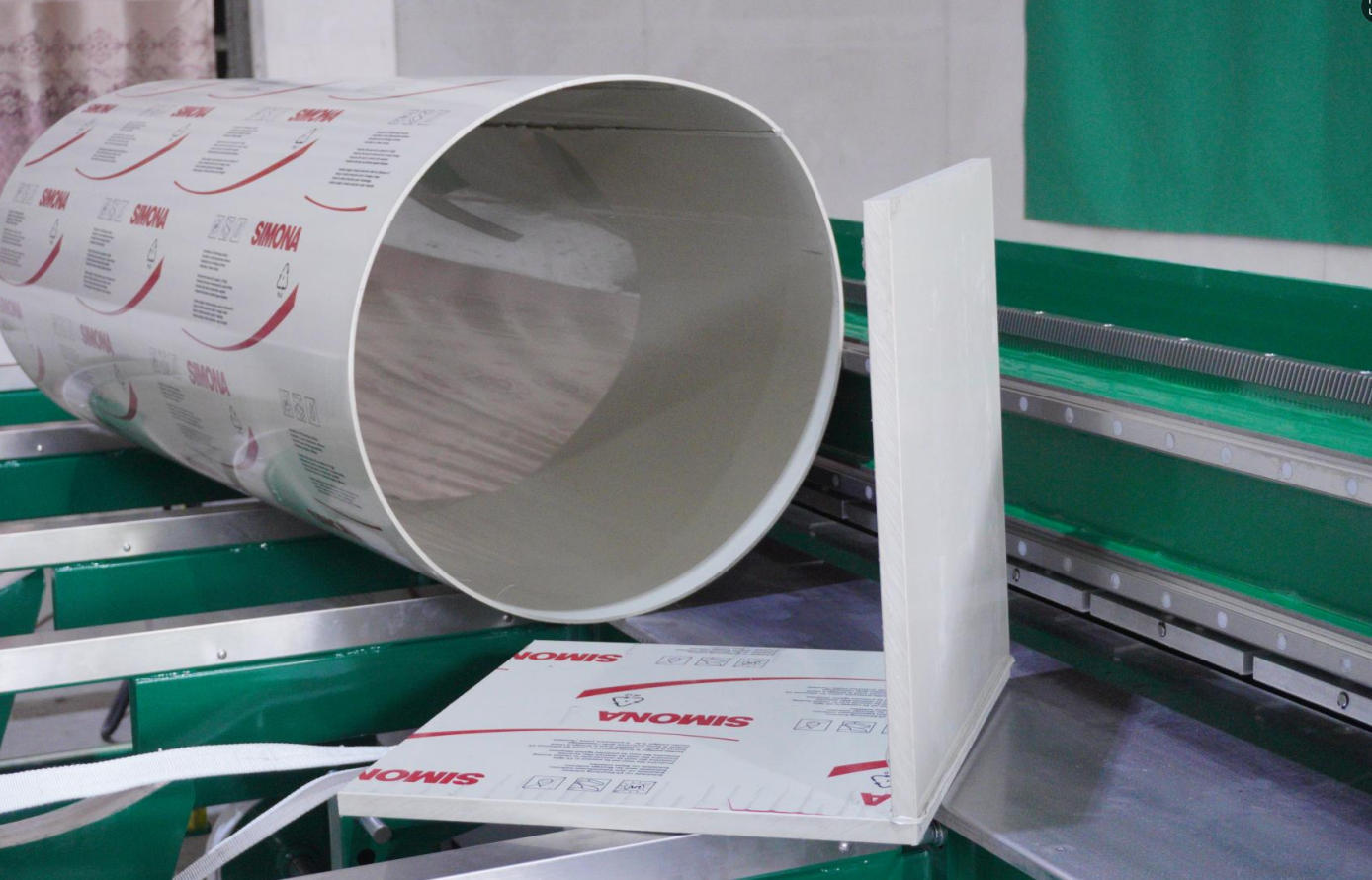
Round duct is made by curving a flat, development-shaped sheet into a cylinder and welding the longitudinal seam. Larger diameters are built from two or more curved segments. On a WeiBond-class butt welder, an optional rolling auxiliary device extends the machine from flat panel welding into curved-section work, so a duct shop does not need a separate rolling line for modest-diameter round duct. Round duct is generally preferred for exhaust service because a circular section resists the pressure and vibration of moving air well and gives fewer corners for deposits to collect.
Extrusion welding for flanges and detail joints
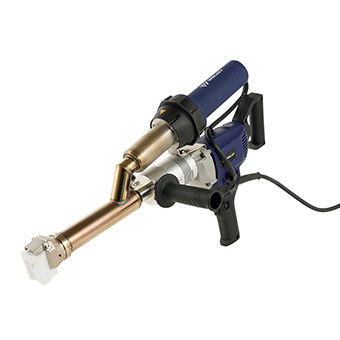
Duct networks are held together by many detail joints: flanges and connecting rings, branch stubs and take-offs, damper and port frames, support and stiffening rings, and reinforcement beads at high-stress points. These are typically added by extrusion welding — DVS 2207-4 covers the extrusion welding of pipes, pipeline parts, and panels, and the finished beads are evaluated under DVS 2202 Supplement 5 — which deposits a filler bead of the same material to seal and reinforce the joint. Because a leak at any flange or branch is as damaging as a leak in a main seam, extrusion welds must be executed and inspected with the same care as the panel welds. Weissenberg supplies Weldy extrusion welders and extrusion welding solutions for this work.
Large-Diameter Duct Fabrication with Weissenberg Equipment
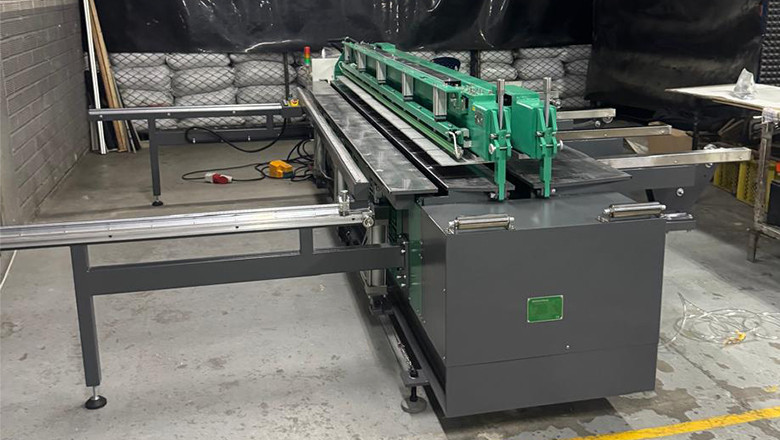
As duct diameter and wall thickness grow, the fabrication problem changes from “can we bend this?” to “can we weld a panel this thick, this wide, and still keep the seam tight?” Large-diameter ducts for scrubber inlets, process exhaust mains, and tall stacks are built from wide, thick sheet, and the machines have to be sized to the widest panel and the heaviest wall the design uses. Two Weissenberg machines cover this range, and they are complementary rather than alternatives: the WeiForm Pro 3000 is a welding-and-bending machine, and the WeiBond 3000 is a large-format butt welder.
| Parameter |
WeiForm Pro 3000 (welding & bending) |
WeiBond 3000 (butt welder) |
| Maximum working width |
3,000 mm |
3,000 mm |
| Machine dimensions (L × W × H) |
4,750 × 3,250 × 1,220 mm |
4,750 × 2,500 × 1,200 mm |
| Welding thickness |
3–30 mm |
PE 3–40 mm; PP 3–40 mm; PVDF 3–40 mm |
| Bending capability |
3–20 mm, 5°–95° |
— |
| Control |
Mitsubishi PLC; servo-controlled electric cylinders for bending; SMC pneumatic components for the remaining pneumatic functions |
PLC and touchscreen control with stored welding programs |
| Power supply |
230/400 V, 3/N/PE, 50/60 Hz |
230/400 V, 3/N/PE, 50/60 Hz |
| Power consumption |
7.2 + 4.6 × 2 kW |
7.2 kW |
| Compressed air connection |
4–8 bar |
4–8 bar |
| Max. heating temperature |
260°C |
260°C |
| Optional auxiliary tools |
— |
90° angle device; rolling auxiliary device |
| Named duct/air applications |
Air ducts, electroplating tanks, medium-sized plastic structures |
PP scrubber tower fabrication, aquaculture, water treatment |
Those numbers matter to a duct shop for specific reasons. The 3,000 mm working width on both machines lets duct sides and round-duct blanks be formed and welded from wide material, which directly reduces the number of longitudinal seams per section — and every seam removed is a weld that does not have to be inspected or leak-tested. The 3–40 mm welding band of the WeiBond 3000 across PE, PP and PVDF means the same welder covers the sheet gauges used for ductwork as well as the thicker plate used for scrubber bodies, flanges, and heavy-duty connections, so a shop is not forced to qualify two processes for different parts of the same system. The WeiForm Pro 3000’s 3–20 mm bending range at 5°–95° covers the fold angles used for rectangular ducts, transitions, and flanges, and it also welds, so a duct side can be folded and seamed on one machine. The PLC control on both machines — Mitsubishi PLC with servo-controlled electric cylinders for bending and SMC pneumatic components for the other pneumatic functions in the WeiForm Pro 3000, and PLC plus touchscreen with stored programs in the WeiBond 3000 — is what makes batch production of repeat duct sections consistent, so the twentieth spool is welded to the same procedure as the first.
On the welding-quality side, Weissenberg’s PP scrubber solutions apply stable heating-plate temperature control held within about ±5°C to prevent local overheating or underheating of the joint; a parallelogram synchronization mechanism that keeps the panels moving uniformly to minimize heat-stress concentration and alignment error; and a sturdy, precision-flat work platform that supports even heating and accurate alignment. Those are exactly the properties that keep duct seams airtight over a long network. The WeiBond 3000’s optional 90° angle device and rolling auxiliary device extend it from flat panel welding into corner forming and curved round-duct sections, so a duct design that mixes flat, folded, and rounded elements does not require a separate machine for each. See the WeiForm Pro 3000 product page, the WeiBond 3000 product page, and the Plastic Sheet Welder range for full details.
Quality Standards and Inspection for Ventilation System Welds
A duct network is only as good as its weakest joint, and because exhaust ductwork carries contaminated air and is commonly run under suction, where a leak draws ambient air in and weakens capture rather than being obvious — airtightness is the quality property that matters most. Quality for duct welds can be grouped into what the weld must be, and how it is verified.
What the weld must be:
- Fully fused across the entire seam. A longitudinal seam or a panel butt weld that is strong in the middle and weak or unfused at the ends can create a leakage path under operating pressure and vibration. Uniform heat input and pressure distribution help prevent incomplete fusion, particularly near the ends of long seams.
- Even, aligned joint faces. Misalignment creates a stepped or thinned weld that both reduces the load-bearing section and can hide a channel. Machine clamping holds both panels flat and true through the cycle.
- Controlled heating, changeover, and cooling. Fusion depends on the correct temperature, pressure stages, and times for the material and thickness — executed the same way on every seam, including the slow cooling that prevents voids and shrinkage cracks in thicker sheet.
- Sealed detail joints. Flanges, branch stubs, port frames, and stiffening rings are typically added by extrusion welding and must be executed and inspected with the same care as the main seams.
- Correct material and procedure match. Each material has its own heated-tool procedure (DVS 2207-1 for PE-HD, DVS 2207-11 for PP, DVS 2207-12 for PVC-U, DVS 2207-15 for PVDF), and the weld must follow the procedure appropriate to that material and thickness.
How it is verified:
| Test / check |
What it verifies |
Typical use in duct fabrication |
| Visual inspection of every weld |
Bead form, symmetry, alignment, and surface defects against an assessment standard (the DVS 2202 series; DVS 2202 Supplement 5 for extrusion-weld assessment) |
Routine, on every main seam and detail joint, before a section leaves the bench |
| Airtightness / leak test of the assembled section |
That the completed duct section or spool does not leak — the acceptance property for exhaust service |
On completed sections and spools, to the ventilation leakage test specified for the project — airtightness of ductwork is normally defined as a leakage class under the applicable ventilation/ductwork standard, so confirm the exact method, test pressure, and acceptance criteria in the specification |
| Destructive sample testing |
Actual fusion quality of the weld (e.g., tensile testing of weld samples per the DVS 2203 series) |
Periodic coupons or test welds, or where the QA plan or customer requires physical evidence |
| Dimensional and fit-up checks |
Diameters, lengths, flange alignment, and spool fit so sections assemble on site without stress |
On completed sections before dispatch; flange bolt-hole alignment is a common source of site rework if unchecked |
| Parameter and process records |
That each seam was welded to its documented procedure — the traceability layer beneath the physical tests |
Recorded for main seams on machine-controlled welds and filed with the duct order |
For an exhaust-duct customer, the airtightness test is the demonstration that matters, but the work that makes it pass happens earlier — in the material, the procedure, and the welding machine. Our DVS 2207 compliance guide and quality checklist and the butt welding process and inspection guide cover the procedure and documentation side in detail. Note that ductwork strength and airtightness requirements are typically set by the customer and the applicable ventilation-system specification for the project: where a project references leakage classes or test pressures, confirm the exact method and acceptance criteria in the specification before fabrication, and match them to what a welded thermoplastic system can demonstrate.
Production Efficiency: Reducing Fabrication Time for Duct Networks
Duct orders rarely arrive as a single section. A plant project is a network: many straight runs in several diameters, a set of elbows, tees, and transitions, and a family of flanges and ports, all needed in the sequence the site installs them. That changes the problem from “how fast can we make one duct?” to “how do we produce a reproducible kit of parts quickly and consistently?” Consistency and component standardization, not peak welding speed, are what make a duct shop profitable.
Choose this path: network and volume duct fabrication
- You receive whole-network or repeat orders and expect the duct segment to grow with the plant-building market.
- Standardize a small family of duct diameters and rectangular sizes so components repeat across projects.
- Invest in matched machines — a welding-and-bending machine (WeiForm Pro-class) for folded sides and flanges plus a large-format butt welder (WeiBond 3000-class) with stored programs for panels and longitudinal seams.
- Cut accurate development shapes on a CNC router so elbows, transitions, and branches fit up with tight gaps.
- Build round ducts on the welder with the rolling auxiliary device to avoid a separate rolling line.
- Design the network as transportable spools with flanges, so sections are pre-fabricated and tested in the shop.
Choose this path: project-based or small-batch duct work
- Ductwork is occasional and mixed with tank or general fabrication, or your ducts are small-diameter.
- Start with a mid-range welding-and-bending machine sized to your typical sheet, and build extrusion-welding capability for flanges and branches.
- Buy elbows, tees, and fittings where a supplier already stocks them, and fabricate the straight runs and transitions yourself.
- Use standard sheet sizes and standard fold angles wherever possible to avoid custom setups.
- Adopt spool documentation habits from day one — they are what industrial and institutional customers audit.
- Outsource the occasional over-width or thick-wall weld only while it stays rare; frequent large duct work justifies the machine.
Three efficiency levers are worth naming explicitly. First, folding instead of welding can improve airtightness while reducing fabrication time: every properly formed corner eliminates a welded seam and its associated weld-related leakage path. Second, seam minimization and spool design reduce welding time, inspection time, and site assembly time at once — a network built from a few standard spools installs faster than one built from many bespoke pieces. Third, catching defects at the seam, not at final test, is where the real savings are: machine-controlled parameters plus visual inspection per the applicable DVS 2202 assessment standard catch problems while the section is still on the bench, rather than after it has been shipped and assembled. For the automation reasoning behind machine control, see our CNC vs manual welding analysis, and for how to arrange the shop floor around these operations, see the workshop layout planning guide.
Integration with PP Scrubber Systems: Complete Air-Quality Solutions
Ductwork almost never stands alone. In most industrial exhaust projects, the duct network is the conveyance that feeds a treatment device — and for corrosive fumes that treatment device is very often a PP scrubber. A typical train runs: capture hood at the process → duct network (straight runs, elbows, branches) → scrubber inlet → packed bed and mist eliminator → fan and discharge stack. The ductwork and the scrubber share the same material family, the same welding discipline, and often the same fabrication shop.
That overlap is why duct fabricators frequently find themselves building both sides of the system. The requirements are closely related:
- Same material logic. A PP duct feeding a PP scrubber keeps the system within one material family and simplifies material qualification, while the applicable welding procedure still depends on the joint type, sheet thickness, and fabrication method. Using the same material family can simplify specification and fabrication, although chemical compatibility should still be verified for the actual conditions in each part of the exhaust train.
- Same sealing standard at the interface. The duct-to-scrubber connection is a critical joint: it must be airtight and chemically sound, because it is where the whole network meets the treatment device. Flanged or welded transitions here deserve the same inspection as any main seam.
- Shared fabrication equipment. PP scrubber towers are built from welded PP sheet and welded PP internals, using the same butt welders, bending machines, and extrusion welders a duct shop already needs. See our PP scrubber manufacturing guide for the vessel side, and the PP scrubber welding solutions page for the equipment set.
- One quality story for the customer. A contractor who can supply capture, conveyance, and treatment demonstrates a coherent air-quality solution rather than a collection of parts — and can manage both under one documented fabrication and QA framework, while applying the appropriate inspection and test method to each component.
For a fabrication shop, the practical conclusion is that ductwork is a natural extension of existing equipment rather than a new capability. The machines that weld and bend a PP scrubber also weld and bend its inlet and outlet ducts; the difference is in design details and testing, not in the core process.
Design and Fabrication Checklist for Exhaust Duct Networks
Ventilation ductwork shares equipment and welding discipline with tanks and vessels, but several issues are specific to ducts and to air handling, and they should be settled before quoting:
- Airstream chemistry and temperature first. Establish exactly what the exhaust contains and its temperature range, then choose the material — PP-H, PVC-U, or PVDF — against those conditions. This is the decision that determines everything downstream, so confirm it with the customer or process engineer before fixing a price.
- Airtightness as a design requirement, not an afterthought. Because exhaust ducts are frequently run under suction and carry contaminated air, size the number of joints, the flange design, and the test plan around achieving a tight system, and agree the acceptance test with the customer up front.
- Full-perimeter fusion at every joint. Straight-run seams, longitudinal seams on round ducts, flange welds, and branch connections must all be fully fused. A duct that is tight except at one branch is not a tight duct.
- Formed corners and transitions where possible. Fold duct corners and form transitions rather than fabricating them from welded strips. Forming reduces both fabrication time and the number of leak paths.
- Round sections for exhaust mains. Circular duct resists pressure and vibration well and gives fewer internal corners for deposits to collect; curve round-duct blanks with the rolling auxiliary device and weld the longitudinal seam.
- Flanges and spool design for site assembly. Designing the network as flanged spools lets sections be pre-fabricated, inspected, and leak-tested in the shop, then assembled on site — faster and more controllable than long welds in position.
- Supports, expansion, and weight. Plastic ducting is lighter than steel, but it also expands and contracts with temperature and needs supports spaced and designed for the material and the service temperature; agree support spacing with the installer and allow for thermal movement.
- Access for cleaning and inspection. Exhaust ducts accumulate residues. Provide inspection and cleaning ports and design them as properly sealed, welded joints, not field-cut holes.
- Consistent welding procedure per material. Match each material to its DVS 2207 part and keep a documented procedure and parameter record per seam; this is what makes the network auditable and reproducible.
Handled well, these points are all about the same thing: full-perimeter fusion, formed rather than fabricated joints, and a documented procedure for every material in the system. They are what separate a dependable exhaust network from a duct that leaks at the flange and corrodes at the branch.
Typical Production Scenario: Scaling Duct Fabrication Capacity
This section describes a typical, illustrative production scenario — not a specific named customer case, and with no output or capacity figures quoted. Duct orders rarely arrive one section at a time. A common pattern in this segment is a plastic fabrication shop that already welds PP tanks, scrubbers, or fume hoods being asked by a chemical plant, plating line, laboratory, or systems integrator to supply the exhaust duct network as well — often the full train of straight runs, elbows, branches, and the connections into a scrubber, with repeat orders as the plant expands or as more lines are added.
The binding constraint is usually not the shop’s welding skill but its throughput and consistency: if each duct section is cut, folded, and welded with a different setup and hand-varied parameters, output is limited and variation and rework risk increase. Moving to matched machines with stored programs changes that. Wide material and formed corners cut the seam count per section, so each spool takes fewer welding passes; stored programs mean the twentieth section is welded to the same procedure as the first; and dimensional and parameter records make the quality of the whole kit visible before it leaves the shop. The result is the outcome duct and air-quality contractors are looking for — capacity that scales with the project and a quality level the customer can rely on order after order.
We keep this scenario qualitative deliberately: it is an illustrative example rather than a reported customer result, and the exact capacity gain depends on the shop’s duct sizes, wall thicknesses, and existing equipment, so the right way to size a line is to work from your own drawings. Our engineers can run that sizing with you — talk to a Weissenberg engineer.
FAQ
What plastic is used for exhaust and ventilation ductwork?
The workhorse materials are PP (PP-H), PVC-U, and PVDF. PP-H is the default for chemical-fume and process-exhaust ductwork because it resists a broad range of acids, alkalis, and salts, is available in large sheets, and welds excellently. PVC-U is widely used for lower-temperature and less aggressive runs, including laboratory fume exhaust. PVDF is chosen for hot, solvent-laden, or strongly oxidising vapour streams where PP and PVC-U are marginal, and it costs the most. The selection should be made from the actual airstream chemistry and temperature, and the specific grade should be confirmed against the supplier’s data before quoting.
How are plastic ventilation ducts joined?
Plastic duct components are joined by welding, using the techniques appropriate to each part. Flat panels and the longitudinal seam of round duct sections are joined by heated-tool butt welding; duct sides, transitions, hoods, and flanges are formed by line bending, and where a corner can be folded it is folded rather than welded, because a properly formed corner eliminates a welded seam and therefore removes one potential weld-related leakage path; and detail joints such as flanges, branch stubs, port frames, and stiffening rings are typically sealed and reinforced by extrusion welding. Each material is welded to its own procedure — DVS 2207-1 for PE-HD, DVS 2207-11 for PP, DVS 2207-12 for PVC-U, and DVS 2207-15 for PVDF; extrusion-welded detail joints follow DVS 2207-4.
How do you make a duct system airtight, and how is it tested?
Airtightness comes from fully fusing every seam and joint across its entire length under uniform conditions, then verifying the result. In practice that means machine butt welding with even clamp pressure and stable heating-plate temperature so seams do not have weak, under-fused ends; folding corners instead of fabricating them; careful extrusion welding of flanges and branches; and visual inspection of every weld against an assessment standard. Completed sections and spools are then verified by the ventilation leakage test specified for the project (ductwork airtightness is normally defined as a leakage class under the applicable ductwork standard, so confirm the exact method and acceptance criteria in the specification), with destructive weld-sample testing per the DVS 2203 series where the quality plan requires physical evidence.
Can plastic ducts handle high temperatures?
It depends on the material. PVC-U has the lowest continuous-service temperature capability of the three common duct materials and is the limiting choice in hot exhaust; PP-H tolerates higher continuous service temperatures than PVC-U; and PVDF has the highest capability of the three and is selected for hot or highly aggressive streams. Because published continuous-service temperatures vary by grade and formulation, always confirm the specific grade against the supplier’s data sheet and against the actual airstream temperature — including any short-term excursions — before specifying a material for a hot exhaust run.
What equipment is needed to fabricate plastic ventilation ducts?
The core set is: a CNC router for accurate cutting of panels and complex development shapes; a welding-and-bending machine for folding duct sides, transitions, hoods, and flanges and for welding seams on the same unit; a large-format butt welder for flat panels and round-duct longitudinal seams, with an optional rolling auxiliary device for curved round sections; and an extrusion welder for flanges, branches, ports, and reinforcement. Weissenberg’s WeiForm Pro 3000 is a 3,000 mm-wide welding-and-bending machine (3–30 mm welding, 3–20 mm bending, 5°–95°) named for air-duct work, and the WeiBond 3000 is a 3,000 mm-wide butt welder for 3–40 mm PE, PP and PVDF sheet with optional 90° angle and rolling devices.
How does ductwork connect to a PP scrubber system?
The duct network conveys the captured fumes to the scrubber: a typical train runs from capture hoods, through straight duct runs, elbows, and branches, into the scrubber inlet, through the packed bed and mist eliminator, and out to a fan and discharge stack. Because the duct and the scrubber are usually made from the same material family, working within a single family can simplify material qualification, specification, and support — although the applicable welding procedure still depends on the joint type, sheet thickness, and fabrication method, and chemical compatibility should still be verified for the actual conditions in each part of the system. The duct-to-scrubber connection itself is a critical joint — it must be airtight and chemically sound — so it deserves the same inspection as any main seam.
Key Takeaways
- Ventilation and exhaust duct fabrication is welded thermoplastic ductwork building for corrosive or contaminated air — governed by three requirements: a material matched to the airstream chemistry and temperature, airtight welded joints along every seam and connection, and efficient forming of the straight runs, elbows, transitions, and round sections a network needs.
- PP-H is the default workhorse for chemical-fume ductwork; PVC-U suits lower-temperature and less aggressive runs; PVDF is reserved for hot, solvent-laden, or strongly oxidising streams — confirm the specific grade against the airstream conditions before quoting.
- Fabrication is a sequence of matched techniques: CNC cutting for accurate development shapes; line bending (or welding-and-bending) for duct sides, transitions, and flanges; butt welding for panels and round-duct longitudinal seams; rolling for curved round sections; and extrusion welding for flanges, branches, ports, and reinforcement.
- Airtightness is a process outcome, not a single test: even heating and uniform clamp pressure across the full seam, folded rather than fabricated corners, sound extrusion-welded detail joints, and visual inspection of every weld per the DVS 2202 series, verified by the project’s specified ventilation leakage test and destructive sampling per DVS 2203 where required.
- Ductwork and PP scrubbers belong to the same system and share materials, welding discipline, and equipment — building both gives a fabrication shop a complete air-quality solution to offer.
- The Weissenberg WeiForm Pro 3000 is a 3,000 mm-wide welding-and-bending machine (welding 3–30 mm, bending 3–20 mm at 5°–95°, Mitsubishi PLC with servo-controlled electric cylinders for bending and SMC pneumatic components for other functions) named for air-duct applications; the WeiBond 3000 is a 3,000 mm-wide butt welder for 3–40 mm PE, PP and PVDF sheet with optional 90° angle and rolling devices for corners and round sections.
- Efficiency is engineering: fold instead of weld where possible, minimize seams and standardize spools, and catch defects at the seam rather than at final test.
References and Further Reading
- Weissenberg — WeiForm Pro 3000 welding & bending machine (3,000 mm working width; welding 3–30 mm; bending 3–20 mm at 5°–95°; Mitsubishi PLC; servo-controlled electric cylinders for bending; SMC pneumatic components for the other pneumatic functions; 7.2 + 4.6 × 2 kW; 260°C max heating temperature; named for air ducts and electroplating tanks)
- Weissenberg — WeiBond 3000 plastic sheet butt welder (3–40 mm PE/PP/PVDF; 3,000 mm max working width; 7.2 kW; 260°C max heating temperature; optional 90° angle and rolling auxiliary devices; engineered for PP scrubber tower fabrication, aquaculture, and water treatment)
- Weissenberg — Plastic Sheet Welder range (WeiBond butt welder family)
- Weissenberg — Plastic sheet welding & bending machines (WeiForm Pro 2000/3000/4000 range)
- Weissenberg — PP scrubber welding solutions (heating-plate temperature control within about ±5°C; parallelogram synchronization mechanism; sturdy precision-flat work platform)
- Weissenberg — Extrusion welding solutions and Weldy extrusion welders for flanges, branches, ports, and seam reinforcement
- Weissenberg — CNC router for accurate cutting of panels and development shapes
- Weissenberg — PP scrubber manufacturing: best practices for corrosion-resistant weld joints
- Weissenberg — Plastic sheet butt welding process: setup, 5-stage welding cycle & inspection guide
- Weissenberg — DVS 2207 compliance guide and quality checklist
- Weissenberg — How to bend plastic sheets: PP, HDPE & PVC line bending guide
- Weissenberg — How to weld HDPE, PP & PVDF sheets: process, temperatures & material guide
- Weissenberg — Water treatment equipment fabrication: plastic welding solutions
- Weissenberg — Plastic fabrication workshop layout: 5-zone planning guide
- DVS 2207 series — Welding of thermoplastics (heated-tool parts: DVS 2207-1 PE-HD, 2207-11 PP, 2207-12 PVC-U, 2207-15 PVDF; extrusion welding: DVS 2207-4), DVS Media GmbH, Düsseldorf
- DVS 2202 series — Evaluation of joints between thermoplastics on piping parts and panels (visual assessment of heated-plate and extrusion welds; DVS 2202 Supplement 5 covers extrusion-weld assessment; verify current supplements and editions)
- DVS 2203 series — Testing of welded joints of thermoplastics (mechanical testing of weld samples; verify current parts and editions)
- Ductwork airtightness — for exhaust and ventilation ductwork, airtightness is normally specified as a leakage class under the applicable ventilation/ductwork standard for the project; confirm the applicable standard, leakage class, and test pressure in the project specification.
- Industrial ventilation practice — recognised references for the design and specification of industrial exhaust and ventilation systems include the ACGIH Industrial Ventilation: A Manual of Recommended Practice for Design and, in the United States, OSHA 29 CFR 1910.94 (Ventilation). Always follow the ventilation-system specification and the regulatory requirements applicable to the project.
Planning an exhaust duct network or extending your shop into ventilation work and want a second opinion on material selection, duct and spool design, or machine choice? Talk to a Weissenberg engineer — the right setup depends on your duct sizes and wall thicknesses, the airstream chemistry and temperature, your production volume, and the compliance and test requirements of your market.