Quick Answer
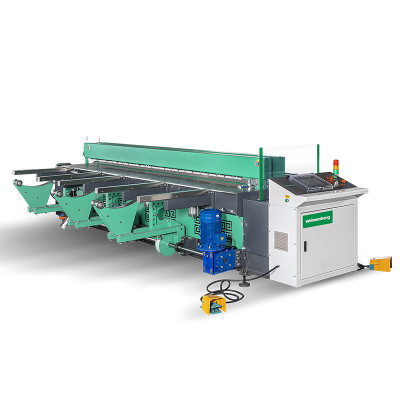
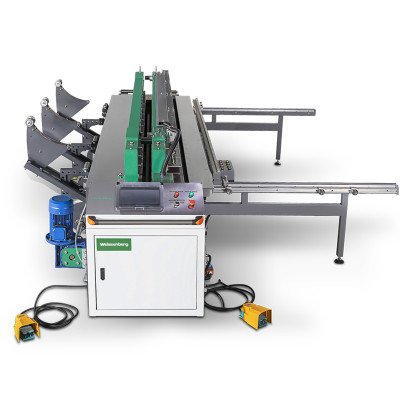
Chemical storage tank manufacturing is the fabrication of welded thermoplastic vessels — built from HDPE, PP, or PVDF sheets — that safely store acids, alkalis, process chemicals, and industrial liquids. Because a tank seam failure can release hazardous chemicals, this industry runs on two hard requirements: material selection matched to chemical compatibility and welds executed and verified against recognized standards such as the DVS 2207 series, with design and testing references that include DVS 2205-1/-2/-5 guidance in German-speaking markets and the EN 12573 series in Europe. The practical consequence for fabricators: chemical tank production is a machine-driven process — large-format heated-tool butt welders such as Weissenberg’s WeiBond 5000, 6000, and 7000 join full-size panels with even pressure and controlled parameters, producing long, homogeneous seams that extrusion welding alone cannot match, while detail joints, nozzles, and reinforcements are added with extrusion welding and corners are formed by bending. This guide explains the tank types, the material decision, the standards landscape, thick-sheet welding on heavy panels, leak-prevention engineering, and the compliance checklist every chemical tank manufacturer should work from.
What Is Chemical Storage Tank Manufacturing?
Definition: Chemical Storage Tank Manufacturing
Chemical storage tank manufacturing is the engineering and fabrication of containers designed to hold aggressive or hazardous liquids — acids, alkalis, bleach and oxidizers, plating and etching chemistries, wastewater, and bulk industrial chemicals. Where steel corrodes or requires heavy linings, welded thermoplastic tanks made from HDPE, PP, or PVDF provide an economical, corrosion-resistant alternative. The core production process is plastic sheet welding: extruded sheets are cut to panel sizes, butt-welded into wall sections and bottoms on heated-tool welding machines, formed into curved or cornered shapes by heating and bending, and assembled with nozzles, flanges, manholes, and internal fittings using extrusion welding. Because welds are critical potential leak paths and stress-concentration locations in fabricated thermoplastic tanks, tank manufacturing is governed less by exotic materials than by welding discipline: repeatable parameters, trained welders, verified materials, and systematic inspection. This guide covers the tank types and their welding profiles, the HDPE vs PP vs PVDF material decision, the standards that apply to chemical tank welding, the techniques and challenges of thick-sheet welding, leak-prevention design and quality control, and how large-format welders like the WeiBond 5000–7000 series enable efficient big-tank production.
It is written for plastic fabrication shops entering the chemical tank market, established tank manufacturers reviewing their welding processes, and plant owners or EPC contractors evaluating tank suppliers. For the fundamentals these tanks rely on, see our plastic sheet butt welding process guide; for the factory-level view of organizing a tank production line, see inside an HDPE chemical tank factory: the complete production workflow.
Types of Chemical Storage Tanks and Their Welding Profiles
Chemical tanks come in a limited set of structural families, and each family places different demands on the welding shop. The main distinction is between flat-panel construction (walls made of butt-welded flat sheets, with formed or welded corners) and cylindrical construction (wall panels curved by rolling or bending, then joined by longitudinal and circumferential welds).
| Tank Type |
Typical Construction |
Welding Profile |
Key Engineering Concern |
| Vertical cylindrical storage tanks |
Curved wall panels butt-welded vertically, bottom plate welded in, roof or open top |
Long vertical and circumferential butt welds on a welding bench or turntable; bottom plate grid welds |
Plumbness and roundness; uniform fusion over full panel length |
| Horizontal / saddle-mounted tanks |
Cylindrical shell built from curved panels with dished or flat ends |
Circumferential butt welds, end-cap welds, nozzle clusters |
Shell straightness and support design under fill weight |
| Rectangular tanks and open-top basins |
Flat wall panels butt-welded into a box, bottom welded, corners either bent or welded |
Panel butt welds, corner welds, stiffener and partition welds |
Wall flatness and deflection under hydrostatic load |
| Double-wall / secondary-containment tanks |
Inner tank built as a normal vessel, outer jacket welded around it |
Same panel welding plus jacket seams, leak-detection channels |
Integrity of both shells; detectable interstitial space |
| Lined or relined vessels |
Thermoplastic sheet welded as a corrosion liner inside a steel or concrete shell |
Sheet-to-sheet butt or overlap welds plus tack/anchoring welds to the substrate |
Bonding method, spark testing of the lining, thermal expansion |
Across all types, the same principle applies: every seam is a potential leak path, so tank designs are engineered to minimize the number of welds — by starting from the largest available sheet size, by bending corners instead of welding them where the material and design allow, and by grouping nozzles and fittings during assembly rather than adding them one at a time.
Material Selection: HDPE vs PP vs PVDF for Chemical Compatibility
The material decision is the first engineering decision in chemical tank manufacturing, and it is driven by the stored chemical, the operating temperature, and the mechanical duty — not by price alone. A material that is chemically compatible at room temperature may fail rapidly at elevated temperature, and a chemically ideal material may be uneconomical for a large tank. The table below summarizes the three workhorse thermoplastics; always confirm compatibility against the specific chemical, concentration, and temperature using the supplier’s chemical resistance data.
| Property |
HDPE (PE-HD) |
PP (PP-H) |
PVDF |
| Chemical resistance profile |
Excellent against most acids, alkalis, and aqueous salts; attacked by strong oxidizing acids and some solvents at elevated temperature |
Similar broad resistance to acids and alkalis with better resistance to many organic solvents; vulnerable to strong oxidizers and halogenated hydrocarbons |
Outstanding resistance across a very wide range of chemicals, including strong oxidizers and many solvents that damage PE and PP |
| Typical service temperature capability |
Good general-purpose range; loses stiffness quickly as temperature rises toward its softening range |
Higher continuous-use capability than PE, making it a common choice for warmer chemical duties |
Highest of the three; used where PE and PP cannot survive the temperature or the chemistry |
| Weldability & applicable DVS 2207 welding part |
Excellent, well-characterized; DVS 2207-1 |
Excellent; DVS 2207-11 |
Good with disciplined parameter control; DVS 2207-15 |
| Typical tank applications |
Bulk acid/alkali storage, water treatment chemicals, waste storage — the default workhorse for large tanks |
Warmer service or chemistry-specific duties, scrubber and process vessels, plating and pickling lines |
High-purity, high-temperature, or highly aggressive duties: semiconductor chemicals, strong oxidizers |
| Relative cost and size practicality |
Lowest; available in very large sheets — best suited to big tanks |
Moderate; large sheets available |
Highest; sheets are smaller and costlier, so PVDF is used where required rather than by default |
For most bulk chemical storage, HDPE is the starting point because it combines broad chemical resistance, toughness, large sheet sizes, and low cost. PP-H is often selected where higher temperature capability or the specific chemical compatibility profile favors PP over PE. PVDF is the specialist’s material for the hottest and most aggressive services — see our PVDF sheet butt welding guide for that material’s specific demands. For a deeper material-by-material welding comparison, see our HDPE, PP & PVDF sheet welding material guide.
Welding Standards and Codes for Chemical Tanks
Chemical tank welding is governed by a layered set of standards: welding procedure standards that define how to weld each material, assessment standards that define what a good weld looks like, testing standards for leak integrity, and tank design/product standards that frame the whole vessel. Knowing which layer applies — and which regional edition is in force — is part of the manufacturer’s job.
| Layer |
Representative Standards |
What It Governs |
| Welding procedures |
DVS 2207 series — heated-tool parts (2207-1 for PE-HD, 2207-11 for PP, 2207-12 for PVC-U, 2207-13 for PVC-C, 2207-15 for PVDF); DVS 2207-4 for extrusion welding of pipes, fittings and panels |
Heated-tool butt welding parameters: heating-plate temperature, pressure stages, heating and changeover times, cooling time per material and thickness; DVS 2207-4 defines extrusion welding procedures and requirements used for detail joints |
| Weld assessment (visual) |
DVS 2202 series: Supplement 1 for heated-plate butt welds, Supplement 5 for extrusion welds |
Acceptable bead geometry, misalignment limits, and surface defects; how to evaluate weld quality visually, per weld type |
| Testing |
DVS 2203 series (mechanical testing of welds); DVS 2206-2 (leak test on unpressurized thermoplastic tanks and apparatus) |
Destructive sample testing (e.g., tensile testing of weld samples) and leak testing of finished tanks |
| Tank design & installation |
DVS 2205-1/-2/-5 (calculation and design of thermoplastic tanks and apparatus: 2205-1 general basis with characteristic values and welding factors, 2205-2 vertical cylindrical unpressurized tanks, 2205-5 rectangular tanks) |
Wall thickness calculation, welding factors, and shape-specific design of thermoplastic vessels |
| Regional and project standards |
EN 12573 series (Europe: static welded thermoplastic tanks — design and calculation); where no regional product standard applies, welded tanks are engineered to project/owner specifications referencing design rules such as DVS 2205 |
Design and calculation of the finished welded tank (Europe); project-specified engineering elsewhere |
| Weld personnel |
EN 13067 (plastics welding personnel — qualification testing of welders) and national equivalents; DVS 2212-1 (qualification of plastics welders for plant construction — apparatus, tank and pipeline work) |
Demonstrated welder skill through qualification tests, often with periodic re-qualification; DVS 2212-1 is the DVS qualification route for welders working on tanks and apparatus |
Two practical notes. First, standard editions change and jurisdictions differ — always confirm which edition of the applicable DVS 2207 parts, the EN 12573 series, or your project specification applies to your export market before quoting compliance. Second, compliance is documented, not assumed: parameter records, weld maps, material certificates, and test reports are what turn "we followed the standard" into auditable evidence. For extrusion-welded detail joints (nozzles, flanges, reinforcements), the procedure reference is DVS 2207-4 and the visual assessment reference is DVS 2202 Supplement 5. Our DVS 2207 compliance guide and quality checklist walks through the documentation trail in detail.
Thick-Sheet Welding: Techniques and Challenges
Chemical tanks are sized by volume, and volume drives thickness, but the required sheet thickness varies considerably with vessel geometry, material, chemical density, temperature, and structural design. A large vertical storage tank may be built from sheets of 20 mm and up, and heavy-duty designs may require substantially thicker panels. Thick-sheet butt welding is where the difference between a serious tank machine and a light fabrication welder becomes obvious.
What thick sheets demand from the machine
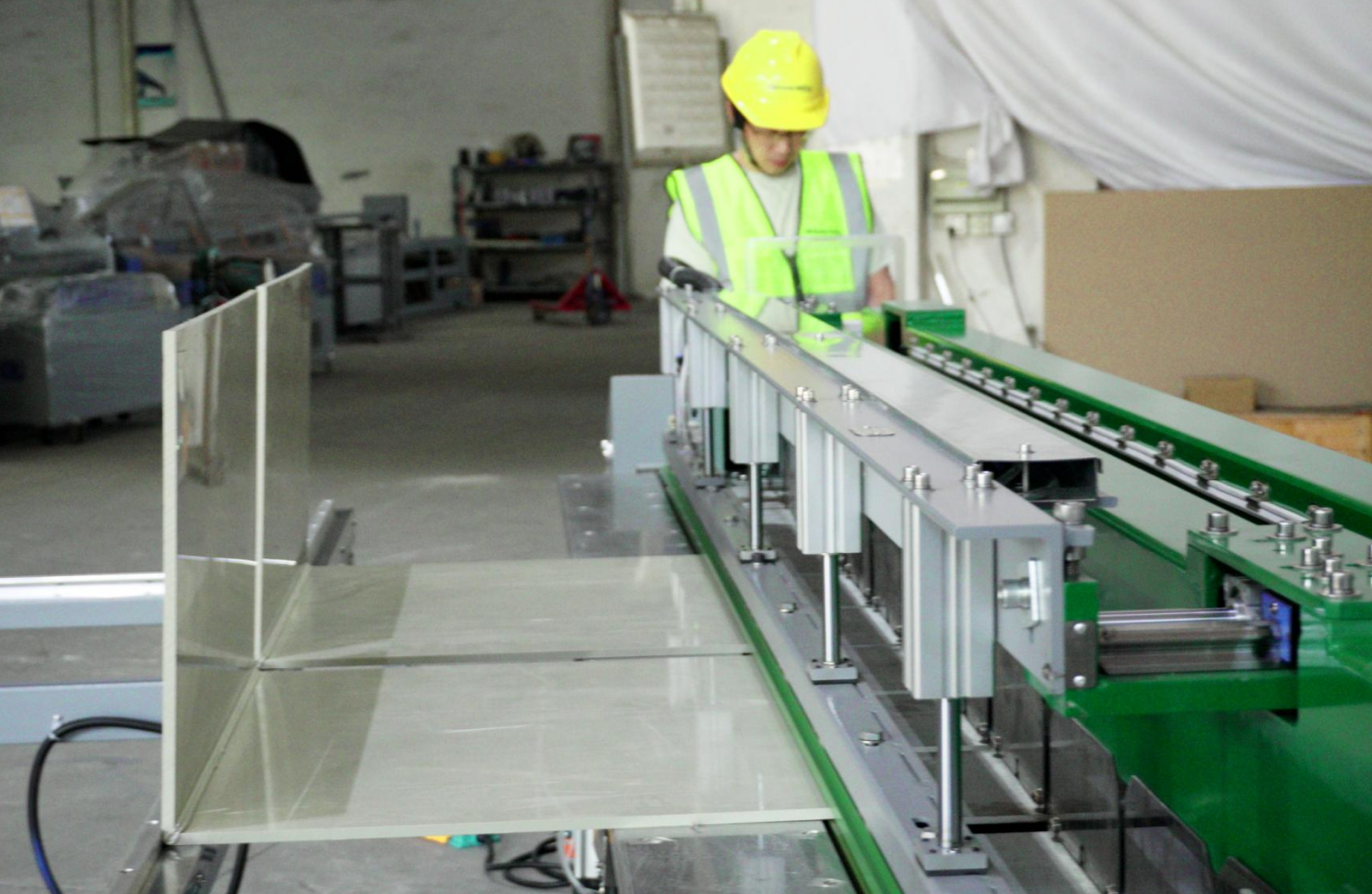
- Rigid clamping over the full weld length. Thick sheets are heavy and stiff; the clamps must hold both sides straight and true so the joint faces stay aligned under high welding pressure.
- Stable heating-plate temperature. Thick sheets require longer heat-soak periods, so the heating plate must maintain the programmed temperature throughout the welding cycle. Weissenberg welders control heating-plate temperature within about ±5°C, with stepless heating-plate height adjustment driven by a motor for even contact.
- Sufficient welding force. The machine must generate and hold the required pressure over the entire joint without flexing — a frame that deflects produces a weld that is strong in the middle and weak at the ends.
- Controlled parameter execution. Heating time, changeover time, and cooling time grow with thickness; machine control (WeiBond machines use PLC and touchscreen parameter control) keeps the cycle consistent from weld to weld.
What thick sheets demand from the workshop
- Handling and alignment aids. Panels at the thick end of the range are heavy; rollers, hoists, and level benches protect both operators and the joint edges.
- Flatness correction before welding. Extruded sheet carries internal stress; thick panels must be checked and, where needed, flattened or stress-relieved so edges meet without gaps or mismatch.
- Edge preparation discipline. Cut edges must be clean, square, and free of contamination — defects at the joint face become defects in the weld.
- Patience with cooling. The weld must cool under controlled pressure for the full specified time; removing the panel early invites voids and shrinkage cracks.
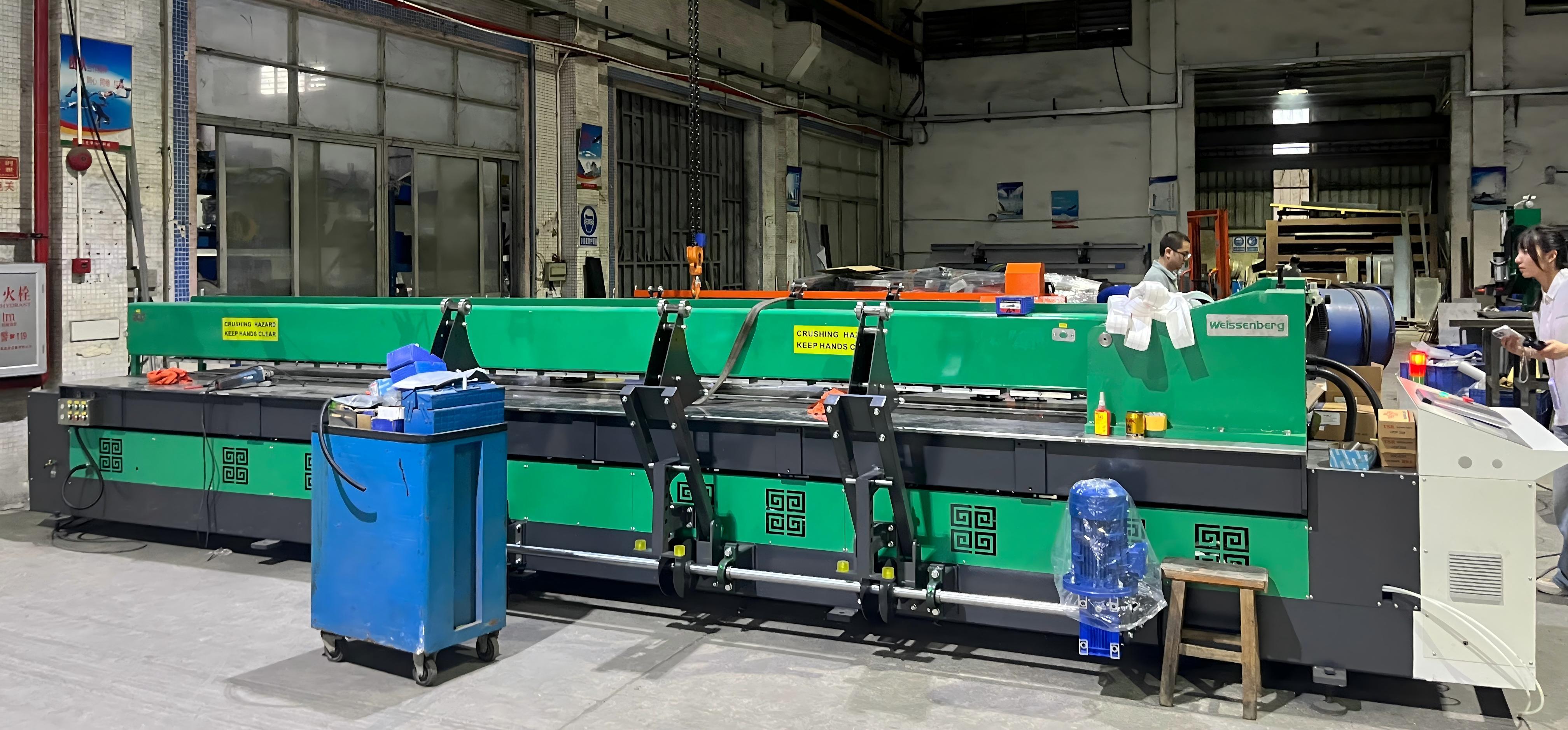
The machine-side answer to these demands is the large-format welder. Weissenberg’s WeiBond range scales from compact units for thin sheet up to machines built for heavy panels: the WeiBond 5000 is designed for large-scale sheet welding with a 5000 mm maximum welding width and can be equipped with an optional 90° angle-forming device and a rolling auxiliary device, and the range extends to the 6000 mm-class WeiBond 6000 and the WeiBond 7000 for 7-metre-wide panels. Heavy-duty tank designs may use sheets in the 40–60 mm range; however, the published welding capacity of current WeiBond large-format models is up to 40 mm, so thicker applications require separate machine and procedure verification. Wide-format capability is not a luxury in chemical tank work — it is how a shop turns a full-width heavy panel into a tank wall with the fewest possible seams.
Leak Prevention: Design Considerations and Quality Control
Leak prevention depends on both sound tank design and controlled fabrication. Good joint accessibility and weldability reduce fabrication risk, but they do not replace correct material selection, structural design, qualified welding procedures, and inspection.
Design considerations that prevent leaks
- Minimize seam count. Specify the largest sheets the process can handle, and design wall layouts so full panels are used wherever possible. Every eliminated seam eliminates a potential leak path and the inspection burden that goes with it.
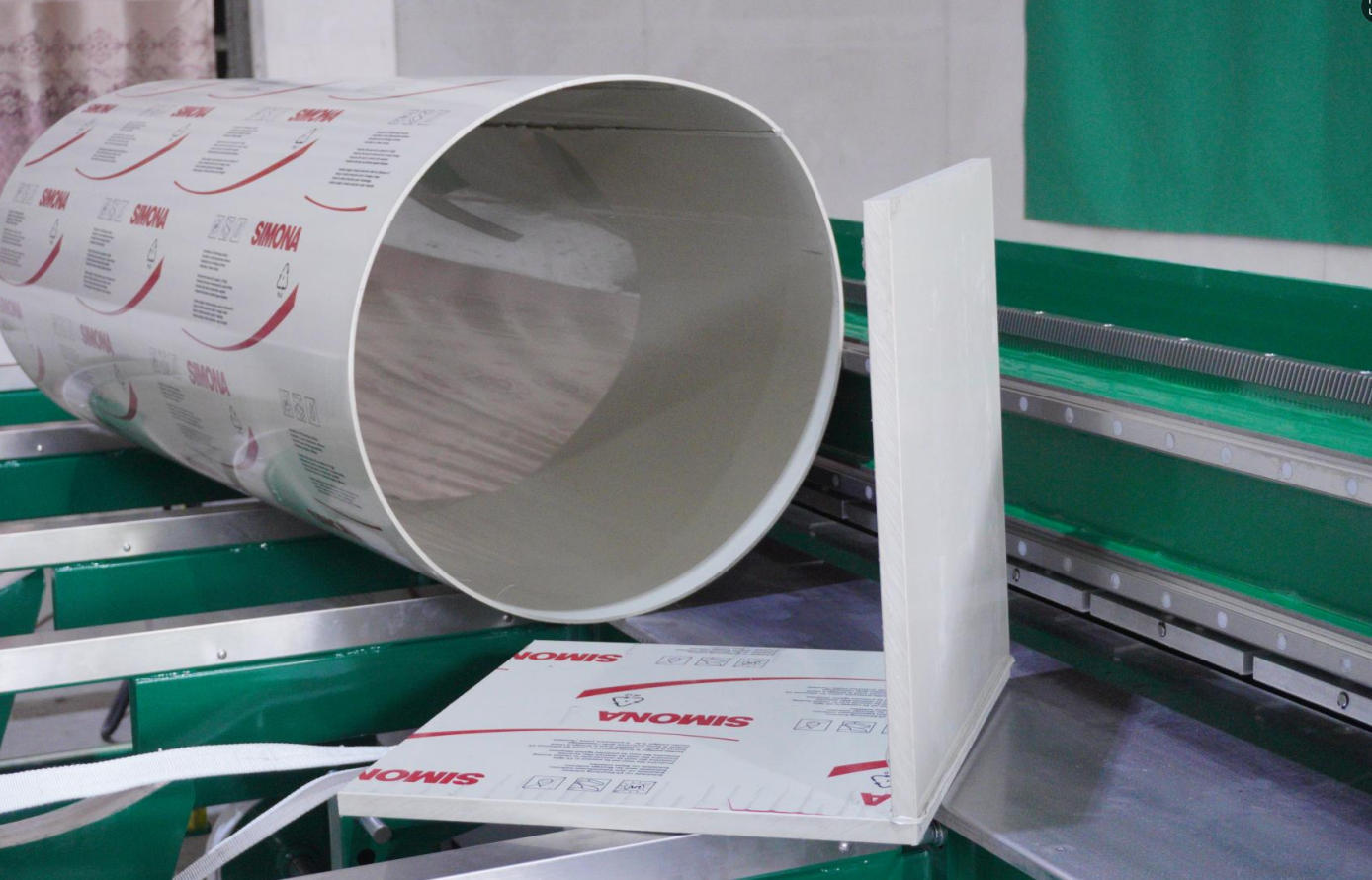
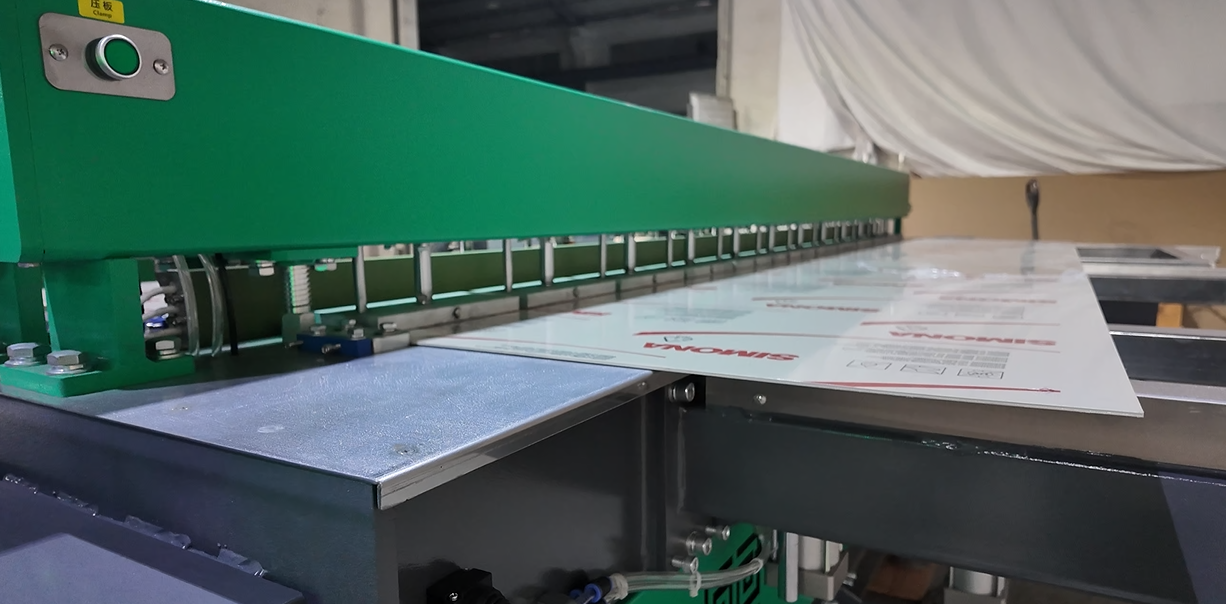
- Prefer formed corners over welded corners where material and geometry allow — a continuous bent corner has no seam to leak. Machines that can be equipped with an optional angle-forming device (such as the WeiBond 5000) support this design choice.
- Detail joint placement. Nozzles, flanges, and manholes should be positioned so they can be welded from accessible angles, with reinforcement welds (extrusion welding) where the joint carries load or vibration.
- Design for drainage and venting. Internal fittings and baffles should avoid trapping air or chemicals in crevices that create hidden stress or cleaning problems.
Quality control that catches defects
- Incoming control: verify material grade and certificate (e.g., PE 80 / PE 100, PP-H, PVDF) and confirm the batch is traceable to the tank order. Inspect sheets for scratches, contamination, and flatness before they enter production.
- In-process control: record the welding parameters for every main seam — temperature, pressures, and times — so each weld can be tied to a documented cycle. PLC-controlled machines make this routine rather than optional.
- Visual inspection: assess every weld against the applicable assessment standard (DVS 2202 Supplement 1 for heated-plate butt welds, DVS 2202 Supplement 5 for extrusion welds), checking bead form, symmetry, and alignment of the joint faces.
- Leak testing: test finished tanks per the applicable procedure (e.g., water-fill leak testing per DVS 2206-2 for unpressurized thermoplastic tanks where applicable), typically by filling the vessel with water, holding it for the specified period, and checking the tank and all seams for leakage.
- Destructive sampling: where the QA plan requires it, cut samples from test welds or coupons and test them (e.g., tensile testing of weld samples) to verify that fusion quality meets the requirement — the most direct evidence that the process is in control.
Large-Format Welding: How WeiBond 5000–7000 Machines Enable Big Tank Production
Big tanks are, in production terms, a welding-logistics problem: a 50 m³ vessel built from 3-metre sheets contains many metres of seam; the same vessel built from 6–7-metre panels contains a fraction of that. Large-format butt welders change the economics and the quality profile of tank manufacturing in three ways:
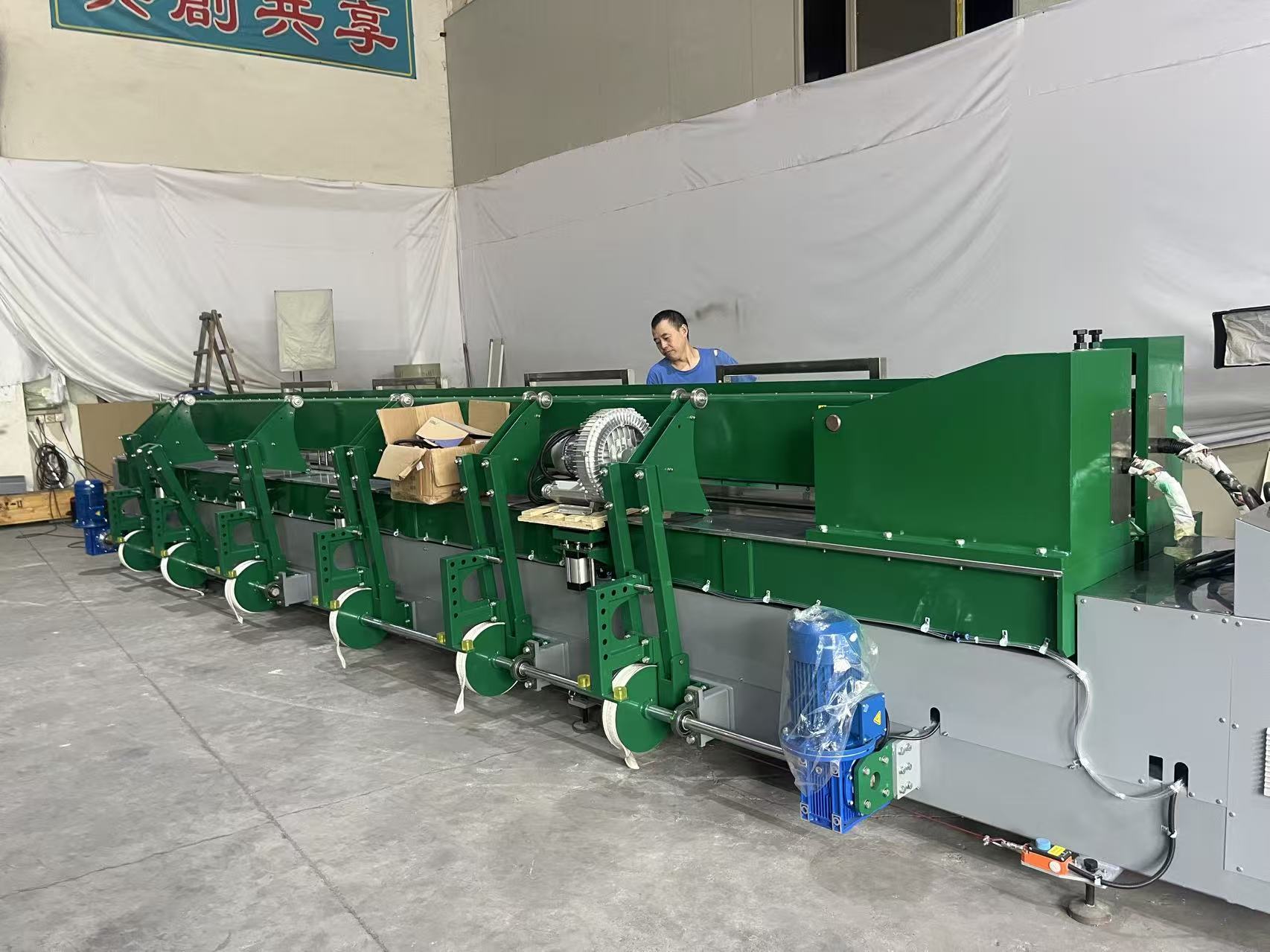
- Fewer, longer seams. Wide-format welding (up to 5000–7000 mm in the WeiBond 5000/6000/7000 range) lets a shop build wall panels and bottom plates from full-width sheets. Fewer seams means fewer leak paths, less inspection, and shorter total welding time.
- Machine-consistent quality on heavy panels. A tank-grade machine holds alignment and pressure across the whole panel width, applies even heat through precise temperature control, and executes the DVS 2207 pressure/temperature/time cycle automatically — removing the variability that manual methods introduce on long heavy seams. The WeiBond 7000 is designed to support welding procedures aligned with the applicable DVS 2207 requirements and is CE certified, sized for tank wall production.
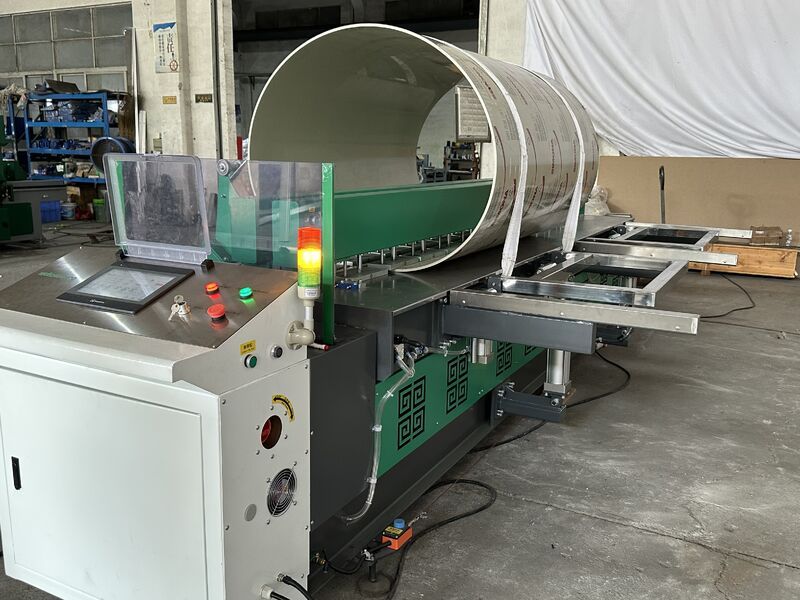
- Integrated forming options. A WeiBond 5000 equipped with the optional 90° angle-forming and rolling auxiliary devices can both weld panels and form corners or curved wall sections, so tanks that combine flat and cylindrical elements do not require a separate forming pass or a second machine.
For the shop moving from small tanks to chemical storage work, the practical recommendation is to size the welder to the largest panel the tank designs require — not to today’s average job. The machine cost difference between a mid-size and a large-format welder is usually small next to the value of being able to quote (and reliably weld) big tanks. See the WeiBond plastic sheet butt welder range for the full lineup and specifications, and our analysis of CNC vs manual welding automation for the investment reasoning.
Building the Production Line: Machine Choices and Workflow Decisions
Chemical tank fabrication is not a single welding job but a process chain: cutting → panel welding → forming → assembly and detail welding → testing. Each stage feeds the next, and the machine choices should be made as a chain, not as isolated purchases.
Choose this path: scaling into large chemical tanks
- You quote tanks above roughly 10–20 m³ or panels beyond standard sheet lengths on a regular basis.
- You need documented, repeatable weld quality for compliance-minded customers.
- Invest in a large-format butt welder (WeiBond 5000–7000 class), a CNC or guided cutting solution, and line-bending capacity for formed corners.
- Pair the machine with parameter recording and a test station (visual, leak, sample testing) so every tank ships with evidence.
Choose this path: prototyping, small tanks, or entry into the market
- Your current work is small vessels, liners, and detail fabrication, with chemical tanks as an occasional job.
- Start with a mid-range butt welder sized to your typical panels and build extrusion welding capability for detail joints; add line bending when formed corners appear in your designs.
- Outsource the occasional very large panel weld only if it stays rare — frequent large jobs justify the machine.
- Either way, adopt the documentation and inspection habits of a tank shop from day one; they are what customers audit.
On the cutting side, clean square edges are the foundation of good butt welds; Weissenberg supplies CNC routers and cutting solutions sized to sheet processing. For the complete five-stage welding cycle that every butt-welded seam follows — setup, heating, changeover, joining/cooling, and inspection — our butt welding process guide is the reference. Detail joints (nozzles, flanges, baffles, reinforcements) are extrusion welding territory, which is why many tank shops run both a butt welder and an extrusion welding solution.
Regulatory Compliance Checklist for Chemical Tank Manufacturers
- Confirm the applicable standards for your market — identify the in-force editions of the welding procedure standards (DVS 2207 series), the applicable design standards (e.g., the EN 12573 series in Europe; elsewhere, project specifications referencing rules such as DVS 2205-1/-2/-5), and any national code or notified-body requirement before quoting.
- Verify material certificates and traceability — every sheet batch must carry a certificate matching the ordered grade, with storage so the certificate can be tied to the specific tank it was used in.
- Define and document weld procedures — a written procedure per material and thickness (temperature, pressure stages, heating/changeover/cooling times) that operators actually follow.
- Qualify your welders — welders performing load-bearing seams should hold qualification per EN 13067, DVS 2212-1 (tank and apparatus plant work), or the applicable national scheme, with re-qualification tracked.
- Keep welding parameter records — record the executed parameters for main seams so every weld can be verified against its procedure.
- Inspect every weld visually — assess bead geometry, alignment, and surface condition against the applicable assessment standard, with defects dispositioned by a written rule.
- Leak-test finished tanks — apply the specified leak test (e.g., water-fill leak testing per DVS 2206-2 for unpressurized tanks where applicable) and record the result with the tank serial number.
- Sample-test welds where the QA plan requires — destructive testing of coupons or test welds (e.g., tensile) as evidence of fusion quality.
- Mark and document each tank — nameplate data (material, volume, year, manufacturer, standard), a weld map or seam record, and a file containing certificates, parameter logs, inspection and test reports.
- Review compliance when standards update — set a periodic review of the standards list so your documentation does not silently go stale.
FAQ
Which plastic is used to weld chemical storage tanks?
HDPE is the default workhorse for bulk chemical storage tanks because it combines broad resistance to acids, alkalis, and aqueous chemicals with toughness, availability in very large sheets, and excellent weldability. PP-H is often selected for warmer service or where the specific chemical compatibility profile favors PP over PE, and PVDF for high-temperature, high-purity, or highly aggressive services where PE and PP cannot survive. The choice is made per stored chemical, concentration, and temperature — confirm against the material supplier’s chemical resistance data rather than generalizing.
Why is machine butt welding preferred over hand welding for chemical tank walls?
Tank walls are built from long panel seams that must be fully fused across their entire length. Heated-tool butt welding joins the full cross-section at once with controlled temperature, pressure, and time, producing a homogeneous seam with no filler material — and on a machine, those parameters are repeatable from weld to weld. Hand extrusion welding remains essential, but for the long load-bearing panel and bottom seams of a chemical tank, machine butt welding is the primary method because consistency is what prevents leaks.
Does DVS 2207 apply to chemical storage tanks?
DVS 2207 is a welding procedure standard: the heated-tool parts (2207-1 for PE-HD, 2207-11 for PP, 2207-12 for PVC-U, 2207-13 for PVC-C, 2207-15 for PVDF) define butt welding parameters for each material, and DVS 2207-4 covers extrusion welding of pipes, fittings and panels for detail joints. Tank manufacturers use these to execute and document their welds, but the tank as a whole is framed by additional documents — design and calculation per DVS 2205-1/-2/-5, leak testing per DVS 2206-2, welder qualification per DVS 2212-1, and regional or project standards such as the EN 12573 series in Europe. Compliance means applying the full applicable set, not one standard alone.
How thick can plastic sheets be welded for chemical tanks?
Chemical tank panels are welded across a wide thickness range that varies with vessel geometry, material, chemical density, temperature, and structural design; heavy-duty designs may require substantially thicker panels. Thick-sheet welding needs a machine with rigid full-length clamping, stable heating-plate temperature, sufficient welding force, and controlled execution of the longer heating and cooling cycles that thickness demands. Within their published thickness specification (panels up to 40 mm), Weissenberg’s large-format welders, from the WeiBond 5000 up to the WeiBond 7000, are built for exactly this duty — wide, heavy panels welded with even pressure across the full width; for plate beyond that range, confirm the machine rating and the applicable welding procedure with the manufacturer.
How is the quality of chemical tank welds tested?
In three layers. First, visual inspection of every weld against the applicable assessment standard (the DVS 2202 series for heated-plate welds), checking bead form and alignment. Second, leak testing of the finished tank — for unpressurized thermoplastic tanks typically a water-fill leak test per DVS 2206-2 where applicable, filling the vessel and observing it and its seams for leakage over the specified period. Third, destructive sample testing where the QA plan requires it: cutting coupons or test welds and testing them (e.g., tensile testing) to prove fusion quality. Documented parameters from machine-controlled welding support all three layers.
What documentation does a chemical tank manufacturer need for compliance?
The core file set is: material certificates traceable to each tank, written welding procedures per material and thickness, welder qualification records (e.g., per EN 13067 or DVS 2212-1 for tank and apparatus work, or national equivalents), executed parameter records for main seams, visual inspection reports, leak test reports, and destructive test records where applicable — plus a nameplate and weld map on the tank itself. Buyers and auditors expect this file to exist per tank order, not as a general folder, so batch traceability is the habit that makes compliance achievable.
Key Takeaways
- Chemical storage tank manufacturing is governed by two requirements: material matched to chemical compatibility, and welds executed and verified against recognized standards — leaks are prevented by design and process, not by luck.
- Match the material to the chemistry and temperature: HDPE for bulk storage and large tanks, PP-H for warmer service or chemistry-specific duties, PVDF for high-temperature, high-purity, or highly aggressive service.
- The standards are layered: DVS 2207 series for welding procedures (heated-tool parts 2207-1/-11/-12/-13/-15, extrusion part 2207-4), DVS 2202 Supplements 1 and 5 for visual assessment, DVS 2203/2206 for testing, DVS 2205-1/-2/-5 for design and calculation, the EN 12573 series as the European standard for welded thermoplastic tanks, and EN 13067 / DVS 2212-1 for welder qualification — confirm the editions in force for your market.
- Thick-sheet welding demands rigid full-length clamping, stable heating-plate temperature, sufficient force, and controlled long heating/cooling cycles — the defining capabilities of a tank-grade welding machine.
- Minimize seam count with the largest available panels and formed corners; every seam you do not weld is a leak path you do not have to test.
- Large-format welders such as the Weissenberg WeiBond 5000 (5000 mm width, optional 90° angle-forming and rolling auxiliary devices), WeiBond 6000, and WeiBond 7000 (7-metre panels, built for DVS 2207-aligned welding procedures, CE certified) — with published welding capacity for panels up to 40 mm — are how big tank production becomes efficient and consistent.
- Compliance is documented: certificates, procedures, parameter records, inspection and test reports, and per-tank files are the evidence that turns process claims into auditable fact.
References and Further Reading
- Weissenberg — Chemical storage tank welding solutions page (PP/HDPE) (DVS 2207-aligned welding, precision heat control, welding clamp, PLC parameter control)
- Weissenberg — WeiBond plastic sheet butt welder range (WeiBond 1500–7000)
- Weissenberg — WeiBond 5000 product page (5000 mm max welding width; optional 90° angle-forming and rolling auxiliary devices)
- Weissenberg — WeiBond 7000 product page (7-metre panels, designed to support DVS 2207-aligned welding procedures, CE certified)
- Weissenberg — Inside an HDPE chemical tank factory: the complete production workflow
- Weissenberg — Plastic sheet butt welding process: setup, 5-stage welding cycle & inspection guide
- Weissenberg — DVS 2207 compliance guide and quality checklist
- Weissenberg — How to weld HDPE, PP & PVDF sheets: process, temperatures & material guide
- Weissenberg — Plastic sheet butt welder vs extrusion welder
- Weissenberg — PVDF sheet butt welding guide
- DVS 2207 series — Welding of thermoplastics — heated tool welding (heated-tool parts: DVS 2207-1 PE-HD; 2207-11 PP; 2207-12 PVC-U; 2207-13 PVC-C; 2207-15 PVDF), DVS Media GmbH, Düsseldorf
- DVS 2207-4 (12/2019) — Welding of thermoplastic materials — extrusion welding of pipes, piping parts and panels: procedures, requirements, DVS Media GmbH, Düsseldorf
- DVS 2202 Supplement 1 (02/2023) — Evaluation of joints between thermoplastics on piping parts and panels — heated plate welding, DVS Media GmbH, Düsseldorf
- DVS 2202 Supplement 5 (12/2016) — Assessment of defects in joints between thermoplastics on piping parts and panels — hot-gas extrusion welding (WE), DVS Media GmbH, Düsseldorf
- DVS 2206-2 (12/2016) — Non-destructive testing of unpressurized tanks and apparatus made of thermoplastics — leak test, DVS Media GmbH, Düsseldorf
- DVS 2205 series — Calculation and design of tanks and apparatus made of thermoplastics: 2205-1 general basis (05/2023), 2205-2 vertical cylindrical unpressurized tanks (12/2021; under revision), 2205-5 rectangular tanks (03/2024), DVS Media GmbH, Düsseldorf
- EN 12573 series — Static welded thermoplastic tanks — design and calculation (Europe; verify current editions)
- EN 13067 — Plastics welding personnel — qualification testing of welders (and national equivalents)
- DVS 2212-1 (08/2024) — Qualification testing of plastics welders for plant construction — apparatus, tank and pipeline construction, DVS Media GmbH, Düsseldorf
Planning chemical storage tank production and want a second opinion on material selection, welding standards, or machine sizing? Talk to a Weissenberg engineer — the right setup depends on your tank sizes, the chemicals you store, your production volume, and the compliance requirements of your export market.