How to Bend Plastic Sheets: PP, HDPE & PVC Line Bending Guide
Quick Answer
Bending a plastic sheet is a heat-then-fold process, not a force process: you soften a narrow strip of thermoplastic along a straight line, fold it to the target angle, and hold it until it cools. For PP, HDPE, and PVC, the practical recipe is: heat the bend zone to the material's softening window (roughly 140–160 °C for PP, 130–150 °C for HDPE, 100–130 °C for PVC as working references), heat long enough for the full thickness to soften, fold in one smooth motion, and cool in position to lock the angle. Match temperature to material, heating time to thickness, and bend radius to the part's design requirements and allowable strain. Together with stable and uniform machine control, that combination determines whether you get a clean corner or a bubbled, whitened or cracked bend.
What Is Plastic Sheet Bending?
Definition: Plastic Sheet Bending
Plastic sheet bending is a thermoforming technique in which a thermoplastic sheet (PP, HDPE, PVC, PVDF, ABS, and similar) is locally heated along a straight line until it becomes soft, then folded to a target angle and held until it cools and stiffens. Only the bend line is heated, so the rest of the sheet keeps its flatness, thickness, and surface quality. Bending is the standard method for producing corners, flanges, box bodies, and tank shells from flat sheets — typically the step between cutting and butt welding in a fabrication workflow.
This guide is written as an operator's how-to: how the material behaves, how thickness changes the process, what defects appear and why, and how to fold a sheet correctly the first time. It covers the three most common fabrication materials — PP, HDPE, and PVC — and assumes you are bending panels that will later be welded into tanks, scrubbers, ducting, or liners.
1. The Two Techniques: Line Bending vs Drape Forming
Two families of techniques exist, and they produce different geometries.
| Criterion | Line Bending (strip heating) | Drape Forming (mold forming) |
|---|---|---|
| Heated area | Narrow straight strip along the bend line | Large section or full sheet |
| Resulting geometry | Straight folds, corners, flanges, box bodies | Curved panels, radii, deep-formed shapes |
| Equipment | Strip heater or a bending machine with a straight heating element | Oven or heater plus a mold or former |
| Angle control | Repeatable, especially with controlled angle settings (5°–95° on WeiFlex models) | Depends on mold accuracy and operator skill |
| Typical use | Rectangular tanks, ducting, scrubber bodies, flanges, liners | Curved tank walls, hoods, custom enclosures |
Line bending is the dominant method in industrial fabrication because tanks and ducts are mostly straight-edged boxes. Drape forming appears when a part genuinely needs a curved contour. Everything below concerns line bending.
2. How to Bend a Plastic Sheet: Step-by-Step
The sequence is the same for PP, HDPE, and PVC; only the numbers change. These steps assume a bending machine or strip heater with a straight, uniform heating element — which is what industrial shops use because hand torches make it difficult to maintain a straight and uniform heat line consistently.
- Mark the bend line. The fold happens exactly where the heat is applied. Mark the line on both faces and align it with the heating element.
- Set the temperature for the material. Use the material windows in Section 3 as a starting point; adjust to your sheet's actual behavior.
- Heat the strip. Time depends on thickness: thin sheets (3–6 mm) need seconds of soak, thick sheets (12–25 mm) need long enough for heat to penetrate the full cross-section. The surface turning slightly glossy is the visual cue that the strip is ready.
- Fold to the angle. In one smooth motion, bring the free side to the target angle. On a machine, set the angle first via the PLC-controlled angle setting so every fold in the batch is identical.
- Hold until cool. Keep the fold clamped or braced in position until the heated zone stiffens. Releasing early causes spring-back and angle drift.
- Check the result. Measure the angle and inspect the fold for whitening, bubbles, or surface damage before the part moves to welding.
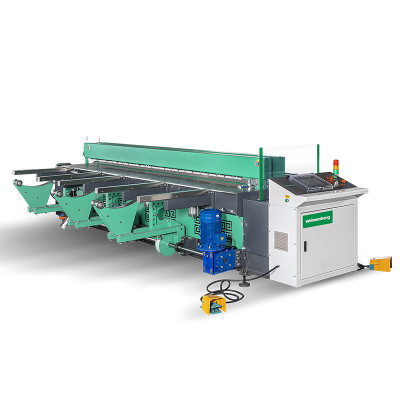
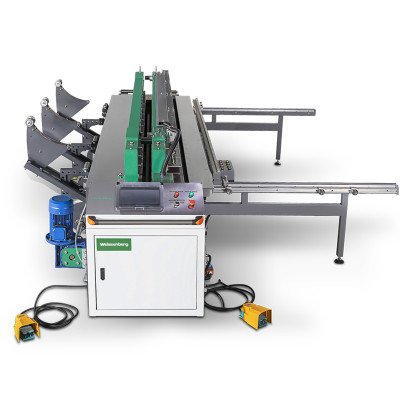
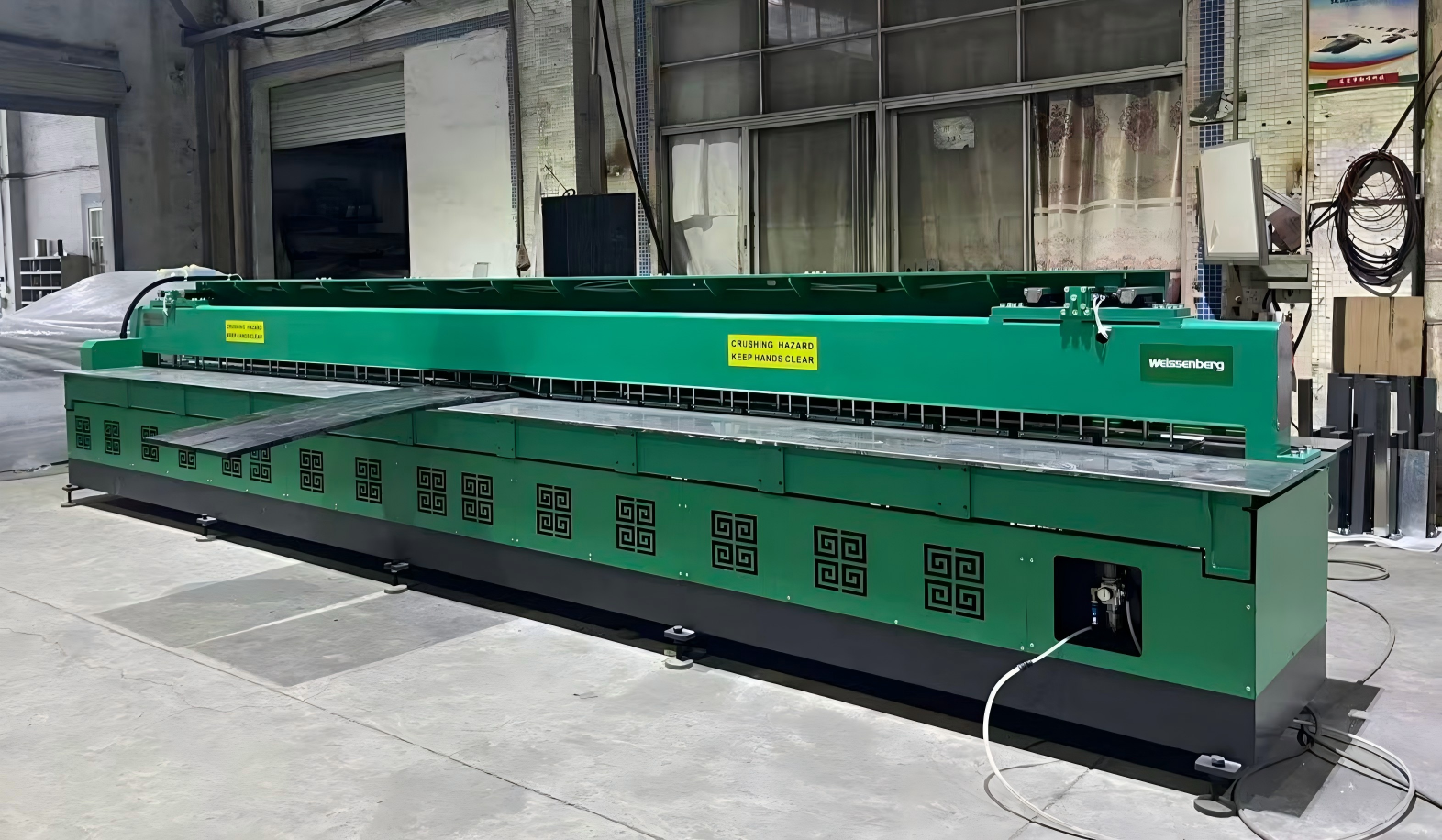
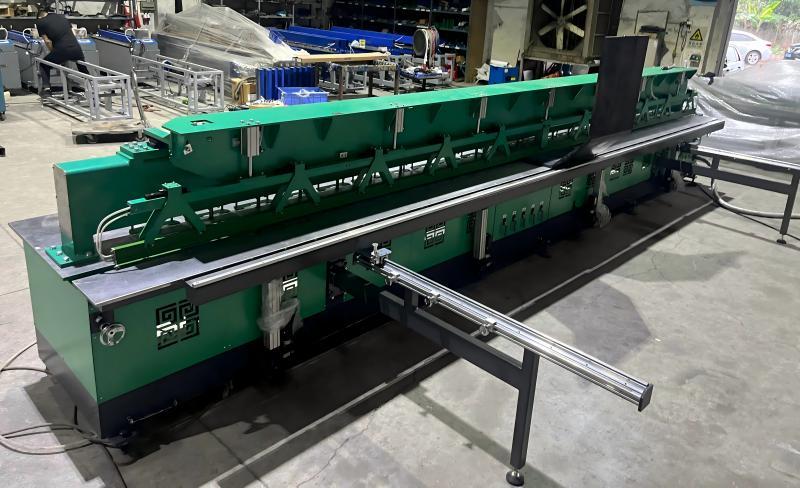
On a plastic sheet bending machine, steps 2–5 are controlled rather than guessed: the heating element runs the full bending width for an even heat line, the PLC angle setting defines the fold, and the clamping holds the sheet during cooling. The process knowledge below is what you still need to set the machine correctly.
3. Material Guide: PP, HDPE, and PVC
Every thermoplastic softens in its own temperature window. The values below are typical working references for line bending; confirm with your material supplier's data sheet, because additives, fillers, and thickness shift the ideal window.
| Material | Typical Sheet/Bend-Zone Temperature Reference* | Behavior When Heated | Readiness Cue |
|---|---|---|---|
| PP (polypropylene) | Roughly 140–160 °C | Softens gradually with a wide working window | Strip turns glossy and yields under light pressure; fold without force |
| HDPE (high-density polyethylene) | Roughly 130–150 °C | Softens with a visible glossy change; holds shape well after cooling | Glossy strip; ensure the full section has softened before folding |
| PVC (polyvinyl chloride) | Roughly 100–130 °C | Softens at the lowest temperature; narrowest safe window of the three | Watch color: browning means you are already past the window |
*These values refer to the material/bend-zone temperature as general process references, not necessarily the machine heating-element setpoint. Heater settings depend on machine design, heat-transfer method, material grade and sheet thickness.
- PP requires even heating across the bend line. Folding before the full section has softened can cause whitening or local stress.
- HDPE also requires controlled heating and sufficient heat penetration, particularly as thickness increases. Excessive thermal exposure can distort the surface, while insufficient heating can increase spring-back.
- PVC demands discipline: it softens at the lowest temperature and degrades fastest. Stay at the low end of the window and ventilate the work area, because overheated PVC releases decomposition fumes.
Standards Note: DVS 2207-14
DVS 2207-14 (Welding of thermoplastics – Welding by bending using a heated tool for panels made of PP and PE) applies specifically to heated-tool fold welding of PP and PE panels; it is not a general standard for all line bending of thermoplastics. It provides dedicated guidance on the process, preparation, heating, forming and cooling stages, covers panel applications in tank and apparatus fabrication as well as ventilation, and describes upper-and-lower heating for thicker sheets. Actual parameters should still be matched to material grade, sheet thickness and machine configuration.
Experience Note
Operators judge readiness by feel and appearance, not by thermometer alone: the strip turns slightly glossy and gives under light pressure when it is ready to fold. If the sheet resists, it may not be hot enough yet — bending it anyway often leads to stress whitening. If the surface bubbles, it has been too hot or too long; lower the temperature and shorten the soak rather than speeding up the fold.
4. V-Knife vs Flat Heating Knife: Heat Transfer and Bend Surface Quality
On Weissenberg bending machines, the flat-knife and V-knife options are heating-system configurations, not mechanical forming dies. Unlike a metal press brake — where a V punch produces a sharp radius and a flat punch produces a large one — the heating knife governs how heat is delivered to the bend line. The final bend radius is a separate decision, set by the machine's forming geometry and by the material and design requirements.
| Feature | V-Knife | Flat Heating Knife |
|---|---|---|
| Heat concentration | Higher | More distributed |
| Heating speed | Faster | More controlled |
| Heat penetration | Stronger | Gentler |
| Surface appearance | More defined heating zone | Smoother, cleaner surface |
| Best suited for | Efficient / structural bending | Appearance-sensitive fabrication |
Bend radius should be selected according to material, sheet thickness, design requirements and allowable strain; it should not be determined by heating-knife type alone.
For a full engineering discussion of knife features, precision and energy design across the machine range, see our Complete Guide to Plastic Sheet Bending Machines.
5. Bending Thick Sheets vs Thin Sheets: What Actually Changes
Thickness mainly changes heating time and cooling time. Thin sheets (3–6 mm) heat through quickly and cool fast — so the soak must be short enough to avoid overheating. Thick sheets (12–25 mm) need substantially longer heating so the heat penetrates the full cross-section; if only the surface is soft, the core cracks during the fold.
| Parameter | Thin sheet (3–6 mm) | Thick sheet (12–25 mm) |
|---|---|---|
| Heating time (the main variable) | Short; watch closely | Long — heat must penetrate full thickness |
| Bend radius | Small radius acceptable if material allows | Larger radius to avoid core cracking |
| Clamping | Light clamping sufficient | Firm clamping so the sheet cannot lift |
| Cooling in position | Short | Long, to prevent spring-back |
A bending machine rated for the sheet thickness keeps the heating element close enough to heat through evenly. For reference, Weissenberg's WeiFlex range is rated for sheet up to 15 mm on the smallest model (WeiFlex 1500) and up to 25 mm on the WeiFlex 3000 and larger models. For sheets beyond direct-bending capacity, see our guide to V-grooving and thick-sheet bending (25–50 mm).
6. Common Defects and How to Avoid Them
Most bent-part defects can be traced back to how the heat is applied and how the fold is timed and supported — process conditions that are largely within the operator's control.
- Bubbling — blisters on the surface. Cause: element too hot or soak too long. Fix: lower temperature, shorten time, confirm the sheet is a bending grade without absorbed moisture.
- Whitening (stress whitening) at the fold. Cause: bending before the strip is fully soft, or a radius too small for the material. Fix: heat longer at moderate temperature, or use a larger forming radius.
- Uneven bend line / wavy edge. Cause: non-uniform heating across the width, or the sheet slipping in the clamp. Fix: use a heating element that runs the full width evenly; re-align and re-clamp.
- Discoloration (PVC) — yellowing or browning. Cause: exceeding PVC's narrow window. Fix: reduce temperature, watch the soak time, ventilate the area.
- Spring-back — the angle opens after release. Cause: releasing too early, or insufficient heat penetration on thick sheet. Fix: hold until fully cool; increase heating time. For a deeper treatment of angle control, spring-back compensation and PLC adjustment, see Plastic Sheet Bending Accuracy Explained.
- Cracking at the inner corner. Cause: radius too small for the material's elongation, typical on thick or filled sheets. Fix: larger radius, or adjust the forming geometry.
Bend Quality Checklist
- Material and thickness confirmed against the temperature reference
- Bend line marked and aligned with the heating element
- Heating time matched to thickness (thicker = longer)
- Even gloss across the strip before folding — no hot spots
- Fold held in position until cool
- Angle measured; surface inspected for whitening, bubbles, cracks
7. Bending and Welding Together in Tank Fabrication
In tank and scrubber production, bending and welding are sequential steps on the same panels: cut, bend the corners and flanges, then weld the panels into the shell. Keeping the two operations close in the workflow minimizes handling of large, heavy sheets — the same logic behind a zone-based workshop layout.
- Cut and edge-prepare the panels to final dimensions.
- Bend corner lines and flanges. Triple-folding — forming three or four sides of a tank body from one sheet without repositioning — is available on selected models only, such as the WeiFlex 5000; check the machine specification before planning a single-sheet fold sequence.
- Butt-weld the bent panels into the shell with a heated-tool sheet welder, following the applicable DVS heated-tool butt-welding procedure for the material — such as DVS 2207-1 for PE-HD and DVS 2207-11 for PP.
- Weld internal corners and seams (extrusion or hot-air), then leak-test.
For the equipment side of this workflow, the tank fabrication equipment setup guide covers machine selection in full — this article stays focused on the bending process itself.
8. Experience Notes from the Workshop
Experience Note
Three patterns repeat across the fabrication workshops Weissenberg supports. First, angle consistency, not speed, is what controlled bending typically buys: hand-bent tanks often vary from corner to corner, and that variance can show up later as weld gaps. Second, operators who try to compensate with higher temperature instead of longer heating time often end up with bubbled or weakened bends — a controlled heat-up is usually the difference. Third, parts that will carry chemical load generally benefit from a rounded inner corner: the few extra millimeters of radius cost little at the machine and can help prevent crack initiation over years of service.
9. FAQ
What temperature do I need to bend PP sheets?
PP sheet is typically line-bent in the region of roughly 140–160 °C material/bend-zone temperature. The ideal value depends on sheet thickness, additives, and how the machine delivers heat, so treat this as a starting reference and confirm with the material supplier. The strip is ready when it turns slightly glossy and yields under light pressure.
Can I bend HDPE sheets with a heat gun?
Yes, for small parts and repairs. For production, a heat gun is hard to control: keeping a straight, even heating line by hand is difficult, so corners come out uneven or whitened. A strip heater or bending machine with a straight full-width element gives a uniform heat line and repeatable angles — which matters when the bent panels must later be welded together.
Why does my PVC sheet turn brown when bending?
PVC has a narrower safe window than PP or PE (roughly 100–130 °C as a working reference). Exceeding it causes thermal degradation — first yellowing, then browning — and releases decomposition fumes. Lower the element temperature, shorten the soak, and ventilate the work area.
Why do my bends whiten or crack at the fold?
Stress whitening and fold cracks mean the material was stretched beyond its limit: the strip was not fully softened when folded, or the bend radius was too small for the material and thickness. Heat longer at a moderate temperature, and if it still whitens, increase the forming radius.
How thick a plastic sheet can be bent?
There is no universal limit — it depends on the heating capacity. A strip heater or machine must heat the full cross-section evenly before the fold. Weissenberg's WeiFlex machines are rated up to 15 mm on the WeiFlex 1500 and up to 25 mm on the WeiFlex 3000 and larger models; beyond the rated thickness, the fold line cannot be heated through evenly and quality drops. For thicker sheets, V-grooving before bending is the established approach — see our thick HDPE sheet bending guide.
Should I bend or weld first when making a plastic tank?
Bend first, then weld. Bending creates the corners and flanges from single sheets, and welding then joins the bent panels and seals internal seams. This order minimizes weld length and lets you weld already-formed panels instead of wrestling flat sheets into a box at the welding table.
Key Takeaways
- Bend thermoplastics with controlled heat rather than force.
- Material type determines the usable temperature window.
- Sheet thickness mainly changes heating and cooling time.
- Heating-tool selection affects heat transfer and surface quality.
- For PP/PE heated-tool fold welding, DVS 2207-14 is the relevant technical reference.
References and Further Reading
- DVS 2207-14 (04/2009) — Welding of thermoplastics – Welding by bending using a heated tool for panels made of PP and PE, DVS Media GmbH, Düsseldorf (official DVS standard for heated-tool fold welding of PP/PE panels).
- Weissenberg — Complete Guide to Plastic Sheet Bending Machines
- Weissenberg — How to Bend Thick HDPE Sheets (25–50 mm): V-Grooving vs Direct Bending
- Weissenberg — Plastic Sheet Bending Accuracy Explained: Angle Control, Springback & PLC Adjustment
- Weissenberg — PP panel heated-tool butt welding according to DVS 2207-11
- Weissenberg — Plastic fabrication workshop layout: 5-zone planning guide
- Weissenberg — Plastic tank fabrication equipment setup guide
- Weissenberg — Plastic Sheet Bending Machine product range (WeiFlex specifications)