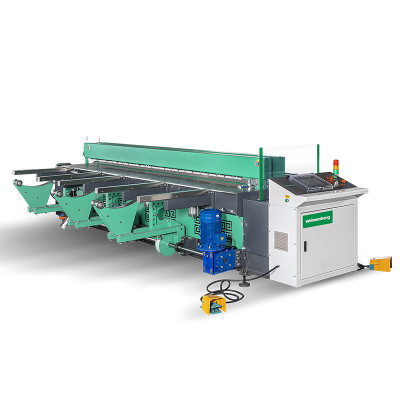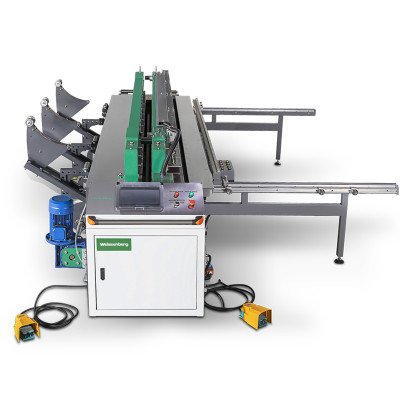
Water Treatment Equipment Fabrication: Plastic Welding Solutions for the Growing Water Industry
Quick Answer
Thermoplastic water-treatment equipment fabrication is the design and manufacture of plastic components — tanks, clarifiers, filtration housings, chemical dosing systems, launders, channels, and distribution boxes — that purify, store, and convey water in municipal, industrial, and commercial treatment plants. As water infrastructure investment grows worldwide, fabricators are welding more HDPE and PP sheet into ever-larger vessels, and thermoplastic water-treatment equipment fabrication has two hard requirements: leak-proof welds and consistent, repeatable quality: a pinhole in a tank seam can contaminate treated water, and a failed joint in a chemical dosing vessel can shut down an entire treatment line. That is why machine-controlled plastic sheet butt welding — stable heating-plate temperature, even pressure across the full panel width, and recorded parameters — has become a core production process for manufacturers of welded thermoplastic water-treatment tanks and process equipment, and why Weissenberg’s WeiBond welding line, WeiFlex bending machines, and complete equipment packages are used by fabricators serving this growing industry.
What Is Water Treatment Equipment Fabrication?
Definition: Water Treatment Equipment Fabrication
Water treatment equipment fabrication is the manufacturing of the vessels and components that remove contaminants from water: sedimentation and clarification tanks, filtration housings, chemical dosing and flocculation tanks, sludge-handling units, neutralization basins, and the launders, channels, and distribution boxes that route flow between them. Thermoplastic water-treatment equipment is built from plastic sheets — primarily HDPE and PP, with PVC-U and PVDF for specific duties — because these plastics resist corrosion, are economical to fabricate, and, where potable water contact applies, are available in grades approved for drinking-water contact. The core fabrication process is plastic sheet welding: panels are cut, butt-welded into tank walls and housings on heated-tool welding machines, bent into corners and transitions on line-bending machines, and assembled with nozzles, flanges, and internals. This guide covers why water treatment fabrication is growing, what the equipment is made of and how it is welded, the quality requirements that define this market, and how Weissenberg’s equipment line supports fabricators from first tank to scaled production.
It is written for water treatment equipment manufacturers, tank fabricators entering the water sector, and plant operators and EPC contractors evaluating in-house or outsourced fabrication. For the welding fundamentals these components rely on, see our plastic sheet butt welding process guide.
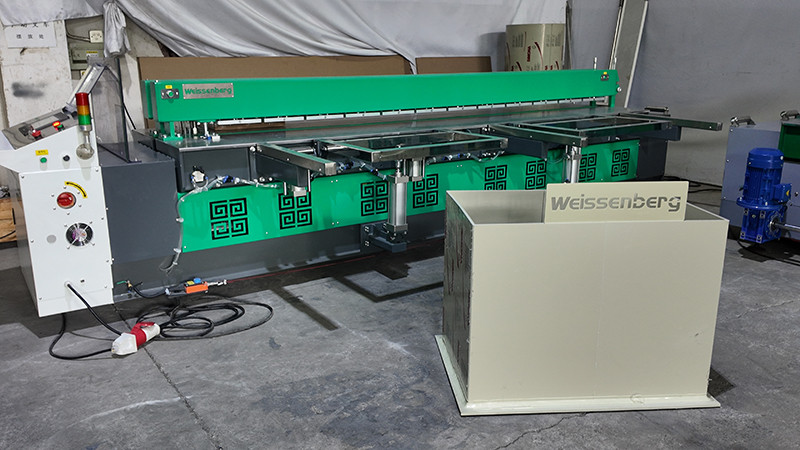
Why the Water Treatment Market Is Growing
Three long-term demand drivers are pulling more thermoplastic fabrication into the water sector:
- Infrastructure renewal and expansion. Aging municipal water and wastewater networks in developed markets need upgrading, while rapid urbanization in developing markets is building treatment capacity from scratch. Larger treatment plants mean larger tanks — and larger tanks mean more sheet welding.
- Industrial water reuse and compliance. Factories face tightening discharge regulations and water scarcity, pushing them toward on-site treatment, recycling loops, and zero-liquid-discharge configurations. Industrial treatment trains rely heavily on corrosion-resistant plastic tanks and dosing systems.
- Rising water quality expectations. Desalination pretreatment, advanced filtration, and potable water storage all add plastic vessels to the supply chain. HDPE is widely used for potable water storage and conveyance when an approved grade is specified, thanks to its corrosion resistance, long service life, and weldability.
The practical effect for fabricators: steady demand for chemically inert, leak-proof vessels in a widening range of sizes — from small dosing tanks to multi-cubic-metre clarifiers — which is precisely the range that welded thermoplastic sheet handles well. Market size figures vary by source and region, so this guide intentionally describes the direction of demand rather than quoting a specific growth percentage.
Plastic Components in Water Treatment Equipment
A typical water treatment plant contains a family of plastic components, each with its own fabrication profile:
| Component | Typical Material | How It Is Fabricated | Key Welding Requirement |
|---|---|---|---|
| Sedimentation & clarification tanks | HDPE, PP | Butt-welded wall panels, bent corners, welded bottom | Leak-proof seams; flat, level panels for consistent operation |
| Filtration housings & media vessels | HDPE, PP | Butt-welded cylinder or box bodies with welded internals and flanges | Leak integrity and dimensional accuracy |
| Chemical dosing & flocculation tanks | PP, HDPE | Butt welding plus extrusion-welded nozzles and baffles | Chemical resistance of welds; no voids or contamination |
| Neutralization & sludge basins | HDPE, PP | Large welded sheet structures, often lined or double-walled | Long, uniform panel seams; weld integrity across large areas |
| Launders, channels & distribution boxes | HDPE, PP, PVC-U | Sheet-formed troughs and channels; welded joints and transitions | Clean fusion; smooth internal surfaces for flow |
| Potable water storage | HDPE | Butt-welded panels with controlled welding parameters | Leak-tightness and material compliance for water contact |
Across all of these, the fabrication pattern is the same: accurate cutting, machine butt welding of panels, bending for corners and transitions, assembly with detail welding, and testing before shipment. For the full end-to-end workflow on welded plastic vessels, see our HDPE tank factory production workflow guide.
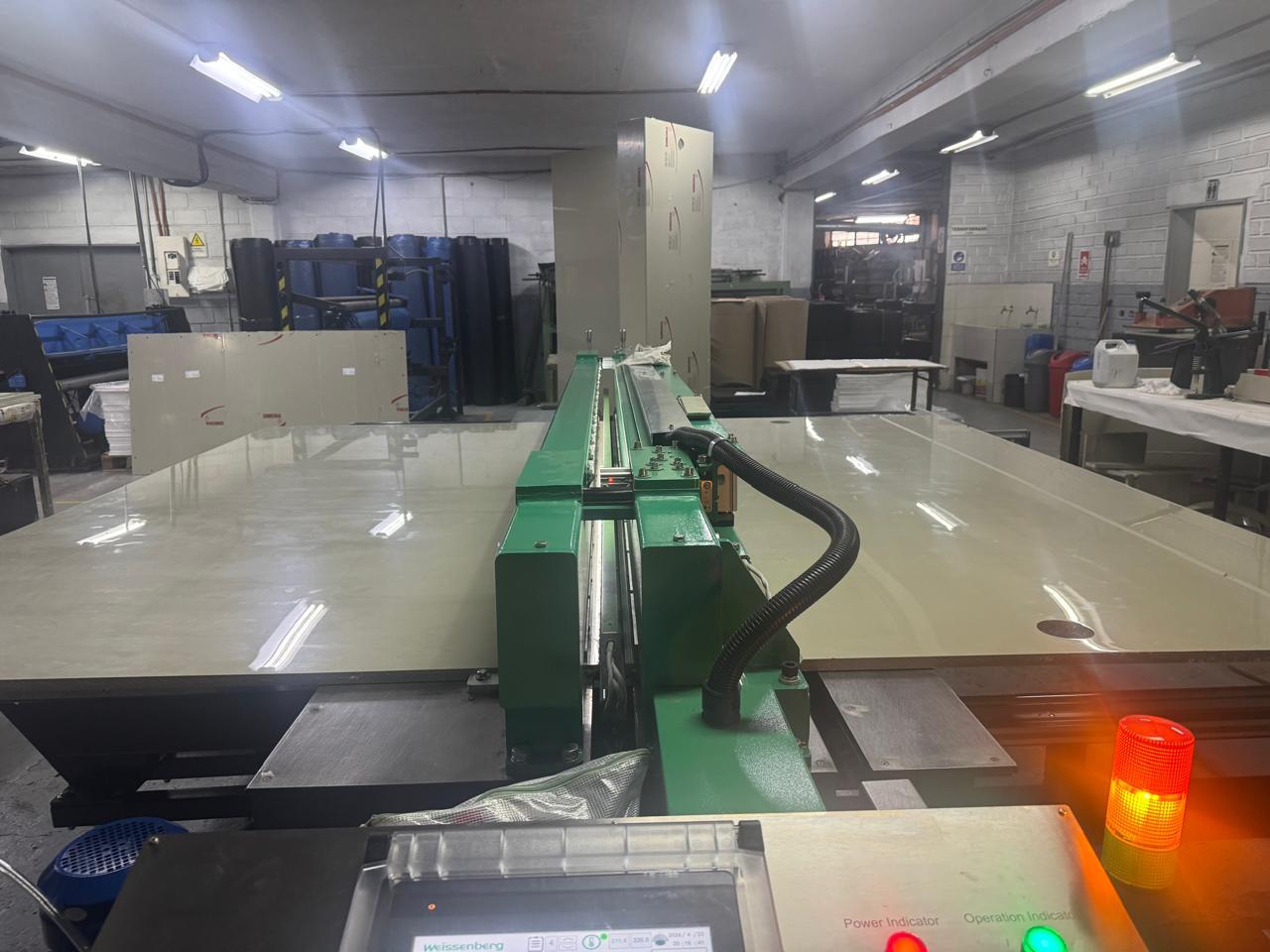
Welding Requirements: Leak-Proof Joints and Water-Contact Compliance
Two requirements deserve particular attention in water treatment welding: leak integrity and material/process compliance.
- Leak integrity is non-negotiable. A leaking seam in a clarifier or storage tank is not just a repair — it can contaminate treated water, bypass treatment stages, and undermine the plant’s discharge or potable compliance. Seams must be fully fused, free of voids, and visually verified against the applicable welding evaluation criteria (for heated-tool butt welding, the criteria of DVS 2202 Supplement 1; for extrusion welds, DVS 2202 Supplement 5).
- Water-contact compliance applies where required. Potable water service requires materials and weld materials approved for drinking-water contact under the applicable rules in the end market — for example, NSF/ANSI/CAN 61 (Drinking Water System Components) in North America, or the relevant local drinking-water approvals elsewhere. Fabricators should verify grade certificates and confirm weld additives (e.g., filler material for extrusion welding) against the applicable approval for their market — this guide describes the requirement, not a specific certification.
- Consistency protects both. Because water treatment components are produced in volume and in large sizes, quality cannot depend on a single operator’s skill on a single day. Machine-controlled welding with stable heating-plate temperature, controlled pressure stages, and recorded parameters is what makes leak-proof quality repeatable seam after seam.
For the standard-based quality checklist used across welded plastic vessels, see our DVS 2207 compliance guide and quality checklist.
Material Selection for Water Treatment Equipment
Welded water treatment components are typically built from one of four thermoplastics. Selection follows the water chemistry, the mechanical duty, and the applicable water-contact rules:
| Material | Typical Role in Water Treatment | Strengths | Notes |
|---|---|---|---|
| HDPE (PE 80 / PE 100) | Clarifiers, storage tanks, filter vessels — the workhorse of water treatment fabrication | Excellent chemical resistance, toughness, weldability, long service life; widely used for potable water storage where an approved grade is specified | Welded per the applicable DVS 2207 procedure for PE; high-quality joints over a wide thickness range |
| PP (PP-H / PP-B) | Chemical dosing tanks, flocculation units, media vessels in aggressive chemistry | Broad acid/alkali resistance, good weldability, lighter than steel alternatives | Welded per DVS 2207-11 (heated-tool butt welding of PP) |
| PVC-U | Launders, troughs, ducting, and low-temperature water-contact components where cost matters | Good chemical resistance, rigid, economical | Welded per DVS 2207-12 (heated-tool welding of PVC-U); more sensitive to overheating |
| PVDF | High-purity or high-temperature duties — e.g., aggressive chemical dosing, hot process water | Outstanding resistance to many chemicals and higher temperatures | Premium cost; welded per DVS 2207-15 (heated-tool butt welding of PVDF) |
Choose HDPE / PP When…
- The water chemistry is conventional (municipal, industrial, neutral-to-mild chemistry)
- You need the best balance of cost, weldability, toughness, and service life
- Potable water contact is involved (HDPE where an approved drinking-water grade is specified)
- You are building large tanks where sheet cost and welding speed matter
Choose PVC-U / PVDF When…
- Budget-constrained, low-temperature water contact suits PVC-U (launders, troughs)
- Strong oxidizers, hot process water, or high-purity duty exceeds HDPE/PP (PVDF)
- Stiffness and rigidity are the priority (PVC-U)
- Maximum chemical and thermal performance justifies the premium (PVDF)
Always confirm the exact grade against your water chemistry and the applicable water-contact regulation with the material supplier — no general table replaces a grade-by-grade check. For material and temperature guidance across HDPE, PP, and PVDF sheets, see our sheet welding material guide.
How Weissenberg’s Equipment Line Serves Water Treatment Fabricators
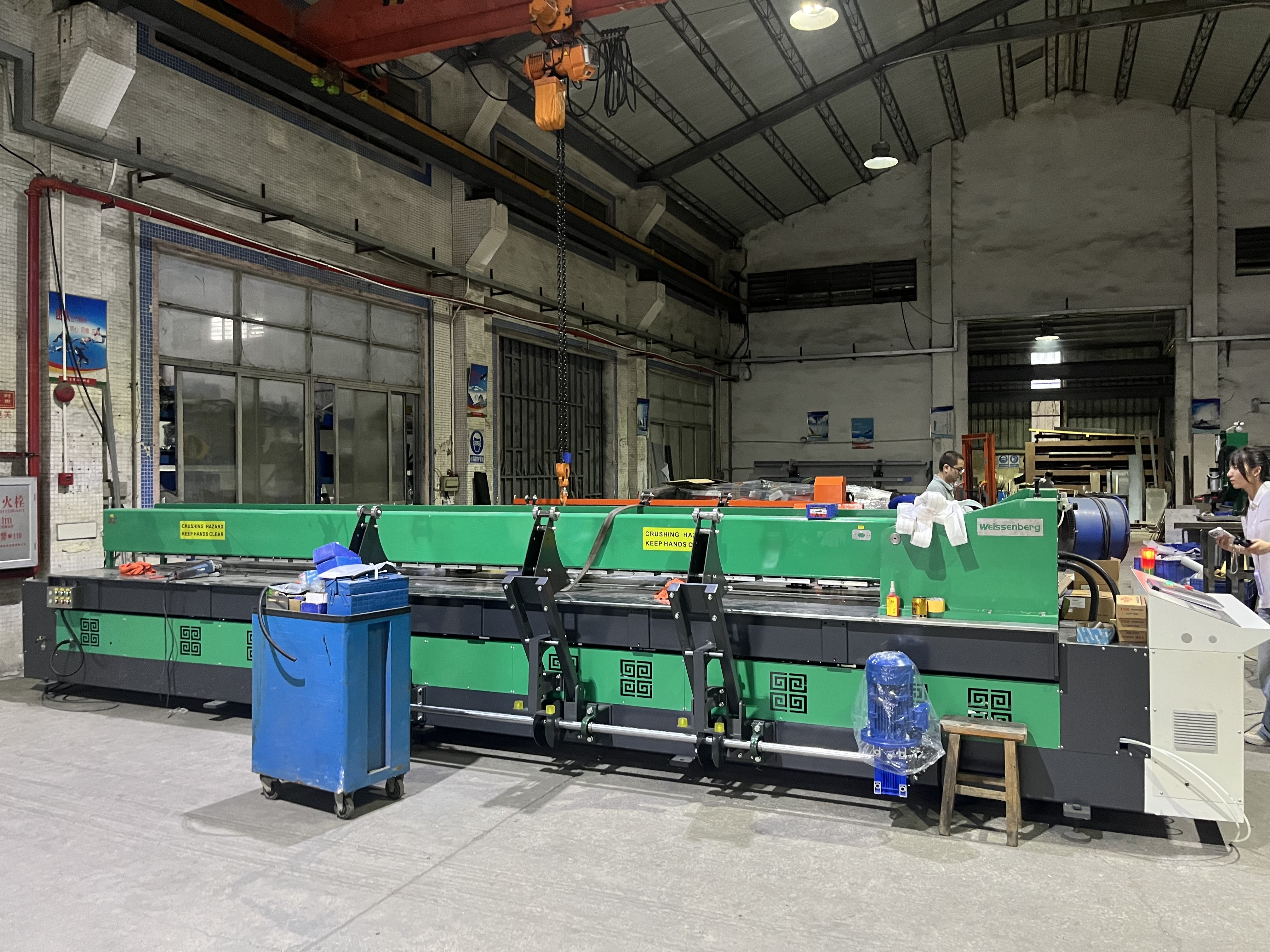
Weissenberg’s water treatment solutions combine welding, bending, and cutting equipment into a coherent production line. Four characteristics map directly to the market’s requirements:
- Even pressure for reliable sealing. Mechanical synchronous transmission and high-density locking clamps apply uniform pressure across the welding area, increasing joint strength and reducing the leakage risks typical of water treatment equipment.
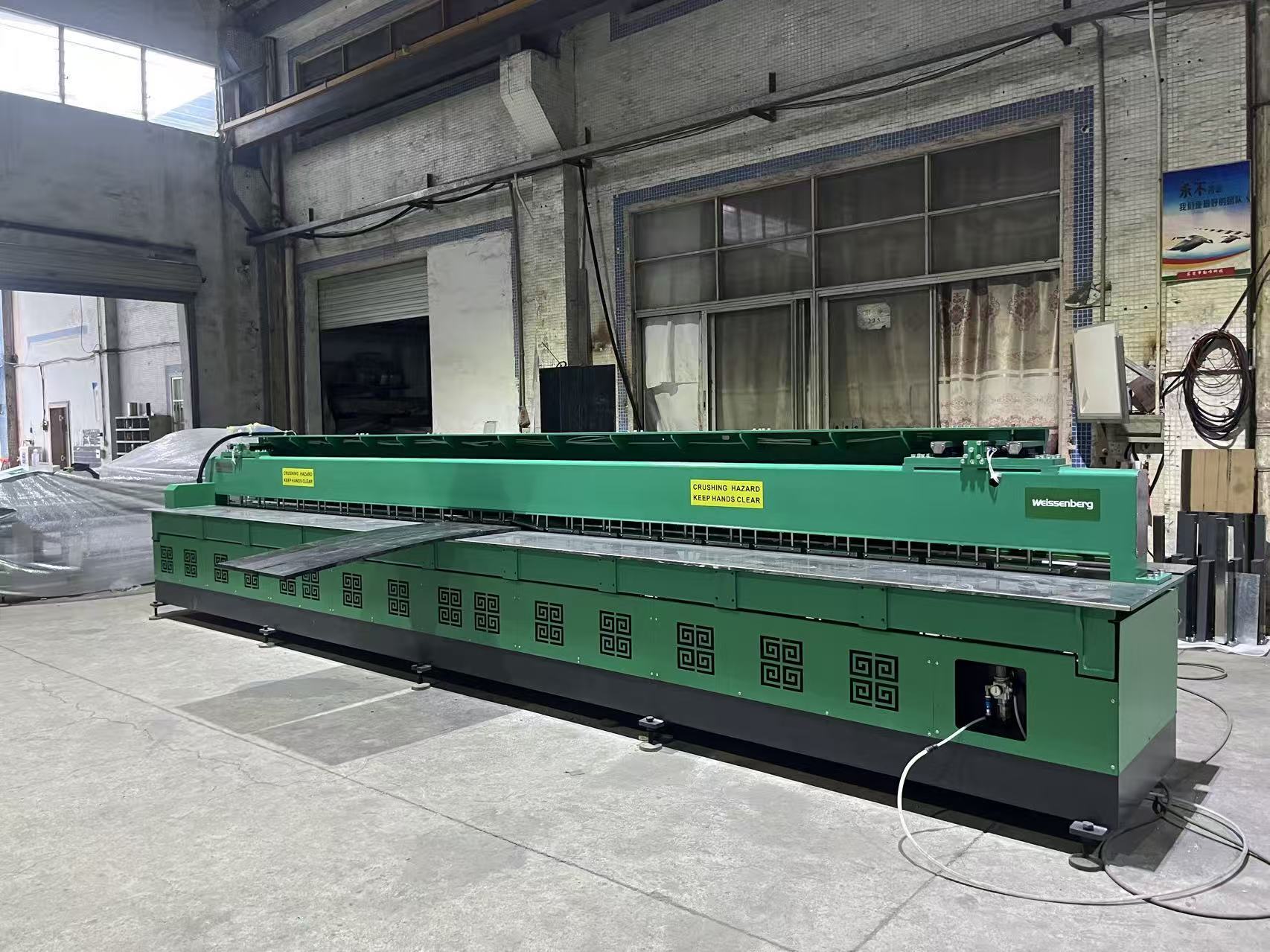
- Model-dependent thickness and width range. Welding capacity depends on the model rather than a single spec: the WeiBond series spans compact machines up to large-format welders with working widths up to 7,000 mm, and each model supports its own sheet thickness range. Match the machine to your largest panel size.
- Stable welding pressure and process monitoring. The welding system uses SMC pneumatic components and proportional pressure regulation to help maintain stable welding pressure, while the Siemens PLC controls the programmed welding parameters throughout the welding cycle, helping reduce operator-dependent variation and improve process consistency.
- DVS 2207-aligned control. Weissenberg’s machines are built to support heated-tool welding procedures aligned with the applicable DVS 2207 requirements, with heating-plate precision around ±5 °C and core components from brands such as Siemens (PLC), SMC (pneumatics), and OMRON and SCHNEIDER (electrical) for long-term stability. On the bending side, the latest WeiFlex machines use servo-driven electric cylinders for precise, repeatable angle control.
| Equipment | Role in Water Treatment Fabrication | Typical Application |
|---|---|---|
| WeiBond plastic sheet butt welders | Machine butt welding of panels into tank walls, bottoms, and housings | Clarifier panels, storage tank shells, filter vessel bodies |
| WeiFlex line bending machines | Bending corners, flanges, and transitions after panel welding | Tank corners, top rims, transition pieces, trough profiles |
| WeiForm Pro welding & bending combination systems | Both joining and forming at one workstation | Compact shops scaling into water treatment production |
| CNC router | Precision cutting of panels and openings before welding | Accurate wall panels, nozzle openings, internal baffle shapes |
| Weldy extrusion welders | Detail welding: nozzles, flanges, baffles, fillets, and repairs | Dosing tank fittings, internal reinforcements, field repairs |
See the Weissenberg Water Treatment Systems solutions page for the dedicated production setup, and the plastic sheet welding machine overview for the full WeiBond range.
Optimizing the Water Treatment Production Workflow
Water treatment fabrication scales with process discipline. Shops that deliver reliable tanks and housings consistently follow the same production pattern:
- Cut accurately, once. CNC routing of panels and openings removes hand-fitting variation — mis-cut panels create misaligned joints, stress raisers, and wasted welding time. For more on cutting and panel preparation, see our tank factory workflow guide.
- Standardize the weld schedule. Define heating-plate temperature, pressure stages, and cycle times per material and thickness once (per the applicable DVS 2207 procedure), then repeat — with recorded parameters for traceability.
- Weld panels in parallel with assembly. Butt-weld wall sections on the machine while other sections are being bent and fitted, so assemblies are ready when the vessel goes together.
- Bend, don’t always weld, the corners. Where the material, thickness, bend radius, and tank design allow it, line bending can reduce the number of welded corner seams in rectangular tank fabrication. Line bending on a WeiFlex machine produces clean, strong corners — see our line bending guide for the process.
- Detail-weld with the right tool. Nozzles, flanges, baffles, and reinforcement fillets are typically extrusion-welded — see our butt welding vs extrusion welding comparison.
- Test before it leaves the shop. Visual inspection of every seam against the applicable evaluation criteria, plus leak testing where the project or QA plan requires it (e.g., water-fill testing per DVS 2206-2).
For the full five-stage welding cycle and inspection points behind the machine step, see our butt welding process guide.
Customer Examples: How Fabricators Scale Up with Weissenberg Machines
Fabricators moving from manual or semi-automatic welding typically hit the same wall: inconsistent seams, high rework, and a ceiling on panel size. Across Weissenberg customer projects, moving to machine-controlled welding can raise the practical ceiling on panel size and improve production consistency — not simply because of welding speed, but because the welding cycle can be repeated with much greater consistency.
- Automation for consistency. Customers using WeiBond welders report that the machines are intuitive to operate — an Indonesian fabricator using a WeiBond 3000 described it as easy to operate — which shortens the learning curve when production volume grows and new staff join the shop.
- Customization for unusual duty. A French customer customized a WeiBond 1500M to weld 20 mm-thick sheets and tested it immediately after delivery with excellent feedback — an example of tailoring the machine to the specific panel thickness a project demands rather than forcing the job to fit a standard machine.
- From tank to complete line. Beyond the welder, Weissenberg’s one-stop line — cutting, welding, bending, and detail welding tools — can support a complete water treatment production workflow from a single supplier, which can simplify training, spares, and support. Weissenberg has served customers in more than 50 countries with equipment used in water treatment systems, plating tanks, scrubbers, and environmental equipment.
Note: the customer examples above describe real Weissenberg equipment installations and user feedback across fabrication sectors; they are cited as machine experience, not as water-treatment-specific performance data.
The numbers behind any individual scale-up depend on the shop’s starting point — sheet sizes, operator skill, order mix — so rather than quoting generic benchmarks, measure your own rework rate and weld rejection count before and after standardizing on machine-controlled welding. Those two metrics tell the real story.
Future Trends: Larger Tanks, Higher Automation
Four trends are reshaping how water treatment equipment will be fabricated over the coming years:
- Larger vessels. Bigger treatment plants and higher flow rates push tank dimensions up, which favors machine butt welding — the WeiBond series offers working widths up to 7,000 mm — over manual methods that cannot hold quality across very long seams.
- Higher automation. CNC/PLC-controlled machines with real-time parameter feedback reduce operator dependence and produce documented quality — increasingly a requirement from EPC contractors and plant operators who need traceability.
- More prefabrication. Fabricators are welding more components in the shop (where conditions are controlled) and assembling on site, which shifts quality work onto the shop floor and its machines.
- Broader material mixes. As water chemistry gets more demanding (reuse streams, industrial effluent), fabricators will run more PP, PVC-U, and PVDF alongside HDPE — machines need to handle multiple materials with switchable weld schedules, which the WeiBond line supports across PE, PP, PVC, and PVDF.
For fabricators, the strategic implication is simple: the equipment that handles today’s orders — consistent machine welds, wide panels, multiple materials — is the same equipment that handles tomorrow’s larger, more automated production. See our analysis of CNC vs manual welding automation for the investment reasoning.
FAQ
What plastic is used to make water treatment tanks?
HDPE is the workhorse material for water treatment tanks — clarifiers, storage tanks, and filter housings — because it combines chemical resistance, toughness, weldability, and long service life, and is widely used for potable water storage when an approved grade is specified. PP is widely used for chemical dosing and flocculation tanks where acid/alkali chemistry is involved. PVC-U appears in launders, troughs, and low-temperature water-contact components on a budget, and PVDF is reserved for high-purity or high-temperature duties where HDPE and PP cannot survive.
Why are leak-proof welds so important in water treatment equipment?
Because a leaking seam does more than lose water — it can contaminate treated water, bypass treatment stages, and undermine the plant’s compliance with discharge or potable water standards. In dosing and neutralization tanks, a leak also exposes personnel and structures to chemicals. Water treatment fabrication therefore treats leak integrity as a design requirement, verified by fully fused, void-free seams, visual inspection of every weld, and leak testing where the project or QA plan requires it.
Which welding method is best for water treatment tanks?
Heated-tool butt welding is the primary method for the long panel seams that form tank walls, bottoms, and housings — it produces strong, homogeneous joints with no filler and is machine-controlled for repeatability. Extrusion welding handles the detail joints: nozzles, flanges, baffles, fillets, and repairs. Line bending can be used for corners and transitions where the material and tank design permit it, reducing the number of welded seams. A complete production line uses all three, with CNC cutting upstream.
What makes a plastic weld safe for potable water contact?
Two things: the material grade and the welding process. The sheet and any filler material must be approved for drinking-water contact under the applicable regulation in your market — for example, NSF/ANSI/CAN 61 covers drinking water system components in North America; elsewhere, check the relevant local drinking-water approvals and verify the specific grade certificate. The welding process must produce clean, fully fused joints without contamination or degraded polymer, using controlled parameters. Confirm both with your material supplier and machine documentation rather than assuming a generic material label covers the specific application.
What machines do I need to start fabricating water treatment equipment?
A practical starting line is: a plastic sheet butt welder for panel seams (Weissenberg’s WeiBond series, sized to your maximum panel length), a line bending machine for corners and flanges (WeiFlex series), and detail welding tools — either extrusion welding equipment (Weldy) for nozzles and fittings or, for smaller jobs, heated-tool hand tools. A CNC router becomes worthwhile once you are cutting panels and openings in volume. For compact shops, Weissenberg’s WeiForm Pro combined welding and bending systems perform two operations at one workstation, and the Water Treatment Systems solutions page shows the full recommended setup.
Can Weissenberg machines handle all the materials used in water treatment?
Yes — the WeiBond plastic sheet butt welders are designed for HDPE, PP, PVC, and PVDF sheets, with switchable weld schedules per material and thickness (for example, PP per DVS 2207-11, PVC-U per DVS 2207-12, PVDF per DVS 2207-15). Thickness and width capacities are model-dependent: the WeiBond series includes machines with working widths up to 7,000 mm, and each model supports its own sheet thickness range. Weissenberg also offers customized machine configurations — such as adapting a machine for a specific sheet thickness or working width — so the equipment grows with your order mix.
Key Takeaways
- Water treatment fabrication is a growing market driven by infrastructure renewal, industrial water reuse, and rising water quality expectations — and for manufacturers of welded thermoplastic water-treatment tanks and process equipment, plastic sheet welding is a core fabrication process.
- Thermoplastic water-treatment equipment fabrication has two hard requirements: leak-proof welds and consistent, repeatable quality — both delivered by machine-controlled butt welding with stable temperature, even pressure, and recorded parameters.
- Material selection follows water chemistry and duty: HDPE for the workhorse roles and potable storage, PP for chemical dosing, PVC-U for budget low-temperature components, PVDF for high-purity or high-temperature service.
- Where potable water contact applies, verify grade certificates and weld materials against the applicable drinking-water approval for your market (e.g., NSF/ANSI/CAN 61 in North America) — compliance is confirmed, not assumed.
- Use the complete process chain: CNC cutting, machine butt welding, line bending for corners, and extrusion welding for detail joints — and, where the material and design allow, bent corners replace a seam with a continuous formed corner.
- Scale with process discipline: standardized weld schedules, parallel panel welding, and inspect-and-test-before-shipment, measuring your own rework rate before and after automation.
- Future demand runs toward larger tanks and higher automation — wide working widths and multi-material capability (PE, PP, PVC, PVDF) position a shop for that growth.
References and Further Reading
- Weissenberg — Water Treatment Systems solutions page (welding line for water treatment equipment: even-pressure sealing, thickness range, pneumatics, real-time monitoring)
- Weissenberg — Plastic sheet welding machine overview (WeiBond range)
- Weissenberg — WeiBond plastic sheet butt welder products
- Weissenberg — Inside an HDPE chemical tank factory: the complete production workflow
- Weissenberg — Plastic sheet butt welding process: setup, 5-stage welding cycle & inspection guide
- Weissenberg — How to bend plastic sheets: PP, HDPE & PVC line bending guide
- Weissenberg — Plastic sheet butt welder vs extrusion welder
- Weissenberg — DVS 2207 compliance guide and quality checklist
- Weissenberg — How to weld HDPE, PP & PVDF sheets: process, temperatures & material guide
- Weissenberg — CNC plastic sheet welder vs manual welder: is automation worth the investment?
- DVS 2207 series — Welding of thermoplastics – heated tool welding (DVS 2207-1 PE; 2207-11 PP; 2207-12 PVC-U; 2207-15 PVDF), DVS Media GmbH, Düsseldorf (procedure parameters for heated-tool butt welding)
- DVS 2202 Supplement 1 (02/2023) — Evaluation of joints between thermoplastics on piping parts and panels – heated plate welding, DVS Media GmbH, Düsseldorf
- DVS 2202 Supplement 5 (12/2016) — Assessment of defects in joints between thermoplastics on piping parts and panels – hot-gas extrusion welding (WE), DVS Media GmbH, Düsseldorf
- DVS 2206-2 (12/2016) — Non-destructive testing on pressureless tanks and apparatus made of thermoplastic – leak test, DVS Media GmbH, Düsseldorf
- NSF/ANSI/CAN 61 — Drinking Water System Components – Health Effects (North America; verify the applicable local drinking-water approvals for your market)
- World Bank Group (2025) — Scaling Water Reuse: A Tipping Point for Municipal and Industrial Use (municipal and industrial water reuse growth context) — openknowledge.worldbank.org/handle/10986/43326
- UN-Water (2024) — Progress on Wastewater Treatment – 2024 Update (wastewater treatment coverage gaps and treatment capacity context) — unwater.org/publications/progress-on-wastewater-treatment-2024-update
Planning water treatment equipment fabrication and want a second opinion on material, welding approach, or machine sizing? Talk to a Weissenberg engineer — the right setup depends on your tank sizes, water chemistry, production volume, and the compliance requirements of your market.