Quick Answer
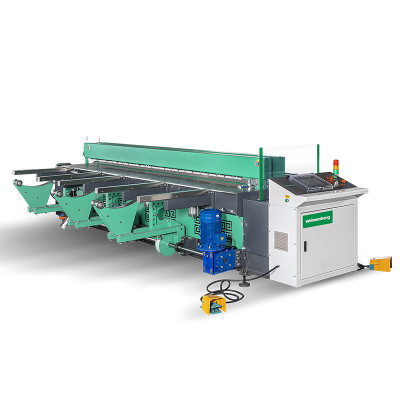
PP scrubber manufacturing is the fabrication of polypropylene (PP) scrubbers — the vertical towers that clean corrosive exhaust fumes from plating, etching, and chemical processes — from thermoplastic sheets joined with heated-tool butt welding and reinforced with extrusion welding. The weld joints are the heart of the scrubber: the vessel lives inside an aggressive atmosphere of acid and alkali fumes, and a defective seam can become a leak path, a stress raiser, and a spot where chemicals concentrate and attack. Corrosion-resistant weld joints come from three things working together: the right material grade for the fume chemistry, complete fusion with no voids or contamination, and consistent machine-controlled welding parameters (Weissenberg’s WeiBond butt welders hold the heating plate within about ±5 °C, and Weldy extrusion welders build the fillets that reinforce every seam). Inspect every seam visually; where specified and applicable, supplement this with electrical high-voltage testing and/or water-fill leak testing according to the project or QA plan — because a scrubber that leaks in service is not just a repair job, it is a containment failure.
What Is a PP Scrubber?
Definition: PP Scrubber
A PP scrubber is a chemical exhaust treatment vessel built from polypropylene (PP) sheets. Process exhaust gases — typically acid or alkali fumes from electroplating lines, etching and pickling baths, semiconductor fabs, and laboratory ventilation systems — enter the tower at the bottom and flow upward through packing media (for example, PP Pall rings or random packing) while scrubbing liquid is sprayed down from the top. The countercurrent contact transfers the contaminants from the gas stream into the liquid. The vessel body is a vertical cylinder or box fabricated from PP sheets, with nozzles, flanges, support rings, and a mist eliminator section welded into the shell. Because the inside of the vessel is continuously wetted with aggressive liquid and exposed to corrosive gas, the material and its welds are the scrubber’s two lines of defense.
This guide covers how scrubber manufacturers achieve weld joints that stay corrosion-resistant for years: the material and welding requirements of corrosive fume service, welding techniques for large-diameter bodies, quality assurance and weld testing, and how Weissenberg’s machine line supports consistent scrubber production. It is written for scrubber fabricators, chemical plant and plating shop owners specifying exhaust treatment, and anyone evaluating in-house fabrication. For the process fundamentals behind the joints, see our plastic sheet butt welding process guide.
Why Weld Joints Decide Scrubber Corrosion Resistance
In a scrubber, the sheet material provides the baseline chemical resistance — but the weld joints are where corrosion resistance is won or lost. Four mechanisms put the seam at the center of scrubber durability:
- Leak integrity. A scrubber shell holds scrubbing liquid and separates the process atmosphere from the surroundings. Any defect in a seam — a cold weld, a pinhole, an incomplete fusion — can become a leak path for corrosive liquid and fumes.
- Chemical concentration at defects. Voids, micro-gaps, and contamination at a joint face give chemicals a place to creep and concentrate. What starts as a small imperfection can grow into a corrosion site that attacks the weld zone preferentially.
- Stress concentration at the seam. Scrubbers are large vessels: hydrostatic load from the scrubbing liquid, thermal cycling, wind load on tall towers, and vibration from the fan all concentrate stress at the joints. Poorly designed or executed joints can become crack-initiation sites under combined mechanical, thermal, and vibration loads.
- Thermal degradation can reduce joint performance. Overheating during welding degrades the PP polymer, which can reduce the mechanical and chemical performance of the joint before it even enters service.
The practical consequence: consistent control of heating temperature, pressure stages, and cycle timing reduces weld defects, which is central to keeping a scrubber corrosion-resistant over its service life. Shops that treat welding as a secondary operation tend to spend their margin on rework, leak repairs, and containment incidents.
Material Selection: Which Thermoplastic for Scrubber Service?
PP is the default scrubber material because it combines broad chemical resistance, good weldability, and cost. But “PP” is not one material, and other thermoplastics appear in scrubber service where the fume chemistry demands them.
| Material |
Typical Use in Scrubbers |
Chemical Resistance Notes |
Welding Standard Reference |
| PP-H (polypropylene homopolymer) |
Standard scrubber body material for acid/alkali fume service (e.g., hydrochloric or sulfuric acid fumes; caustic scrubbers) — verify the specific grade against your actual fume chemistry |
Excellent resistance to most acids and alkalis; limited against strong oxidizing agents and some solvents at elevated temperature |
DVS 2207-11 (heated-tool butt welding of PP) |
| PP-B (polypropylene block copolymer) |
Scrubber components exposed to impact, low temperatures, or cyclic stress where improved toughness helps |
Broadly similar chemistry to PP-H with better low-temperature impact and stress-crack resistance; slightly lower stiffness and heat resistance |
DVS 2207-11 (heated-tool butt welding of PP) |
| PVC-U (unplasticized PVC) |
Fume ducting and smaller scrubbers in moderate-temperature, acid-heavy service where cost matters |
Good resistance to many mineral acids and alkalis; not for high-temperature or strongly oxidizing service |
DVS 2207-12 (heated-tool welding of PVC-U) |
| PVDF (polyvinylidene fluoride) |
Scrubber sections handling hot, strongly oxidizing fumes (e.g., wet chlorine, hot chromic acid) where PP cannot survive |
Outstanding resistance to many strong acids and oxidizers at elevated temperature; premium cost |
DVS 2207-15 (heated-tool butt welding of PVDF) |
Selection rules that hold in practice:
- Standard fume service → PP. Most plating and chemical exhaust streams are handled by PP-H; it is the workhorse of the industry.
- Impact and low-temperature exposure → PP-B. Where the tower sees knocks, cold climates, or cyclic loading, the copolymer’s toughness buys insurance.
- Hot oxidizing fumes → PVDF. When the fume exceeds PP’s chemical envelope, PVDF is the premium answer — at a premium price.
- Always verify with the material supplier. Exact chemical resistance depends on the specific grade, fume composition, concentration, and temperature. No table replaces a grade-by-grade compatibility check against your actual exhaust stream.
Choose PP When…
- The fume stream is conventional acid/alkali at moderate temperature
- You need the best balance of cost, weldability, and durability
- You want a proven, widely documented scrubber material
- Large-diameter bodies make material cost a significant factor
Choose PVDF (or PVC-U) When…
- The fume is strongly oxidizing or hot enough to exceed PP’s envelope (PVDF)
- Product purity or leak containment demands maximum material performance
- Budget and low temperature allow PVC-U in acid-heavy, moderate duty
- Long service life in aggressive chemistry justifies the premium (PVDF)
For the full material and temperature picture across PP, HDPE, and PVDF sheets, see our HDPE, PP & PVDF sheet welding material guide, and for the PP-specific heated-tool procedure, our PP panel welding procedure per DVS 2207-11.
Welding Techniques for Large-Diameter Scrubber Bodies
Scrubber towers are built with two complementary welding methods. Large-diameter bodies — towers that can reach several metres tall and over a metre in diameter — demand both:
| Method |
Where It Is Used on a Scrubber |
Strengths |
Limitations |
| Heated-tool butt welding |
Long straight panel seams that form the tower walls; sheet-to-sheet joints before assembly |
Strong, homogeneous joints with no filler; fast for long seams; machine-controlled with recorded parameters |
Requires flat, aligned panels and a capable machine; joints are straight-line |
| Extrusion welding |
Longitudinal seams of curved shells, ring stiffeners, nozzle-to-shell joints, fillets, brackets, and repairs |
Flexible for three-dimensional joints; adds material to build fillets and stiffeners; standard for on-site assembly and repair |
More operator-dependent; slower for long straight seams; filler rod quality and preheat matter |
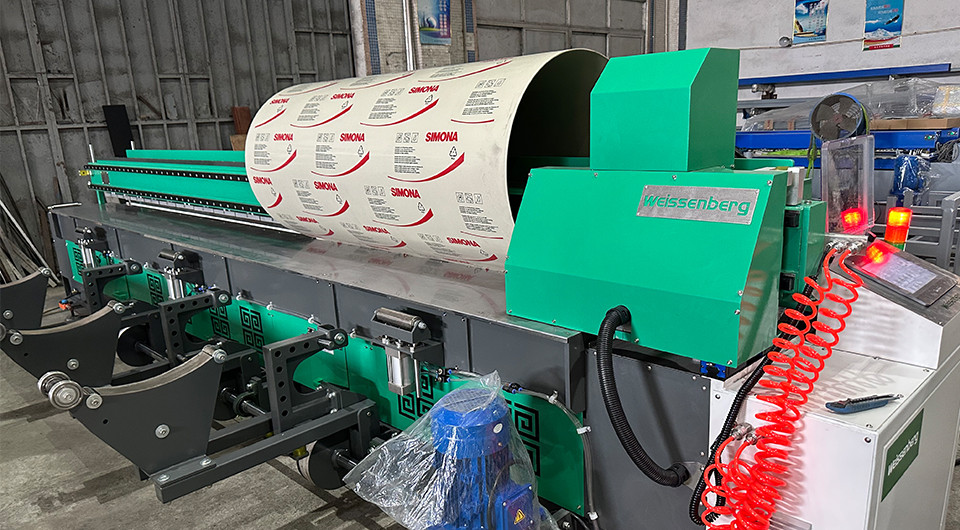
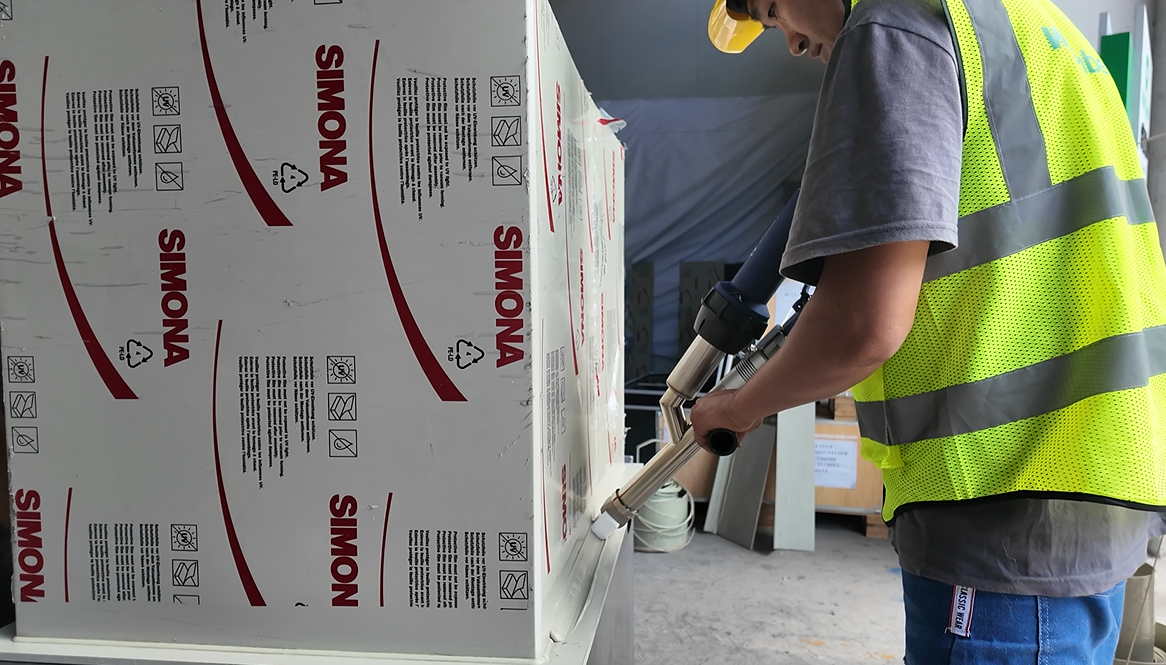
A typical large scrubber build sequence: cut PP sheets to size (a CNC router is commonly used for accurate panel and nozzle openings in repeat production), butt-weld the wall panels into full-height strips or curved shell sections on a machine, then assemble the tower — closing the longitudinal seams of the curved shell with extrusion welding, welding in nozzles and flanges with fillet welds, and adding external ring stiffeners to keep the large-diameter shell round under load. Weissenberg’s Weldy extrusion welders are explicitly positioned for reinforcing and repairing PP and HDPE scrubbers and tanks. Extrusion welding of PP is carried out to the procedure parameters of DVS 2207-4 (extrusion welding of pipes, piping parts, fittings and panels).
Cylindrical scrubber shells are formed by rolling or curving the sheet before assembly; line bending handles the straight bends — flanges, duct transitions, and edge returns. Weissenberg’s bending equipment handles PP sheet for chemical scrubber manufacturing, and the dual-function welding and bending system supports both joining and forming in one production line. See the Weissenberg PP Scrubbers solutions page for the full scrubber production setup.
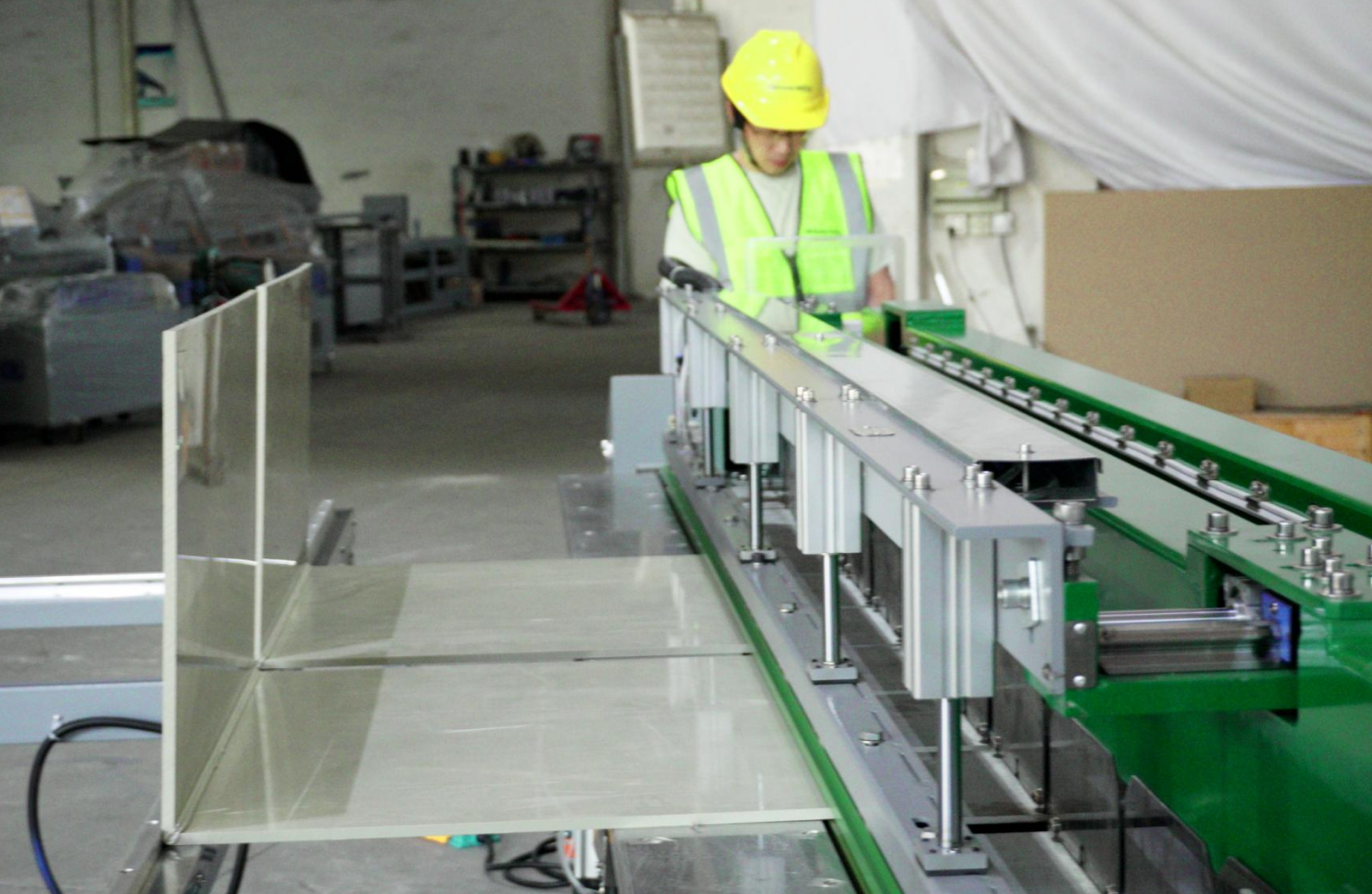
Quality Assurance: Inspecting and Testing Scrubber Welds
Scrubber weld quality is verified in layers — from process control during welding to tests on the finished vessel. The layered approach is what makes “corrosion-resistant weld joints” verifiable rather than assumed:
- Visual inspection of every seam. The first line of QA: check bead shape, dimensions, fusion, and surface defects on all welds — butt welds against the evaluation criteria of DVS 2202 Supplement 1 (heated-plate welding), extrusion welds against DVS 2202 Supplement 5 (extrusion welding).
- Weld qualification samples. For series production, weld test pieces under the same parameters and check them by macro-section (cross-section examination of fusion quality) and mechanical testing where the project or QA plan requires it.
- Spark testing. A high-voltage spark test along the seams is commonly used where a pinhole-free joint is critical — it detects through-thickness defects that visual inspection can miss (DVS 2206-4), but it does not replace leak testing. Use it where the project or QA plan calls for it.
- Water-fill / leak testing. Where specified, fill the assembled vessel (or the liquid-tight sections) with water and inspect every seam for leakage over a soak period (DVS 2206-2).
- Documented parameters. Recorded welding parameters (material, thickness, plate temperature, pressures, times) turn “trust us” into evidence — and chemical plant customers increasingly require it.
The same logic applies as in tank fabrication: a defect found in the shop costs a fraction of one found on the customer’s line. For the standard-based quality checklist in full, see our DVS 2207 compliance guide and quality checklist.
How Weissenberg Machines Produce Reliable, Corrosion-Resistant Welds
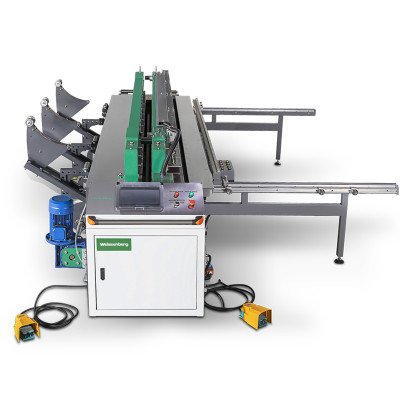
Weissenberg’s scrubber fabrication line is built on four control characteristics that map directly to weld quality:
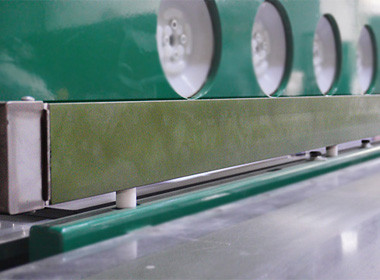
- Stable heating-plate temperature control. The heating plate holds about ±5 °C accuracy, which helps prevent both cold welds (incomplete fusion) and overheating (polymer degradation that can impair corrosion resistance).
- Real-time parameter feedback. A Siemens PLC with touchscreen automatically adjusts pressure, temperature, and time per weld, reducing operator-dependent variation — critical when every seam on a tall tower needs to meet the same quality.
- Synchronized mechanical design. A strong steel frame and synchronous drive apply even pressure across the full panel width, preventing partial-fusion seams and weak seam ends.
- A sturdy, level work platform. Stable, flat panel support keeps sheet edges aligned during welding — misalignment reduces the load-bearing section and creates stress raisers.
| Control Characteristic |
What It Prevents |
Why It Matters for Scrubbers |
| Stable heating-plate temperature control (±5 °C) |
Cold welds and thermal degradation |
Thermally degraded PP can suffer reduced chemical and mechanical performance; cold welds can create leak paths |
| Real-time parameter feedback (Siemens PLC) |
Operator-dependent variation |
Every seam on a large tower needs to be as consistent as possible, seam after seam |
| Synchronized mechanical design |
Uneven pressure, partial fusion |
Wide panels need even pressure across the whole width |
| Sturdy, level work platform |
Misalignment and steps at joints |
Alignment errors become stress raisers and chemical attack sites |
For a deeper comparison of what machine control buys a fabrication shop, see CNC plastic sheet welder vs manual welder.
Scaling Scrubber Production Efficiently
Scrubber fabrication is a production discipline, not just a welding job. Shops that scale successfully standardize every step before it reaches the welder:
- Cut accurately, once. CNC routing of PP sheets (including nozzle and flange openings) removes hand-fitting variation and speeds assembly — mis-cut panels consume welding time and create stress raisers at joints.
- Standardize the weld schedule. Define sheet thickness, plate temperature, heating time, and pressures per material and thickness once, then repeat — with recorded parameters for traceability.
- Line up welding with assembly. Butt-weld panels on the machine in parallel with shell assembly so curved sections are ready when the tower goes together.
- Use the right tool for the joint. Machine butt welding for long straight seams; extrusion welding for curved seams, nozzles, fillets, and repairs; rolling or curving for cylindrical shells; and line bending for flanges and transition pieces — the dual-function welding and bending system lets one production line handle both joining and bending.
- Inspect as you go. Check each seam before it is buried under the next assembly step; rework after assembly costs multiples of rework at the bench.
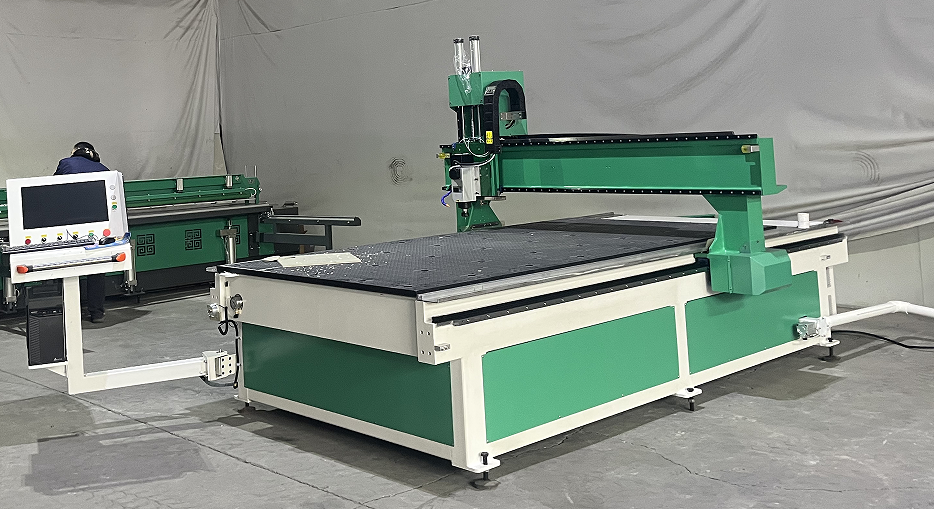
Scrubber production scales with consistency, not speed — the yield gains come from fewer leaks and less rework, which is where the real productivity improvement lives. The exact before/after figure depends on each shop’s starting point, so measure your own rework rate before and after standardizing rather than relying on generic benchmarks.
Field Experience: Lessons from Scrubber Builds
Across PP scrubber fabrication projects for chemical plants, plating shops, and exhaust treatment systems, the same lessons recur — worth writing down before they cost a tower:
Lessons from the Shop Floor
- Match the material to the actual fume, not the label on the drawing. “Corrosion-resistant” only means something against a specific chemical at a specific temperature and concentration — confirm PP-H, PP-B, PVC-U, or PVDF against the real exhaust stream.
- Joint preparation decides weld quality. Machine the joint faces fresh, keep them clean and dry, and weld promptly — contamination at the fusion face is invisible in the finished seam but shows up as a corrosion site years later.
- Reinforce the round shell. Large-diameter towers need ring stiffeners and sound fillet welds to hold their shape under load — a shell that goes oval concentrates stress at the seams.
- Test where the project or QA plan requires it. Spark testing and water-fill testing catch defects while the vessel is still accessible; tested scrubbers find their problems at the shop, not on the plant roof.
- Document the welds. Recorded parameters and inspection results are increasingly required by chemical plant customers and turn quality into evidence.
- No generic performance figure survives contact with real chemistry. Every scrubber duty is different — the recurring patterns above are consistent, but the numbers (temperature, concentration, service life) come from your material supplier’s compatibility data and your own testing.
Weissenberg has supported PP scrubber and exhaust-treatment fabrication for more than 19 years, serving customers in 50+ countries with machines used in scrubbers, spray towers, ventilation systems, plating tanks, and environmental equipment. For the dedicated scrubber solutions page, see Weissenberg PP Scrubbers; for related vessel fabrication, see our plating tank fabrication guide.
FAQ
What is a PP scrubber and why is polypropylene used for it?
A PP scrubber is an exhaust treatment vessel built from polypropylene sheets, used to remove corrosive contaminants from process fumes — typically from plating lines, etching baths, and chemical plants. Gas flows up through packing media while scrubbing liquid is sprayed down, transferring contaminants into the liquid. PP is the default material because it combines broad resistance to acids and alkalis, good weldability, low cost, and decades of proven service in fume handling. Where the fume is hot or strongly oxidizing, PVDF is used instead; PVC-U covers lower-temperature acid service on a budget.
Why do PP scrubber weld joints corrode or fail?
Weld joints fail through a combination of mechanisms: incomplete fusion (cold welds) leaves leak paths; voids and contamination give chemicals a place to concentrate and attack; misalignment creates stress raisers; and overheating during welding degrades the PP polymer, which can suffer reduced mechanical and chemical performance before entering service. All four trace back to process control — temperature, pressure, timing, and joint preparation. Machine-controlled butt welding reduces the process variability behind most of these faults.
Which welding method should I use for a large-diameter scrubber body?
Both, for different joints. Heated-tool butt welding produces the strong, homogeneous long panel seams of the tower walls — it is fast, machine-controlled, and leaves no filler material. Extrusion welding closes the longitudinal seams of curved shell sections, welds in nozzles and flanges, builds ring stiffeners and fillets, and is the standard tool for on-site assembly and repairs. Using extrusion welding alone for long straight seams is slower and more operator-dependent; using butt welding alone cannot handle the three-dimensional joints.
Can a PP scrubber handle any chemical fume?
No. PP has excellent resistance to most acids and alkalis, but it is limited against strong oxidizing agents and some solvents, especially at elevated temperature. The right material depends on the specific fume chemistry, concentration, and temperature — for example, hot wet chlorine or hot chromic acid service typically requires PVDF rather than PP. Always confirm the material grade against your actual exhaust stream with the material supplier’s compatibility data; no general table replaces a grade-by-grade check.
How do you test PP scrubber weld joints for corrosion resistance and leaks?
Quality is verified in layers. Every seam gets visual inspection — butt welds against the evaluation criteria of DVS 2202 Supplement 1, extrusion welds against DVS 2202 Supplement 5. Weld qualification samples can be checked by macro-section and mechanical testing. Where the project or QA plan requires it, spark testing (DVS 2206-4) detects through-thickness defects along the seams — it complements, but does not replace, leak testing — and water-fill (leak) testing (DVS 2206-2) checks the assembled vessel for leakage over a soak period. Recorded welding parameters accompany the tests so the quality is provable, not assumed.
What machines do you need to manufacture PP scrubbers?
A typical modern scrubber production line may include four key process stations: CNC cutting for accurate panels and openings, heated-tool butt welding for long wall seams (Weissenberg’s WeiBond series, holding the heating plate within about ±5 °C), extrusion welding for curved seams, nozzles, fillets, and repairs (Weldy extrusion welders), and line bending for flanges, transitions, and straight bends — cylindrical shells are formed by rolling or curving, not by bending. Weissenberg’s dual-function welding and bending system combines two of these operations in one production line, which suits smaller shops scaling into scrubber fabrication.
Key Takeaways
- Scrubber corrosion resistance comes from two places: the material grade sets the chemical envelope for the fume, and the weld joints determine whether that envelope survives — complete fusion, no voids or contamination, no overheating.
- Material choice is fume-driven: PP-H for standard acid/alkali service, PP-B for impact and low-temperature exposure, PVDF for hot or strongly oxidizing fumes, PVC-U for low-temperature acid service on a budget.
- Use both welding methods: machine butt welding for long wall seams, extrusion welding for curved shell seams, nozzles, stiffeners, fillets, and repairs.
- Precision temperature and pressure control (heating plate within about ±5 °C, Siemens PLC-controlled cycle, even pressure across the panel) is what makes welds consistent and documentable.
- Test in layers: visual inspection of every seam per the applicable DVS 2202 supplement (Supplement 1 for butt welds, Supplement 5 for extrusion welds), qualification samples, and — where the project or QA plan requires it — spark testing (DVS 2206-4) and water-fill testing (DVS 2206-2) before the tower leaves the shop.
- Scale production by standardizing the process — accurate CNC cutting, a fixed weld schedule, parallel panel welding, and inspect-as-you-go discipline — not by welding faster.
- Verify material compatibility against your actual exhaust chemistry with the supplier — no generic table replaces a grade-by-grade check for your specific fumes.
References and Further Reading
- Weissenberg — PP Scrubbers solutions page (scrubber production line: cutting, welding, bending, dual-function system)
- Weissenberg — Extrusion welding solutions (Weldy)
- Weissenberg — WeiBond plastic sheet butt welder range
- Weissenberg — Plastic sheet butt welding process: setup, 5-stage welding cycle & inspection guide
- Weissenberg — Plating tank fabrication: why precision plastic welding matters for electroplating quality
- Weissenberg — DVS 2207 compliance guide and quality checklist
- Weissenberg — PP panel heated-tool butt welding procedure per DVS 2207-11
- Weissenberg — How to weld HDPE, PP & PVDF sheets: process, temperatures & material guide
- DVS 2207-11 — Welding of thermoplastics – heated tool welding of panels, pipes and pipe components, PP, DVS Media GmbH, Düsseldorf (procedure parameters for PP butt welding)
- DVS 2202 Supplement 1 (02/2023) — Evaluation of joints between thermoplastics on piping parts and panels – heated plate welding, DVS Media GmbH, Düsseldorf
- DVS 2202 Supplement 5 (12/2016) — Assessment of defects in joints between thermoplastics on piping parts and panels – hot-gas extrusion welding (WE), DVS Media GmbH, Düsseldorf
- DVS 2207-4 (12/2019) — Welding thermoplastic materials – extrusion welding of pipes, piping parts, fittings and panels – procedures, requirements, DVS Media GmbH, Düsseldorf
- DVS 2206-2 (12/2016) — Non-destructive testing on pressureless tanks and apparatus made of thermoplastic – leak test, DVS Media GmbH, Düsseldorf
- DVS 2206-4 (09/2011) — Non-destructive tests on tanks, apparatus and piping made of thermoplastics – testing with electrical high voltage, DVS Media GmbH, Düsseldorf
Planning a PP scrubber build and want a second opinion on material, welding approach, or machine selection? Talk to a Weissenberg engineer — the right answer depends on your fume chemistry, temperature, tower size, and production volume.