Quick Answer
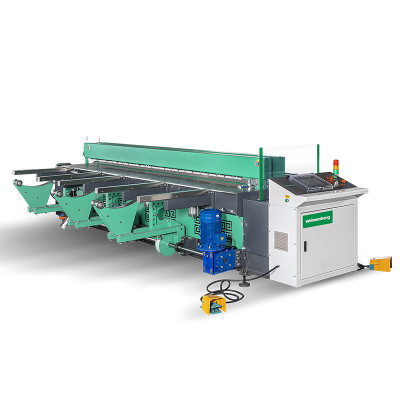
Plating tank fabrication is the process of building electroplating and surface-treatment tanks from thermoplastic sheets — typically PP, PVC-U, or PVDF — joined with heated-tool butt welding and reinforced with extrusion welding. The welds are the tank: plating baths are hot, chemically aggressive, and under constant hydrostatic load, so a pinhole at a joint becomes a leaking line, a corroding spot, and a contaminated bath. Precision welding matters because it determines the two properties a plating tank must have — chemical resistance and leak-proof joints — chemical compatibility is set by the material grade, and the weld determines joint integrity. That is why tank builders use machines with tight temperature and pressure control (Weissenberg’s WeiBond butt welders hold the heating plate within about ±5 °C) rather than relying on hand welding alone.
What Is Plating Tank Fabrication?
Definition: Plating Tank Fabrication
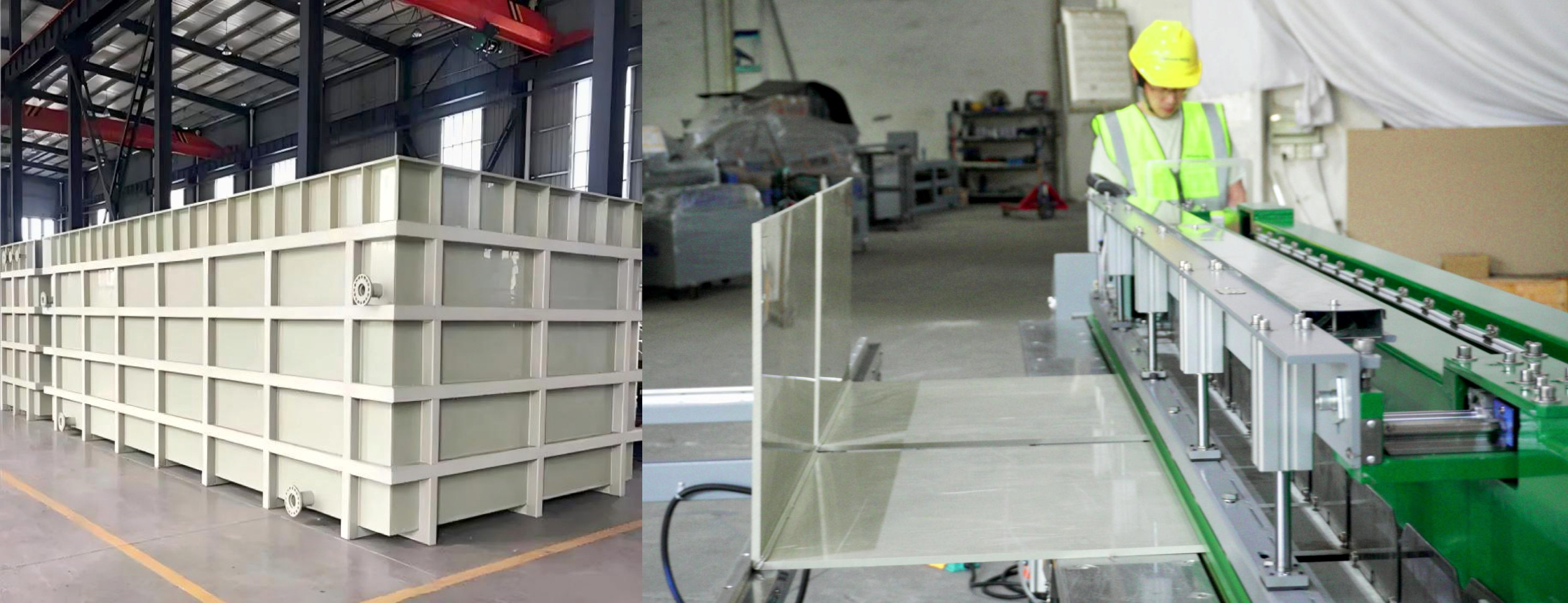
Plating tank fabrication is the manufacture of tanks used to hold electroplating and surface-treatment baths — chromium, nickel, zinc, acid, and alkali solutions, often heated to working temperature. The tank body is built from thermoplastic sheets cut to size and joined along the edges, typically by heated-tool butt welding for long panel seams and extrusion welding for corners, T-joints, and reinforcements. The finished tank must contain a corrosive, often hot liquid for years without leaking, and the weld seams are the most failure-prone part of the construction.
This guide explains why welding precision is the deciding factor in plating tank quality: how the welds carry the load, which material to choose, what the weld requirements actually are, and how Weissenberg’s approach to temperature and pressure control supports durable tank construction. It is written for plating shop owners, tank fabricators, and anyone specifying custom electroplating equipment. For a look at why more plastic fabrication companies are expanding into this market, see our electroplating tank manufacturing market guide.
Why the Welds Decide Plating Tank Performance
In a plating tank, the plastic sheets are the walls — but the tank stands or falls on its seams. Three reasons put the weld at the center of tank performance:
- Leak integrity. A tank holds liquid by static head pressure. Any defect in a seam — a cold weld, a pinhole, an incomplete fusion — is a leak path that no coating or liner can repair once the bath is in service.
- Weld defects can create local weak points under chemical exposure. Poor fusion, voids, contamination, or local stress concentrations can make the joint more vulnerable under chemical and thermal exposure.
- The bath temperature adds the stress. Plating baths are commonly operated heated. Thermal expansion, cyclic heating and cooling, and residual weld stress combine at the seams — the weld zone is where fatigue and cracking start.
The practical consequence: consistent control of plate temperature, pressure stages, and cycle timing reduces weld-related defects and improves the likelihood of passing leak testing without rework. Shops that treat welding as a secondary operation spend their margin on rework, leak repairs, and warranty callbacks.
Material Selection: PP, PVC-U, or PVDF?
Plating tanks are commonly fabricated from PP, PVC-U, or PVDF, depending on bath chemistry and operating temperature. Budget also plays a role, but welding convenience does not — all three weld well with the right parameters.
| Material |
Typical Use in Plating Tanks |
Indicative Service Temperature |
Chemical Resistance Notes |
Welding Standard Reference |
| PP (polypropylene) |
Most common tank body material: chrome, nickel, zinc, and many acid/alkali baths at moderate temperatures |
Good up to about 80–90 °C (grade-dependent) |
Excellent resistance to most acids and alkalis; limited against strong oxidizing agents at elevated temperature |
DVS 2207-11 (heated-tool butt welding of PP) |
| PVC-U (unplasticized PVC) |
Acid baths and rinse lines where temperature stays moderate; often the economical choice |
Typically limited to about 60 °C continuous service |
Good resistance to many mineral acids and alkalis; not suitable for high-temperature or strongly oxidizing service |
DVS 2207-12 (heated-tool welding of PVC-U) |
| PVDF (polyvinylidene fluoride) |
High-temperature and aggressive baths, semiconductor and specialty plating where purity and temperature push PP beyond its limits |
Continuous service well above PP’s range, grade-dependent |
Outstanding resistance to many strong acids and oxidizers at elevated temperature |
DVS 2207-15 (heated-tool butt welding of PVDF) |
A few selection rules that hold in practice:
- Standard plating service → PP. It is the workhorse because it combines broad chemical resistance, weldability, and cost.
- Hot, strong-acid service → PVDF. When the bath exceeds PP’s temperature or chemical envelope, PVDF is the premium answer — at a premium price.
- Budget acid lines → PVC-U. Where temperature stays low, PVC-U is the economical choice, but confirm the bath chemistry against the material grade.
- Always verify with the material supplier. Exact temperature limits and chemical resistance depend on the specific grade, the bath composition, and exposure time. No table replaces a grade-by-grade compatibility check.
Choose PP When…
- The bath is a standard plating or anodizing electrolyte
- Operating temperature stays in PP’s working range
- You need the best balance of cost, weldability, and durability
- You want a proven, widely documented tank material
Choose PVDF When…
- The bath runs hot enough to exceed PP’s envelope
- The chemistry is strongly oxidizing or aggressive at temperature
- Product purity demands minimum leachables (e.g., semiconductor lines)
- Long service life justifies the higher material cost
For the PVDF welding process in detail — parameters, joint preparation, and leak-proof weld practice — see our PVDF sheet butt welding guide.
Critical Weld Requirements: Chemical Resistance and Leak-Proof Joints
Two requirements dominate plating tank welding specification, and every quality check traces back to them.
| Requirement |
What It Means for the Tank |
How the Weld Delivers It |
How It Is Checked |
| Chemical resistance |
The seam must resist the bath as well as the parent sheet; no micro-gaps where chemicals can creep or concentrate |
Complete fusion across the joint faces with no voids, contamination, or entrapped air; sound double bead; no overheating that degrades the polymer |
Visual inspection per DVS 2202 Supplement 1; macro-sections on qualification samples; material-compatible process parameters |
| Leak-proof joints |
No leak path under hydrostatic load and thermal cycling for the tank’s service life |
Uniform, fully fused seam; adequate weld bead dimension; correct alignment (no steps that reduce load-bearing section) |
Hydrostatic/water-fill testing where the project or QA plan requires it; visual inspection of every seam; documented welding parameters |
Chemical compatibility is determined by the selected material grade and service conditions, while welding quality determines whether that performance is maintained across the seam and whether the joint remains leak-tight. A heating plate held within about ±5 °C of the material’s window, correct pressure per material (for example, about 0.10 N/mm² joining pressure for PP), and machine-controlled changeover produce the uniform fusion that leak-tightness depends on and that helps preserve the expected chemical performance at the seam.
Welding Methods Used in Plating Tank Fabrication
Plating tanks are built with two complementary welding methods. Many fabricated plating tanks use both methods for different joint geometries:
| Method |
Where It Is Used on a Plating Tank |
Strengths |
Limitations |
| Heated-tool butt welding |
Long straight panel seams that form the tank walls; sheet-to-sheet joints |
Strong, homogeneous joints with no filler; fast for long seams; ideal for machine automation with recorded parameters |
Requires flat, aligned panels and a capable machine; joints are straight-line |
| Extrusion welding |
Corners, T-joints, bottom-to-wall joints, reinforcements, weld beads, repairs |
Flexible for three-dimensional joints; adds material to build fillets and stiffeners; good for on-site repair |
Depends more on operator skill; slower for long straight seams; filler rod quality matters |
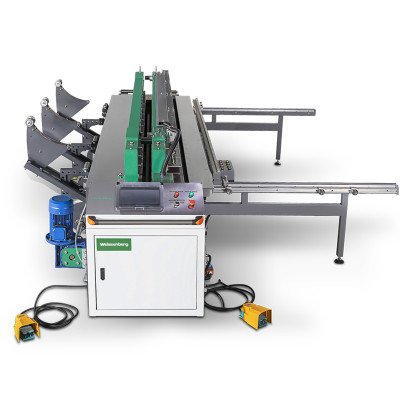
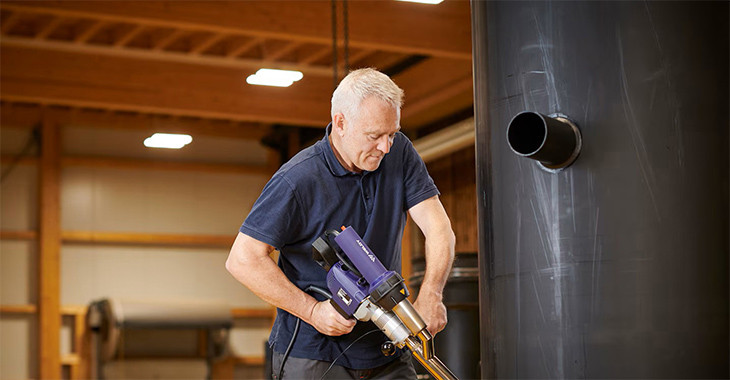
A typical tank build sequence: cut sheets to size (see Weissenberg’s sheet welder and cutting range), butt-weld the wall panels into full tank walls on a machine (our plastic sheet butt welding process guide covers setup, the five-stage welding cycle, and inspection), then assemble the box — bottom and corners closed with extrusion welding and reinforcing fillets. Weissenberg’s Weldy extrusion welders are explicitly positioned for reinforcing and repairing HDPE and PP electroplating tanks.
How Precision Temperature and Pressure Control Protects Tank Durability
Weissenberg’s plating tank solution is built on four control characteristics that map directly to weld quality:
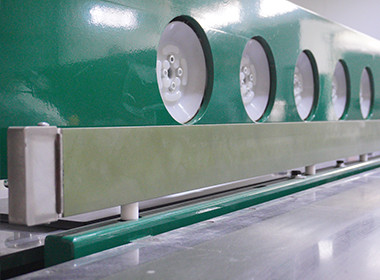
- Stable pressure distribution. A strong steel frame and synchronous drive apply even pressure through a regulating valve and high-density clamps, so the full panel width sees the same pressure — preventing leaks and poor sealing at the seam ends.
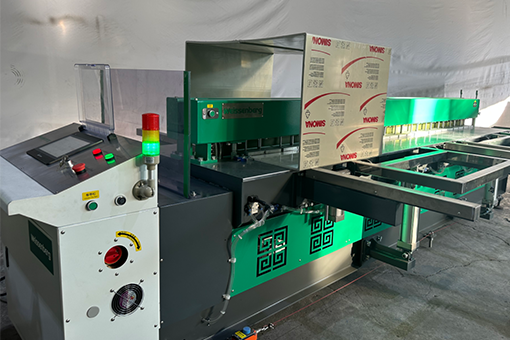
- Intelligent parameter control. A Siemens PLC with touchscreen automatically adjusts pressure, temperature, and time per weld — reducing operator-dependent variation and suiting complex multi-panel tank builds.
- Precise temperature control. The heating plate holds about ±5 °C accuracy, ensuring uniform heat, reducing residual stress, and improving weld quality and corrosion resistance.
- Broad material compatibility. The machines handle PP, PE, PVC, PVDF, and other thermoplastics over a model-dependent sheet thickness range (extendable for special needs), so one machine line covers the full tank material range.
These map to the failure modes discussed earlier: even pressure reduces the risk of partial-fusion seams; controlled temperature prevents both cold welds and overheating degradation; recorded parameters make quality documentable for customers who audit tank fabrication. For a full comparison of what automated control buys a fabrication shop, see CNC plastic sheet welder vs manual welder.
Field Experience: What Tank Builders Learn
Across plating tank fabrication projects, the same lessons recur — and they are worth writing down before they cost a tank:
Lessons from the Shop Floor
- Hydrotest where the project or QA plan requires it. Water-fill testing catches seam defects while the tank is still accessible; tanks that are tested find leaks at the shop, not at the customer’s line.
- Joint preparation decides weld quality. Machine the joint faces fresh, keep them clean, and weld promptly — contamination at the fusion face is invisible in the finished seam but shows up as a chemical attack site years later.
- Bath temperature changes the risk profile. A tank fine for a cold rinse can fail at the seams in a heated bath; specify the weld process for the actual operating temperature.
- Reinforce corners and bottom seams. Extrusion-welded fillets at internal corners and along bottom-to-wall joints distribute stress and add a second line of defense against leaks.
- Document the welds. Recorded parameters (material, thickness, plate temperature, pressures, times) turn "trust us" into evidence — and many plating customers now ask for it.
- Yield gains come from consistency, not speed. Shops that move from hand-welding to machine-controlled butt welding report fewer leaks and less rework, which is where the real productivity improvement lives — the exact figure depends on the shop’s starting point, so measure your own before/after rather than relying on benchmarks.
The consistent lesson from tank builds: weld quality is won or lost in the process — temperature, pressure, timing, joint prep — which is why process control is the first thing to check when a tank leaks or fails.
Custom Welded Tanks vs Off-the-Shelf Solutions
Platers face a genuine build-or-buy decision. Both routes work; they fit different situations.
| Dimension |
Custom Welded Tank (Fabricated to Spec) |
Off-the-Shelf / Standard Tank |
| Fit to space and line layout |
Built to exact dimensions, cut-outs, and interfaces |
Limited to standard sizes; often needs adaptation |
| Bath chemistry fit |
Grade matched to bath chemistry and temperature |
Generic material; verify against your chemistry |
| Lead time |
Longer — fabrication, welding, testing |
Short — buy and install |
| Upfront cost |
Higher engineering and fabrication cost |
Lower per-tank price |
| Total cost of ownership |
Potentially lower if fit and material extend service life |
Higher if the standard tank is over-specified or fails early |
| Quality control |
You specify welding process, testing, and documentation |
Depends on the supplier’s process; less visible |
Build Custom When…
- Line space dictates non-standard dimensions
- The bath chemistry or temperature demands a specific material grade
- You need documented weld quality for audits or warranty
- You have or will invest in in-house fabrication capability
Buy Standard When…
- A standard size fits your line with minor adaptation
- You need the tank quickly and the bath is conventional
- The tank is a simple, low-risk service (rinses, storage)
In short: build when tanks are many, large, or chemically demanding; buy when needs are simple and standard. Either way, demand the weld quality criteria in this guide.
How to Choose a Plating Tank Welding Partner
If you outsource fabrication, or if you are buying the machine to fabricate in-house, the same checklist applies to the welding capability behind your tanks:
- Ask about weld process control. Can the partner document plate temperature, pressure, and timing for each seam? Machine-controlled (PLC/CNC) butt welding is the strongest signal of consistent quality.
- Check material coverage. PP, PVC-U, and PVDF need different parameters; confirm the welder and welders are qualified for your material.
- Look for standard-conform practice. DVS 2207 procedure parts define the welding parameters for each material — see our DVS 2207 compliance guide and quality checklist for what to look for.
- Require testing. Where the project or QA plan calls for it, hydrostatic testing plus inspection records is what makes quality verifiable for plating service.
- Verify track record in plating. Ask for tanks built for plating or surface-treatment lines specifically — the application has its own failure modes.
Weissenberg has supported plating tank fabrication for more than 19 years, serving customers in 50+ countries with machines used in plating tanks, spray towers, ventilation systems, and environmental equipment. For the dedicated plating tank solution page, see Weissenberg Plating Tanks solutions; for the machine range, see the WeiBond plastic sheet butt welder range.
FAQ
What is the best plastic material for an electroplating tank?
PP (polypropylene) is the most common choice for plating tanks because it combines broad chemical resistance, good temperature tolerance, weldability, and cost. PVDF is chosen when the bath is hotter or more aggressive than PP can handle, especially in high-purity applications. PVC-U suits lower-temperature acid lines on a budget. The right answer always depends on your bath chemistry, operating temperature, and material grade — confirm with your material supplier.
Why do plating tank welds leak?
Leaks most often trace back to process faults in the weld: incomplete fusion (cold weld) from too-low plate temperature, too-short heating time, or an over-long changeover; misalignment that reduces the load-bearing section; contamination at the joint face; or overheating that degrades the polymer. Machine-controlled butt welding reduces the process variability behind most of these faults, because temperature, pressure, and timing are held automatically and consistently.
Can a plastic welding machine weld all three tank materials (PP, PVC-U, PVDF)?
Yes — the same machine can weld PP, PE, PVC, and PVDF, because heated-tool butt welding is the same process; only the parameters change per material. Weissenberg’s WeiBond series covers a model-dependent sheet thickness range (extendable for special needs) with PLC-controlled parameters for each material. What changes between materials is the heating plate temperature, pressures, and timings — per the applicable DVS 2207 part (2207-11 for PP, 2207-12 for PVC-U, 2207-15 for PVDF).
Is extrusion welding enough for plating tank fabrication?
No — in many fabricated plating tanks, the two methods serve different purposes rather than replacing each other. Heated-tool butt welding produces the strong, homogeneous long seams of the tank walls; extrusion welding closes corners and T-joints, adds reinforcing fillets along bottom seams, and is the standard tool for repairs. Using extrusion welding alone for long straight seams is slower and more operator-dependent, which is why machine butt welding is standard for tank walls.
How do you test a fabricated plating tank for leaks?
Where the project or QA plan requires leak testing, the standard method is hydrostatic testing: fill the tank with water and inspect every seam for leakage, typically with a soak period. Before that, every seam gets a visual inspection per DVS 2202 Supplement 1, and qualification samples can be checked by macro-section and mechanical testing. Documented welding parameters accompany the tests so the quality is provable, not assumed.
Custom welded tanks cost more than standard tanks — are they worth it?
Custom fabrication costs more upfront, but it pays when you need non-standard dimensions, a specific material grade for your bath chemistry, or documented weld quality. The total-cost comparison is about service life and fit: a correctly specified custom tank lasts longer and fits the line without adaptation, while a standard tank can fail early or need rework if its material or size is wrong for the service. The decision grid in this guide summarizes when each route wins.
Key Takeaways
- Plating tank performance comes from two places: the material grade sets chemical compatibility with the bath, and the welds determine joint integrity and thermal-cycle survival.
- Material choice is bath-driven: PP for standard plating service, PVC-U for low-temperature acid lines, PVDF for hot or aggressive baths — verify grades with the supplier.
- Joint integrity is decided by the weld: complete fusion, no voids or contamination, sound bead, correct alignment — while chemical compatibility with the bath is decided by the material grade.
- Use both methods: machine butt welding for long wall seams, extrusion welding for corners, T-joints, reinforcements, and repairs.
- Precision temperature and pressure control (heating plate within about ±5 °C, PLC-controlled cycle) is what makes welds consistent and documentable.
- Build custom when dimensions, chemistry, or documentation demand it; buy standard when a standard size fits and the service is conventional.
- Where the project or QA plan requires it, test tanks by hydrostatic fill before they leave the shop — a leak found in-house costs a fraction of one found on the customer’s line.
References and Further Reading
- Weissenberg — Plating Tanks solutions page (temperature/pressure control, material compatibility, DVS 2207-conform welding)
- Weissenberg — Chemical Storage Tanks solutions page
- Weissenberg — Extrusion welding solutions (Weldy)
- Weissenberg — WeiBond plastic sheet butt welder range
- Weissenberg — PVDF sheet butt welding for semiconductor equipment: achieving leak-proof welds
- Weissenberg — DVS 2207 compliance guide and quality checklist
- Weissenberg — CNC plastic sheet welder vs manual welder
- Weissenberg — How to weld HDPE, PP & PVDF sheets: process, temperatures & material guide
- Weissenberg — PP panel welding procedure per DVS 2207-11
- DVS 2207 series — heated-tool butt welding procedure parts for PP (2207-11), PVC-U (2207-12), PVC-C (2207-13), PVDF (2207-15), DVS Media GmbH, Düsseldorf
- DVS 2202 Supplement 1 (02/2023) — Evaluation of joints between thermoplastics on piping parts and panels – heated plate welding, DVS Media GmbH, Düsseldorf
Planning a plating tank build and want a second opinion on material or welding approach? Talk to a Weissenberg engineer — the right answer depends on your bath chemistry, temperature, and tank size.