How to Weld HDPE, PP & PVDF Sheets: Process, Temperatures & Material Guide
Welding thermoplastic sheets such as HDPE, PP, and PVDF is widely used in industrial applications including fire water tanks, chemical storage systems, and environmental equipment.
While the basic welding principles may appear straightforward, achieving consistent, high-quality welds in real production environments is far more challenging than expected.
In many cases, welding defects are not caused by the material itself—but by process instability, equipment limitations, and inconsistent temperature control. This guide explains how to weld HDPE, PP, and PVDF sheets, which welding methods to use, what temperature ranges are suitable, and how fabrication teams in North America and Europe evaluate process selection.
1. Which Welding Methods Apply to HDPE, PP & PVDF?
There are three primary welding methods for thermoplastic sheets:
Welding Method | Best For | Equipment Used | Notes |
Hot Air Welding | small seams, tacking, repair | Hot air plastic welders | lower strength, good for PVDF tack |
Extrusion Welding | structural seams, tank building | Handheld extrusion welders | filler rod required |
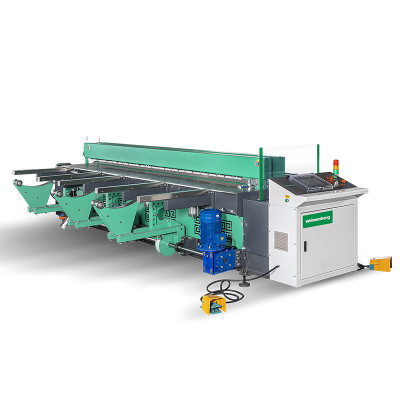
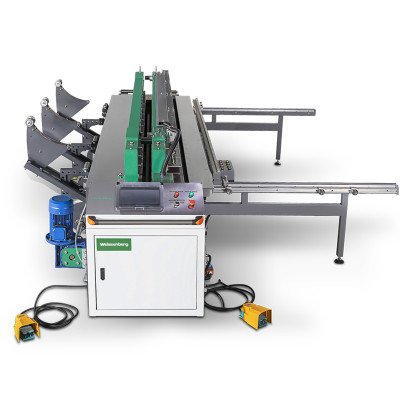
Butt Fusion Welding | full cross-section joints | Plastic sheet butt welder | highest strength |

Hot Air Welding
Uses heated air to melt the surface of the sheet and filler rod (if used).
Strength is lower than extrusion or butt fusion but ideal for tacking, edge sealing and PVDF prep work.
✔ Equipment: Hot air welding tools
Extrusion Welding
Deposits molten material (same resin grade) into a V-groove or corner joint.
This is the standard method for chemical tanks, scrubbers, and industrial boxes.
✔ Equipment: Extrusion welding tools
Butt Fusion Welding
Sheets are clamped, heated by a platen, pressed, and cooled under controlled force.
This produces the strongest weld, often equal or superior to base material.
✔ Equipment: Plastic sheet butt welder / Butt fusion machine
However, in real-world fabrication, achieving reliable butt fusion results depends heavily on equipment performance.
Common issues seen in production include:
• Uneven heating across the plate
• Inconsistent pressure during fusion
• Misalignment of large sheets
These problems often lead to weak joints, internal stress, or even long-term leakage risks—especially in applications such as fire water tanks or chemical storage systems.
This is why more fabricators are moving from manual setups to controlled butt fusion systems with stable temperature and pressure control.
Not all welding machines deliver the same results.
Low-cost or basic machines often suffer from:
• Poor heating plate uniformity
• Temperature fluctuation beyond the acceptable range
• Limited control over welding parameters
In contrast, industrial-grade butt fusion machines with ±5°C temperature control and PLC systems ensure repeatable, high-strength welds—especially critical for large structural applications.
2. Why Material Behavior Matters (Density, Crystallinity & Tg)
Although HDPE, PP, and PVDF are all thermoplastics, their crystallinity, density, and softening behavior differ significantly:
| Material | Type | Crystallinity | Behavior |
| HDPE | PE family | High | broad softening; flexible |
| PP | Polypropylene | High | higher stiffness; higher weld temp |
| PVDF | Fluoropolymer | Semi-crystalline | oxidation sensitive; tight process window |
These differences explain why PP ≠ HDPE ≠ PVDF during welding.
3. Welding Temperature Guide (Hot Air / Extrusion / Butt Fusion)
Note: Welding temperatures are process temperatures, not melting points.
| Material | Hot Air (°C) | Extrusion Melt (°C) | Butt Fusion Heater (°C) | Notes |
| HDPE | 260–290 | 220–240 | 200–220 | preheat helps; pressure critical |
| PP | 280–300 | 240–260 | 220–240 | higher than HDPE; narrow cooling |
| PVDF | 300–340 | 240–260 | 230–250 | oxidation risk at high temperature |
These ranges align with parameters commonly referenced in DVS 2207 for sheet welding.
4. Choosing the Right Method for Each Material
HDPE Welding
Best used in:
✔ Chemical tanks
✔ Water treatment tanks
✔ Scrubber systems
✔ Bund liners
✔ Marine & industrial components
Recommended processes:
| Task | Method |
| Large sheets | Butt fusion |
| Tanks & corners | Extrusion welding |
| Tack / repair | Hot air |
PP Welding
Used in:
✔ Fume extraction systems
✔ Chemical process tanks
✔ Industrial boxes & manifolds
PP has a higher welding temp than HDPE, and a shorter cooling window, requiring better fixture stability.
PVDF Welding
Common in:
✔ Semiconductor
✔ Pharma & biotech
✔ Cleanroom exhaust systems
✔ Acid scrubbers
PVDF welding requires:
✔ Tight control of temp
✔ Cleaner workshop environment
✔ Slower weld travel speed
✔ Preferably extrusion or butt fusion
In applications such as:
• Fire water tanks
• Chemical storage tanks
• Scrubber systems
• Large HDPE or PP structures
Welding quality directly determines long-term performance, safety, and maintenance costs.
As project sizes increase, the requirement for stable and scalable welding solutions becomes even more critical.
If you are working on large-scale tank fabrication or structural welding projects, choosing the right welding equipment is essential.
👉 Contact our team to evaluate your application and get professional recommendations based on your materials and project requirements.
5. Common Welding Defects
Defect | Cause | Prevention |
Burn / yellowing | Excess heat | Reduce air temp; keep nozzle distance |
Cold weld | Temp too low | Increase air temp / preheat |
Porosity | Moisture / dust | Pre-dry material; clean weld area |
Weak seam | Wrong filler | Match resin grade |
| Oxidation (PVDF) | Slow travel + high heat | Reduce hot air temp; increase speed |
| Misalignment | Fixture / pressure | Use clamps & CNC pressure control |

6. Industry Applications
Thermoplastic sheet welding is replacing stainless steel in:
North America
✔ Ventilation & air treatment
✔ Chemical storage & secondary containment
✔ Industrial wastewater treatment
✔ Landfill leachate systems
Europe
✔ Flue gas treatment & scrubbers
✔ Semiconductor exhaust
✔ Chemical process lines
✔ Corrosion-resistant plant equipment
The shift is driven by:
• Corrosion resistance
• Lower installation cost
• Better fabrication flexibility
• No passivation required
7. Equipment Selection Guide
| Material | Best Machine Type |
| HDPE | Butt fusion + Extrusion |
| PP | Butt fusion + Extrusion |
| PVDF | Extrusion + Hot air + Butt fusion |
For structural welds (tanks & ducts):
→ Extrusion or Butt fusion is preferred.
For tack welding & repairs:
→ Hot air is ideal.
8. Quick Buying Guide (For Engineering & Procurement)
When specifying equipment, procurement teams typically ask:
✔ Which materials? (HDPE / PP / PVDF / blends)
✔ Which thickness? (3–60 mm)
✔ Which weld type? (straight, corner, vertical, circular)
✔ Which finish standard? (DVS 2207, AWS G1.6M etc.)
✔ Which output volume? (prototype / low-volume / mass fabrication)
9. Recommended Equipment (Non-Promotional & Accurate)
Below:
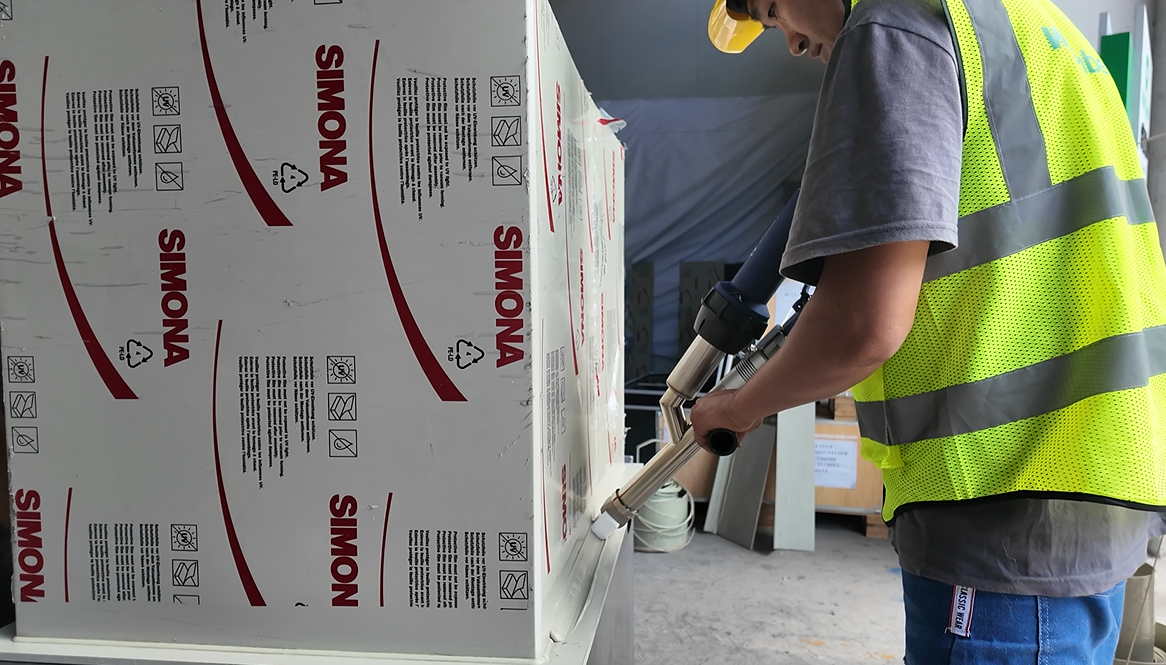
For structural tank welding: handheld extrusion welders (e.g., Weldy EX series)
For field tack & repair: industrial hot air welders (e.g., Weldy ENERGY series)
For high-strength sheet joints: CNC plastic sheet butt welders (Weissenberg)
If you need to compare extrusion vs hot air vs butt fusion pricing or capacity, technical tables are available upon request.
10. FAQ
Q: Can PVDF sheets be welded?
Yes. PVDF can be welded using hot air, extrusion or butt fusion, but requires tighter temperature control due to oxidation risk.
Q: What temperature should HDPE be welded at?
HDPE hot air welding uses approx. 260–290 °C, extrusion 220–240 °C, and butt fusion 200–220 °C depending on thickness.
Q: Is extrusion welding stronger than hot air?
Yes. Extrusion welding deposits molten filler and produces stronger structural joints, especially in tank fabrication.
Q: Which welding method gives the strongest joint?
For sheets, butt fusion welding produces the strongest weld because it forms a full cross-section molecular bond.
11. Finally
Choosing the right welding method is only part of the solution.
In real production, consistent welding quality depends on machine stability, temperature control, and process repeatability.
At Weissenberg, we provide industrial plastic sheet butt fusion solutions designed for demanding applications such as large tanks and structural fabrication.
👉 Contact us today to discuss your project requirements and explore the right solution for your production.
Website: https://www.weissenbergwelder.com/