Quick Answer
A plastic fabrication business is not created by buying a welding machine; it is created by a demand case, a process cell and a working-capital buffer that lets the first slow months happen without panic. Three numbers decide whether the plan survives contact with reality: the entry cost of the smallest equipment set that can complete a sellable product without subcontracting its core joint, the monthly cash requirement before repeat orders arrive, and the contribution each metre of weld actually leaves after material, labour, energy and scrap. Many start-up plans focus heavily on equipment cost while giving less attention to working capital and contribution margin. This guide sets out niche selection, the minimum viable equipment cell, the five budget buckets, the four revenue models a fabrication shop can run, a business-level payback model, the triggers for scaling, and the failure modes that show up in the first two years.
Definition: The Minimum Viable Fabrication Cell
The smallest set of machines and capabilities that can take sheet stock and deliver one complete, sellable product family — cut to size, welded, formed where the design requires it, finished and inspected — without sending the critical joint out to a subcontractor. It is defined by the product, not by a showroom list. A shop that can weld a tank shell but cannot square the sheet, bend the corner or repair a defect has not built a cell; it has bought a bottleneck with a power cable attached.
Start With the Order Book, Not the Equipment List
A common weak sequence in a fabrication start-up is to choose a machine, find a building, and only then look for work that fits the equipment. The sequence that works is the reverse. Before a single specification is written, three questions need honest answers: what product will you make, who buys that product today, and why would they move the order to a new supplier with no track record?
The third question is often the one that exposes a weak plan. Demand existing somewhere in your region is not the same as demand being addressable by you. A fabricator entering a market where every buyer already holds an approved-supplier list, a qualification file and a ten-year relationship is not competing on welding quality; they are competing on switching cost. The practical entry point is usually a segment where the buyer is unhappy with lead time, minimum order size or responsiveness rather than with price alone.
| Segment | Typical products | Why welding quality decides the sale | Entry difficulty for a new shop | Equipment implication |
|---|
| Water treatment and aquaculture | Tanks, dosing stations, lamella units, fish-farming vessels | Leak-tightness and long service life in wet, loaded conditions | Moderate — buyers often value lead time and local service | Mid-width butt welder plus bending for corners and rims |
| Chemical and plating tanks | Pickling tanks, storage vessels, fume hoods, drip trays | Joint integrity under chemical attack and thermal cycling | Moderate to high — material and documentation expectations | Thicker-sheet capability, careful temperature control, good records |
| Ventilation and exhaust ducting | Rectangular ducts, hoods, scrubber housings, fittings | Air-tightness, structural stiffness, corrosion resistance | Low to moderate — many small buyers, fragmented demand | Bending capability matters as much as welding width |
| Process and apparatus work | Frames, cabinets, machine guards, small vessels | Dimensional accuracy and clean joints on visible parts | Moderate — tolerance-driven, drawing-literate customers | Accurate cutting first; welding width secondary |
| Scrubbers and environmental equipment | Packed towers, mist eliminators, duct assemblies | Large structures where one failed seam means site rework | High — engineering content and project risk | Wide-format machines and handling capacity |
| Regulated high-purity work | Semiconductor and pharmaceutical service components | Purity and documented process control, not appearance | Very high — qualification cycles measured in quarters, not weeks | Documentation discipline before machine ambition |
Two filters narrow this table quickly. First, does the segment buy in the size range a modest machine can serve? If every enquiry is a 9 m tank shell, a 2,000 mm machine will lose the work regardless of how well it welds. Second, does the segment accept a supplier without an existing qualification file? Regulated work is attractive on margin and brutal on entry cost, which is why it usually belongs in year three rather than month three.
There is also a geographic filter that start-ups routinely skip: the cost of delivering an empty, bulky product. A tank that fills a truck carries freight and damage risk that can erase the margin on the whole order. Products that nest, stack or ship knocked-down favour a small shop with a compact machine; products that ship assembled favour a shop close to its customers.
The Minimum Viable Equipment Cell
A sheet fabrication cell has four jobs: get the sheet to size and square, join it, form it where the design needs a bend, and finish or repair what the first three operations could not achieve. Each job has a minimum capability, and the minimum is set by the product you chose in the previous section — not by the largest machine in the catalogue.
| Operation | What it must achieve | Weissenberg option | What it unlocks | What goes wrong without it |
|---|
| Cutting and squaring | Straight, square edges within the tolerance your joint depends on | EasyCut 3000 sheet cutting machine — 3,000 mm cutting length, up to 50 mm, 7.5 kW; or Vector 1530 CNC router — 1,500 × 3,000 mm area, 1–60 mm, ±0.02 mm repeat accuracy | Predictable joint gaps and less alignment time at the welder | Every downstream problem is blamed on the welder when the cut was never square |
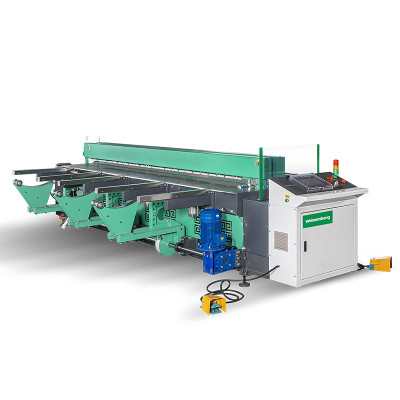
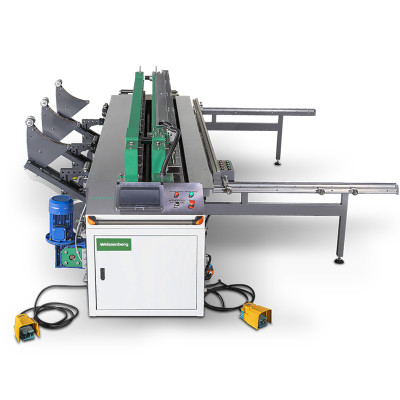
| Butt welding | A controlled heating, changeover and cooling cycle across the full seam | WeiBond 1500 (1,500 mm / 3–15 mm), WeiBond 2000 (2,000 mm / 3–20 mm), WeiBond 3000 (3,000 mm / 3–40 mm) | The core product: tank shells, duct sections, panels, apparatus bodies | Outsourced joints, unpredictable quality and no control of delivery dates |
| Bending and forming | Accurate angles without thinning or cracking the sheet | WeiFlex 1500 (1,500 mm / 15 mm), WeiFlex 2000 (2,000 mm / 20 mm), WeiFlex 3000 (3,000 mm / 25 mm); 5°–95° range | Corners, rims, stiffening flanges, duct transitions, one-piece shells | More welded corners mean more joints to control, inspect and leak-test, with more potential failure points |
| Welding and bending on one frame | Both operations on the same working width and datum | WeiForm Pro 1500 (weld and bend 3–15 mm), WeiForm Pro 2000 (3–20 mm), WeiForm Pro 3000 (weld 3–30 mm, bend 3–20 mm) | Fewer setups, one footprint, one handling step between forming and joining | Two machines, two footprints, and handling time that never appears in the quote |
| Finishing and repair | Fillet welds, corner details, defect recovery, site repairs | Booster EX2 extrusion welder (3–4 mm rod, 1.5–2.2 kg/h, 10–15 mm sheet) and Energy HT1600 hot air tool (40–700 °C, 1,600 W) | The ability to complete details the butt welder cannot reach, and to fix instead of scrap | Scrapping a nearly finished part, or refusing the detail work that carries the margin |
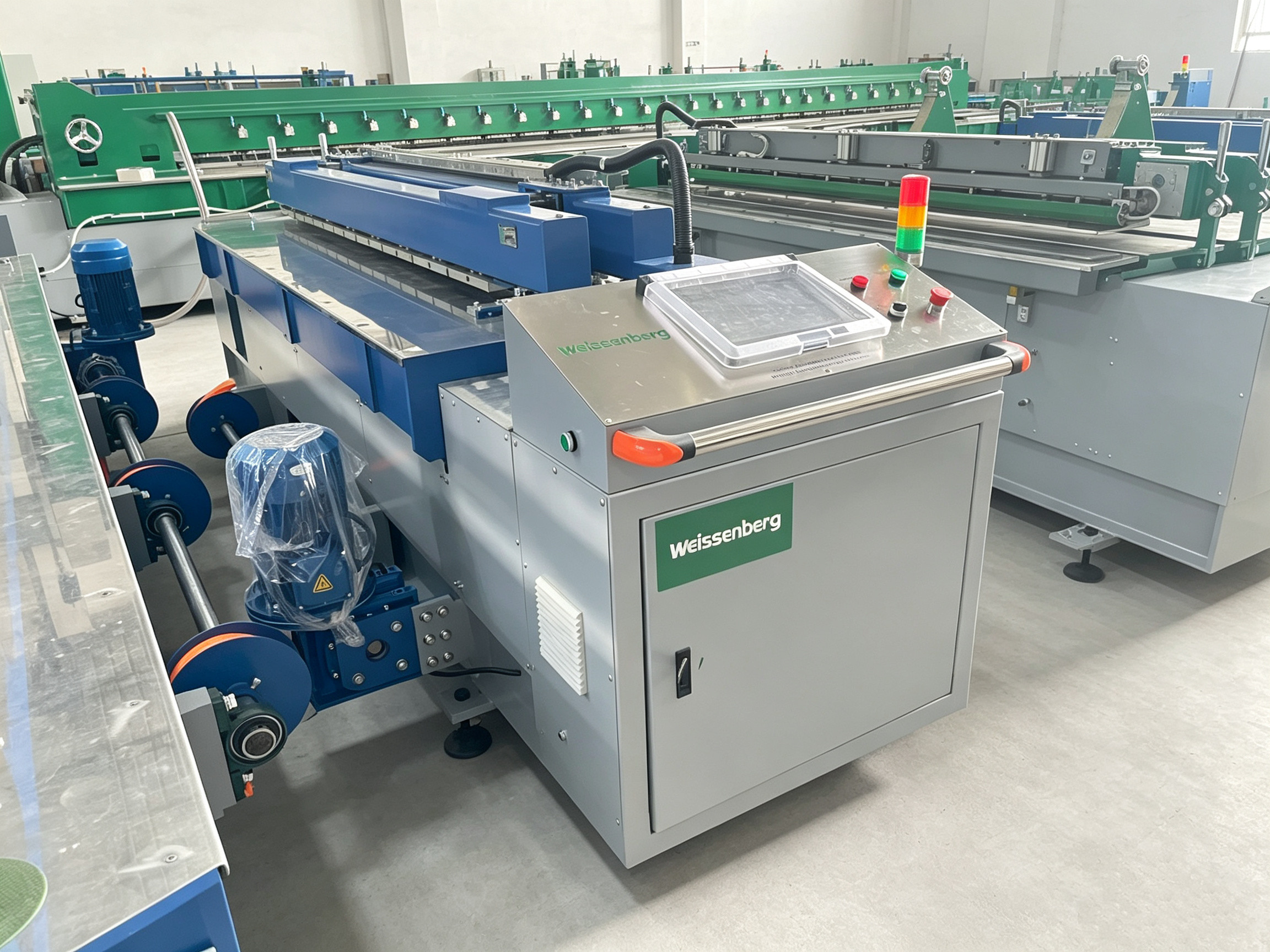
The width and thickness ceiling of the butt welder define which products you can quote — everything else in the cell supports that decision.

Bending turns corners into formed geometry: fewer joints to weld, inspect and leak-test.
The temptation is to treat the cutting machine as the cheap item to be solved later. In practice, cut quality is the cheapest quality improvement available to a new shop. A square, consistent edge reduces alignment time, reduces the gap the welder has to close, and makes the difference between an operator who is fighting the machine and one who is running it. Shops that start with a good saw and a modest welder outperform shops that start with a wide welder and a hand-held cutter, because the second group spends its first year reworking joints that were never going to close.
Two specifications are worth fixing before you request quotes, because they determine everything downstream. The first is the maximum panel dimension you expect to handle, including the diagonal of any part you will rotate on the bed. The second is the thickness range by material, not a single headline figure — PE, PP and PVDF do not behave identically at the same thickness, and a machine rated to 20 mm in PE is not automatically a 20 mm PVDF machine for your cycle time.
Separate Machines or a Combined Welding and Bending Platform?
This is the first genuine capital-allocation decision in the plan, and it is not a question about which machine is better. It is a question about which production pattern your order book will actually produce.
A combined platform fits when…
- Most parts need both a weld and a bend, and the two operations happen in sequence on the same panel.
- Floor space is the binding constraint and every square metre has to earn.
- You want one setup datum: the sheet is aligned once and stays aligned through forming and joining.
- Your widths and thicknesses sit inside one envelope — for example 2,000 mm and 3–20 mm for both operations.
- You are a small team where the same two people run every process, so fewer machines means less changeover and less training.
Separate machines fit when…
- Welding and bending requirements diverge: thick welds at 40 mm but bends only up to 20 mm, or the reverse.
- Bending is a bottleneck that must run in parallel with welding rather than after it.
- You expect to add a second welder before a second bender, and want each to scale independently.
- Parts are large enough that moving them between two dedicated stations is easier than repositioning on one frame.
- You need the widest available bending width without paying for the same width in welding capability.
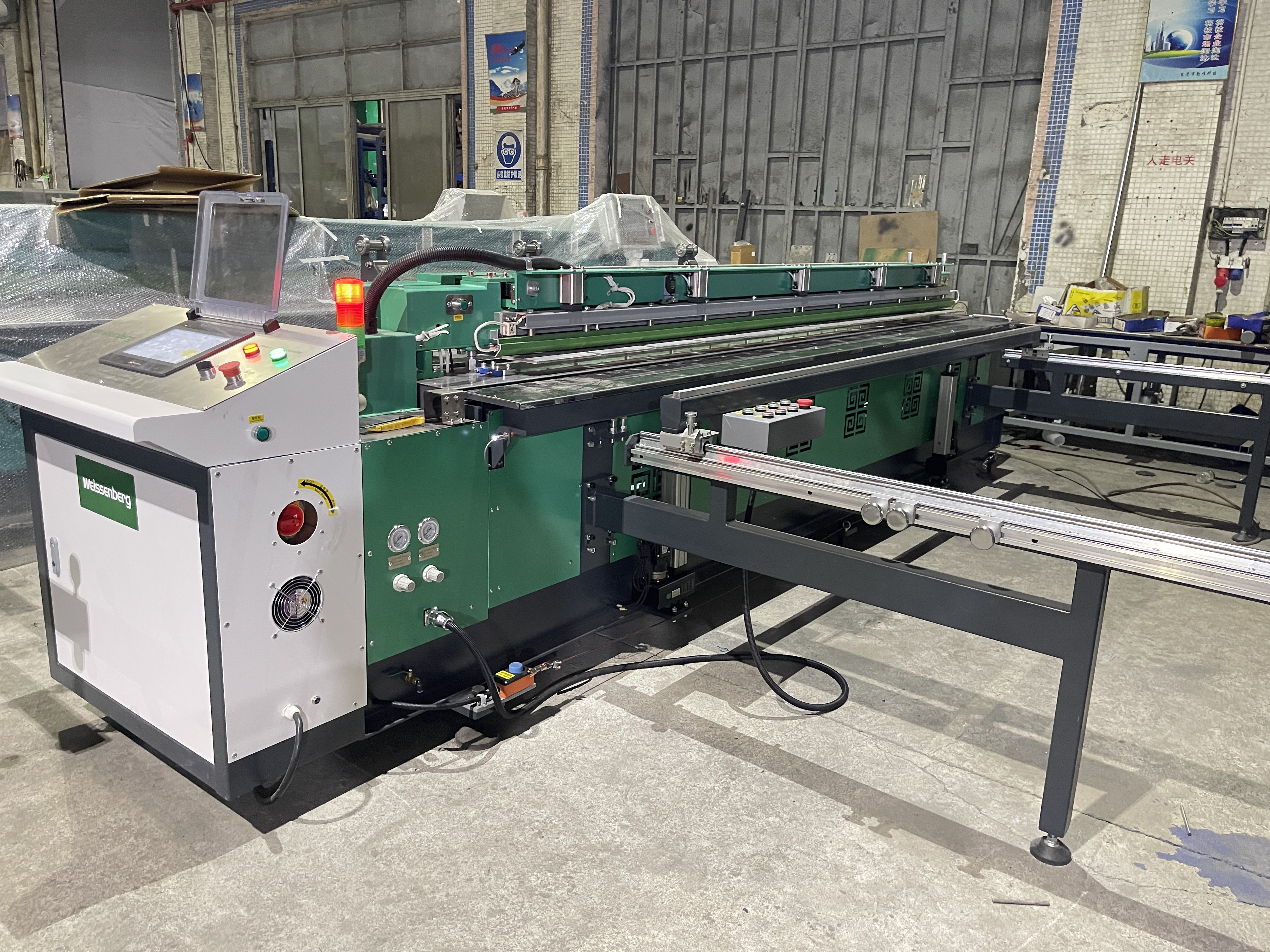
A combined platform trades flexibility for floor space, setup time and one alignment datum.
The combined route is frequently mispriced in a business plan because buyers compare the combined machine against a single welder instead of against a welder plus a bender plus the handling between them. On a like-for-like basis the comparison usually narrows, and the floor-space and setup-time advantages are real. The counter-argument is equally real: a combined machine couples your capacity in two processes. If bending demand doubles while welding demand stays flat, you buy capacity you did not need in the operation that was not the constraint.
What the Budget Actually Contains
The equipment invoice is the most visible line in a start-up budget, but it is only one part of the first-year cash requirement. Five buckets have to be funded, and four of them arrive before the first repeat order.
| Bucket | What belongs in it | When it is spent | How start-ups underestimate it |
|---|
| Equipment and delivery | Machines, options, tooling, freight, insurance, duty, unloading, installation, commissioning, first-article trials | Before production | Budgeting the ex-works price and treating delivery and commissioning as a rounding error |
| Facility and utilities | Floor preparation, power supply and protection, compressed air, extraction, lighting, sheet racking, lifting and handling, fire safety | Before installation | Discovering after the machine arrives that the building cannot supply the connected load or the door is too narrow |
| Working capital | Sheet inventory across materials and thicknesses, consumables, wages during ramp-up, receivables funding | Continuously, from month one | Treating inventory as a purchase rather than as cash that is temporarily unavailable |
| People and training | Operators, a fabricator who can read drawings, training hours, trial material consumed while learning | From installation onward | Counting course days but not the weeks of reduced output while a new team reaches rated cycle |
| Compliance and market access | Applicable machine conformity and safety documentation for the destination market — for example, CE marking where required in the EU/EEA — together with welding procedure records, operator qualification, test specimens, customer audits and insurance | Before the first regulated customer | Assuming the machine’s certificate is the shop’s certificate — it is not |
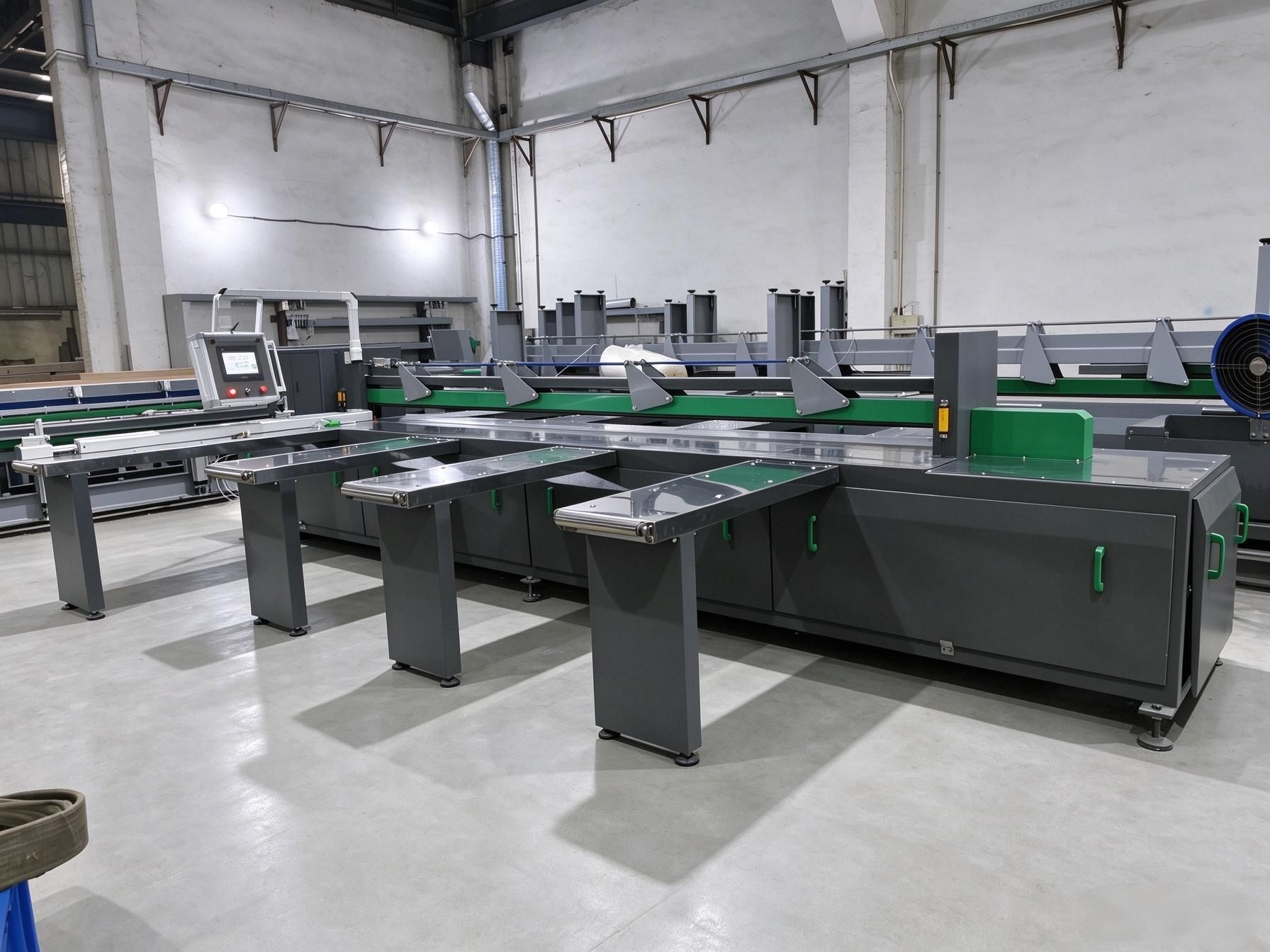
A sheet cutting machine is not a glamorous purchase, but square cuts reduce the labour content of every joint that follows.
Facility requirements are one of the places where start-up budgets are most easily underestimated. A 3,000 mm cutting machine needs infeed and outfeed space well beyond its cutting length; a 3,000 mm welder needs clearance on both sides for sheet handling and a floor that stays level under a frame that long; a hot air or extrusion station needs extraction because you are heating polymers indoors. None of these are machine costs, and all of them are real. The time to check is before the purchase order, when a different building or a different layout is still an option.
Site checklist before you commit to a machine specification
- ✓ Power: voltage, phase and available capacity at the intended location, plus the protective devices the machine requires.
- ✓ Compressed air: confirm the required pressure and flow at the machine; the supply should be stable, properly filtered and maintained within the manufacturer’s air-quality requirements.
- ✓ Floor: level, load-bearing and able to take the machine frame plus the sheet being handled on it.
- ✓ Access: door width and height, turning space, and the lifting equipment available on delivery day.
- ✓ Extraction: local exhaust for hot air and extrusion work, and adequate general ventilation.
- ✓ Storage: appropriate full-sheet storage, offcut organisation by material and thickness, and a layout that avoids unnecessary handling of finished parts.
- ✓ Fire safety: plastic sheet stock is a fuel load; check what your insurer requires before the first delivery arrives.
Why Working Capital Can Become the Biggest Start-Up Risk
A fabrication shop buys full sheets and sells cut, welded and formed parts. The moment a sheet enters the rack it becomes cash that is no longer available, and it stays unavailable until a customer pays for the finished product — which, in project work, can be months later. This gap is the reason profitable-looking shops run out of money.
| Stage of the cash cycle | What is happening to your money | Practical protection |
|---|
| Sheet purchase | Cash leaves immediately; you now hold inventory in several materials and thicknesses | Buy depth only in the two or three specifications your chosen niche actually uses; source the rest to order |
| Work in progress | Labour and consumables are consumed before the part is sellable | Bill deposits and progress milestones on project work, not only on delivery |
| Finished goods | The product is complete but still yours until accepted | Agree acceptance criteria in writing so a finished tank does not sit in dispute |
| Receivables | Payment terms of 30, 60 or 90 days while wages are weekly | Price the financing cost into the quote; negotiate shorter terms with a discount rather than absorbing them silently |
| Rework | A failed joint consumes material, labour and a schedule slot | Treat first-article inspection as a cash-protection measure, not a quality formality |
The buffer that matters is not a generic figure copied from a business plan template. It is the amount that lets you pay wages and buy the next sheet delivery without depending on a customer payment that has not arrived. Calculate it from your own payroll, your own material consumption per month and your own payment terms, then add the ramp-up months during which output is below plan. If that number is uncomfortable, the plan is telling you something useful while it is still cheap to hear.
Offcut management deserves a mention because it is working capital hiding on the floor. Every shop accumulates usable remnants, and every shop that does not organise them by material and thickness ends up buying a new sheet to cut a part that already exists as scrap. A simple racking discipline and a rule that offcuts above a minimum size go back into stock converts waste into inventory you already paid for.
Four Revenue Models and What Each Demands
A fabrication business can sell four different things with the same machines, and each one produces a different cash pattern, margin profile and equipment requirement. Choosing one deliberately is a strategy; drifting between all four is how a shop ends up busy and unprofitable.
| Model | What you sell | Margin and cash pattern | Equipment implication | Main risk |
|---|
| Job shop | Cutting, welding and forming to a customer’s drawing | Modest margin per hour, fast invoicing, low material risk if supplied free-issue | Accuracy and changeover speed matter more than width | Competing on hourly rate with no differentiation |
| Standard product line | Your own tanks, boxes, duct sections or trays in fixed sizes | Better margin, but cash tied up in finished stock and tooling | Repeatability and cycle time; jigs and fixtures pay for themselves | Building inventory for demand that does not materialise |
| Project fabrication | Engineered equipment delivered to a site, often installed | Highest contract value, slowest cash, milestone billing essential | Wide-format capability and handling capacity; documentation discipline | One delayed project consumes the whole year’s working capital |
| OEM and contract manufacturing | Repeat components for an equipment builder who owns the design | Predictable volume, thinner margin, strong utilisation | Consistency and documented parameters; the customer audits the process | Single-customer dependence and price pressure at every renewal |
One practical progression for a new independent shop is to begin with job-shop work, then introduce a standard product line once the same parts are requested repeatedly, and move into project fabrication when the shop has the width, handling capability and documentation discipline to support it. Contract manufacturing can enter at almost any stage and may provide a faster route to stable utilisation where a suitable OEM customer already exists — but it should be entered with the knowledge that the customer, not you, controls the design and therefore much of the margin.
Building a Payback Model at Business Level
Machine payback — the price of a specific welder divided by the saving it produces — is a useful calculation, but it is not a business plan. The business-level question is different: how many billable hours does the shop need to cover its fixed costs, and how long does it take to reach that number?
| Input | What it means | Where to get it |
|---|
| Productive hours per month | Machine hours actually available after maintenance, changeovers and holidays | Shift pattern × working days × realistic utilisation |
| Billable share | The proportion of productive hours that can be sold | Your own ramp curve, not your best month |
| Contribution per hour | Revenue per hour minus material, consumables and direct labour | Three representative quotes, costed properly |
| Cash fixed costs | Rent, fixed utility charges, insurance, non-production salaries, administration and other recurring costs that must be paid regardless of output | Supplier contracts and payroll |
| Ramp period | Months before billable hours reach plan | Honest estimate from comparable shops; assume slower than you hope |
The arithmetic itself is simple. Break-even billable hours equal monthly cash fixed costs divided by contribution per billable hour. Monthly operating cash surplus equals total contribution from billable work minus monthly cash fixed costs. Cash payback period equals the initial cash investment divided by the monthly operating cash surplus. Depreciation should be considered separately when evaluating accounting profit and machine-hour cost, because it is not a monthly cash outflow in the same way as rent, wages or insurance. The useful discipline is to run the model at full plan and again at a conservative 60–70% of planned utilisation.
Two cautions are worth stating plainly. First, do not count capacity value that no order will fill; unused capacity is an option, not a saving, and it does not pay wages. Second, separate revenue from contribution. A shop can double its revenue by taking low-margin contract work and end up with less cash than before, because material and labour consumed at thin margins still have to be financed until the invoice is paid.
Pricing Work So the Machine Pays for Itself
New fabricators usually underprice in one of two ways: quoting material plus a labour guess, or quoting per kilogram of finished product. The first omits the machine and the risk; the second commoditises the work and rewards the wrong things, because a kilogram of simple butt weld and a kilogram of complex corner detail carry completely different labour content.
A price that survives contact with the year has five components: material including yield loss and offcuts, direct labour at a loaded rate, a machine hour rate that recovers depreciation, maintenance, energy and floor space, a scrap and rework allowance based on your actual failure rate, and a margin that funds the business rather than merely marking up the sheet.
| Pricing basis | When it works | Where it fails |
|---|
| Per metre of weld | Repeatable joints at a known thickness and geometry; useful for internal costing | Ignores handling, fit-up, inspection and the difference between a straight run and a corner |
| Per part or per drawing | Job shop work where the customer supplies the design | Collapses when the drawing is incomplete and the scope creeps |
| Per kilogram | Commodity work where the market sets the rate and your only lever is efficiency | Punishes complex geometry and rewards simple, low-value work; rarely covers engineering |
| Per project with milestones | Engineered equipment with defined scope and acceptance criteria | Dangerous without a change-order mechanism and a deposit |
The machine hour rate is the number most often missing. It is not the purchase price divided by some vague life; it is annual depreciation plus maintenance plus energy plus the cost of the floor space the machine occupies, divided by the productive hours you realistically expect. A machine that runs 1,200 hours a year carries a very different hourly burden from the same machine running 3,000 hours, and a quote built on the second figure will lose money in a shop that only achieves the first.
Scaling in Three Steps
Growth in fabrication is not a smooth curve. It arrives in steps, and each step is triggered by a specific constraint rather than by ambition. Identifying the constraint correctly is what prevents a shop from buying a second machine when it needed a second shift.
| Stage | Trigger to move on | Typical investment | What breaks if you skip the stage |
|---|
| 1. Single cell, one shift | Orders are consistently turned away, or overtime is permanent rather than seasonal | First test whether additional staffing or a second shift can unlock existing machine capacity before adding another machine | Buying capacity before demand is proven; capital sits idle while fixed costs rise |
| 2. Second machine or wider capability | The constraint is width or thickness, not hours — you are refusing work that no amount of extra shifts can win | A wider welder, a dedicated bender, or a combined platform to relieve the bottleneck | Continuing to refuse profitable work, or subcontracting the core joint and losing control of quality and dates |
| 3. Automation and process control | Quality depends on which operator is on the machine, or labour cost is the binding constraint at stable volume | CNC positioning, recipe storage, parameter logging; cutting automation | Scaling headcount to compensate for process variation, which multiplies the variation along with the payroll |
Stage two is where capital-allocation mistakes can easily happen, because the visible symptom — a full order book and late deliveries — can be caused by a scheduling problem, a cutting bottleneck or a lack of floor space rather than by welding capacity. Measure where parts actually wait before buying a machine that makes a different operation faster. Speeding up a non-bottleneck adds work in progress, not output.
Automation belongs at stage three for a reason. CNC and parameter logging pay back when the process is stable enough that repeatability is the constraint. Introduced too early, they add programming and maintenance burden to a shop that has not yet learned which parameters matter for its own products. The exception is a segment where customers audit recorded parameters from day one; in that case, documentation capability is part of market access rather than an efficiency upgrade.
Failure Modes in the First Two Years
The patterns worth designing against
- ✓ Buying width you do not need. A 7,000 mm machine serving 1,500 mm panels is capital on the floor and a permanent floor-space problem.
- ✓ Underfunding working capital. The plan funds machines and building, then discovers that sheet inventory and receivables need cash too.
- ✓ No finishing capability. Omitting an extrusion welder or hot air tool means scrapping parts over details that take minutes to fix.
- ✓ Quoting from material cost. Labour, machine time, scrap and financing disappear from the price and reappear as a loss at year end.
- ✓ Chasing regulated work too early. Qualification cycles consume cash and calendar time before the shop has a stable process to qualify.
- ✓ Single-customer dependence. One buyer at 60% of revenue owns your pricing, your schedule and your survival.
- ✓ No documentation. Without procedure records and parameter logs, the shop cannot pass the audit that would unlock better-paying customers.
- ✓ Growing revenue without contribution. Busy months at thin margin finance the customer’s growth rather than yours.
Certification and Market Access
Certification is usually presented as a compliance cost. In fabrication it is better understood as a sales asset, because it determines which buyers will accept a quotation at all. Three layers matter to a new shop, and they are not interchangeable.
The first is the machine: CE marking and the documentation that comes with it, including electrical drawings and a maintenance manual. The second is the process: welding procedures and parameter records consistent with the DVS 2207 series for the materials and thicknesses you actually weld, plus the test specimens that demonstrate the procedure works. The third is the system: a quality management approach — ISO 9001 is the common reference — that lets a customer audit how you control material, process and traceability.
For a start-up the practical sequence is process first, system second, and only then the customer-specific qualification that regulated segments demand. A shop that can show a parameter record, a test result and a material certificate for a specific job is far more credible than one that owns a certificate but cannot reproduce the weld that produced it. Documentation is also the cheapest form of quality improvement, because writing down what you did is how you discover what you should stop doing.
Where to Learn the Trade
Fabrication is learned on the shop floor, but the market signals are learned in public. Three channels are worth building into the first year.
Standards and training bodies. The DVS guidelines are the reference point for thermoplastic welding procedures and quality assessment, and DVS-based training is widely recognised by buyers who specify welded plastic equipment. Where local training is unavailable, supplier-run commissioning and first-article training fills part of the gap, but it does not replace a recognised procedure framework.
Trade fairs. Water, wastewater and environmental exhibitions concentrate the buyers who specify tanks, scrubbers and ducting; aquaculture exhibitions do the same for fish-farming vessels. Walking a show as a visitor costs a day and produces a year of market intelligence: who is buying, what they complain about, and which suppliers they already use.
Industry associations and peer shops. National plastics and fabrication associations publish technical guidance, run training and provide the informal network through which subcontract work moves. A new shop that knows three established fabricators in its region will find overflow work long before it finds a marketing budget.
A Twelve-Month Setup Sequence
Sequencing matters as much as budgeting, because several decisions are expensive to reverse. The order below front-loads the cheap decisions and defers the expensive ones until the demand case is tested.
| Phase | Main work | Decision gate before moving on |
|---|
| Months 0–2 | Niche selection, customer interviews, competitor and lead-time analysis, product family definition | At least a handful of real buyers have described a problem you can solve and a budget they control |
| Months 2–3 | Specification of the minimum cell, configuration quotes, site survey, finance structure | Delivered scope, power, access and installation cost are known rather than assumed |
| Months 3–5 | Building preparation, utilities, racking, insurance, recruitment | The site can accept the machine without improvisation on delivery day |
| Months 5–7 | Installation, commissioning, operator training, first-article trials in your own material | Test welds meet the procedure and the acceptance criteria you will offer customers |
| Months 7–9 | First commercial orders, documentation discipline, pricing review against actual hours | Actual hours per part are within a defined margin of the quoted hours |
| Months 9–12 | Stabilise delivery, measure scrap and rework, decide on stage-two investment | The constraint is identified from data rather than from frustration |
The temptation is to compress months 0–3 because they produce nothing visible. They are also the only phase where a wrong decision costs almost nothing to change. Once the building is fitted out and the machine is on the floor, every correction carries a price.
What a First-Machine Story Actually Changes
Weissenberg has published a customer story about a Colombian fabricator’s first plastic sheet butt welding machine, and the detail worth taking from stories like that one is not the machine model. It is that a first machine changes what a shop is allowed to quote. Before it, welded work is either declined or subcontracted; after it, the joint becomes an internal process with a known cycle, a known cost and a delivery date the shop controls. That shift — from passing work through someone else’s schedule to owning the critical operation — is often a larger return than the labour saving that appears in the payback calculation.
The second change is less comfortable. Once welding is internal, quality problems become yours. A shop that previously blamed a subcontractor now owns the leak test, the rework and the customer conversation. That is why the first machine should be bought with training, documentation and a spare-parts plan, not only with a width and a thickness figure. The published story is a useful companion to this guide.
Frequently Asked Questions
How much capital does it take to start a plastic fabrication business?
There is no universal figure, because the requirement is set by the product family, the width and thickness envelope, the building and the payment terms you can obtain. The useful approach is to build the number in three parts rather than one: the delivered and installed cost of the minimum cell, the working capital needed for sheet inventory and receivables, and a buffer for the ramp months when output is below plan. A configuration-based quotation gives you the first part accurately; the second and third have to come from your own payroll, material consumption and customer terms. Any single “start-up cost” figure quoted without those inputs is a guess dressed as a benchmark.
Do I need a CNC machine to start?
No. What a new shop needs first is accuracy and repeatability at the cut, and that can come from a well-set sheet cutting machine. CNC routing and CNC cutting become valuable when the constraint moves from cut quality to changeover time, nesting efficiency or complex geometry that cannot be produced accurately by hand. Buying CNC before the order book justifies it adds programming skill, maintenance and capital cost to a business that is still learning which products it sells. A modest, accurate cutting machine plus a reliable butt welder is a more capable start than an automated cutter feeding a welder that cannot hold tolerance.
Should I buy a combined welding and bending machine or two separate machines?
It depends on whether your parts need both operations in sequence and whether your width and thickness requirements are the same for each. A combined platform such as the WeiForm Pro 1500, 2000 or 3000 saves floor space, keeps one alignment datum and removes a handling step, which matters most in a small shop where the same people run every process. Separate machines make sense when bending demand runs in parallel with welding, when the two operations need very different capacities, or when you expect to scale one of them independently. Compare the combined machine against the total cost of two machines plus the handling between them, not against a single welder.
Which products should a new fabrication shop make first?
Start with products where the joint is critical, the qualification burden is low and the buyer is local enough that freight does not eat the margin. Tanks, duct sections, drip trays, hoods and apparatus bodies usually fit that description better than regulated high-purity components, which carry qualification cycles that a new shop is not yet equipped to survive. The best first product is often one the founder has already made or specified in a previous job, because the process knowledge is real rather than researched, and the first customers are already known.
How long does it take for a new fabrication shop to become profitable?
Generic timelines are unreliable because profitability depends on the ramp curve, the contribution per hour and the fixed cost base, not on the calendar. A more useful measure is break-even billable hours: monthly cash fixed costs divided by contribution per billable hour. Calculate that number, compare it with the billable hours you can realistically sell in month three, month six and month twelve, and the answer for your business appears from your own figures. Planning for a slower first two quarters and funding that ramp properly gives the business more room to absorb lower-than-expected utilisation without creating an immediate cash crisis.
What certifications will customers ask for?
It depends on the segment, but three requests are common. Customers specifying welded thermoplastic equipment often ask for welding procedures and parameter records consistent with the DVS 2207 series, together with test results on specimens from the materials and thicknesses in question. Buyers of the machine itself expect CE marking and the accompanying documentation. Customers with formal supplier qualification programmes may ask for a quality management system, commonly ISO 9001, and will audit how you control material traceability, process parameters and inspection. The machine certificate alone does not satisfy any of these; the shop’s own records do.
Can I start with used equipment?
Sometimes, with clear eyes. A used machine can lower the entry cost, and a well-maintained butt welder is a durable asset. The risks are specific: worn heating plates and clamps that no longer hold thickness consistently, obsolete control components with no spare-parts path, missing documentation that prevents you from proving a procedure to a customer, and no commissioning or training support. If you buy used, budget for a heating plate inspection, a clamp and alignment check, and a realistic spares assessment before you quote your first job. The saving is real only when the machine can still produce a weld you are willing to guarantee.
Key Takeaways
- Choose the niche before the machine; the product family defines width, thickness and documentation requirements.
- Build a minimum viable cell — cut, weld, bend, finish — rather than a single impressive machine with no supporting capability.
- The equipment invoice is visible; working capital for sheet inventory and receivables is what usually runs out first.
- Compare a combined welding and bending platform against two machines plus the handling between them, not against one welder.
- Price from material, labour, machine hour rate, scrap allowance and margin — never from material plus a guess.
- Scale in steps: test whether a second shift can unlock existing capacity before assuming a second machine is necessary, and add automation when repeatability or labour becomes the binding constraint.
- Documentation is market access; procedure records and test results open doors that a machine certificate cannot.
- Run the business-level payback model at a conservative 60–70% of planned utilisation as a downside scenario, rather than testing only the full-capacity case.
References and Further Reading
Related Weissenberg Guides
Product References
- Weissenberg plastic sheet butt welder range — WeiBond 1500 to WeiBond 7000
- WeiBond 2000 — 2,000 mm width, 3–20 mm thickness
- WeiFlex 2000 — 2,000 mm bending width, up to 20 mm, 5°–95°
- WeiForm Pro 2000 — combined welding and bending, 3–20 mm
- EasyCut 3000 — 3,000 mm cutting length, up to 50 mm, 7.5 kW
- Vector 1530 CNC router — 1,500 × 3,000 mm, 1–60 mm, ±0.02 mm repeat accuracy
- Booster EX2 extrusion welder — 3–4 mm rod, 1.5–2.2 kg/h
- Weldy Energy HT1600 — 1,600 W, 40–700 °C hot air tool
Standards and Industry References
- DVS 2207 series — Welding of thermoplastics: procedures, parameters and quality assurance.
- DVS 2202 series — Imperfections in thermoplastic weld joints: characteristics and assessment.
- EN ISO 12100 — Safety of machinery: general principles for design, risk assessment and risk reduction (CE context).
- ISO 9001 — Quality management systems, where customer supplier qualification requires a certified system.
Weissenberg has manufactured plastic sheet welding and bending machines since 2006 and supports plastic fabricators across international markets. For a configuration-based quotation on a start-up equipment cell, send your material, thickness range, maximum panel size, available power and destination to the engineering team through the contact page.