Electroplating Tank Manufacturing: Why More Plastic Fabrication Companies Are Expanding into This Market
Excerpt:
As demand grows across the EV, PCB, semiconductor, and metal finishing industries, more plastic fabrication companies are expanding into electroplating tank manufacturing. This article explores why the market is growing, what makes electroplating tank production different, and how manufacturers can build the capabilities needed to compete in this higher-value industrial sector.
As demand grows across the EV, PCB, semiconductor, and metal finishing industries, more plastic fabrication companies are expanding into electroplating tank manufacturing. This article explores why the market is growing, what makes electroplating tank production different, and how manufacturers can build the capabilities needed to compete in this higher-value industrial sector.
The thermoplastic fabrication industry is changing.
Ten years ago, many plastic fabrication companies focused primarily on manufacturing chemical storage tanks, industrial ducting, and environmental equipment. Today, an increasing number of these workshops are expanding into electroplating tank manufacturing.
This shift is not accidental.
The rapid development of electric vehicles, semiconductor manufacturing, printed circuit boards (PCB), precision engineering, and metal surface treatment has created a growing demand for reliable electroplating equipment. At the same time, stricter environmental regulations are encouraging manufacturers to replace traditional materials with corrosion-resistant thermoplastics.
For plastic fabrication companies, electroplating tanks are more than just another product line.
They represent an opportunity to move into higher-value industrial projects while building on the fabrication capabilities many workshops already possess.
The question is no longer whether the market is growing.
The real question is whether your workshop is ready to participate.
Why Is the Electroplating Industry Growing?
Electroplating remains an essential manufacturing process across numerous industries.
From EV battery components and semiconductor production to PCB manufacturing and precision metal finishing, electroplating helps improve corrosion resistance, electrical conductivity, wear resistance, and product durability.
As these industries continue to expand, manufacturers require production equipment capable of operating continuously in aggressive chemical environments.
This demand has driven steady growth in the market for thermoplastic electroplating tanks.
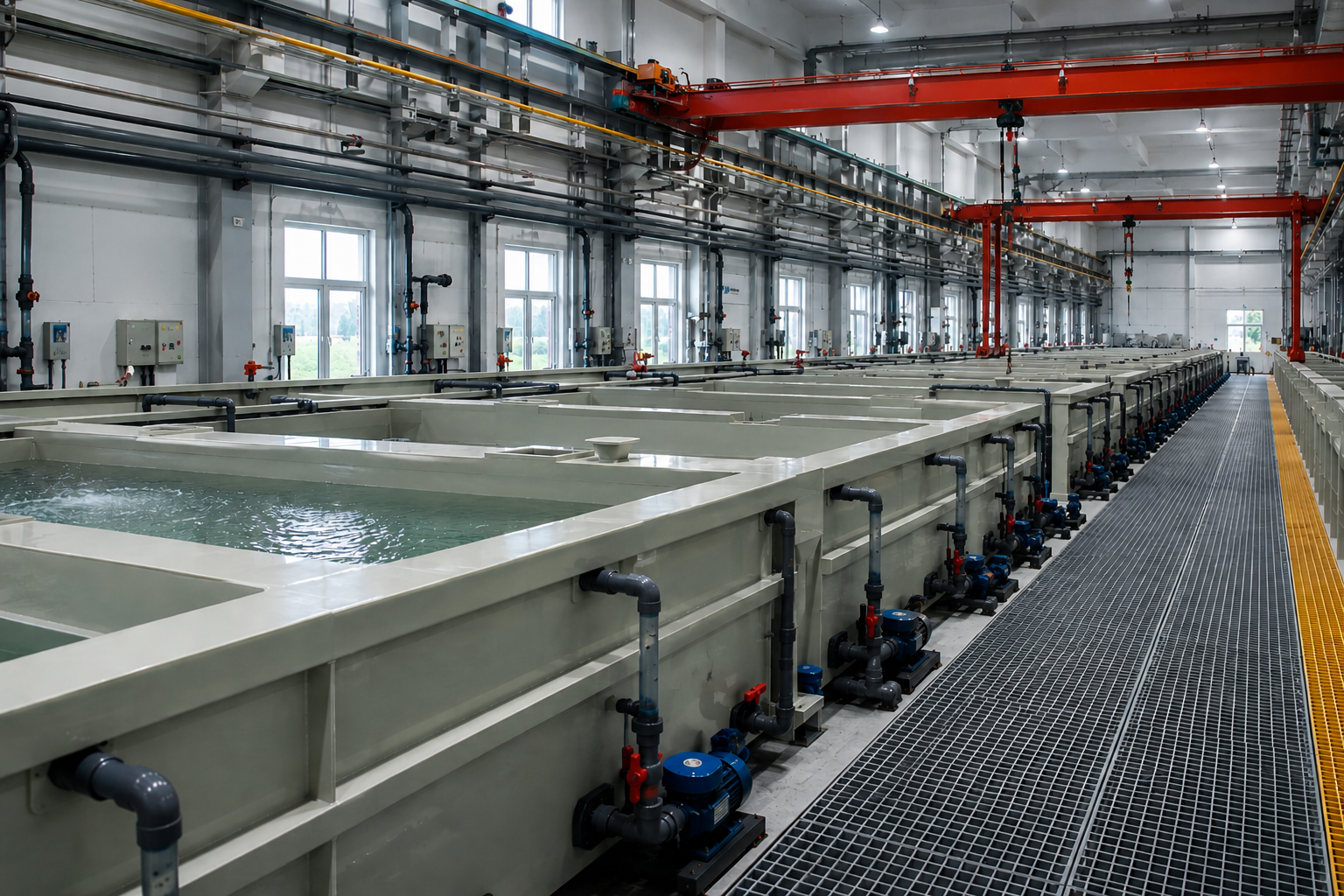
Unlike standard storage tanks, electroplating tanks are part of an active manufacturing process.
Many operate around the clock while containing concentrated acids, alkaline solutions, and heated chemical baths.
These operating conditions require tanks that are not only chemically resistant but also structurally reliable over many years of continuous production.
For fabrication companies, this means customers are no longer purchasing a simple tank.
They are investing in equipment that directly supports manufacturing quality and production efficiency.
Why Are More Plastic Fabrication Companies Entering This Market?
For many workshops, expanding into electroplating tank manufacturing is a logical business decision rather than a complete change of direction.
Companies already producing chemical storage tanks, PP process equipment, environmental systems, or custom thermoplastic fabrications often possess many of the core skills required.
These include:
• Plastic sheet cutting
• Panel preparation
• Butt welding
• Plastic sheet bending
• Extrusion welding
• Structural reinforcement
• Industrial assembly
Rather than learning an entirely new manufacturing discipline, these companies are extending existing capabilities into a higher-value market.
This significantly lowers the barrier to entry.
At the same time, electroplating tanks are typically custom-engineered rather than mass-produced.
Every project may require different dimensions, overflow systems, support structures, heating arrangements, or connection ports.
For fabrication companies experienced in customized manufacturing, this creates opportunities that are often more attractive than producing standardized plastic products.
Industry Insight
One common misconception is that companies enter the electroplating industry by investing in completely new factories.
In reality, many successful manufacturers expand gradually.
They first develop expertise in chemical storage tanks, environmental equipment, or industrial plastic fabrications before moving into electroplating applications.
This approach allows workshops to increase project value while making full use of their existing engineering knowledge, operators, and fabrication equipment.
What Makes Electroplating Tank Manufacturing Different?
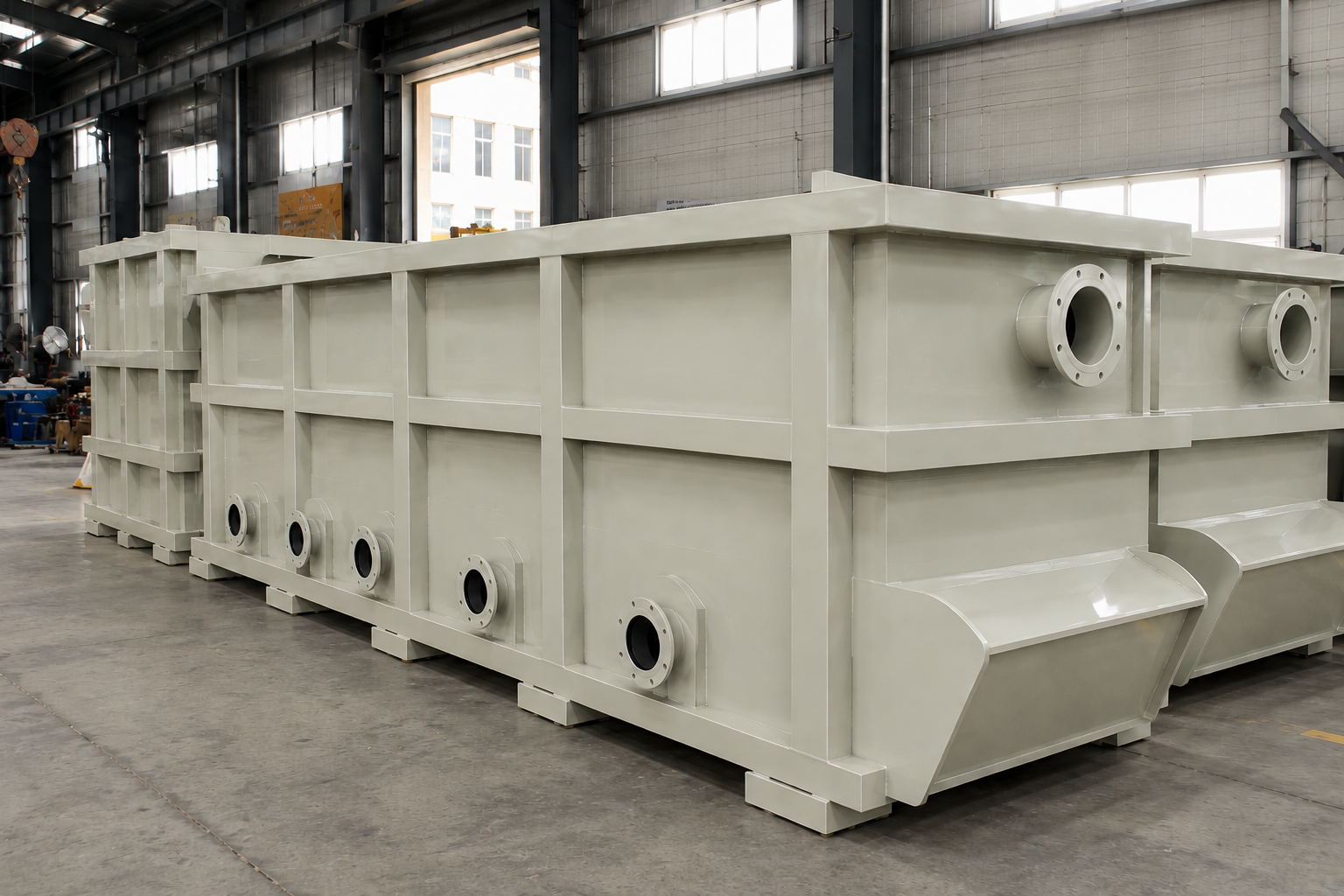
Although electroplating tanks and chemical storage tanks may appear similar, their manufacturing requirements are often very different.
Electroplating tanks are designed to operate continuously under demanding production conditions.
Customers expect long service life, excellent dimensional accuracy, consistent welding quality, and reliable performance throughout years of operation.
This places greater emphasis on manufacturing quality than on production speed.
Experienced fabrication companies understand that successful electroplating tank production depends on controlling every stage of fabrication.
The process typically includes:
• Engineering design
• Plastic sheet preparation
• Butt welding of large panels
• Panel bending and forming
• Reinforcement installation
• Extrusion welding
• Leak testing
• Final quality inspection
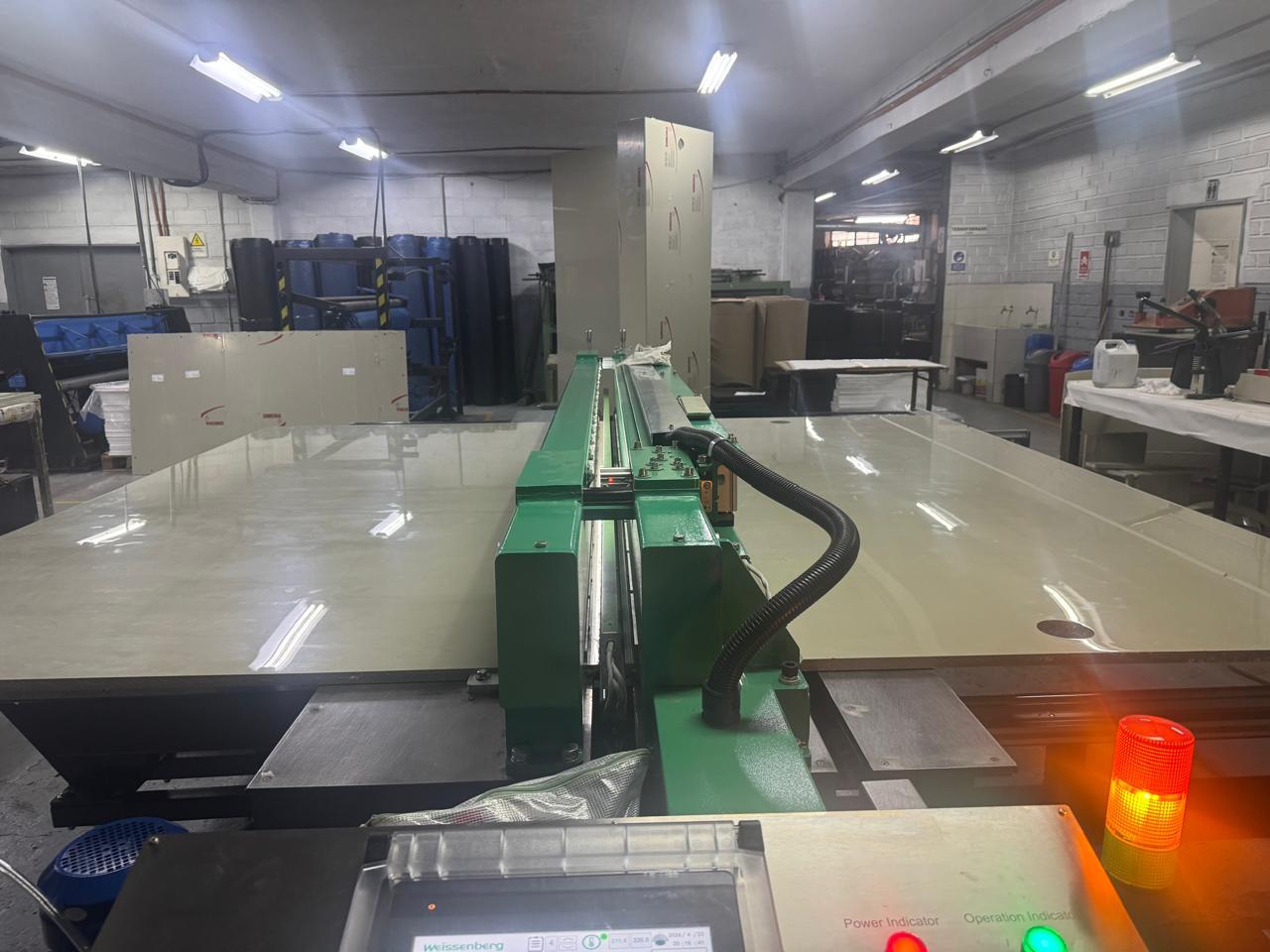
Among these stages, butt welding is one of the most critical.
Large panels must be aligned accurately while maintaining consistent welding temperature and pressure throughout the entire weld.
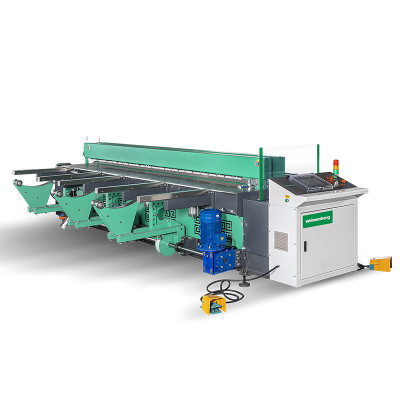
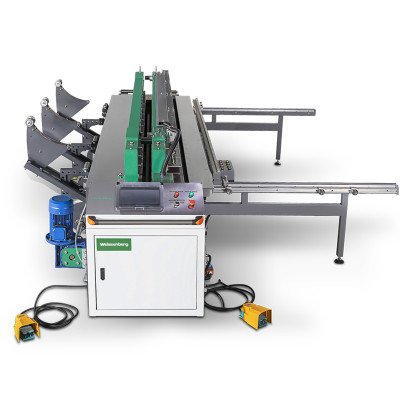
For this reason, many professional manufacturers rely on dedicated plastic sheet welding machines to improve repeatability, reduce operator variation, and achieve consistent welding quality across large projects.
High-quality welding is not simply about creating a strong joint.
It is about ensuring that every weld performs reliably after years of continuous exposure to aggressive chemicals.
The Biggest Manufacturing Challenges
Producing an electroplating tank is not particularly complicated.
Producing one that performs reliably for years is much more demanding.
Several challenges frequently determine whether a project succeeds.
Maintaining Welding Consistency
Electroplating tanks often contain long continuous welds.
Any variation in welding temperature, alignment, or pressure can reduce joint quality and increase the risk of future leakage.
Professional manufacturers, therefore, place significant emphasis on repeatable welding procedures rather than relying solely on operator experience.
Preventing Panel Deformation
Large polypropylene sheets naturally expand and contract during fabrication.
Without proper support, reinforcement planning, and welding sequence control, panels may deform before assembly is completed.
Dimensional accuracy becomes increasingly important as tank sizes grow.
Meeting Customer Expectations
Industrial customers evaluate suppliers differently from general plastic product buyers.
They expect:
• Consistent welding quality
• Reliable delivery schedules
• Accurate fabrication
• Technical documentation
• Long-term product reliability
Meeting these expectations requires more than skilled operators.
It requires standardized manufacturing processes.
For a deeper discussion of production challenges, see Common Challenges in Chemical Tank Fabrication and How Manufacturers Solve Them.
Why Some Workshops Continue Growing While Others Stop
Every fabrication company reaches a point where production methods that once worked well begin to limit future growth.
At the beginning, manual fabrication may be sufficient for producing small quantities of custom products.
As customer expectations increase and projects become larger, however, new challenges start to appear.
Production managers begin noticing longer lead times.
Operators spend more time adjusting panels before welding.
Quality becomes increasingly dependent on individual experience.
Rework becomes more common.
Delivery schedules become more difficult to maintain.
Interestingly, these problems are rarely caused by a lack of skilled workers.
In many cases, they simply indicate that the workshop has outgrown its original production methods.
Recognizing this turning point is often what separates companies that continue expanding from those that remain limited to smaller projects.
Equipment Should Increase Capability, Not Just Capacity
Many companies believe that buying larger equipment automatically leads to business growth.
Experienced manufacturers know that this is only partly true.
The real objective is not simply to produce more tanks.
It is to produce more complex projects with greater consistency and higher quality.
Reliable fabrication equipment helps workshops achieve:
• More repeatable welding quality
• Better dimensional accuracy
• Shorter production cycles
• Reduced dependence on operator experience
• Greater confidence when accepting larger industrial projects
For growing fabrication companies, equipment becomes an investment in manufacturing capability rather than simply another production tool.
Industry Insight
One characteristic appears repeatedly among successful thermoplastic manufacturers.
Before expanding their factories, they first improve their manufacturing processes.
Standardized fabrication procedures, consistent welding quality, and repeatable production systems often create greater long-term value than increasing production volume alone.
This is one reason why many companies are able to move successfully from manufacturing simple plastic products to producing complex industrial process equipment.
Final Thoughts
The growing electroplating industry is creating new opportunities for plastic fabrication companies around the world.
For many workshops, entering this market does not require starting over.
Instead, it requires building upon the capabilities they already possess.
Companies that invest in stronger engineering, better fabrication processes, and more consistent manufacturing quality will be better positioned to serve increasingly demanding industrial customers.
Electroplating tank manufacturing is not simply another product category.
It represents a natural step toward higher-value thermoplastic fabrication.
For workshops ready to grow, the opportunity is already here.
Planning Your Next Step?
Whether your company currently manufactures chemical storage tanks, environmental equipment, or custom thermoplastic products, expanding into electroplating tank production begins with understanding your manufacturing capabilities.
At Weissenberg, we work with fabrication companies worldwide to improve plastic sheet welding, forming, and fabrication efficiency through reliable manufacturing solutions.
If you're planning to expand your workshop or explore new industrial markets, we'd be pleased to discuss your production goals and help you identify the right fabrication approach.