Why More Plastic Fabrication Companies Are Expanding into Water Treatment Equipment Manufacturing
Industrial water treatment is no longer just an environmental requirement—it has become a major manufacturing industry.
Across sectors such as chemical processing, mining, semiconductor manufacturing, food production, pharmaceuticals, and municipal infrastructure, companies are investing heavily in new water treatment facilities and upgrading existing systems to meet stricter environmental regulations.
For plastic fabrication companies, this shift is creating a new opportunity.
The question many workshop owners are now asking is no longer "Can we manufacture chemical tanks?"
Instead, it is:
"What's the next product we should manufacture?"
Some companies choose larger chemical storage tanks.
Others expand into electroplating equipment.
Increasingly, however, many manufacturers are entering water treatment equipment manufacturing.
Not because it is easier.
But because it allows them to build upon the fabrication capabilities they already have while entering a larger, more stable, and higher-value industrial market.
If your workshop already fabricates polypropylene tanks, industrial ducting, or custom thermoplastic equipment, you may already possess many of the core skills required to succeed in this industry.
The challenge is not starting from zero.
It is transforming existing manufacturing capabilities into complete industrial process equipment.
Why Are More Workshops Looking Beyond Chemical Tanks?
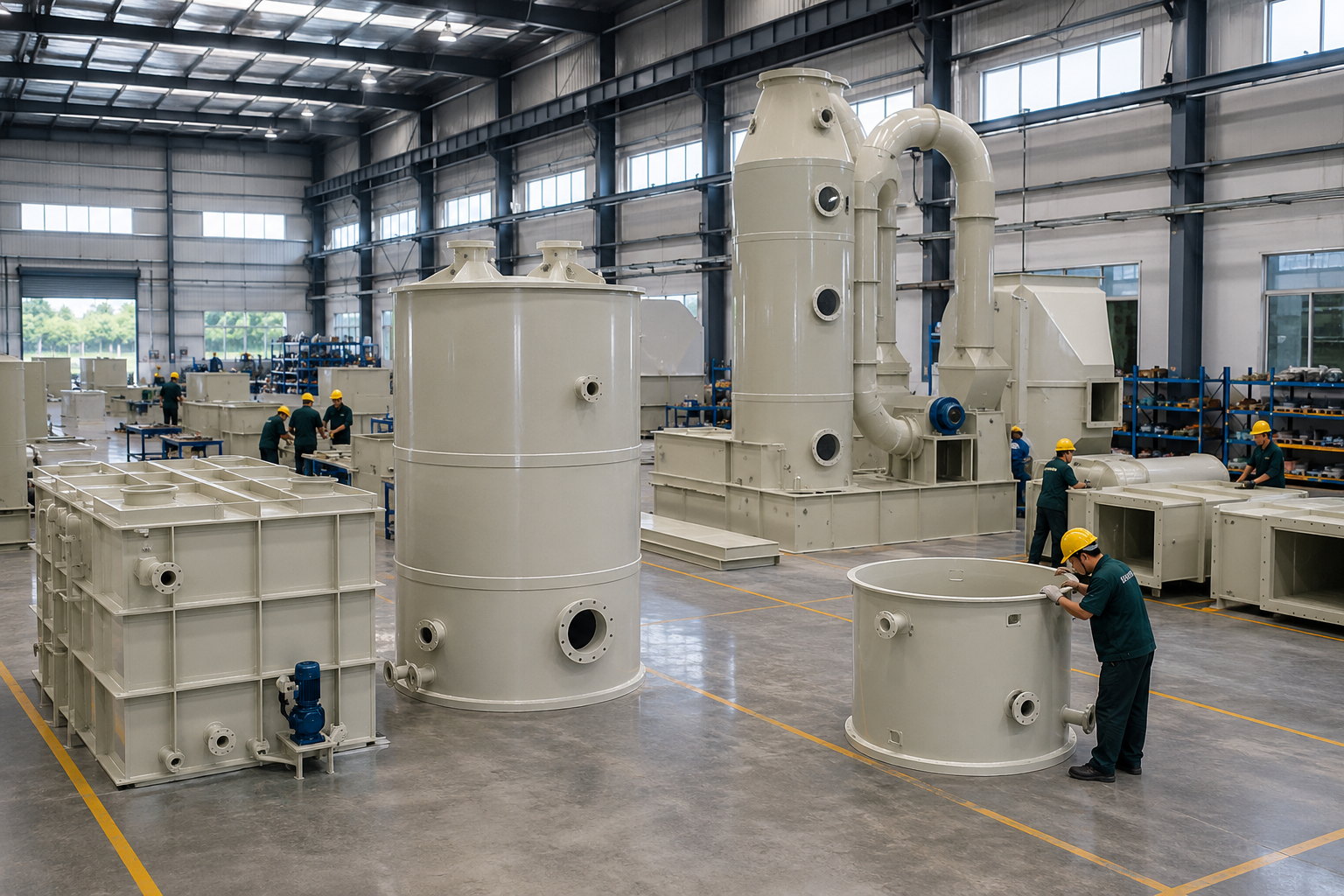
For many years, chemical storage tanks have been one of the core products manufactured by plastic fabrication companies.
The production process is familiar, market demand remains steady, and most workshops already have experience working with PP, HDPE, PVC, and PVDF sheets.
However, customer expectations are changing.
Industrial projects today rarely require only a storage tank.
Instead, customers increasingly need complete process systems capable of handling chemical dosing, wastewater treatment, air pollution control, and process fluid management.
This trend is encouraging many fabrication companies to expand beyond individual products and begin supplying complete industrial equipment.
Unlike standard tanks, water treatment equipment usually involves multiple interconnected components, custom engineering, and project-based manufacturing.
For workshops with strong fabrication experience, this creates an excellent opportunity to increase project value without completely changing their production capabilities.
Industry Insight
Many successful plastic fabrication companies do not enter the water treatment industry by building complete treatment plants from the beginning.
Instead, they expand gradually.
A typical development path looks like this:
Chemical Storage Tanks
↓
Industrial Duct Systems
↓
Scrubbers
↓
Water Treatment Equipment
↓
Complete Process Equipment
Each stage builds on the manufacturing experience gained in the previous one.
Rather than replacing existing products, companies continuously expand what they are capable of manufacturing.
What Does a Water Treatment Equipment Manufacturer Actually Build?
Many people imagine a water treatment plant as one large tank.
In reality, it is a complete system made up of numerous thermoplastic fabrications working together.
Depending on the application, a typical project may include:
• Chemical dosing tanks
• Neutralization tanks
• Mixing tanks
• Sedimentation tanks
• PP duct systems
• Scrubber systems
• Process piping
• Equipment covers
• Filter housings
• Customized structural fabrications
Every component must withstand corrosive chemicals, continuous operation, and demanding industrial environments.
This is why manufacturing quality is often more important than material selection alone.
A well-designed PP tank built with inconsistent welding quality will never achieve the same service life as a professionally fabricated system.
Manufacturers who understand this focus not only on materials but also on fabrication consistency throughout the entire production process.
Why Manufacturing Water Treatment Equipment Is More Demanding Than It Looks
At first glance, many water treatment components appear similar to ordinary plastic tanks.
Experienced manufacturers know the reality is very different.
As project sizes increase, so do customer expectations.
Water treatment equipment must not only resist chemicals but also maintain dimensional accuracy, structural integrity, and long-term reliability.
Several manufacturing challenges become increasingly important.
Maintaining Welding Consistency
Large process tanks often require long continuous welds.
Any variation in welding temperature, pressure, or alignment can reduce weld quality and increase the risk of leakage during long-term operation.
For this reason, experienced manufacturers emphasize standardized welding procedures rather than relying solely on operator skill.
Reliable fabrication depends on repeatability.
Not luck.
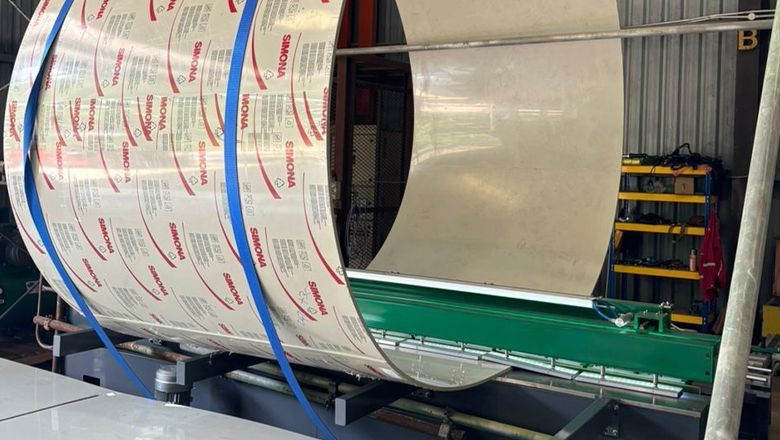
Handling Large Plastic Panels
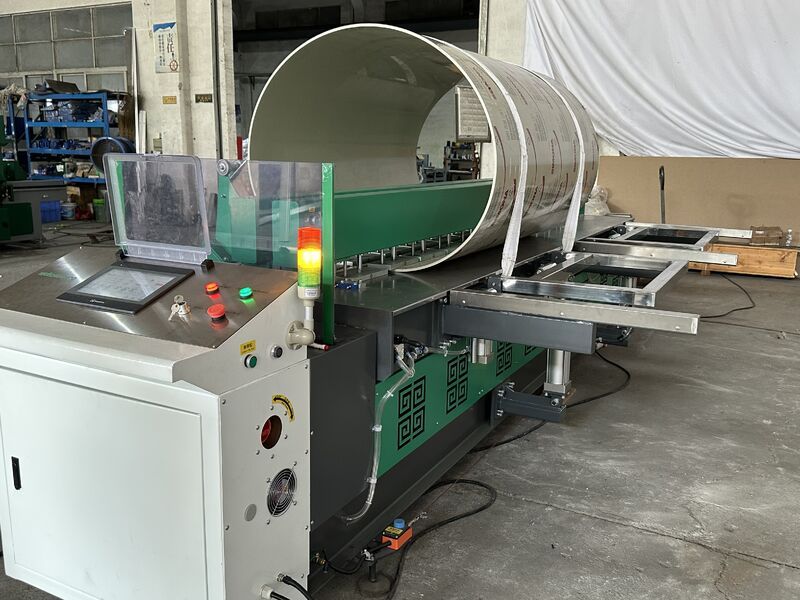
Modern industrial projects increasingly use larger polypropylene sheets to reduce weld joints and improve structural strength.
However, larger panels are also more difficult to position, align, and weld accurately.
Material handling, fixture design, and fabrication workflow all become critical factors affecting final product quality.
For a deeper discussion of fabrication quality, you can also read Common Challenges in Chemical Tank Fabrication and How Manufacturers Solve Them.
When Does a Workshop Outgrow Its Existing Equipment?
One characteristic can be seen among many successful plastic fabrication companies.
They do not grow simply by producing more products.
They grow by improving what they are capable of manufacturing.
Many workshops begin with relatively simple products such as plastic tanks or ductwork. As customer requirements become more demanding, they gradually move into larger projects involving complete water treatment systems, integrated process equipment, and customized engineering solutions.
At this stage, traditional fabrication methods often become the bottleneck.
Operators spend more time aligning large sheets before welding.
Dimensional accuracy becomes increasingly difficult to maintain.
Project lead times become longer.
Quality becomes heavily dependent on individual experience rather than standardized manufacturing procedures.
These challenges rarely mean a workshop lacks skilled people.
Instead, they indicate that the company's manufacturing capability has reached the next stage of development.
For many manufacturers, this is the point where investing in better fabrication equipment begins to improve not only productivity, but also project quality and business competitiveness.
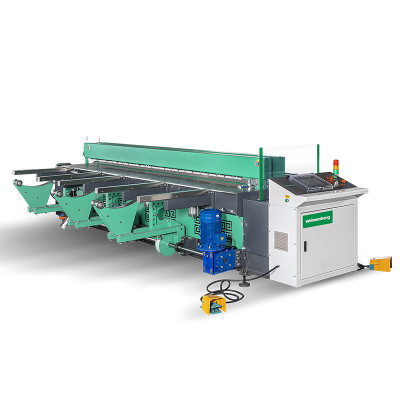
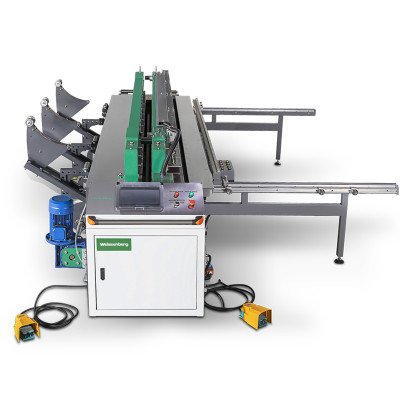
Professional plastic sheet welding machines help workshops achieve:
• More consistent welding quality
• Better dimensional accuracy
• Faster fabrication of large panels
• Reduced operator dependency
• Higher production efficiency
• Greater confidence when accepting large industrial projects
The objective is not simply to produce more equipment.
It is to manufacture better equipment with greater consistency.
Workshop Perspective
One interesting pattern appears repeatedly among successful manufacturers.
Very few companies enter the water treatment industry by producing complete treatment plants immediately.
Instead, they grow step by step.
A typical development path often looks like this:
• PP Storage Tanks
• Chemical Dosing Tanks
• Ventilation Duct Systems
• Scrubber Equipment
• Water Treatment Modules
• Complete Water Treatment Systems
Each project builds new engineering experience.
Each customer expands manufacturing capability.
Each investment creates opportunities for larger and more valuable projects.
This gradual growth is one reason why many plastic fabrication companies successfully enter the water treatment industry without fundamentally changing their business model.
Why Customers Choose Manufacturing Capability Over Low Prices
Today's industrial customers are becoming more demanding.
When selecting a fabrication partner, they are not simply comparing quotations.
They are evaluating whether a supplier has the capability to successfully complete the project.
Typical questions include:
• Can this company manufacture large customized equipment?
• Is welding quality consistent across every project?
• Can they meet delivery schedules?
• Do they understand industrial fabrication?
• Can they support future projects as our business grows?
These questions are difficult to answer with a product catalogue alone.
They are answered through manufacturing capability.
For this reason, many successful fabrication companies are investing in process improvement, engineering expertise, and standardized production systems instead of competing solely on price.
Key Takeaways
• Water treatment equipment manufacturing is becoming one of the fastest-growing opportunities for plastic fabrication companies.
• Existing capabilities in tank fabrication, butt welding, and thermoplastic processing provide a strong foundation for entering this market.
• Successful manufacturers grow gradually by expanding their product range rather than changing their business overnight.
• Consistent fabrication quality is often a greater competitive advantage than simply increasing production capacity.
• Investing in manufacturing capability prepares workshops for larger, higher-value industrial projects.
Ready to Expand Your Manufacturing Capabilities?
For many plastic fabrication companies, water treatment equipment is not a completely new business—it is the next step in their development.
If your workshop already manufactures chemical tanks, industrial duct systems, or custom thermoplastic fabrications, you may already have many of the capabilities needed to enter this market.
The key is building on the experience you already have.
At Weissenberg, we work with manufacturers worldwide to improve fabrication capability through reliable plastic sheet welding and bending solutions designed for industrial thermoplastic applications.
Whether you are planning your first water treatment project or expanding an existing production line, our engineering team is ready to help you identify the right manufacturing solution for your business.
Contact us today to discuss your next project.