Quick Answer
Pressure is one of the three key variables in plastic sheet butt welding, alongside temperature and time. Too little joining pressure can leave incomplete fusion; too much can displace molten material and thin the joint. Good pressure control is not about one fixed number, but about applying the correct pressure at each welding phase and repeating it consistently. Controller-commanded proportional control can improve that repeatability when the pneumatic system is correctly designed, supplied and maintained.
Why Pressure Control Is the Underrated Factor
Definition: Pressure Control in Plastic Sheet Welding
Pressure control in plastic sheet welding is the practice of applying the correct joining force at each stage of the welding cycle — a light, even contact while the material heats, a defined compression when the softened ends are pressed together, and a steady hold while the joint cools — and keeping that force repeatable from one weld to the next. In heated-tool butt welding, pressure determines how far the plasticised faces flow into one another and how much molten material is displaced at the seam. “Pressure control” therefore covers two things: the value chosen for each phase, and the machine’s ability to reach and hold that value without drift, spikes or operator guesswork.
This article is written for plastic fabrication shops, tank and duct builders, and technical buyers who already watch temperature and time — and want to understand the third process variable that quietly decides weld quality. For the full sequence a machine follows, see our plastic sheet butt welding process and 5-stage cycle guide; for the temperature side, see the temperature control in plastic welding guide.
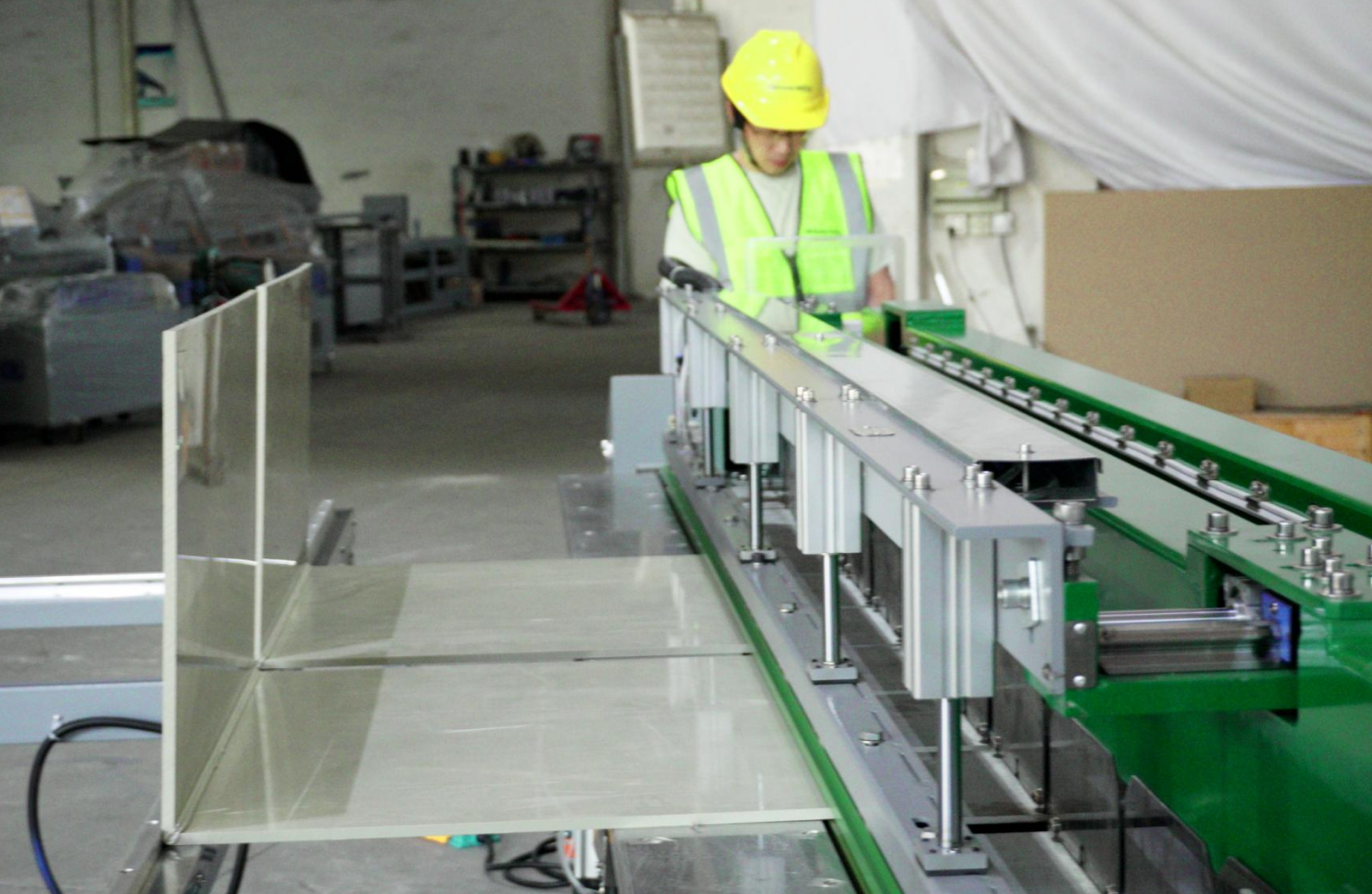
A weld is formed by pressing two plasticised ends together until their melt layers merge and then cool as one. Temperature makes the material weldable; time lets it heat through; pressure is what actually brings the two faces together and keeps them there. That is why a machine that holds temperature beautifully but presses inconsistently will still produce a seam that varies from one part to the next: the heating step can be perfect and the joining step can still be the thing that decides whether the joint is sound.
Pressure is underrated for a simple reason: it is harder to see than temperature. A plate temperature shows on a display and can be compared against a specification. Pressure is usually felt rather than read, and its effects — a slightly under-fused seam, a bead that is a little too heavy, a wall that is slightly thinned — are easy to pass off as “normal variation” until a leak, a rework or a failed test says otherwise. Yet the DVS 2207 series treats pressure as a defined process parameter for every material and thickness, not an optional detail.
The Role of Pressure Across the Welding Cycle
Pressure Appears More Than Once
In a heated-tool butt weld, pressure is not a single setting applied once. It is applied in defined phases, and each phase does a different job. A typical heated-tool cycle runs through the following steps, and pressure matters at almost every one:
- Contact and alignment. The two sheet ends are clamped and aligned. The clamps themselves apply a clamping force, and how evenly they hold the sheet decides whether the ends meet squarely. Poor alignment cannot be fixed by pressure later — it only makes the joining step fight the geometry.
- Heating under a light contact pressure. The ends are brought against the heated plate under a relatively low contact force. This is deliberate: too much force here squeezes material against the plate, and too little leaves an uneven gap. The aim is full, even contact so each face plasticises to the required depth without being driven away from the heat source.
- Changeover. The plate is withdrawn and the two softened ends are brought together as quickly as the procedure allows. Time and motion here matter, but so does the machine’s ability to move the platen smoothly — a jerky or slow changeover lets the melt layer cool or shift before the faces meet.
- Joining under joining pressure. The ends are pressed together at the joining pressure specified for the material and thickness. This is the step that drives the two melt layers into one another and forms the joint. Too light and the layers do not fully merge; too heavy and the molten material is displaced out of the seam.
- Cooling under hold pressure. The joint is held under pressure while it solidifies, so it cannot move or separate as it crystallises. Releasing pressure too early invites distortion, internal stress or a joint that opens slightly as it cools.
Heating contact pressure, joining pressure and cooling-under-pressure time are all defined in the welding procedure. The DVS 2207 series is organised by material for exactly this reason — for example 2207-1 for PE-HD, 2207-11 for PP, 2207-12 for PVC-U and 2207-15 for PVDF — and it is worth confirming the current edition of any standard for your project. A machine’s job is not to invent those values but to reach and hold them reliably, phase by phase.
Why the Joining Phase Does Most of the Work
The joining phase is where pressure control earns its reputation, because it is where the two faces become one. When the softened ends are pressed together, the melt from each side flows into the other and the interface disappears. If the pressure is too low, that interface never fully closes; if it is too high, the material that should stay in the seam is pushed out as bead instead. The acceptable pressure window can become relatively narrow, especially on thicker sheet and demanding applications, which is why “more pressure for a stronger weld” is one of the most common and most damaging assumptions in the shop.
Common Pressure-Related Defects: Incomplete Fusion and Excessive Bead
Too Little Pressure: Incomplete Fusion
When joining pressure is too low — or is applied unevenly along the seam — the melt layers do not merge fully. The result is a partial fusion: the faces touch and appear welded, but the polymer chain interdiffusion that gives the joint its strength never completes. Under-fused joints can show as a weak interface, fine voids, or a seam that fails a bend or peel test even though it looks acceptable. Worse, a cold joint can look neat from the outside, so the defect hides until the part is in service. This is the failure mode most associated with welds that leak or crack under load.
Too Much Pressure: Excessive Bead and Thinning
Raise the pressure too high and the problem reverses. Excess force squeezes molten material out of the joint as a heavy bead or flash, and because that material leaves the seam, the effective wall thickness at the joint can be reduced. Over-compressed joints also tend to carry more internal stress, which can show up later as warping or as a seam that behaves differently from the parent sheet. A broad, heavy bead is often read as a sign of a strong weld; in many cases it is a sign that material has been displaced rather than joined.
Unstable or Spiking Pressure: The Hidden Third Defect
Between those two extremes sits a more subtle problem: pressure that is roughly right on average but unstable in practice. If the joining force spikes when the ends meet, the sudden shock can displace melt before the faces have merged cleanly. If it drifts as supply air or the machine warms up, the tenth weld no longer matches the first. If it falls away during cooling, the joint solidifies without support. These variations rarely produce one dramatic defect; they produce inconsistency — some welds pass, some do not, and nobody can say why. That unpredictability is exactly what controlled pressure is meant to remove.
Manually Set vs Electro-Pneumatic Proportional Pressure Control
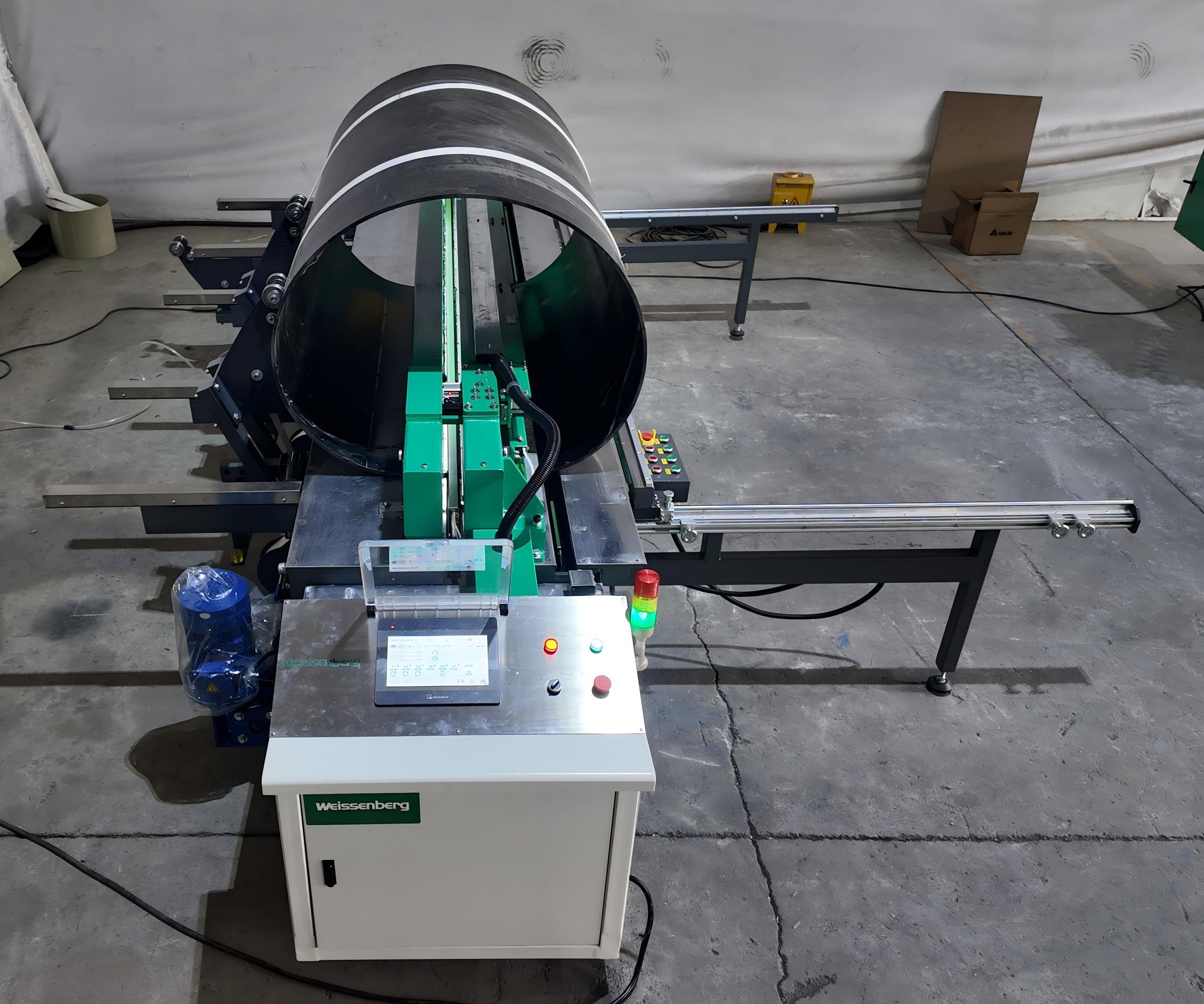
Machines differ in how joining pressure is set and held. The contrast below is general, because the exact behaviour of any machine depends on its design and on the procedure being followed — but it shows the difference a control method makes to repeatability.
| Aspect |
Traditional pressure setting |
Electro-pneumatic proportional control |
| How pressure is set |
Hand-adjusted regulator, read from a gauge by the operator |
Stored as a parameter and commanded by the controller |
| Transition between phases |
Operator-dependent; the force can arrive as a step or a jolt |
Can be ramped to the setpoint rather than stepped, so the melt is compressed more gradually |
| Repeatability |
Varies with operator, supply-air condition and machine temperature |
Setpoints are commanded by the controller, which can reduce cycle-to-cycle variation — provided the pneumatic system is correctly set up and maintained |
| Supply-air variation |
A manual setting can follow supply-air changes |
Control responds to a command rather than a fixed opening, but a stable supply is still required; proportional control does not remove the need for adequate, steady compressed air |
| Changeover and joining sequence |
Often left to the operator’s timing |
Cycle-driven, so pressure follows the phase of the weld |
| Where it fits |
May be adequate for thin, short, non-critical seams where the process has margin |
Especially valuable for thick sheet, long seams and repeatable production |
Read the table as a difference in repeatability, not as a claim that a manual setup cannot make a good weld. In experienced hands and on forgiving work, a well-managed manual regulator can produce sound joints. But as sheet gets thicker, seams get longer and expectations of documented consistency rise, the machine’s ability to reach the same pressure the same way every time becomes the deciding factor.
How Weissenberg Uses Japanese SMC Proportional Valves for Smooth Pressure Transition
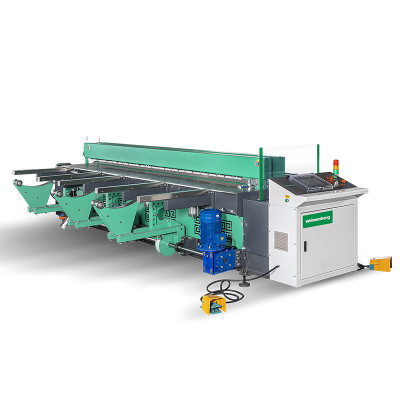
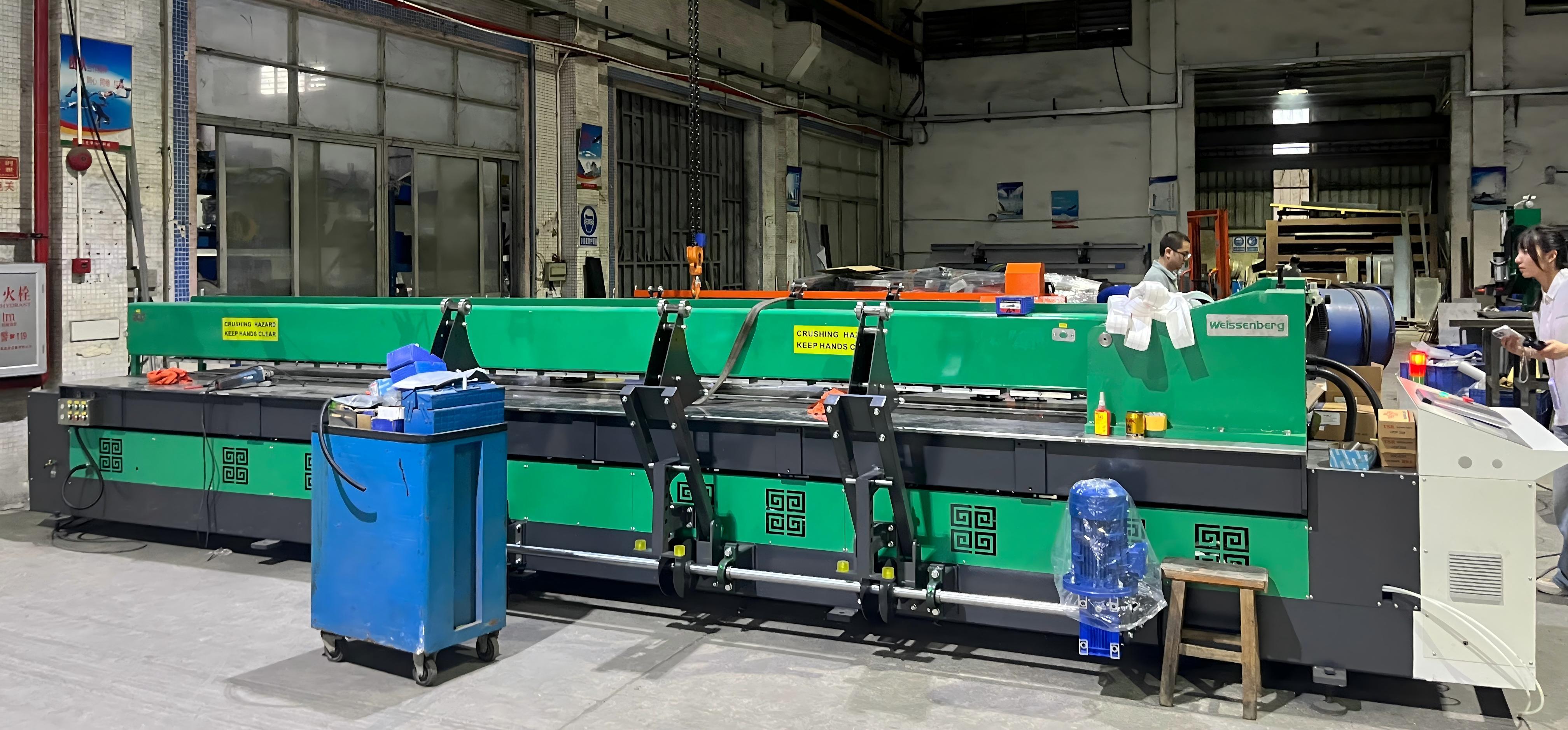
Weissenberg builds its sheet welding machines around the idea that pressure should be a controlled variable, not a hand-tuned guess. The welding pressure is managed through SMC pneumatic components with proportional control — SMC being a Japanese pneumatics brand widely used in industrial equipment — so that the joining force is commanded by the controller rather than dialled by hand.
Steering pressure through a proportional valve, rather than switching a fixed air supply, changes what the joint experiences:
- Smooth pressure transition. Instead of the joining force arriving as a sudden step when the ends meet, the valve can ramp it toward the setpoint, so the melt layers are compressed more gradually rather than shocked. How smoothly this happens still depends on the valve, the ramp settings and the condition of the system.
- Repeatable setpoints. Because the pressure is set as a parameter and applied by the controller, the setpoint is re-applied each cycle rather than left to where an operator set a knob — assuming the machine is correctly set up and maintained.
- Less dependence on the operator. A controller-commanded setpoint does not drift because someone turned a knob or bumped a gauge. It does not, however, make the machine immune to poor-quality or fluctuating compressed air: a stable supply is still part of the system.
- Integration with the cycle. Because the pressure command sits inside the welding program, it can be tied to the phase of the weld — the lighter contact for heating, the joining pressure for fusion, and the hold through cooling.
It is worth being precise about what this does and does not claim. Proportional pressure control improves how consistently the machine reaches and holds the pressure the procedure calls for; it is not a self-correcting guarantee of quality, it does not choose the right pressure for you, and it does not replace correct temperature, heating time, changeover time or fit-up. Its benefit depends on correct setup, a maintained valve and an adequate, steady compressed-air supply. Where pressure feedback is integrated, the controller can also help monitor and correct deviations during the cycle — but the starting point is a qualified procedure for the material and thickness in front of the machine. On the WeiForm Pro 3000 welding-and-bending machine, pressure control sits alongside a Mitsubishi PLC and servo-controlled electric cylinders for bending motion, so the welding and bending actions are programmed rather than improvised.
Pressure Control on Thick Sheet
On thin sheet, a pressure error has a small amount of material to work with and the process often has enough margin to absorb it. As sheet gets thicker, the same error has far more consequences, which is why pressure control becomes most visible on heavy work. There is no single thickness at which this begins: the effect scales continuously with thickness, material and seam geometry. What matters for a buyer is whether the machine can deliver enough force, evenly, for the thickest sheet you actually weld.
As thickness rises, three things change at once:
- There is more material to heat through. The melt layer has to be deep enough to fuse across the full joint face, so heating times lengthen and the material stays soft for longer. Throughout that period the pressure has to be right, not just at the moment the ends meet.
- There is more molten material to displace. A thicker sheet means a larger volume of soft plastic at the seam. Too much joining pressure drives more of it out as bead, and the loss of wall thickness at the joint matters more on a thick, load-bearing part than on a thin panel.
- The forces involved are larger. Thicker and wider sheet needs higher clamping and joining forces, and a machine has to deliver them evenly across the seam. Uneven force shows up as a seam that is welded at one end and under-fused at the other.
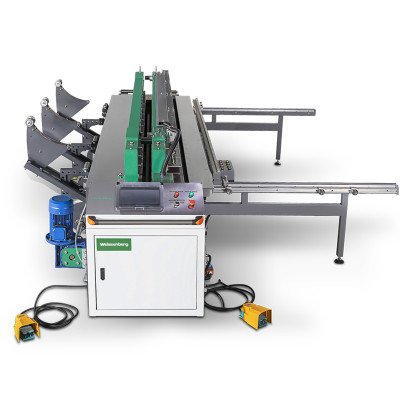
This is where a controlled, ramped pressure helps most. On thick sheet, the ideal is enough force to close the joint completely, delivered smoothly enough that it does not blow the melt out of the seam, and held long enough that the whole joint cools under pressure. WeiBond butt welders are rated to weld 3–40 mm PE, PP and PVDF sheet — with the exact thickness range depending on the model — and working widths of 3,000, 5,000 and 7,000 mm on the selected models, so the pressure system has to stay consistent across a seam that may be several metres long.
Typical Differences: Pressure-Controlled vs Non-Controlled Weld Quality
Rather than quote headline numbers — which depend entirely on material, thickness and procedure — it is more useful to compare the two setups by the pattern of results a shop tends to expect. The table below describes typical, expected differences and is directional, not a set of measured figures.
| What is observed |
Manually set pressure |
Controlled proportional pressure |
| Weld-to-weld consistency |
Varies with operator, shift and supply air; the tenth weld can differ from the first |
Same setpoints applied each cycle, so the spread between welds narrows |
| Bead appearance |
Sometimes light, sometimes heavy, often uneven along the seam |
More uniform, because the joining force is delivered consistently |
| Risk of incomplete fusion |
Higher where pressure is set low or arrives weakly |
Can reduce risk, because the joining pressure is reached and held as programmed |
| Risk of excessive bead and thinning |
Higher when pressure is over-set “to be safe” or spikes on contact |
Can reduce risk, because the ramp avoids the shock that displaces melt |
| Behaviour on thick sheet and long seams |
Most exposed; uneven force is hardest to hide here |
Where the benefit is greatest, because consistency scales with the difficulty of the work |
| Operator dependence |
High; results follow the person at the machine |
Lower; results follow the stored procedure |
Precisely because it is hard to see, pressure is also the variable buyers most often fail to verify — so the steps below set out how to test it on a real machine.
How to Verify Pressure Control on a Real Machine
Everything above is a claim until it is measured on your own machine and your own material. This is the part buyers most often skip, and it is the only way to tell whether a pressure system is genuinely doing its job. Work through it as a short programme:
- Step 1 — Separate air pressure from joining force. A reading on the air line shows pneumatic pressure, not the force the joint actually feels: the two are related by the cylinder area, linkage and friction, so they are not the same number. Measure the joining force the platen applies (with a load cell or force transducer at the joint, where practical), or at minimum establish and record the relationship between commanded air pressure and the force delivered at the joint. Then watch it at each phase — contact while heating, the joining force, and the hold through cooling — and check it along the seam rather than only at the centre.
- Step 2 — Weld a pressure parameter series. Produce butt welds across a range of joining pressures for your material and thickness, inside the limits of the qualified procedure. Include at least one deliberately low and one deliberately high setting, so you can see where the defects appear.
- Step 3 — Test to the applicable standard. Have the samples assessed and mechanically tested under the relevant DVS 2202 assessment and DVS 2203 testing methods, so results are comparable rather than anecdotal.
- Step 4 — Record the conditions. Log plate temperature, heating time, changeover time and joining pressure for every weld, so a result can be traced back to what produced it.
- Step 5 — Inspect the ends of long seams. Inspect and, where feasible, test material from the ends of wide seams, because that is where uneven pressure and temperature show up first.
- Step 6 — Repeat over time. Re-run the checks periodically and after any service or relocation, so a drifting or worn valve is caught before it reaches a customer.
That programme turns “good pressure control” from a specification on a brochure into a measured, documented property of your own process — and it is the fairest way to compare two machines, because both are judged on the same material and the same tests.
Checklist: What to Look for in a Machine’s Pressure System
Turn the ideas above into questions, and ask them of every machine on your shortlist:
- Control method: Is joining pressure set by hand or commanded by the controller as a stored parameter?
- Controlled ramp, not just a valve: Does the system actually support a controlled, ramped pressure transition — and can you see the ramp happen on a gauge or log — rather than simply being fitted with a proportional valve?
- Per-phase pressure: Can contact, joining and hold pressures be set and repeated separately for each phase of the cycle?
- Stability: How is pressure held during the joining and cooling phases, and how does it respond to supply-air variation?
- Feedback: Where pressure feedback is integrated, does the controller monitor and correct deviations during the cycle?
- Range for thick sheet: Does the machine deliver enough force, evenly, for the thickest and widest sheet you expect to weld?
- Clamping and alignment: Are the clamps rigid and even enough to hold the ends square under joining force, across the full working width?
- Components: Are the pneumatic components from a recognised brand whose parts remain available over the machine’s life?
- Procedure support: Does the supplier align the machine with the applicable DVS 2207 procedures for your materials, and confirm current editions?
- Documentation: What does the controller record per weld, in what format, and how is it retrieved?
Ask for a demonstration on your material and thickness, and pay particular attention to the bead along the seam and to the ends of a long weld, where pressure and alignment problems become easiest to detect.
How Weissenberg Applies This
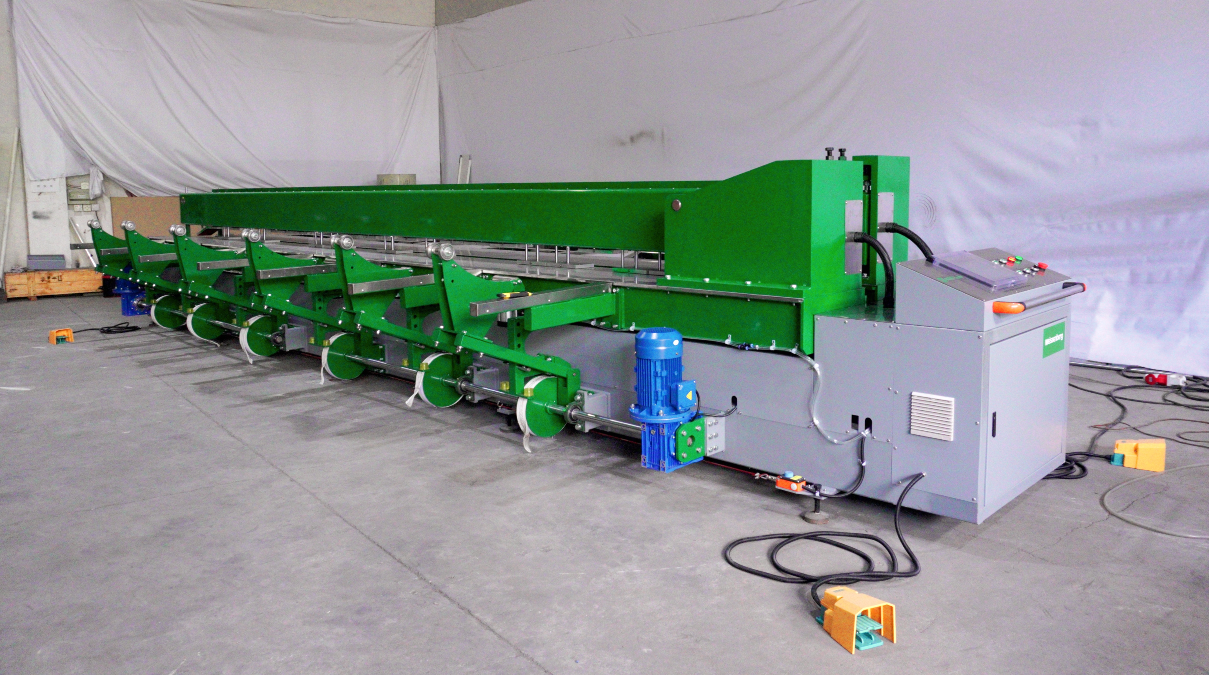
Weissenberg treats pressure as one of the process variables that must be controlled alongside temperature and cycle timing, not as something left to a hand valve. The table maps each pressure-control idea to how it is applied across the WeiBond butt welders and the WeiForm Pro 3000; treat the details as directional and confirm the exact configuration for your application with our engineers.
| Pressure-control principle |
How it is applied on Weissenberg machines |
| Controller-commanded pressure |
Welding pressure managed as a stored parameter, so the joining force is repeated rather than re-set by hand each cycle |
| Smooth pressure transition |
SMC pneumatic components with proportional control, so pressure ramps toward the setpoint instead of arriving as a shock |
| Pressure held through the cycle |
Cycle-driven control keeps the joining and hold pressures applied through the phases where the joint forms and cools |
| Force for thick, wide sheet |
Sturdy frame and high-density clamps on the larger WeiBond models, to hold the ends square under joining force across working widths of 3,000, 5,000 and 7,000 mm |
| Controller and motion control |
Mitsubishi PLC with touchscreen control on the WeiForm Pro 3000; SMC pneumatic components with proportional control for welding pressure, and servo-controlled electric cylinders for precise bending motion |
| Range to match the material window |
WeiBond models rated to weld 3–40 mm PE, PP and PVDF sheet (thickness range depends on model); WeiForm Pro 3000 welds 3–30 mm and bends 3–20 mm at 5°–95° |
For the referenced WeiBond models, specifications include 4–8 bar compressed air and model power ratings such as 7.2, 8.5 and 11 kW, depending on machine size. For reference, see the WeiBond 3000, WeiBond 5000, and WeiBond 7000 butt welders, the WeiForm Pro 3000 welding-and-bending machine, and the wider Plastic Sheet Welder range.
Decision Framework: How Much Pressure Control Does Your Work Need?
Not every shop needs the most tightly controlled pressure system on every machine. Use the two columns below as a practical filter, then weigh control against the sensitivity of the work you actually do.
Controlled proportional pressure matters most when…
- You weld thick sheet, where displaced material costs real wall thickness at the joint
- You run long, wide seams where force has to stay even from end to end
- You run repeat production and need the tenth weld to behave like the first
- You serve regulated or industrial markets that expect documented, repeatable quality
- You weld materials and thicknesses with a narrow process window
- Rework, leaks and field failures are expensive for your business
A well-managed manual setup may be sufficient when…
- Your work is thin, short-seam and low-volume, where the process has margin to absorb variation
- You make one-off or non-critical parts with no traceability requirement
- You have deep operator experience and the process is genuinely under control by hand
- Your material and thickness are forgiving of a wider pressure band
- Your capital budget is tight and the extra control would not be repaid by your current job mix
- You do not expect your sizes, thicknesses or markets to change over the asset’s life
For many growing fabrication businesses, controlled pressure becomes a priority precisely because it reduces the variability that leads to rework. The disciplined approach is to match the machine’s pressure behaviour to the most demanding work you can reasonably expect to quote over its life.
FAQ
Why is pressure control “underrated” compared with temperature?
Because temperature shows on a display and sits in a specification, while pressure is usually felt rather than read, and its effects are subtle. A slightly under-fused seam or a heavy bead is easy to dismiss as normal variation. The DVS 2207 series treats pressure as a defined parameter for every material and thickness, because it is what actually brings the two plasticised faces together.
Does more joining pressure make a stronger weld?
No. Joining pressure has a window: too little and the melt layers do not fully merge, leaving a cold joint that can look acceptable; too much and molten material is squeezed out as heavy bead, thinning the wall at the seam and adding internal stress.
What does electro-pneumatic proportional control actually change?
It changes how the machine reaches and holds pressure: the controller commands a proportional valve to a stored setpoint, instead of relying on a hand-set regulator. That can improve repeatability, but it is not a self-correcting guarantee — correct setup, a maintained valve, an adequate air supply and a qualified procedure are still required.
What pressure-related defects should I look for?
Too little pressure: weak or partial fusion, fine voids, or a seam that fails a bend or peel test while looking neat. Too much: a heavy, broad bead and a joint where wall thickness looks reduced. Unstable pressure: inconsistency with no obvious cause, uneven bead, or a joint that distorts because it was released before it cooled. DVS 2202 assessment and DVS 2203 testing help confirm what appearance alone cannot.
How do I know whether a machine’s pressure control is actually good?
Measure it. Read the pressure the joint actually feels at each phase, weld a parameter series at different joining pressures on your own material, test the samples under the applicable DVS methods, log the conditions for every weld, and check the ends of long seams. Appearance and a datasheet are not enough — see the verification steps above.
Key Takeaways
- Pressure is a defined process variable, not a detail: temperature makes the material weldable, time heats it through, and pressure is what actually brings the faces together and holds them.
- Pressure is applied in phases — light contact while heating, joining pressure for fusion, and a hold through cooling — and each phase has to be right.
- Both directions of error are costly: too little pressure leaves a cold, partially fused joint that can look neat; too much displaces melt as heavy bead and thins the wall at the seam.
- Unstable pressure is the hidden defect: spiking, drift or a weak hold produces inconsistency that no single inspection catches.
- Electro-pneumatic proportional control can improve how repeatably the machine reaches and holds pressure; it is not a self-correcting guarantee, and it depends on correct setup, maintenance, a steady air supply, and the right parameters, temperature, timing and fit-up.
- Thick sheet is where pressure control matters most, because there is more material to heat, more melt to displace and higher forces to deliver evenly — though the effect scales with thickness rather than starting at a fixed figure.
- Weissenberg applies these principles across its families: WeiBond butt welders (3–40 mm PE/PP/PVDF, selected working widths such as 3,000 / 5,000 / 7,000 mm, sturdy frame and high-density clamps) and the WeiForm Pro 3000 welding-and-bending machine (Mitsubishi PLC, SMC pneumatic components with proportional control for welding pressure, servo-controlled electric cylinders for bending).
- Verify before you trust: measure the pressure the joint actually feels at each phase, run a pressure parameter series on your own material, test to the applicable DVS methods, log the conditions, and re-check over time.
References and Further Reading
- Weissenberg — WeiBond 3000 plastic sheet butt welder (3–40 mm PE/PP/PVDF; 3,000 mm max working width; 7.2 kW; 260 °C max heating temperature; 4–8 bar air)
- Weissenberg — WeiBond 5000 plastic sheet butt welder (3–40 mm PE/PP/PVDF; 5,000 mm max working width; 8.5 kW; 260 °C max)
- Weissenberg — WeiBond 7000 plastic sheet butt welder (3–40 mm PE/PP/PVDF; 7,000 mm max working width; 11 kW; 260 °C max; sturdy frame and high-density clamps for stable, consistent welds)
- Weissenberg — WeiForm Pro 3000 welding & bending machine (3,000 mm working width; welding 3–30 mm; bending 3–20 mm at 5°–95°; Mitsubishi PLC and SMC pneumatic components with proportional control; servo-controlled electric cylinders for bending; 260 °C max heating temperature)
- Weissenberg — Plastic sheet butt welding process: setup, 5-stage welding cycle & inspection guide
- Weissenberg — Temperature control in plastic welding: why ±5 °C precision matters for weld strength
- Weissenberg — 7 engineering differences that make some plastic sheet welders perform better than others
- Weissenberg — DVS 2207 compliance guide and quality checklist
- Weissenberg — Uneven heating plate in plastic sheet welding machines: causes, testing and solutions
- DVS 2207 series — Welding of thermoplastics (heated-tool parts: DVS 2207-1 PE-HD, 2207-11 PP, 2207-12 PVC-U, 2207-15 PVDF; extrusion welding: DVS 2207-4), DVS Media GmbH, Düsseldorf — verify current edition
- DVS 2202 series — Evaluation of joints between thermoplastics (visual assessment of heated-plate and extrusion welds) — verify current edition
- DVS 2203 series — Testing of welded joints of thermoplastics (mechanical testing of weld samples) — verify current edition
Buying a plastic sheet welder or tightening the pressure behaviour of the machine you already run, and want a second opinion on how much pressure control your work actually needs? Talk to a Weissenberg engineer — the right answer depends on your sheet materials and thicknesses, your seam lengths and part sizes, your production volume, and the testing and documentation requirements of your market.