Introduction: A Question We Hear Every Week
"Should I buy a butt welding machine or an extrusion welder?" This is one of the most common questions our customers ask at Weissenberg. After 19 years in the plastic sheet welding industry, serving clients across 50+ countries, we have seen fabricators make the wrong choice — and pay for it in rework, delayed delivery, or rejected welds.
In this guide, we compare plastic sheet butt welders vs extrusion welders based on real experience from our factory floor and customer feedback. Whether you build chemical tanks, PP scrubbers, or environmental equipment, you will leave with a clear purchasing decision.
What Is a Plastic Sheet Butt Welder? A Weissenberg Perspective
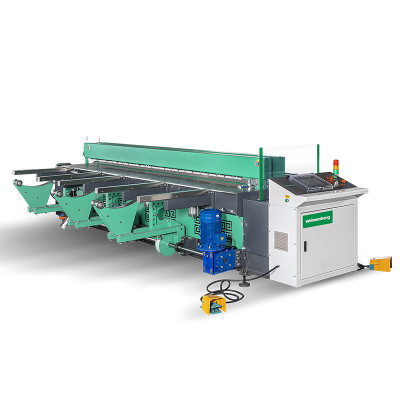
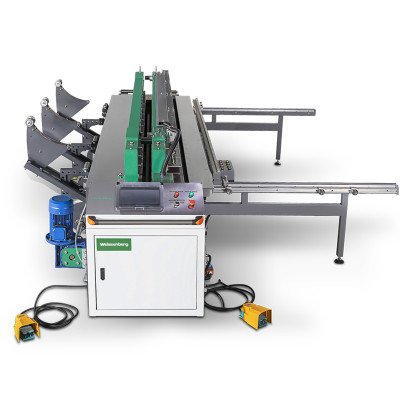
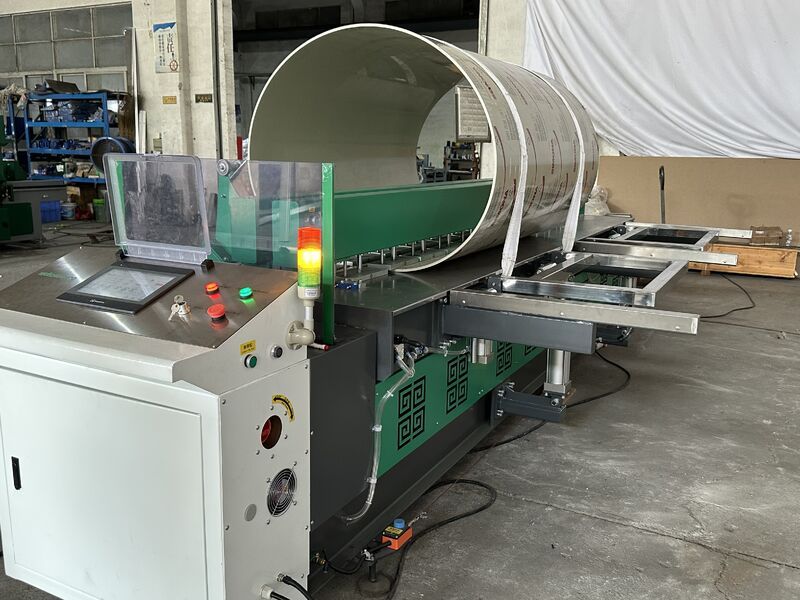
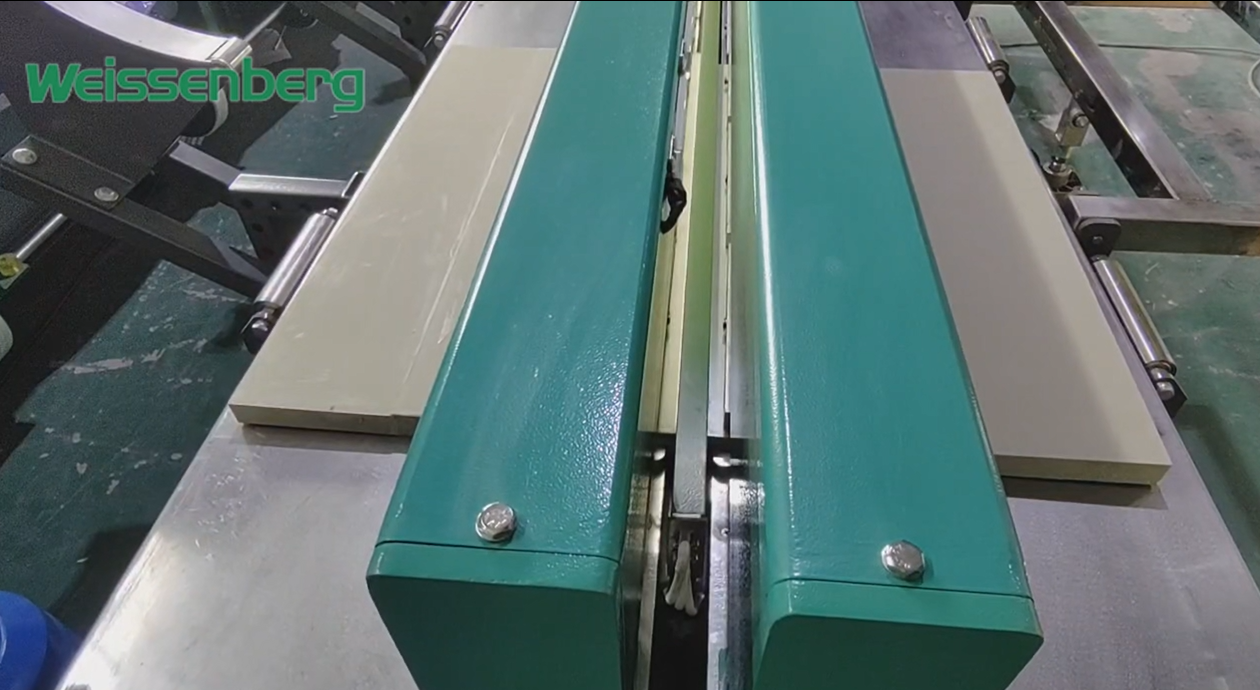
A plastic sheet butt welder (butt fusion machine) joins two thermoplastic sheets by heating their edges to melting point and pressing them together under controlled pressure. The result is a weld that reaches 95-100% of the parent material strength — essential for pressure-rated tanks and structural fabrications.
At Weissenberg, our butt welders — such as the WeiBond series — use Siemens PLC control systems with ±5°C heating plate precision, compliant with DVS 2207 standards. The machine automatically manages the entire welding cycle: heating, heat soak, changeover, fusion, and cooling.
Real Factory Steps
- Cleaning: Operators wipe the sheet edges with isopropyl alcohol. Even a fingerprint can cause weak spots.
- Clamping: Sheets are secured in the machine jaws. Our WeiBond 6000 handles sheets up to 40 mm thick with hydraulic clamping.
- Heating: The heating plate rises to the programmed temperature. 210°C for HDPE, 180°C for PP.
- Heat Soak & Bead-Up: The operator watches for a uniform melt bead — typically 1.5-2.0 mm high.
- Changeover: The heating plate swings away in under 3 seconds.
- Fusion: The hydraulic system applies programmed fusion pressure via Siemens PLC.
- Cooling: The joint cools under pressure for 12-20 minutes, depending on sheet thickness.
Learn more about our butt welding machines →
What Is an Extrusion Welder? Where Weissenberg Uses It
An extrusion welder melts a plastic filler rod and deposits it into a pre-heated joint. At Weissenberg, we use Weldy extrusion welding tools for on-site repairs and complex geometry work. The weld reaches 80-90% of parent material strength — sufficient for non-pressure applications.
We recommend extrusion welding for: repairing existing tanks without disassembly, welding in tight corners and curved surfaces, and prototyping custom fabrications.

Key Technical Differences
| Parameter | Butt Welder (WeiBond Series) | Extrusion Welder (Weldy) |
|---|---|---|
| Weld Strength | 95-100% of parent material | 80-90% of parent material |
| Sheet Thickness | 3-40 mm | 2-20 mm |
| Equipment Type | Stationary machine | Handheld tool |
| Training Time | Half day (video-guided) | 1-2 days hands-on |
| Cycle Time (4m seam) | ~18 minutes total | ~45 minutes total |
| DVS 2207 Compliance | Fully supported | Limited scope |
| Filler Material Cost | None | Ongoing rod cost |
| Best For | Chemical tanks, structural welds | Repairs, complex shapes, field work |
Applications for Butt Welding
Butt welding is the preferred method for chemical storage tanks, PP scrubbers, plating tanks, and water treatment systems. Because it fuses sheet edges directly without filler material, the weld zone becomes homogeneous with the parent material — making it the standard choice for pressure-bearing fabrications.
Explore our plating tank solutions →
Butt Welding: The Standard for Pressure-Bearing Fabrication
Butt welding is the preferred method for chemical storage tanks, PP scrubbers, plating tanks, and water treatment systems. Because it fuses sheet edges directly without filler material, the weld zone becomes homogeneous with the parent material — making it the go-to choice for critical applications where weld strength and leak resistance are paramount.
Applications for Extrusion Welding
Extrusion welding shines where flexibility matters. Consider it for on-site repairs, complex geometries, custom fabrication, and welding dissimilar thicknesses. While weld strength is typically lower than butt fusion, its portability makes it invaluable for maintenance work.
See our PP scrubber solutions →
Extrusion Welding: Maximum Flexibility for Repairs
Extrusion welding is ideal for on-site repairs, complex geometries, custom fabrication, and welding dissimilar thicknesses. While weld strength is typically lower than butt fusion, its portability makes it invaluable for maintenance work. For shops that need both production efficiency and repair capability, investing in both technologies is a common approach.
FAQ: Real Questions from Our Customers
Can I use a butt welder for sheets thinner than 3 mm?
Not reliably. Below 3 mm, the material loses rigidity during clamping, and the melt bead becomes unstable. For thin sheets, extrusion welding or our WeiForm Pro 2000 integrated welder-bender is a better fit.
How long does it take to learn a Weissenberg butt welder?
Very quick. We provide operation videos with every machine. After watching the video and practicing a few cycles, most operators can run the machine independently within half a day. The Siemens PLC automates the critical parameters — temperature, pressure, timing — so the operator mainly needs to understand the workflow and safety procedures.
Does DVS 2207 certification matter for my shop?
If your customers are in the chemical, water treatment, or environmental industries, yes. DVS 2207 is the recognized standard for welded thermoplastic structures. Our WeiBond machines are built to meet it. Many of our clients use DVS 2207 compliance as a sales advantage when bidding for projects.
What is the ROI of a Weissenberg butt welder?
For a shop producing 2-3 tanks per week, a WeiBond butt welder typically pays for itself within months through reduced labor cost, faster production and lower rejection rates (payback depends on labor cost and production volume).
Do you offer both butt welders and extrusion welders?
Yes. Weissenberg manufactures the full WeiBond butt welding series and distributes Weldy extrusion welding tools. Many of our customers buy both — a butt welder for primary production and an extrusion welder for repairs and custom work. Browse our full product range →
How to Choose: A Decision Framework
- Assess your products: Pressure-rated tanks and vessels? Butt welding. On-site repairs and custom work? Extrusion welding.
- Check weld quality specs: If your contracts require DVS 2207 or equivalent standards, a Weissenberg butt welder is your solution.
- Calculate your volume: High-volume shops (3+ tanks/week) benefit most from butt welder automation. Lower volumes may start with extrusion welding.
- Plan for growth: Our WeiBond 6000 handles sheets up to 40 mm — enough capacity for expanding production lines.
- Consider both: A butt welder for primary seams + an extrusion welder for repairs = maximum shop capability.
Why Weissenberg?
Since 2006, Weissenberg has focused on one thing: building reliable plastic sheet welding machines that solve real fabrication problems.
- Factory-Direct Quality: We design and manufacture in-house — not rebranded imports. Every machine is tested before shipping.
- Siemens PLC Control: Our butt welders use Siemens PLCs for precise temperature (±5°C), pressure, and timing control.
- DVS 2207 Compliance: Built to meet the standard, not just claim it.
- Industry-Tested: Our machines weld plating tanks, PP scrubbers, chemical storage tanks, and water treatment systems daily.
- One-Stop Shop: Butt welders, bending machines, combo units (WeiForm Pro), Weldy extrusion tools, and Riyang butt fusion machines — all from one supplier.
- Video-Based Training: Operation videos included with every machine. No expensive on-site training required.
Conclusion
The difference between a plastic sheet butt welder and an extrusion welder is not about which is "better" — it is about what fits your production reality. Butt welding delivers maximum strength, speed, and consistency for structural fabrication. Extrusion welding offers portability and flexibility for repairs and custom work.
At Weissenberg, we help fabricators in 50+ countries make this decision every month. If you are unsure which technology fits your shop, send us your project details — we will recommend the right equipment based on your actual production needs, not a sales script.