Quick Answer
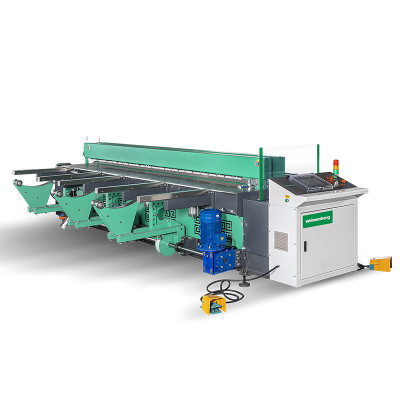
Aquaculture tank fabrication is the process of building watertight thermoplastic vessels — rearing tanks, fish-farm reservoirs, filtration and holding tanks — from HDPE or PP sheet grades with documented suitability for the intended water-contact application, joined by machine butt welding into leak-free walls and bottoms. The three requirements that define good aquaculture tank work are a non-toxic material whose specific grade is validated as suitable for the intended water-contact duty (there is no single universal “fish-safe” certification for plastics — recognised food-contact and/or drinking-water approvals must be checked for the target market and application), watertight welds along the full length of every panel seam so the tank holds water without weeping, and repeatable, machine-controlled welding so a shop can build many tanks with the same quality instead of one good tank and a run of leakers. The practical answer for fabricators is a large-format sheet butt welder with tight heating-plate temperature control and even clamp pressure — for example Weissenberg’s WeiBond 3000, which welds 3–40 mm PE, PP and PVDF sheet up to 3000 mm wide with stepless heating-plate height adjustment, uniform high-density clamping, and PLC parameter control. This guide explains the material decision, the watertight weld requirements and testing methods, how to build tanks in repeatable batches, and where the WeiBond 3000 fits an aquaculture tank line.
What Is Aquaculture Tank Fabrication?
Definition: Aquaculture Tank Fabrication
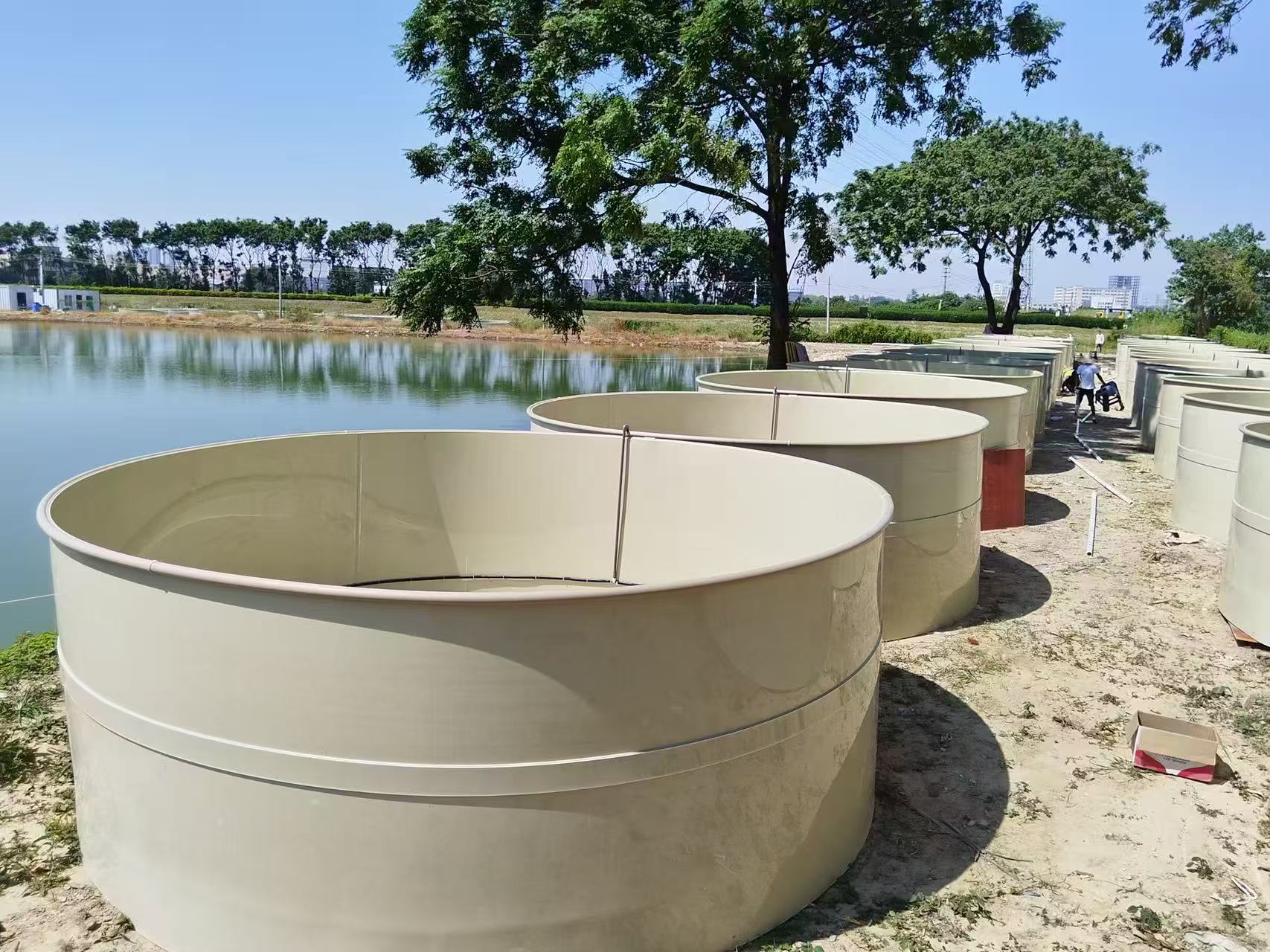
Aquaculture tank fabrication is the manufacture of welded plastic tanks and vessels used to farm, hold, and process aquatic animals and plants — fish, shrimp, shellfish, and algae. Where traditional fish farming relied on earth ponds and concrete basins, modern recirculating and flow-through farms use fabricated thermoplastic tanks because they can be built to precise sizes, moved and expanded, kept hygienic, and made from non-toxic materials that do not leach into the water. The production process is plastic sheet welding: HDPE or PP sheet is cut to panel sizes, butt-welded into wall and bottom sections on a heated-tool welding machine, formed into corners and curves by heating and bending, and completed with fittings, drain ports, overflow weirs, and partition or baffle panels added by extrusion welding. Because a fish tank is a watertight vessel under continuous hydrostatic load, aquaculture tank fabrication is governed by material safety (a non-toxic grade validated for the water-contact duty) and by weld integrity over the whole seam — not just in the middle of the panel. This guide covers the industries driving demand, the material grade and water-contact approval decision, watertight weld requirements and testing, batch production for consistency, and how a large-format butt welder such as the WeiBond 3000 supports aquaculture tank manufacturing.
It is written for plastic fabrication shops entering the aquaculture market, tank manufacturers scaling up output, and fish-farm operators or integrators evaluating welded tank suppliers. For the broader welded-vessel context, see our chemical storage tank manufacturing guide; for the water industry that shares much of the same equipment and welding discipline, see water treatment equipment fabrication.
Why Fish Farming Is Moving to Fabricated Plastic Tanks
Aquaculture is one of the fastest-growing food-production sectors. According to FAO’s The State of World Fisheries and Aquaculture 2026 (SOFIA 2026), total fisheries and aquaculture production reached a record 235 million tonnes in 2024, of which 195 million tonnes were aquatic animals. Aquaculture’s output of aquatic animals passed 100 million tonnes for the first time in 2024, reaching 103 million tonnes (about USD 371 billion at the farm gate), and it now accounts for 53 percent of all aquatic animal production and more than 59 percent of aquatic animal food output. Since the late 1980s, almost all growth in aquatic production has come from aquaculture, while capture fisheries have held within roughly 86–94 million tonnes, and FAO projects total aquatic animal production to reach 214 million tonnes by 2034. Within this broader aquaculture expansion, tank-based and recirculating aquaculture systems create demand for fabricated thermoplastic rearing, holding, filtration and water-storage vessels, and tanks give farmers control that open water cannot — managed water quality and temperature, easier disease and biosecurity control, predictable stocking density, and the ability to place production close to markets. That control comes from the tank itself, and the tank’s performance depends on how well it is welded.
From a fabricator’s point of view, this creates steady, repeatable demand in several directions:
- Rearing and grow-out tanks. Round, rectangular, and partitioned tanks of many sizes, often ordered in matched sets rather than one-offs.
- Reservoirs and storage tanks. Freshwater and seawater storage, degassing and aeration tanks, and emergency water reserves.
- Filtration and treatment vessels. Biofilters, settling and clarification tanks, protein skimmers, and sumps — application-critical parts of recirculating aquaculture systems (RAS).
- Hatchery and nursery tanks. Smaller, high-cleanliness vessels where surface finish and hygiene matter as much as watertightness.
- Live-holding and transport tanks. Tanks used for live hauling and temporary holding, where a reliable seam is a life-support requirement.
The common thread is that each vessel is a watertight container built from welded sheet. A single weak seam does not just drip — it threatens the stock, the floor, and the farmer’s operating schedule, which is why aquaculture buyers tend to care about weld quality and material safety more, not less, than general industrial customers.
Material Selection: Non-Toxic Plastics and Water-Contact Grade Approval for Fish Tanks
The material decision comes before the machine decision, and in aquaculture it has an extra dimension that other tank markets do not: whatever touches the water touches the fish. The plastic must be non-toxic, must not leach harmful substances into the water, and must not give the water an off-taste or off-odour that damages the product. At the same time it must be weldable, tough, and — for outdoor tanks — resistant to sunlight and to the salt, chemicals, and cleaning agents used on the farm. The table below summarizes the workhorse materials. Be precise about what “approved” means here: there is no single, universal “fish-safe” or “aquaculture” certification for plastics, and food-grade or drinking-water approval is not automatically equivalent to a fish-safe rating. What matters is that the specific material grade is validated as suitable for the intended water-contact / aquaculture duty — using recognised food-contact and/or drinking-water approvals where the target market requires them — and those approvals vary by market and by application. Always confirm the specific grade against the supplier’s data and against the scheme applicable in your market.
| Consideration |
HDPE (PE-HD) |
PP (PP-H) |
PVC-U |
| Suitability of the specific grade for water-contact duty (no universal “fish-safe” certification exists) |
Widely used for potable-water and food-contact service when the specific grade is approved for the duty; low water absorption; approved grades are widely used in food- and drinking-water-contact applications |
Suitable for food-contact and water service when the specific grade holds the relevant approval; good chemical and hygiene performance |
Used in water applications, but the specific grade must suit the duty; less favoured where flexibility and impact toughness matter |
| Weldability and applicable DVS 2207 hot-tool part |
Excellent, well-characterized; DVS 2207-1 |
Excellent; DVS 2207-11 |
Good; DVS 2207-12 for PVC-U |
| Toughness and impact behaviour (cold tanks, handling) |
High toughness across a wide temperature band — a common reason HDPE dominates large tanks |
Stiffer and harder than PE; more notch-sensitive, especially at low temperature |
Rigid and impact-sensitive at low temperature; requires care in handling |
| UV / outdoor exposure |
Requires UV-stabilized (black or specially compounded) grades for long outdoor service |
Requires UV stabilization for outdoor use |
Requires UV stabilization; surface can chalk over time |
| Typical aquaculture use |
Rearing tanks, reservoirs, RAS vessels, large storage — the default workhorse |
Warmer-water vessels, filtration and specialty tanks where PP chemistry or stiffness is preferred |
Smaller fabricated parts and specific water-service items |
For most large aquaculture tanks, HDPE is a common starting material when an appropriate water-contact grade is specified, because it combines non-toxicity, toughness, large sheet availability, and excellent weldability. PP-H is chosen where its stiffness or its specific compatibility profile is preferred, and PVC-U appears mostly in smaller fabricated parts. On the compliance side, food-contact and drinking-water applications are commonly assessed against frameworks such as EU Regulation 10/2011 for plastics in contact with food; in Germany, KTW-BWGL and the relevant DVGW certification context; in the United Kingdom, WRAS / BS 6920; and NSF/ANSI/CAN 61 in North America. Note that NSF/ANSI/CAN 61 covers only the health effects of materials in contact with drinking water — it does not certify taste/odour or microbial-growth performance — so confirm which scheme your customer’s market requires before quoting, and make sure the sheet supplier’s certificate matches it. Note again that these are material-approval schemes, not a catch-all “fish-safe” certificate: a grade approved in one market or for one duty is not automatically approved in another, so match the certificate to the specific duty and destination market.
Watertight Weld Requirements and Testing Methods
Watertightness is not a single test but a property the whole fabrication process has to deliver. A welded tank holds water because every seam is fully fused across its full length, every corner is sound, and every fitting is sealed — and because someone checked before the tank shipped. The requirements can be grouped into what the weld must be, and how it is verified.
What the weld must be:
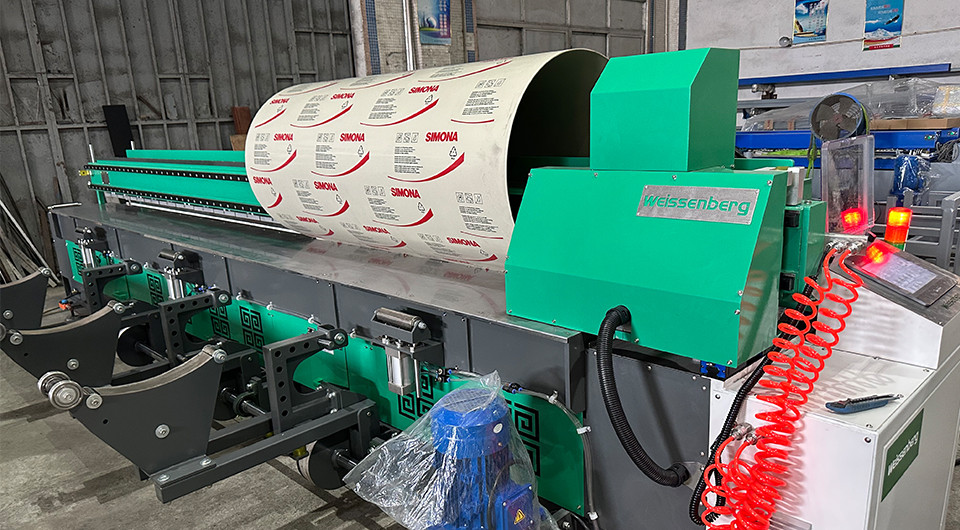
- Fully fused across the entire seam. A butt weld that is strong in the middle and weak or unfused at the ends will weep under sustained head. Uniform heating and uniform clamp pressure across the whole panel are what prevent this.
- Even, aligned joint faces. Misalignment creates a stepped or thinned weld that both reduces the load-bearing section and can hide a channel. Machine clamping holds both panels flat and true through the cycle.
- Controlled heating, changeover, and cooling time. Watertight fusion depends on the correct temperature, pressure stages, and times for the material and thickness — executed the same way on every seam, including the slow cooling that prevents voids and shrinkage cracks in thick sheet.
- Sealed detail joints. Drain ports, overflow weirs, and penetrations are typically added by extrusion welding, which has to be executed and inspected with the same care as the panel seams.
How it is verified:
| Test / check |
What it verifies |
Typical use in tank fabrication |
| Visual inspection of every weld |
Bead form, symmetry, alignment, and surface defects against an assessment standard (the DVS 2202 series for heated-plate and extrusion welds) |
Routine, on every main seam and detail joint, before the tank leaves the bench |
| Water-fill leak test |
Watertightness of the complete vessel under service-like hydrostatic head |
Final acceptance test on the finished tank (e.g., following DVS 2206-2 for unpressurized thermoplastic tanks where applicable) |
| Destructive sample testing |
Actual fusion quality of the weld (e.g., tensile testing of weld samples per the DVS 2203 series) |
Periodic coupons or test welds, or where the QA plan or customer requires physical evidence |
| Parameter and process records |
That each seam was welded to its documented procedure — the traceability layer beneath the physical tests |
Recorded for main seams on machine-controlled welds and filed with the tank order |
For an aquaculture customer, the water-fill test is the demonstration that matters, but the work that makes it pass happens earlier — in the material, the procedure, and the welding machine. Our DVS 2207 compliance guide and quality checklist and the butt welding process and inspection guide cover the procedure and documentation side in detail.
Production Efficiency: Building Multiple Tanks with Consistent Quality
Aquaculture demand usually arrives as volume: a farm or a system integrator orders a set of tanks in matching sizes, not a single vessel. That changes the problem from “can we weld one good tank?” to “can we weld the tenth tank exactly as well as the first?” Consistency, not peak capability, is what makes a tank line profitable.
What repeatable batch production demands
- A stored, retrievable welding program per material and thickness. Instead of re-dialing the machine each time, the operator recalls the proven procedure — the same temperature, pressures, and times every run.
- Machine-controlled parameters. PLC and touchscreen control (as used on WeiBond machines) executes the cycle the same way each time, which reduces operator-dependent variation between shifts.
- Panel standardization. Designing tanks from a small set of standard panel sizes reduces cutting variety, welding variety, and the chance of a setup error between tanks.
- Weld records per unit. Logged parameters let a shop show each tank in a batch was built to the same procedure — valuable for repeat customers and audits.
What stalls a tank line
- Manual re-setup for every seam. Hand methods that depend on operator feel vary from tank to tank, and the variation shows up later as rework.
- Under-sized machine for the panels. If the welder cannot handle the widest panel, seams multiply — more welding time, more leak paths, more inspection per tank.
- Rework hidden until water-fill. A leak found at final test costs the whole tank’s build time; catching defects at the seam is far cheaper.
- No standard procedures. Without written, stored programs, quality walks out the door when an experienced welder does.
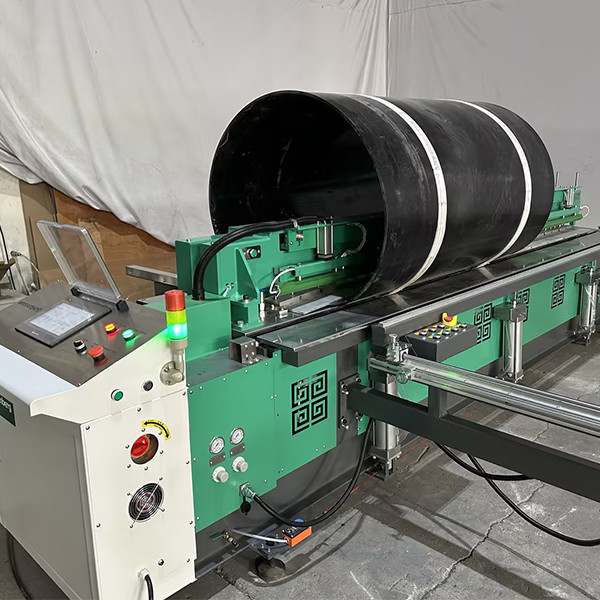
The efficient answer is to size the welder to the widest panel the tank designs need, standardize the panel family, and let machine control carry the repeatability. That is exactly the duty a large-format butt welder is built for — see our CNC vs manual welding analysis for the automation reasoning.
Aquaculture-Specific Design Considerations
Aquaculture tanks share equipment and welding discipline with chemical storage and water-treatment vessels, but several design issues are specific to fish-farm duty and should be settled before quoting:
- Continuous hydrostatic load and full-perimeter watertightness. Rearing and storage tanks stand full of water for long periods, so the whole vessel is under sustained head — not just the base. Every panel seam must be fully fused around the full perimeter, because a single under-heated section can weep continuously and drain a tank over time.
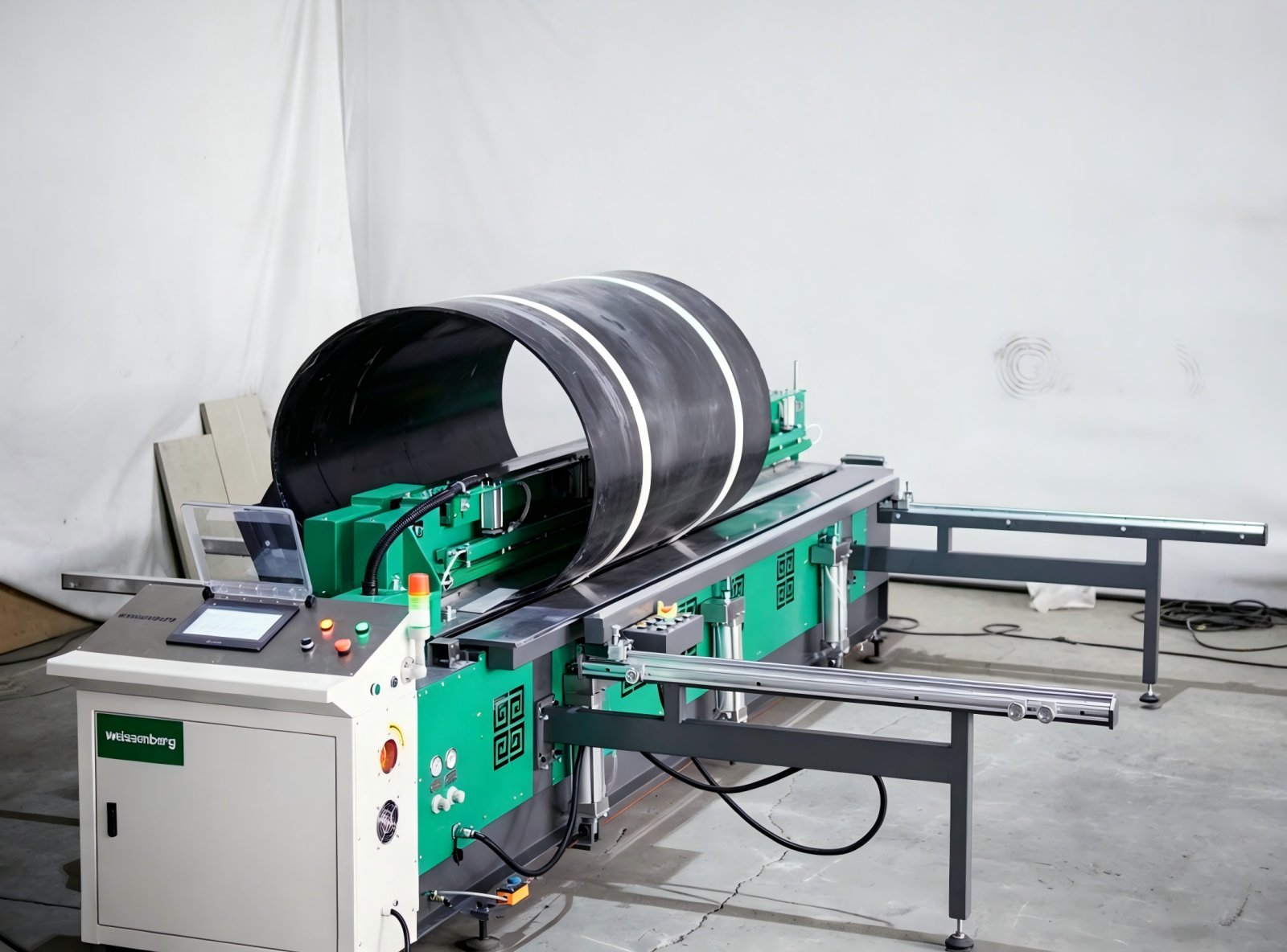
- Round and curved geometry. Many aquaculture tanks are cylindrical or have curved walls, unlike the rectangular chemical tanks built from flat sheet. Curved sections are formed by heating and bending, or on-machine rolling, and the resulting seams and formed corners need the same fusion quality as flat panel butt welds.
- Internal baffles and partition panels. Partitions divide tanks for grading, treatment, or flow control. Each partition adds welded joints on both sides and often has to be watertight itself, so the welding sequence must leave both the partition and the outer wall adequately fused.
- Drains, overflow weirs and bulkhead penetrations. Outlets, overflow weirs, and pipe bulkheads interrupt the tank wall. These are typically sealed by extrusion welding, which must be executed and inspected with the same care as the main seams, since a fitting leak is as damaging as a wall leak.
- Smooth, easy-to-clean interior surfaces. Hygienic aquaculture benefits from a smooth interior with minimal crevices, which helps reduce fouling sites and simplifies cleaning and disinfection — putting a premium on consistent bead form, no undercuts, and no open voids at the weld.
- Outdoor UV and marine/seawater duty. Exposed outdoor tanks need UV-stabilized grades, and seawater service adds material-compatibility, fouling, cleaning-agent and metallic-component considerations that freshwater systems may not face.
- Turnaround and cleaning. Tanks are drained, cleaned, and restocked between production cycles, so welds and fittings must tolerate repeated cleaning and disinfection without cracking, softening, or leaching.
Handled well, these points are all about the weld: full-perimeter fusion, careful extrusion welding of every penetration, and a controlled sequence for partitions and curves. They are what separate an aquaculture tank from a generic vessel with the same sheet and the same machine.
Why the Weissenberg WeiBond 3000 Fits Aquaculture Tank Production
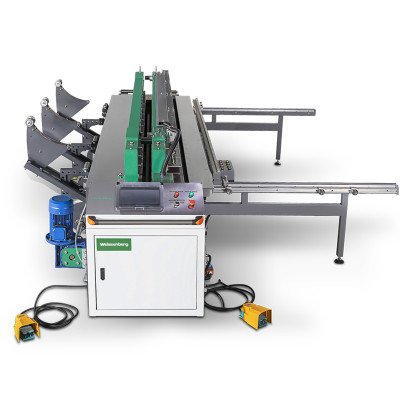
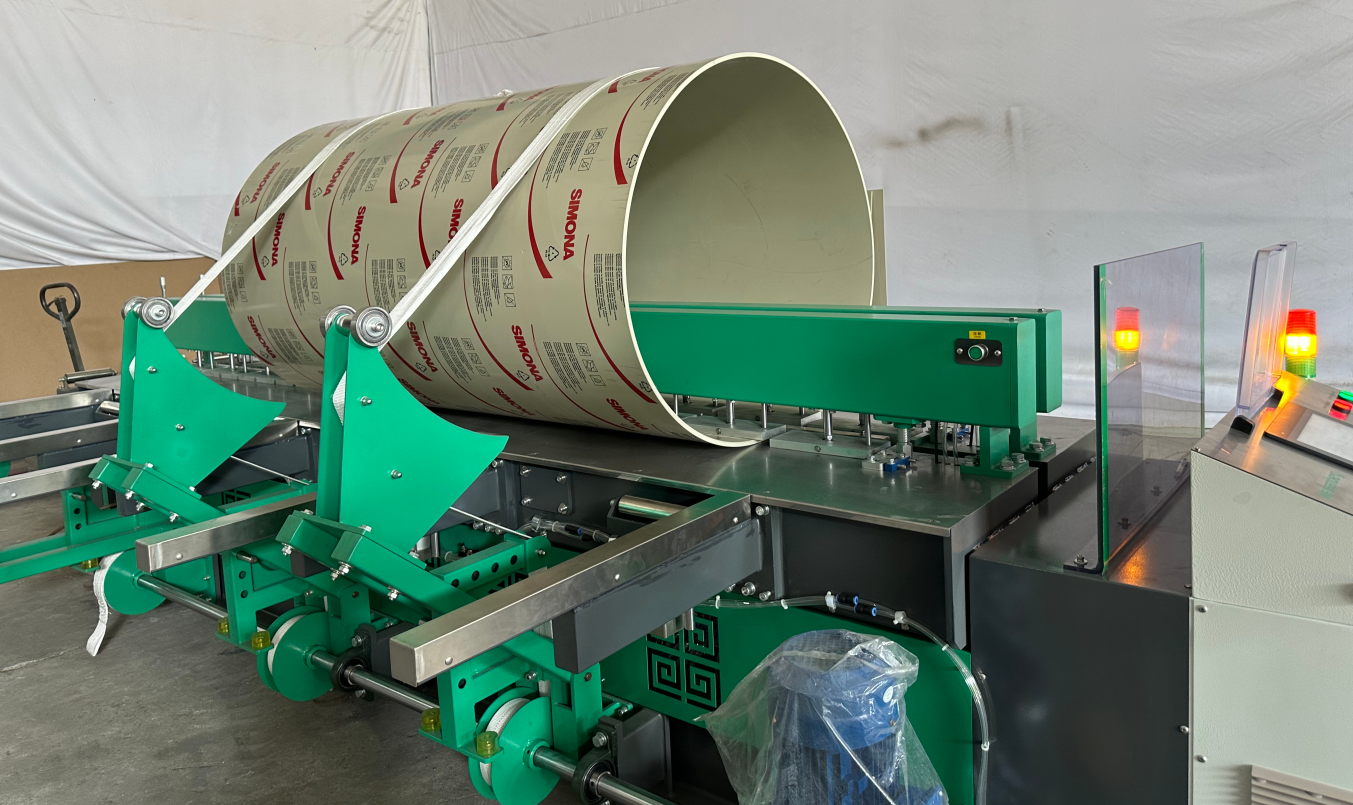
The WeiBond 3000 is a large-format heated-tool butt welder that sits well in the middle-high of the range: it joins thermoplastic sheet from 3 to 40 mm thick across a maximum working width of 3000 mm. That thickness and width band covers a very large share of aquaculture tank panels, from thin hygienic hatchery internals to the thicker walls of large rearing and storage tanks. Its published specifications:
| Parameter |
WeiBond 3000 |
| Maximum working width |
3,000 mm |
| Machine dimensions (L × W × H) |
4,750 × 2,500 × 1,200 mm |
| Welding capacity — PE (0.15 N/mm²) |
3–40 mm |
| Welding capacity — PP (0.10 N/mm²) |
3–40 mm |
| Welding capacity — PVDF (0.10 N/mm²) |
3–40 mm |
| Power supply |
230/400 V, 3/N/PE, 50/60 Hz |
| Power consumption |
7.2 kW |
| Compressed air connection |
4–8 bar |
| Max. heating temperature |
260°C |
| Optional auxiliary tools |
90° angle device; rolling auxiliary device |
Those numbers matter to an aquaculture shop for specific reasons. The 3–40 mm band in PE, PP and PVDF means the same machine serves hatchery internals and heavy rearing-tank walls, so a shop is not forced to buy and qualify two welding processes. The 3000 mm width lets walls and bottoms be built from wider panels, which directly reduces the number of seams per tank — and every seam removed is a weld that does not have to be inspected or leak-tested. The stepless heating-plate height adjustment and ±5°C-class temperature control support consistent heat input across the joint. The high-density welding clamp applies uniform pressure across the weld area, helping maintain alignment and reduce variation in joint formation — which is what prevents the under-pressured weak spots that weep under sustained head. And PLC and touchscreen control lets the shop store and recall programs for different materials and thicknesses, which is the core of repeatable batch production.
The optional 90° angle device and rolling auxiliary device extend the machine from flat panel welding into corner forming and curved wall sections, so a tank design that mixes flat and rounded elements does not require a second forming pass or a separate machine. For the aquaculture tank producer, that combination — wide, thick panel welding plus on-machine forming — is precisely the tool set that turns standard sheet into a finished, watertight vessel with the fewest possible seams. See the WeiBond 3000 product page for full details and the WeiBond butt welder range for how it scales up (WeiBond 5000, 6000, 7000 for wider panels).
Typical Production Scenario: Scaling Tank Output for a Fish-Farm Supplier
This section describes a typical, illustrative production scenario — not a specific named customer case, and with no output or capacity figures quoted. Aquaculture tank orders rarely arrive one at a time. A common pattern in this segment is a fabricator who already welds tanks for the water-treatment or chemical-storage market being approached by a fish-farm customer — or a system integrator — for a matched set of rearing or storage tanks in a range of sizes, often with repeat orders as the farm expands.
The binding constraint is usually not the shop’s skill but its throughput and consistency: if each tank is welded with different panel layouts and hand-varied parameters, output is limited and variation and rework risk increase. Moving to a large-format machine with stored programs changes that. Wider panels cut the seam count per tank, so each vessel takes fewer welding passes; stored programs mean the tenth tank is welded to the same procedure as the first; and process monitoring and parameter logging make the quality of the whole batch visible before the tanks are tested. The result is the outcome fish-farm suppliers are looking for — capacity that scales with demand and a quality level the customer can rely on order after order.
We keep this scenario qualitative deliberately: it is an illustrative example rather than a reported customer result, and the exact capacity gain depends on the shop’s panel sizes, tank designs, and existing equipment, so the right way to size a line is to work from your own drawings. Our engineers can run that sizing with you — talk to a Weissenberg engineer.
Cost-Effective Aquaculture Tank Fabrication Strategies
Because aquaculture buyers order in volume and often to a price, cost control is part of the engineering, not an afterthought. The levers that matter most are the ones that reduce welding work and rework.
Choose this path: volume tank production
- You receive repeat or multi-tank orders and expect the aquaculture segment to grow.
- Standardize a small family of panel sizes and tank diameters/widths to cut variety.
- Invest in a large-format machine (WeiBond 3000-class and up) with stored programs, so wide panels reduce seams and batch consistency is machine-held.
- Add formed corners and curved sections using the 90° angle and rolling options instead of welding extra seams.
- Pair the welder with clean CNC cutting for square edges and a documented inspection/leak-test routine.
Choose this path: entry, small tanks, or mixed fabrication
- Your aquaculture work is occasional and mixed with other sectors, or your tanks are small.
- Start with a mid-range butt welder sized to your typical panel, and build extrusion-welding capability for fittings and detail joints.
- Use standard sheet sizes wherever possible to avoid custom cutting setups.
- Adopt tank-shop documentation habits from day one — they are what repeat and institutional customers audit.
- Outsource the occasional over-width panel weld only while it stays rare; frequent large jobs justify the machine.
Two more cost levers are worth naming. First, seam minimization is cost reduction: a tank built from wider panels costs less in welding time, inspection, and leak-test risk than the same tank built from narrow sheets. Second, catching defects at the seam, not at final test, is where the real savings are — machine-controlled parameters plus visual inspection per the applicable DVS 2202 assessment standard catch problems while the tank is still on the bench. On the cutting side, clean square edges are the foundation of a good butt weld; Weissenberg supplies CNC routers sized to sheet processing, and detail joints are typically added by extrusion welding. For the forming side of corners and curves, see our plastic sheet bending guide.
FAQ
What plastic is used for aquaculture and fish farming tanks?
HDPE is a common starting material for large aquaculture tanks when an appropriate water-contact grade is specified: it is tough, available in large sheets, and well suited to machine butt welding. PP-H is used where its stiffness or specific chemical compatibility is preferred, and PVC-U appears mainly in smaller fabricated parts. The critical requirement is that the specific grade be suitable for contact with water and aquatic stock — confirm the sheet supplier’s food-contact or drinking-water approval for your market before quoting.
How do you make an aquaculture tank watertight?
Watertightness comes from fully fusing every seam across its entire length under uniform conditions, then verifying the result. In practice that means machine butt welding with even clamp pressure and stable heating-plate temperature so the joint does not have weak, under-heated ends; controlled heating, changeover, and cooling times for the material and thickness; careful extrusion welding of fittings and penetrations; and visual inspection of every weld against an assessment standard. The finished tank is then confirmed by a water-fill leak test, and weld samples may be destructively tested where the QA plan requires physical evidence.
Which welding machine is best for aquaculture tank fabrication?
Match the machine to the panel sizes and thicknesses your tank designs use. For aquaculture work that spans thin hygienic internals up to thick rearing-tank walls, a large-format heated-tool butt welder with a wide welding width and a broad thickness band is the efficient choice — it reduces seam count and keeps quality consistent across a batch. Weissenberg’s WeiBond 3000 welds 3–40 mm PE, PP and PVDF sheet up to 3000 mm wide, with stepless heating-plate height adjustment, a high-density welding clamp, PLC and touchscreen control, and optional 90° angle and rolling devices for forming corners and curves.
Are welded plastic tanks safe for fish?
They are safe when the sheet material is a non-toxic grade whose specific grade is validated as suitable for the intended water-contact duty, when the tank is fabricated to a sound welding procedure, and when it is cleaned and tested before use. There is no single universal “fish-safe” certification for plastics; instead the material’s suitability should be confirmed against the applicable food-contact and/or drinking-water scheme for the destination market and application — for example EU Regulation 10/2011 for food-contact plastics, national drinking-water approvals such as KTW-BWGL / DVGW in Germany, WRAS / BS 6920 in the United Kingdom, or NSF/ANSI/CAN 61 in North America. Correct material selection plus watertight, defect-free welds is what keeps the water clean and the stock healthy.
How do you test an aquaculture tank for leaks?
The standard final check is a water-fill leak test: fill the completed vessel with water, hold it for the specified period, and inspect the tank and all seams for leakage — for unpressurized thermoplastic tanks this follows the approach in DVS 2206-2 where applicable. Before that, every weld is visually assessed against the applicable assessment standard (the DVS 2202 series), and weld samples can be destructively tested (for example tensile testing per the DVS 2203 series) where the quality plan or customer requires it. Parameter records from machine-controlled welding back up the physical tests.
Can one machine build many aquaculture tanks consistently?
Yes, and consistency is the main reason to use one. With stored welding programs per material and thickness, PLC-controlled execution, and uniform clamping, the tenth tank in a batch follows the same procedure as the first, so operator-dependent variation between shifts is reduced. Standardizing a small family of panel sizes further reduces setup variation, and parameter logging gives each tank a record tied to its procedure. That repeatability is what lets a shop scale aquaculture tank output without scaling rework.
Key Takeaways
- Aquaculture tank fabrication is watertight thermoplastic vessel building — governed by three requirements: a non-toxic material whose specific grade is validated for the intended water-contact duty (food-grade or drinking-water approval is not, by itself, a “fish-safe” certification); fully fused, leak-free seams; and repeatable machine welding so batches stay consistent.
- HDPE (in a suitable water-contact grade) is the default workhorse for large fish-farming tanks; PP-H is chosen for stiffness or specific compatibility, and PVC-U for smaller parts — always confirm the exact grade against the food-contact or drinking-water approval your market requires.
- Watertightness is a process outcome, not a single test: even heating and uniform clamp pressure across the full seam, controlled heating/changeover/cooling times, sound extrusion-welded fittings, and visual inspection of every weld.
- Verification is layered — visual assessment per the DVS 2202 series, a water-fill leak test (DVS 2206-2 approach for unpressurized tanks), destructive sample testing where required, and parameter records beneath them all.
- Volume orders reward consistency: stored weld programs, machine control, and standardized panel families make the tenth tank as good as the first.
- The Weissenberg WeiBond 3000 welds 3–40 mm PE, PP and PVDF sheet up to 3000 mm wide, with stepless heating-plate height adjustment, high-density clamping, ±5°C-class heating-plate temperature control, PLC/touchscreen programs, and optional 90° angle and rolling devices for forming.
- Cost control is engineering: fewer seams (wider panels, formed corners), defects caught at the seam rather than at final test, and a documented inspection and leak-test routine.
References and Further Reading
- Weissenberg — Aquaculture tank welding solutions page (±5°C temperature tolerance, uniform pressure, Siemens PLC smart control, real-time parameter monitoring)
- Weissenberg — WeiBond 3000 product page (3–40 mm PE/PP/PVDF, 3000 mm max working width, 7.2 kW, 260°C max heating temperature, optional 90° angle and rolling devices)
- Weissenberg — WeiBond plastic sheet butt welder range (WeiBond 1500–7000)
- Weissenberg — Extrusion welding solutions for detail joints, fittings and penetrations
- Weissenberg — CNC router for clean, square sheet cutting
- Weissenberg — Plastic sheet butt welding process: setup, 5-stage welding cycle & inspection guide
- Weissenberg — DVS 2207 compliance guide and quality checklist
- Weissenberg — How to weld HDPE, PP & PVDF sheets: process, temperatures & material guide
- Weissenberg — How to bend plastic sheets: PP, HDPE & PVC line bending guide
- Weissenberg — Chemical storage tank manufacturing: welding standards and engineering considerations
- Weissenberg — Water treatment equipment fabrication: plastic welding solutions
- Weissenberg — CNC plastic sheet welder vs manual welder: is automation worth the investment?
- DVS 2207 series — Welding of thermoplastics — heated tool welding (heated-tool parts: DVS 2207-1 PE-HD; 2207-11 PP; 2207-12 PVC-U), DVS Media GmbH, Düsseldorf
- DVS 2202 series — Evaluation of joints between thermoplastics on piping parts and panels (visual assessment of heated-plate and extrusion welds; verify current supplements and editions)
- DVS 2203 series — Testing of welded joints of thermoplastics (mechanical testing of weld samples; verify current parts and editions)
- DVS 2206-2 (12/2016) — Non-destructive testing of unpressurized tanks and apparatus made of thermoplastics — leak test, DVS Media GmbH, Düsseldorf
- EU Regulation (EU) No 10/2011 — Plastic materials and articles intended to come into contact with food (food-contact suitability; verify current text)
- Drinking-water contact approvals — Germany: KTW-BWGL / relevant DVGW certification context; United Kingdom: WRAS / BS 6920; North America: NSF/ANSI/CAN 61 (health effects of drinking-water contact materials only) — confirm the scheme required in your destination market
- FAO — The State of World Fisheries and Aquaculture 2026 (SOFIA 2026, June 2026): record 235 million tonnes total production in 2024; aquaculture aquatic animal output passed 100 million tonnes for the first time (103 million tonnes); aquaculture supplies 53 percent of aquatic animal production; total aquatic animal production projected to reach 214 million tonnes by 2034
Planning an aquaculture tank line and want a second opinion on material selection, panel sizing, or machine choice? Talk to a Weissenberg engineer — the right setup depends on your tank sizes and thicknesses, the fish species and water conditions, your production volume, and the compliance requirements of your market.