Quick Answer
In a plastic fabrication workshop, the most practical starting point for Industry 4.0 is turning welding into a documented, repeatable and increasingly connected process: parameters held in the machine controller, a record of what happened during each weld, and equipment that can be maintained and improved over its working life. The value is not the technology for its own sake — it is fewer rejects, quality you can show to a demanding customer, and faster onboarding of new operators. Most shops get there in stages, starting with a controller-based machine that stores and repeats welding programs, then adding documentation and a simple data review loop.
Definition: Industry 4.0 in Plastic Sheet Fabrication
Industry 4.0 — also called digital manufacturing or the smart factory — is the shift from machines that are set and watched by hand to machines that hold their own process parameters, record what happened during a weld, and can exchange information with the systems around them. In plastic sheet welding, this means a controller that stores the material, thickness and cycle settings for a job; process data that can be captured as the weld runs rather than written up afterwards; and equipment whose behaviour can be reviewed, repeated and improved over its service life. It is a direction rather than a single purchase, and different machines implement different parts of it. It does not mean a machine that promises to weld for you. It means a machine that helps you prove, repeat and improve how you weld.
Plastic sheet fabrication is in the middle of a quiet shift. For decades the craft lived in the operator’s hands — a feel for the heating plate, a sense of when the material was ready, a bead judged by eye. That knowledge is real and valuable, but it does not scale, it does not travel cleanly between shifts, and it cannot be shown to a customer who asks how a tank was welded. The changes grouped under “Industry 4.0” move part of that craft out of the operator’s hands and into the machine — so that a proven way of welding can be stored, repeated and reviewed instead of being reinvented each shift.
This article is written for fabrication managers and technical buyers who keep hearing the words “digital” and “smart” and want to know what is genuinely useful in a plastic welding workshop, what is still emerging, and what to plan for. It is an industry report rather than a product page: the goal is to help you separate the digital features that change your results from the ones that simply sound modern. For the underlying process variables, see our guides to temperature control and pressure control, which explain why a machine that can hold its parameters repeatably is the foundation everything digital sits on.
Why Industry 4.0 Is Reaching Plastic Fabrication Now
Many metal-fabrication processes adopted CNC control, automated bending and robotic welding earlier and more broadly than plastic sheet fabrication. Plastic sheet welding and bending remained more operator-dependent because many applications could historically be produced with less automation and less formal process documentation. Three forces are now closing that gap at the same time.
Markets Have Moved Up the Value Chain
PP, PE, PVC and PVDF sheet are no longer only used for simple parts. They build chemical storage tanks, scrubbers, ducting, water-treatment equipment, plating tanks and semiconductor components — applications where failure is expensive and where the end customer often has a quality department of their own. Those customers may ask for documented procedures, recorded parameters and evidence of process consistency, depending on the project and quality requirements. A paper logbook filled in at the end of a shift is a weak answer. Captured process data is a strong one.
Process Know-How Is Harder to Transfer
Many fabrication shops face a growing challenge in transferring process know-how between experienced operators and newer staff. A workshop that depends entirely on one person’s judgement is exposed when that person moves on, changes role or retires. Storing proven parameters in the machine, so a less experienced operator can call up a known setup and repeat it, is one of the most practical forms of continuity a fabricator can build — and it turns a personal skill into a documented one.
The Machine Capability Now Exists
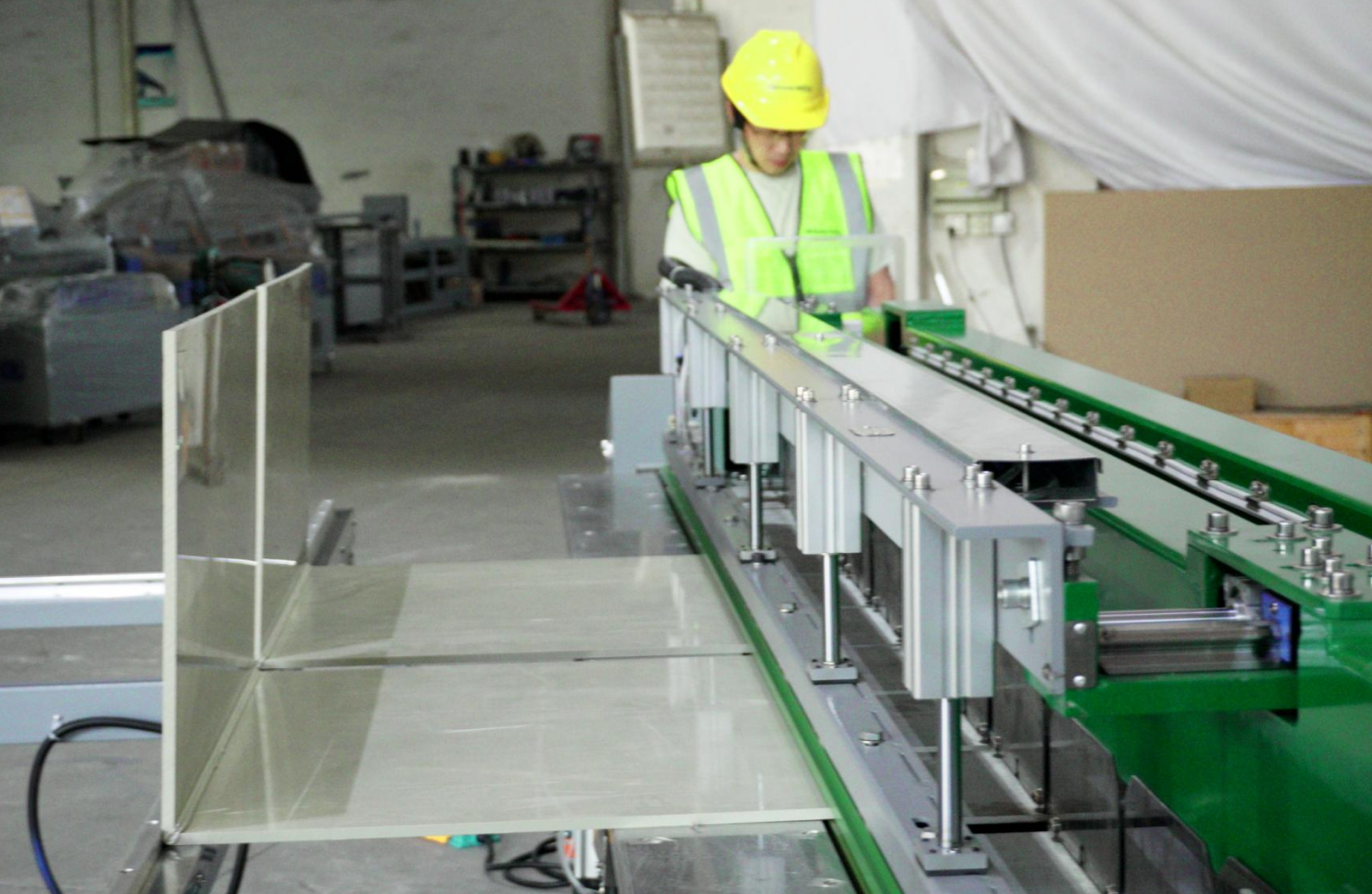
PLC-based control, proportional pneumatics and servo-driven motion have become normal in industrial equipment, and they have reached plastic sheet welding machines as well. Once a machine already has a controller orchestrating temperature, sequencing and pressure, the same controller can, where the control architecture supports it, store programs, display settings and make process data available — so the digital feature set is a natural extension of the control architecture, not an expensive add-on bolted onto a manual machine.
The Digital Features That Actually Matter
Not every digital label earns its place in a welding workshop. The eight capabilities below are the ones worth understanding, in rough order of how soon most fabricators feel the benefit. They are, first, the capability set that Industry 4.0 describes — what a machine or workshop can do when the feature is present — rather than a claim that every machine on the market includes all of them. The table keeps them together; the notes after it explain where the value really sits.
| Feature |
What it does |
What it changes on the shop floor |
| Parameter storage and weld programs |
Material, thickness and cycle settings are stored in the controller and recalled for a job |
The tenth weld follows the same program as the first, and a new operator can run a known setup |
| Digital setpoint control |
Temperature, time and pressure are set as values rather than dials, and applied by the controller |
Fewer transcription errors and less drift from a bumped knob or a hand-held gauge |
| Closed-loop control of a variable |
The controller reads a measured value and corrects back toward the setpoint |
More stable temperature or speed where the machine supports it — useful on longer runs and in changing ambient conditions |
| Process data logging |
Key parameters for each weld are recorded as the cycle runs |
A weld can be traced back to the conditions that produced it, instead of being reconstructed from memory |
| Reporting and traceability |
The logged record is turned into output a customer or auditor can accept |
Can simplify customer QA review and audit preparation where traceability is required |
| Remote monitoring |
Machine status and data are viewed away from the machine |
Useful for multi-site or multi-machine oversight — the least mature area, and one to question closely |
| Software and firmware updates |
The control software can be revised after delivery |
A machine can gain improvements during its life instead of being frozen at the version it shipped with |
| Integration with the wider business |
Weld data connects to production planning, ERP or quality systems |
Longer-term goal; pays off where orders, travellers and quality records are already digital |
1. Parameter Storage Is the Real Starting Point
Everything else depends on this. If the machine cannot repeat a known setup, capturing data about that setup only documents inconsistency. A machine that stores welding programs lets a shop fix a proven procedure for a given material and thickness, remove the guesswork from setting it again, and tie the result to the specification rather than to whoever is on shift. This is also the most honest yardstick for “digital” in a welding machine: ask whether the parameters are stored in the controller or set by hand each time.
2. Digital Displays and Setpoint Control
A digital readout is modest technology, but it removes a class of ordinary mistakes. When temperature and speed or pressure are set as numbers and shown as numbers, the operator compares a value against a specification instead of estimating a position on a dial. On portable and roofing welders, digital displays for temperature and speed have become common for exactly this reason, and they pair naturally with a closed-loop control system that holds those values despite small disturbances.
3. Closed-Loop Control — Useful, and Worth Understanding Precisely
A closed loop means the controller measures a variable and corrects toward the setpoint, rather than simply applying a command and hoping. Some welding units use a closed-loop control system that automatically adjusts temperature and speed; that is a genuine advantage where ambient temperature, supply voltage or material feed vary. It is worth being precise about the limits, though: closed-loop control of one variable (such as heater temperature) does not make the whole weld self-managing. Pressure, changeover time, fit-up and the procedure itself still have to be right. Where it is specified on selected Weissenberg sheet-welding models, stable heating-plate temperature control is held within about ±5 °C — the kind of precision this contributes to. It improves consistency of the heating step, not the correctness of the whole process.
4. Logging, Reporting and Traceability
Data logging is where digital manufacturing meets the quality department. The DVS 2207 series defines process parameters that need to be controlled and documented according to the applicable welding procedure and quality requirements, and beyond the standard, project specifications, customer QA plans and audits increasingly ask for documented welding parameters and inspection records. Depending on the procedure, specification and quality system that apply to your work, welding parameters may need to be documented and traceable from one weld to the next. A machine or workflow that captures those parameters turns a request for evidence into a lookup rather than a scramble.
How Weissenberg’s Machines Support Digital Manufacturing Today
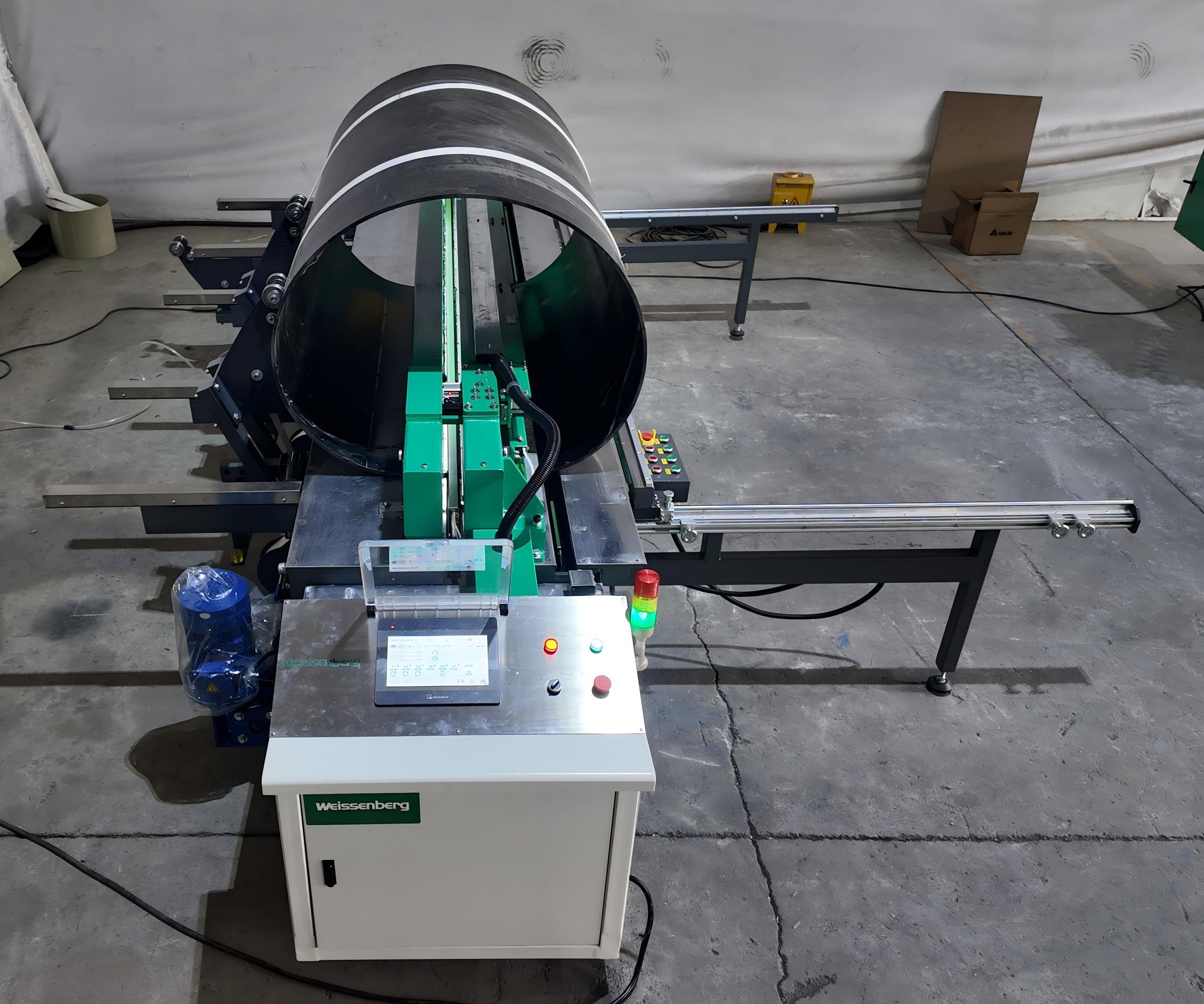
It helps to separate two things. The eight capabilities above are the industry’s direction of travel, and a supplier may or may not ship each one today. Weissenberg’s approach is deliberately grounded: the digital capabilities it builds are those that sit on control architecture the machine needs anyway for welding quality, so they reinforce the process rather than decorate it. The table below maps the ideas to how we currently apply them across the range; treat the specifics as directional and confirm the exact feature set of the model you are considering.
| Digital capability |
How it is applied on Weissenberg machines |
| Controller-based architecture |
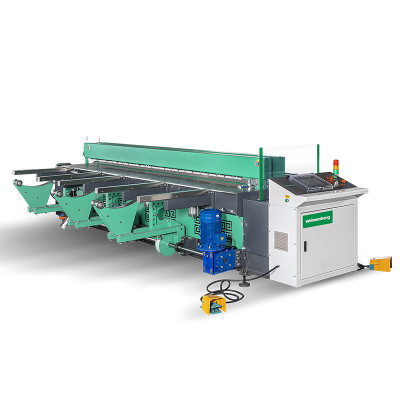
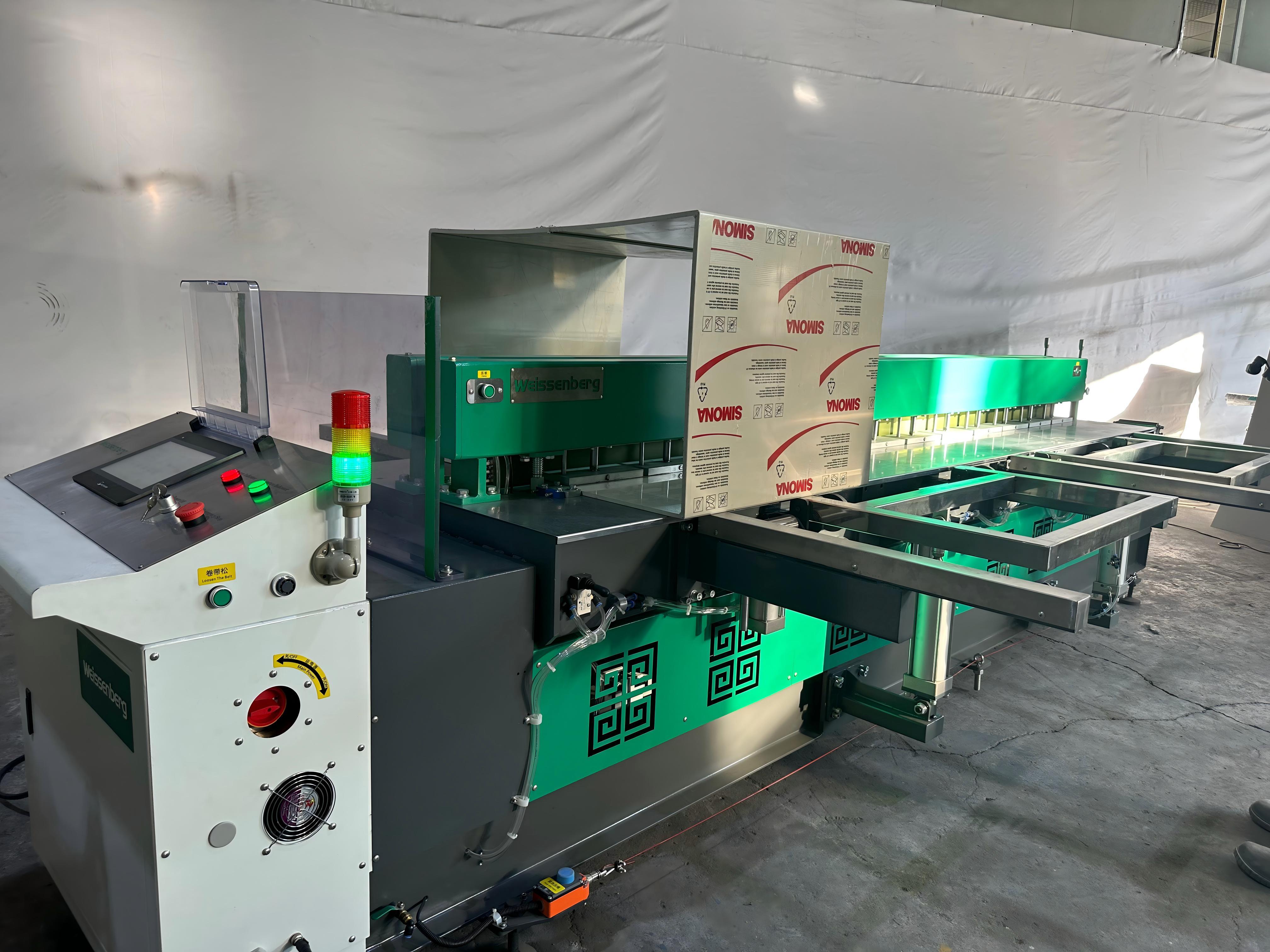
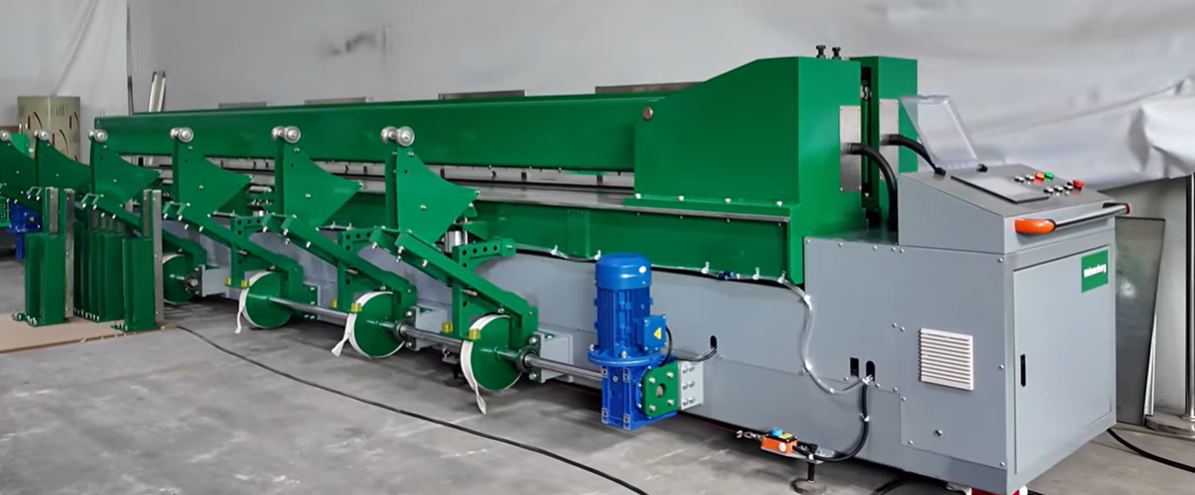
The WeiForm Pro 3000 welding-and-bending machine is built around a Mitsubishi PLC with SMC pneumatic components, with servo-controlled electric cylinders driving the bending motion, so the weld and bend sequence is programmed rather than improvised |
| Controller-based setpoint control |
Process variables such as heating and welding pressure are set and applied by the controller rather than by hand dials, which supports repeatable setpoints; on machines that store welding programs, a proven setup can be recalled instead of re-set each cycle |
| Commanded process variables |
Welding pressure is managed through SMC pneumatic components with proportional control, so the joining force follows the controller rather than a hand-turned regulator |
| Stable thermal control |
On selected models, heating-plate temperature is held within about ±5 °C, supporting the repeatability that any logged data depends on |
| Intelligent control on large machines |
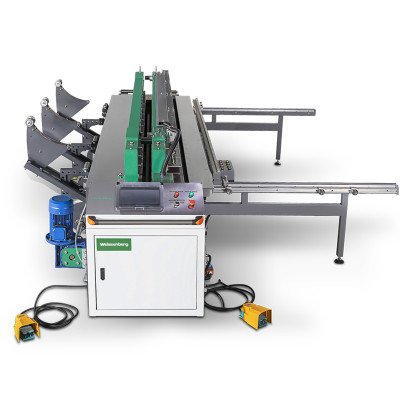
Wide-format WeiBond welders, such as the WeiBond 5000, use an intelligent control system with core parts from Mitsubishi and other established brands, suited to chemical, environmental and electroplating work |
| Digital displays on portable units |
Portable and roofing welders use digital displays for temperature and speed, and some units, such as the RWP1 roofing welder, use a closed-loop control system that automatically adjusts temperature and speed for stable parameters |
| Process stability as a precondition |
Sturdy frames and high-density clamps on the larger WeiBond models hold the sheet squarely under joining force — without that mechanical stability, data would only document variation |
It is worth being honest about the boundary. What the current range does well is the foundation of digital manufacturing: control-based parameter setting, repeatable process variables and, on selected units, closed-loop control and digital displays. Per-weld automatic data logging, automated weld-report generation, remote monitoring, remote software updates and enterprise (ERP) integration are areas where the industry as a whole is still maturing — the direction is real, but any supplier claim in that territory should be tested against what is actually delivered today.
Remote Monitoring and Software Upgrades: What Is Real Today
These two features appear in almost every Industry 4.0 conversation, and they deserve a clear-eyed look, because they are where marketing and reality most often part company.
Remote monitoring means viewing machine status or weld data away from the machine — across a workshop, across a site, or across a company. It is genuinely useful for a business running several machines or several plants, because it allows a manager or engineer to see what is happening without walking the floor. But it depends on a data path: a way to export or transmit the record, a platform to view it on, and someone who will act on it. In plastic sheet welding, ask specifically whether monitoring is included or optional, whether it works without a persistent internet connection, and who owns and hosts the data.
Software and firmware updates mean the machine’s control software can be revised after delivery rather than being fixed at the version it shipped with. This matters over the long working life of industrial equipment: bug fixes, small feature improvements and compatibility changes are all possible where the architecture allows them. The practical questions are how updates are delivered (on-site, by USB, or over a network), whether a change can be rolled back, and whether an update invalidates any approved welding program. A sensible rule for a buyer is to prefer a machine whose control software can be maintained, and to expect a clear answer on how.
Data-Driven Quality Management in the Workshop
The phrase sounds grand, but the useful version is modest and starts with one habit: record the critical parameters for the welds or jobs that your procedure, QA plan or customer requirements call for, and review them when something goes right or wrong. That single loop already produces three concrete improvements.
- Diagnosis instead of guesswork. When a seam fails a test, the record shows the temperature, time and pressure that produced it. The question changes from “what did we do differently?” to “here is what we did, and here is where it left the intended process window.”
- Confirmation of what works. Logged data also captures the welds that passed. A shop can identify the settings that reliably produced a sound joint on a given material and thickness, and standardise on them.
- A record for the customer. Where traceability is required, the same data answers the question before it is asked, shortening sign-off and reducing disputes.
The trap is collecting data and never using it. A log that no one reads is cost without benefit. The value comes from a short, regular review — even a periodic look at exceptions and failures — and from acting on what it shows. Start narrow: a few critical parameters on your most demanding work, reviewed often, beats a mountain of data reviewed never.
Preparing Your Workshop for Industry 4.0: An Investment Roadmap
No fabricator needs to buy the future in one step. The sensible path is staged, with each stage justified by the one before it, so that spending follows a real problem rather than a trend.
| Stage |
What you add |
What it delivers |
| Stage 0 — Audit |
Write down the materials, thicknesses, seam lengths and tolerances of your most demanding current and target work |
A clear picture of where consistency and traceability actually matter, so later spending is targeted |
| Stage 1 — Controllable process |
A machine with controller-based parameter setting, stored programs and repeatable process variables |
The foundation: welds that can be repeated, and a process stable enough for data to mean something |
| Stage 2 — Documentation |
A simple way to record the parameters used for each production weld and tie them to the job |
Traceability for audits and customer QA, and the ability to diagnose failures from evidence |
| Stage 3 — Review loop |
A regular review of the recorded data to spot drift, exceptions and improvements |
Continuous improvement that is based on records rather than impressions |
| Stage 4 — Connectivity |
Remote monitoring or integration with planning and quality systems, where the business is ready for it |
Oversight across machines and sites, and weld records that live alongside the rest of the order data |
The order matters more than the speed. A shop that buys connectivity before it has a repeatable process is paying to distribute noise. A shop that has Stage 1 and Stage 2 in place can justify each later step with evidence from its own production.
How Digital Plastic Welding Improves Quality, Training and Customer Confidence
Digital manufacturing is easy to frame as an internal efficiency project, but its commercial effect can be just as important, particularly for fabricators chasing more demanding work.
- You can answer the quality question. Many industrial buyers and project QA teams increasingly value documented welding procedures and traceable process records. A fabricator who can provide them clears a barrier that holds smaller competitors back.
- Better process control reduces inconsistency. More repeatable welding can mean less rework and a lower risk of field failures — and each avoided failure is usually worth more than the machine feature that prevented it.
- You onboard faster. A stored, proven program lets a new operator produce work to standard far sooner than years of trial and error would allow, which protects capacity as experienced staff move on.
- You gain a defensible story. In a tender or an audit, being able to describe a controlled, documented process can strengthen audit readiness and differentiate you from shops that can only say they are careful.
The framing that works best with customers is not “we have smart machines” but “we can show you how your part was welded, and repeat it.” That is what digital capability is really selling.
How to Evaluate Digital Claims Before You Buy
Because “digital” is fashionable, it is worth turning claims into questions and insisting on specific answers. Ask every supplier on your shortlist the following.
- Parameters. Are welding parameters stored in the controller as programs, or set by hand for each weld?
- Recall. Can a proven setup for a material and thickness be called up and repeated exactly?
- Data. What does the machine record automatically, in what format, and how is it retrieved?
- Traceability. Can the records be tied to a specific job or part, and presented to a customer?
- Displays. Are temperature, time and pressure shown as values the operator can compare against a specification?
- Closed loop. Which variables are actually closed-loop controlled, and which are simply commanded? Get a precise answer, not “fully automatic”.
- Updates. Can the control software be updated after delivery, how are updates applied, and can they be rolled back?
- Remote monitoring. Is it included or optional, does it need a live internet connection, and where does the data live?
- Mechanical base. Are the frame, clamps and motion stable enough that recorded data reflects the process rather than the machine’s flex?
- Support. What training and documentation come with the machine, and how does the supplier support the controller over its life?
Ask for a demonstration on your own material and thickness, and watch how the parameters are set, stored and read back — that short exercise usually separates a genuinely controllable machine from one with a modern-looking panel.
Frequently Asked Questions
Does Industry 4.0 mean plastic welding will become fully automated?
Not necessarily. Sheet welding still depends on material, thickness, fit-up and a defined welding procedure, and a human still matters for setup, inspection and judgement. What digital control changes is repeatability and documentation: the machine holds and repeats the parameters, and can record what happened. Automation of the whole process is a much longer path and is not what most fabricators need first.
What is the first digital step a small shop should take?
A machine that stores its welding parameters in a controller instead of relying on hand-set dials. That single step gives you repeatable, proven setups that a new operator can recall, and it is the precondition for meaningful data later. Everything else — logging, reporting, remote monitoring — builds on a process that can already repeat itself.
Is remote monitoring worth it for a single-machine workshop?
Usually not as a first purchase. Remote monitoring earns its place where there are several machines or sites to oversee, or where an engineer needs to support production from elsewhere. For a single-machine shop, the higher-value data is generally the local weld record used for quality and traceability, not a dashboard nobody is watching.
How does data logging relate to DVS standards?
The DVS 2207 series defines process parameters that need to be controlled and documented according to the applicable welding procedure and quality requirements. Whether a full record is needed for every production weld depends on the procedure, project specification and quality system that apply, so it is worth confirming the current edition of the standard and your customer’s requirements. Data logging is simply the practical way to meet those requirements and to diagnose a problem later from evidence.
Will a digital machine make my welds automatically good?
No. A controller can store and repeat parameters and, where closed-loop control is fitted, hold a variable such as temperature or speed against a setpoint. It cannot choose the right procedure, correct poor fit-up, or guarantee the joining step. Digital capability sharpens a sound process; it does not replace one.
Key Takeaways
- For a workshop, the practical starting point for Industry 4.0 is a documented, repeatable and increasingly connected welding process — not the whole of what the term covers.
- The single most valuable digital feature is parameter storage — the ability to recall and repeat a proven setup instead of setting it by hand each time.
- Digital displays and setpoint control remove ordinary setting errors; closed-loop control of a variable such as temperature or speed adds stability, but does not make the whole weld self-managing.
- Data logging is how digital manufacturing meets quality assurance, and it maps onto the DVS practice of controlling and documenting process parameters for the applicable procedure.
- Per-weld automatic logging, automated reporting, remote monitoring, remote software updates and ERP integration are the less mature parts of the picture; ask precisely what is shipped, how it is delivered, and where the data lives.
- Weissenberg’s current range is built on controller-based architecture — for example a Mitsubishi PLC with SMC pneumatic components and servo-controlled electric cylinders on the WeiForm Pro 3000, and an intelligent control system on wide-format WeiBond welders — supporting controller-set parameters, proportional pressure control and stable heating-plate temperature within about ±5 °C on selected models.
- Adopt in stages: controllable process first, then documentation, then a review loop, then connectivity. Connectivity before repeatability simply distributes noise.
- Commercially, the payoff is being able to show a customer how their part was welded and repeat it — which can strengthen audit readiness, reduce failures and speed up onboarding.
References and Further Reading
Related Weissenberg Guides
Product References
- Weissenberg — WeiForm Pro 3000 welding & bending machine (3,000 mm working width; welding 3–30 mm; bending 3–20 mm at 5°–95°; Mitsubishi PLC and SMC pneumatic components; servo-controlled electric cylinders for bending; 4–8 bar; 260 °C max heating temperature)
- Weissenberg — WeiBond butt welder range — plastic sheet butt welders with a sturdy frame and high-density clamps for stable, consistent welds (PE, PP and PVDF)
Standards
- DVS 2207 series — Welding of thermoplastics (heated-tool parts: DVS 2207-1 PE-HD, 2207-11 PP, 2207-12 PVC-U, 2207-15 PVDF; extrusion welding: DVS 2207-4), DVS Media GmbH, Düsseldorf — verify current edition
- DVS 2202 series — Evaluation of joints between thermoplastics — verify current edition
- DVS 2203 series — Testing of welded joints of thermoplastics — verify current edition
Planning a move toward a more controlled, documented plastic welding process — or deciding which digital features are worth paying for on your next machine? Talk to a Weissenberg engineer — the right roadmap depends on your materials and thicknesses, your production volume, and the traceability and testing requirements of the markets you serve.