
Where Plastic Sheets Meet Unbreakable Joints
From First Machine to Batch Production: WeiForm Pro 3000 in a Colombian Workshop
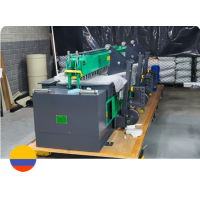
For a thermoplastic fabrication company in Colombia, introducing the WeiForm Pro 3000 was more than adding another machine to the workshop.
It was the company's first dedicated plastic sheet butt welding machine, introducing a new production process while also adding sheet bending capability to the workshop.
What makes this project particularly valuable is what happened after delivery. The customer's team progressed from learning a new welding process to using the machine in daily production. Later, the customer shared additional project photos and confirmed that the WeiForm Pro 3000 had already helped them complete batch fabrication projects.
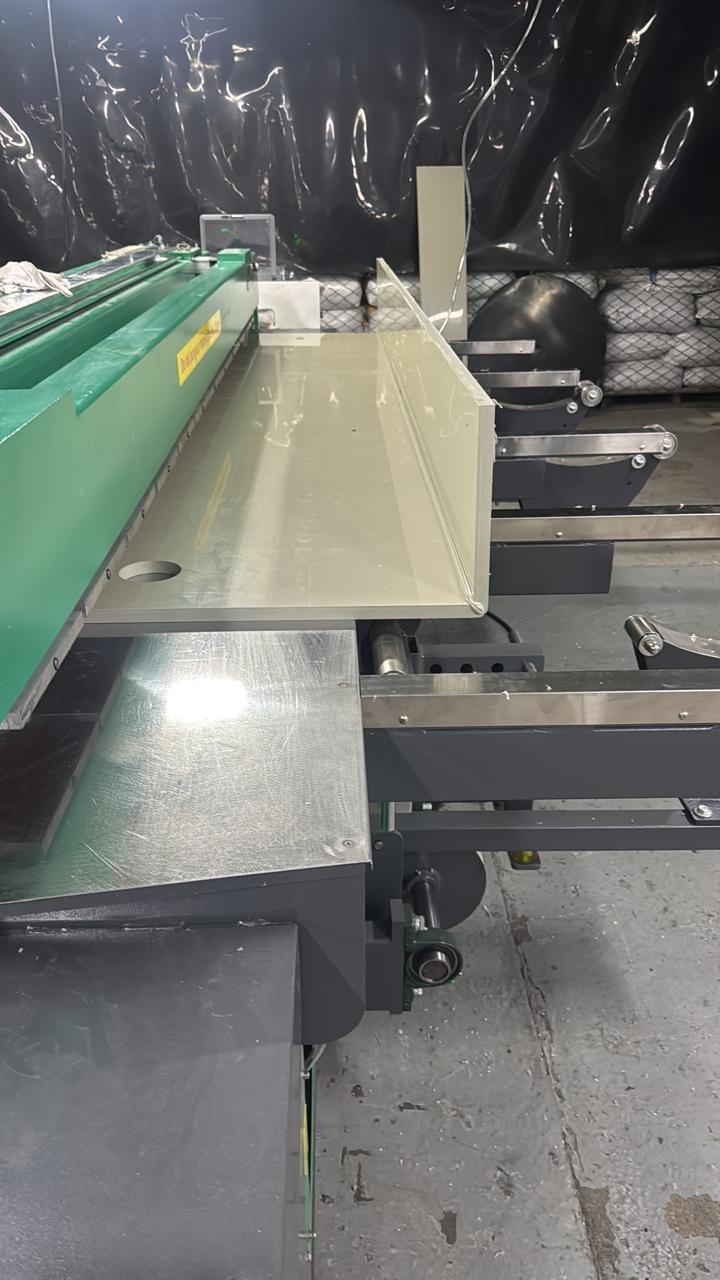
WeiForm Pro 3000 operating in the customer's thermoplastic fabrication workshop in Colombia.
Project Overview
| Market | Colombia |
|---|---|
| Customer Type | Thermoplastic fabrication workshop |
| Project Goal | Introduce in-house plastic sheet butt welding and bending capability |
| Selected Machine | WeiForm Pro 3000 |
| Working Width | 3000 mm |
| Welding Thickness | 3–30 mm |
| Bending Thickness | 3–20 mm |
| Bending Angle | 5°–95° |
| Typical Materials | PP, PE, PVC and PVDF |
| Key Challenge | First dedicated plastic sheet butt welding machine in the customer's workshop |
| Project Result | Integrated into daily production and used to support batch fabrication projects |
The Starting Point: Their First Plastic Sheet Butt Welding Machine
The customer first contacted Weissenberg in December 2025 while evaluating equipment for its thermoplastic sheet fabrication requirements.
This was not a replacement for an older plastic sheet welding machine.
The WeiForm Pro 3000 would be the first dedicated plastic sheet butt welding machine introduced into the customer's workshop.
That made the purchasing decision different from simply replacing familiar equipment. The customer was introducing a new fabrication process that its operators would need to understand and integrate into their existing production workflow.
The machine therefore needed to address several practical questions:
• Could the operators become familiar with the new butt welding process?
• Could welding and bending be handled efficiently in the same workshop?
• Would a 3-meter platform match the customer's sheet fabrication requirements?
• Could the system support different thermoplastic materials and project types?
• Would technical support be available while the team learned the new process?
Why an Integrated Welding & Bending Machine Made Sense
Instead of installing separate production platforms for plastic sheet butt welding and sheet bending, the customer selected the WeiForm Pro 3000 Plastic Sheet Welding & Bending Machine .
The 3000 mm platform provides the working width required for medium-to-large thermoplastic panels, while combining two important fabrication processes on one machine.
For this workshop, the selected configuration provided:
• 3000 mm maximum working width
• Plastic sheet butt welding from 3–30 mm
• Sheet bending from 3–20 mm
• Adjustable bending angle from 5°–95°
• PLC-controlled operation
• Pneumatic sheet clamping
• Capability for common engineering thermoplastics including PP, PE, PVC and PVDF
For a workshop introducing professional sheet butt welding for the first time, combining welding and bending also created a more compact path toward expanding its in-house fabrication capability.
Customer Requirement vs. Selected Solution
| Customer Requirement | WeiForm Pro 3000 Solution |
|---|---|
| Introduce professional plastic sheet butt welding | Dedicated heated-tool butt welding process |
| Process sheets up to 3 meters wide | 3000 mm working width |
| Add sheet forming capability | Integrated bending function |
| Work with different thermoplastic materials | PP, PE, PVC and PVDF capability |
| Produce different formed geometries | Adjustable bending from 5° to 95° |
| Help operators adopt an unfamiliar welding process | Structured machine operation plus remote technical guidance |
| Support repeated production work | Controlled welding and bending processes on one platform |
A Fast Project from Inquiry to Delivery
The project moved quickly.
The customer first contacted Weissenberg on December 15, 2025. Following technical discussions and configuration confirmation, the order was placed on December 17.
The customer also had a clear timing requirement: the machine needed to be completed and shipped before the Chinese New Year holiday.
To meet that schedule, manufacturing, assembly, functional testing, welding and bending verification, pre-shipment inspection and export preparation were coordinated within a compressed production window.
Factory testing photos and videos were shared before shipment so the customer could review the machine's operation prior to dispatch.
Meeting the delivery schedule was important—but for this project, shipment was only the beginning of the customer journey.
After Delivery: Learning a New Welding Process
Because the customer had never previously operated a dedicated plastic sheet butt welding machine, the first challenge after installation was operator familiarization.
The question was not only whether the machine could weld—it was whether the customer's team could confidently incorporate the process into everyday production.
Plastic sheet butt welding requires operators to understand the complete production cycle, including:
• Sheet positioning and alignment
• Clamping
• Heating
• Changeover
• Joining
• Cooling
• Inspection of the completed weld
After the WeiForm Pro 3000 arrived in Colombia, the team used operation videos and technical guidance from Weissenberg while becoming familiar with the machine and welding sequence.
With practice, the operators progressed from learning the basic procedure to using the equipment as part of their actual fabrication workflow.
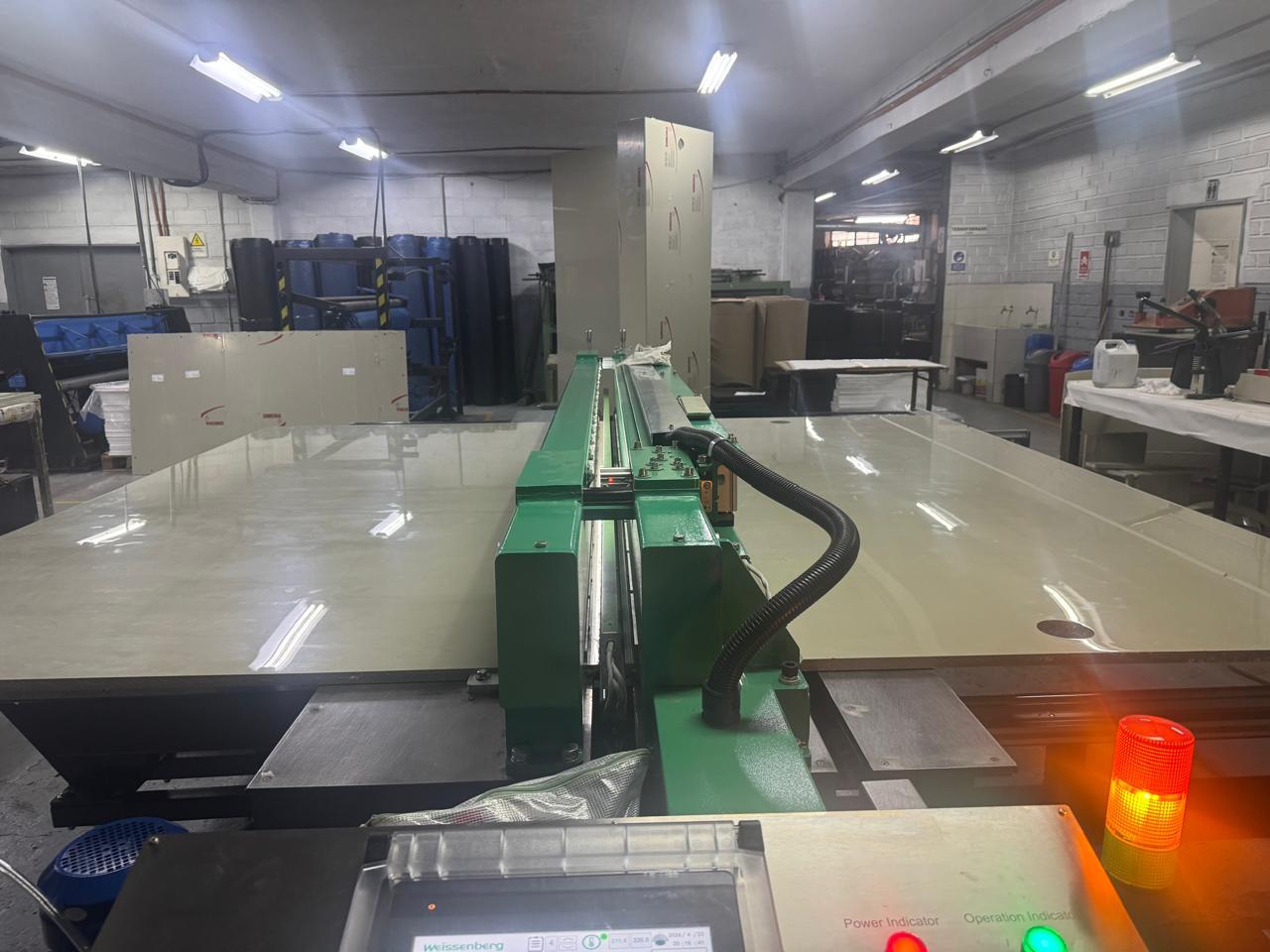
The customer's team using the WeiForm Pro 3000 during thermoplastic sheet fabrication.
From First Machine to Batch Production
First Machine → Operator Familiarization → Trial Production → Daily Use → Batch Fabrication
Several Months Later: Integrated into Daily Production
Several months after delivery, the customer shared new photos from its workshop.
The images showed the WeiForm Pro 3000 no longer as newly delivered equipment, but as a machine working inside the customer's real manufacturing environment.
This provided a different kind of validation from factory acceptance testing.
Factory tests verify the machine before shipment. Real workshop operation shows whether the equipment can successfully become part of:
- • Actual production schedules
- • Operator routines
- • Material handling
- • Workshop layout
- • Different fabrication requirements
- • Day-to-day manufacturing activities
For this Colombian customer, the machine had successfully moved beyond installation and operator training into regular production use.
From Daily Use to Batch Fabrication Projects
The customer's later feedback marked another important step in the project.
In addition to showing the machine in daily operation, the customer shared further project photos and told us that the WeiForm Pro 3000 had already helped the workshop complete batch fabrication work.
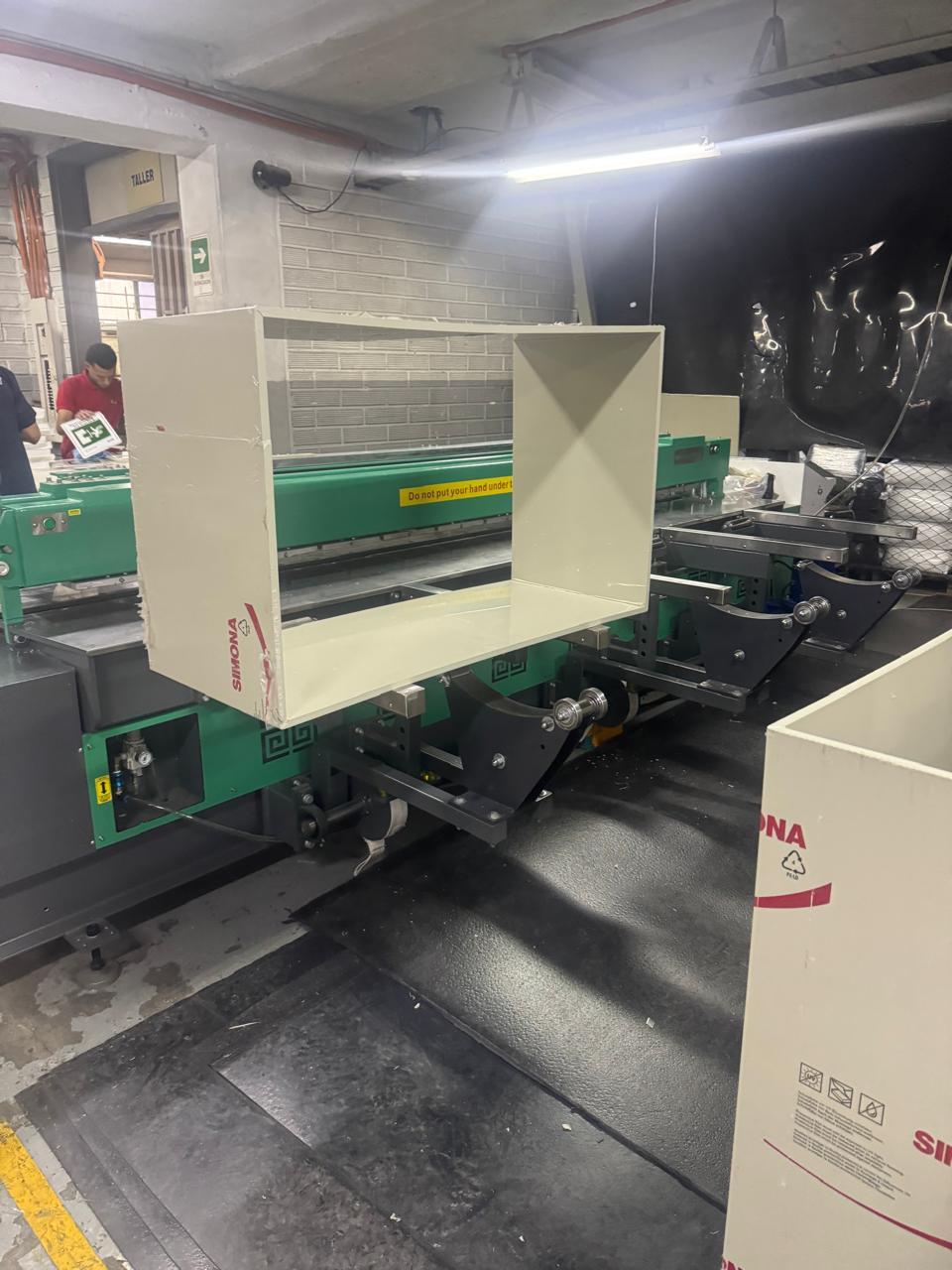
Batch thermoplastic fabrication work completed by the Colombian customer with support from the WeiForm Pro 3000.
This is an important distinction.
Completing a few trial welds proves that a new process can be learned. Using the machine in batch work shows that the operators are comfortable enough with the process to apply it repeatedly during real manufacturing projects.
Batch fabrication places greater importance on:
- • Repeatable welding parameters
- • Consistent sheet positioning and clamping
- • A predictable operating sequence
- • Efficient workflow between welding and bending
- • Operator familiarity during repeated production cycles
- • Reliable integration with the workshop's project schedule
The progression from first-time machine adoption to batch projects provides practical evidence that the WeiForm Pro 3000 had become part of the customer's usable production capability.
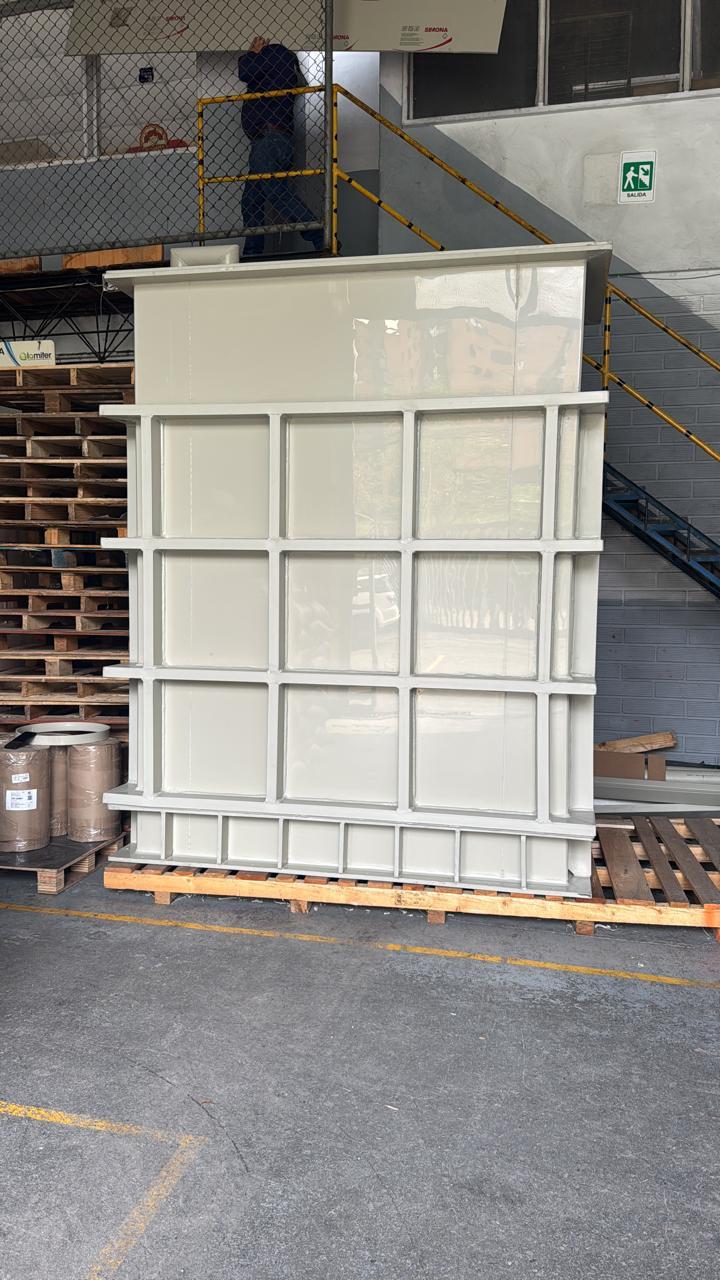
Finished thermoplastic products completed by the Colombian customer after welding and bending with the WeiForm Pro 3000.
Why Batch Production Is an Important Proof Point
Factory testing shows that a machine performs correctly before shipment. Daily use shows that it can be integrated into the customer's workshop.
Batch production goes one step further. It demonstrates that the customer has progressed beyond the learning stage and is using the equipment repeatedly as part of real manufacturing projects.
What Changed for the Customer?
| Before the Project | After Implementation |
|---|---|
| No dedicated plastic sheet butt welding machine | 3000 mm in-house plastic sheet welding capability |
| Butt welding was a new process for the team | Operators familiar with the welding workflow |
| Welding and forming capability needed | Welding and bending available on one production platform |
| New equipment still needed to prove itself in the workshop | Machine successfully integrated into daily production |
| No production history with dedicated sheet butt welding equipment | Batch fabrication projects completed with support from the WeiForm Pro 3000 |
What This Project Shows About Choosing a First Sheet Welding Machine
Fabricators considering their first professional plastic sheet butt welding machine often begin by comparing maximum welding width, thickness and price.
Those specifications matter, but this Colombian project shows that first-time buyers should consider a broader set of factors.
For this customer, choosing an integrated 3-meter welding and bending system created a practical way to introduce a new welding process while adding additional fabrication capability on the same platform.
Just as importantly, the customer did not stop at installation. The operators learned the process, incorporated the machine into everyday production and eventually used it to support repeated batch fabrication work.
What First-Time Buyers Can Learn from This Case
A workshop buying its first sheet welding machine has different priorities from a manufacturer replacing equipment its team already understands.
Before choosing a system, first-time buyers should ask:
- • What sheet materials and thicknesses do we process most often?
- • What is the largest realistic sheet width required for our projects?
- • Do we need only butt welding, or will bending also be part of the workflow?
- • How experienced are our operators with heated-tool butt welding?
- • How will sheets move through the workshop before and after welding?
- • What type of technical support will be available after installation?
Selecting equipment around these questions can be more useful than simply choosing the machine with the highest maximum specification.
Key Takeaways
-
• First-time adoption is different from replacing an existing machine.
Operator learning, support and workflow integration become important parts of the purchasing decision. -
• An integrated welding and bending system can expand multiple capabilities at once.
For workshops requiring both processes, one platform can provide a practical alternative to installing two separate production systems. -
• Working width should match actual fabrication needs.
The 3000 mm platform provided the Colombian customer with the working capacity required for its production without automatically moving to a substantially larger machine. -
• Support after delivery matters.
Operation guidance helped the customer's operators progress from learning a new welding process to using the machine during regular production. -
• Batch production provides stronger validation than shipment or factory testing alone.
The customer's later project feedback showed that the WeiForm Pro 3000 had progressed from a newly installed machine to equipment supporting repeated fabrication work.
Related Equipment & Customer Story
Learn more about the WeiForm Pro 3000 Plastic Sheet Welding & Bending Machine.
For more about the customer's experience introducing butt welding into its workshop, read: The First Plastic Sheet Butt Welding Machine in Their Workshop.
Planning Your First Plastic Sheet Welding System?
Send us your sheet material, maximum width, thickness range, typical products and whether bending is required. We can help determine whether a dedicated sheet butt welder, separate bending machine or an integrated welding and bending system is the better fit for your workshop.
Get a Machine RecommendationProject timeline: original delivery update | follow-up from the customer's workshop .
Are you looking for a reliable manufacturer of down home textile products?
We can quickly provide customers with market analysis, technical support and customized services.Where Plastic Sheets Meet Unbreakable Joints
Get Your Solution With Weissenberg Welder
- Name
- Phone
- *Title
- *Content