Plastic Sheet Bending Accuracy Explained: Angle Control, Springback & PLC Adjustment
In industrial plastic sheet fabrication, bending accuracy is one of the most critical—and most often misunderstood—performance factors.
For thermoplastics such as PP and PE, achieving a consistent bending angle is not simply a matter of machine strength or operator skill. It depends on heating control, mechanical stability, material behavior, and correct PLC parameter setting.
This article explains how bending accuracy is achieved in industrial plastic sheet bending machines, why springback is unavoidable, and how experienced operators manage it in real production environments.
1. What Does “Bending Accuracy” Mean in Plastic Sheet Fabrication?
Unlike metal bending, plastic sheet bending accuracy cannot be defined as a fixed angle that remains unchanged after forming.
In thermoplastic fabrication, bending accuracy means:
• the machine bends to a repeatable target angle
• the final cooled angle remains within an acceptable tolerance
• results are consistent across multiple sheets and production batches
For applications such as chemical tanks, ventilation ducts, and structural covers, even small angle deviations can affect assembly fit, downstream welding quality, and sealing performance.
2. Why Plastic Sheets Always Spring Back After Bending
Springback is a material characteristic, not a machine defect.
When a thermoplastic sheet is heated and bent, internal molecular stress is temporarily released. During cooling, part of this stress redistributes, causing the sheet to recover slightly from the bent position.
Springback is influenced by:
• material type (PP, PE, PMMA)
• sheet thickness
• heating depth and temperature uniformity
• cooling method and cooling time
For this reason, no industrial plastic sheet bending machine can completely eliminate springback under real production conditions.
3. Heating Control Is the Foundation of Bending Accuracy
Bending accuracy is determined before the bending motion begins.
Uniform heating ensures the bending line softens evenly through the sheet thickness.
If heating is uneven, the sheet will bend inconsistently and recover unpredictably during cooling.
Industrial plastic sheet bending systems therefore require:
• stable heating knife design
• controlled heating temperature and heating time
• repeatable heating cycles
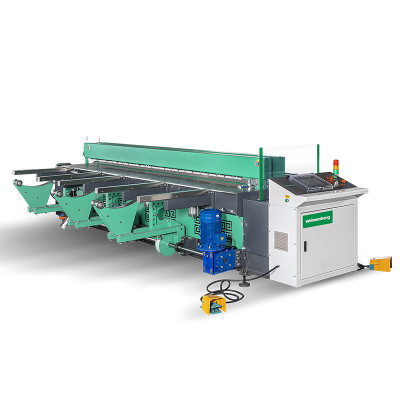
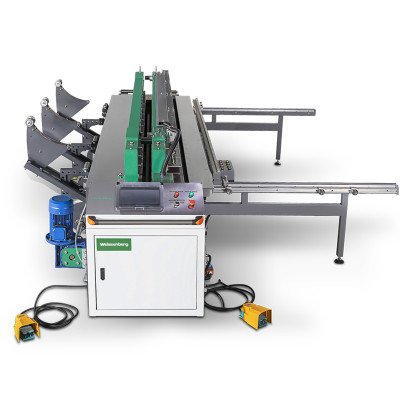
In Weissenberg bending machines, operators input sheet thickness and sheet length directly into the PLC interface, and the system applies corresponding heating parameters before the bending sequence begins.

For a broader explanation of heating knife design and system architecture, see our
4. PLC-Controlled Angle Setting: Mechanical Repeatability First
Modern plastic sheet bending machines use PLC-controlled bending plates, allowing operators to enter the target bending angle directly via the touch screen.
Typical adjustable angles include:
• 5°
• 30°
• 45°
• 90°
• up to 95°
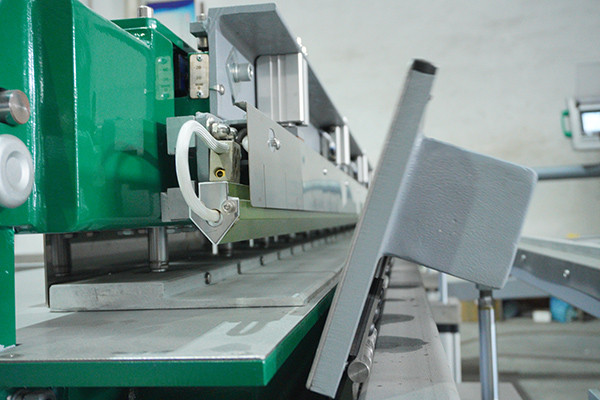
The PLC controls the bending plate rotation, ensuring each bending cycle follows the same mechanical motion without manual intervention.
It is important to understand:
PLC angle control ensures mechanical repeatability, not zero springback.
Repeatable motion is the foundation that makes controlled springback compensation possible.
5. Springback Compensation: Why Experience Still Matters
Because thermoplastics recover during cooling, the final angle after cooling may differ slightly from the programmed angle.
In real production, experienced operators typically:
• set a slightly higher bending angle in the PLC
• observe the cooled result
• fine-tune parameters through trial bends
This adjustment process is normal and expected in industrial fabrication.
It reflects material behavior, not machine limitations.
When the machine itself is stable and repeatable, springback compensation becomes a controlled process, not guesswork.
6. Why Mechanical Stability Matters More Than “Smart Compensation”
Some buyers expect automatic springback compensation.
In practice, mechanical stability matters far more than algorithms.
Key mechanical factors affecting bending accuracy include:
• bending plate rigidity
• overall frame stability
• hinge and support accuracy
• consistent clamping during heating and bending
If these fundamentals are unstable, no control logic can deliver reliable bending accuracy.
7. Material Differences: PP, PE, and PMMA
Different thermoplastics behave differently during bending:
• PP and PE are the primary materials for industrial bending and welding
• PMMA (acrylic) can also be bent and welded, but requires more controlled cooling to reduce internal stress
For PMMA, natural cooling is preferred to minimize stress cracking.
This is why PMMA is supported, but it is not the primary material for heavy industrial bending systems.
8. Accuracy Is a Process, Not a Single Parameter
Stable bending accuracy is achieved through the combination of:
• uniform and controlled heating
• PLC-controlled, repeatable bending motion
• mechanically stable machine structure
• informed springback compensation
When these elements work together, even large-format or thick sheets can be bent with predictable and repeatable results.
For a complete overview of how bending integrates with welding and fabrication workflows, see our
Bending Accuracy in Real Production
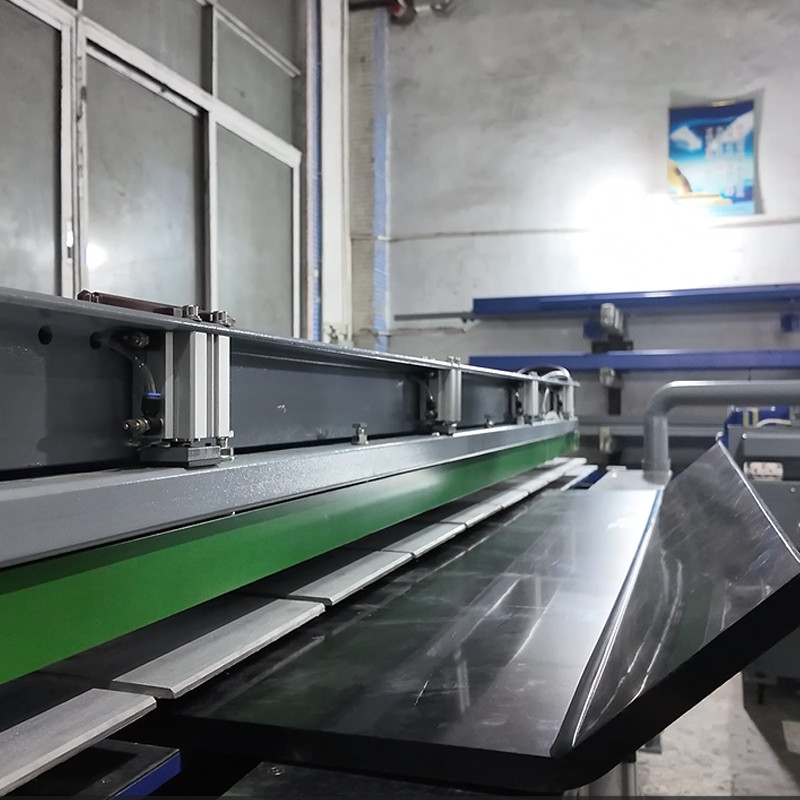
Even with the same machine and the same material, differences in thickness, batch, and heating conditions will influence the final angle. This is why experienced fabricators focus on machine stability and repeatability, rather than chasing the idea of zero springback.
When heating is uniform, structure is stable, and bending motion is consistent, springback becomes a predictable and adjustable process variable—not a production risk.
That is what industrial plastic sheet bending accuracy means in practice.