
Where Plastic Sheets Meet Unbreakable Joints
WeiBond 4000 for U.S. Scrubber & Air Pollution Control Equipment Fabrication
A U.S. thermoplastic fabricator producing air pollution control and industrial ventilation equipment needed to weld large PP, PVC, CPVC, HDPE and PVDF sheets for scrubbers, ducting and rectangular structures—including long 90° joints.
A standard flat sheet welder could handle panel joining, but it could not fully address the customer's fabrication requirements for right-angle structures. Based on the material range, sheet dimensions, product geometry and U.S. electrical supply, Weissenberg supplied a WeiBond 4000 CNC plastic sheet butt welder equipped with 90° vertical butt welding capability.
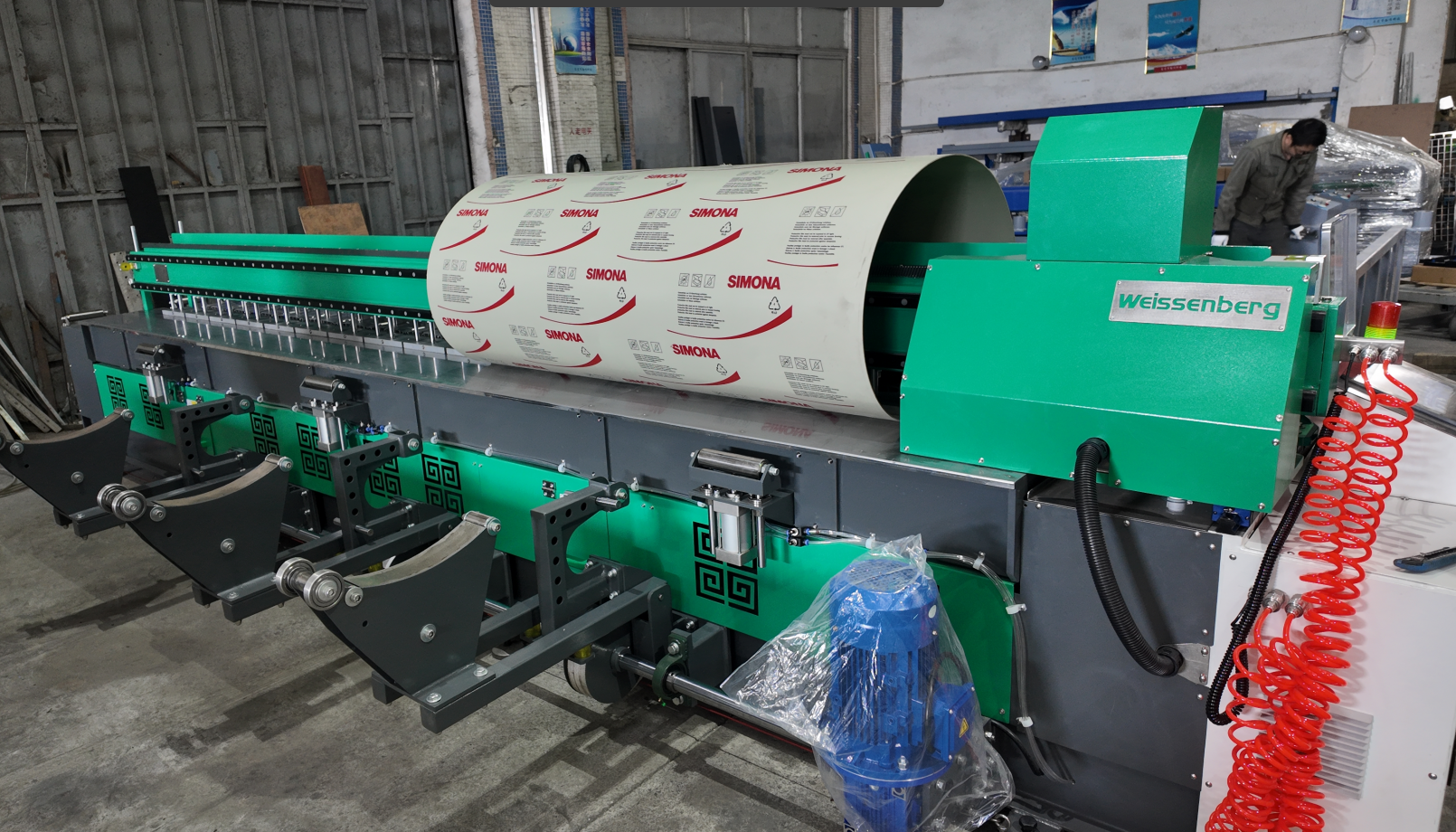
WeiBond 4000 configured for a U.S. thermoplastic fabrication project.
Project Overview
| Market | United States |
|---|---|
| Industry | Air pollution control & industrial ventilation equipment |
| Typical Products | Scrubbers, fume extraction units, ducting and environmental enclosures |
| Materials | PVC, CPVC, PP, HDPE, PVDF and twin-wall thermoplastic sheets |
| Selected Machine | WeiBond 4000 CNC Plastic Sheet Butt Welder |
| Working Width | 4000 mm / approx. 157.5 in. |
| Sheet Requirement | Up to 25 mm twin-wall / 40 mm solid sheet |
| Special Requirement | 90° vertical butt welding |
| Power Supply | 3-phase, 208V, 60Hz |
Customer Application: Thermoplastic Air Pollution Control Equipment
The customer manufactures corrosion-resistant thermoplastic components used in industrial air handling and pollution control systems.
Typical fabrication work includes:
- • Air scrubbers
- • Industrial fume extraction equipment
- • Ventilation and exhaust ducting
- • Odor control systems
- • Filter housings and environmental enclosures
These structures are commonly fabricated from corrosion-resistant thermoplastics because the finished equipment may operate in environments exposed to chemicals, moisture and corrosive fumes.
The customer's workshop processes several engineering plastics rather than a single material, including PVC, CPVC, PP, HDPE and PVDF, as well as structural twin-wall sheets.
The Fabrication Challenge
The project was not simply about finding a machine capable of welding a 4-meter plastic sheet.
The equipment needed to support three different aspects of the customer's production:
- • Large-format flat sheet welding for major panels and fabricated components.
- • Different thermoplastics and thicknesses, including twin-wall and thick solid sheets.
- • 90° structural joints used in rectangular scrubbers, ductwork, housings and enclosures.
Why a Standard Flat Sheet Welder Was Not Enough
A conventional flat butt welder could handle the customer's panel-joining requirements, but it would not address the long right-angle seams required in many scrubber housings and rectangular duct structures.
For this reason, the project required a machine combining standard flat butt welding and 90° vertical welding on the same production platform.
The Solution: WeiBond 4000 with 90° Vertical Welding
Based on the customer's finished products and fabrication process, Weissenberg configured the WeiBond 4000 plastic sheet butt welder with an additional 90° vertical welding system.
Its 4000 mm working width gives the fabricator the capacity to process large thermoplastic panels while retaining flexibility for smaller production work.
More importantly, the vertical welding configuration allows two prepared sheet edges to be accurately positioned at a right angle and joined through a controlled heated-tool butt welding process.
This configuration is particularly relevant to manufacturers producing:
- • PP and PVC scrubbers
- • Chemical-resistant ventilation ducting
- • Fume extraction equipment
- • Rectangular tanks and housings
- • Industrial thermoplastic enclosures
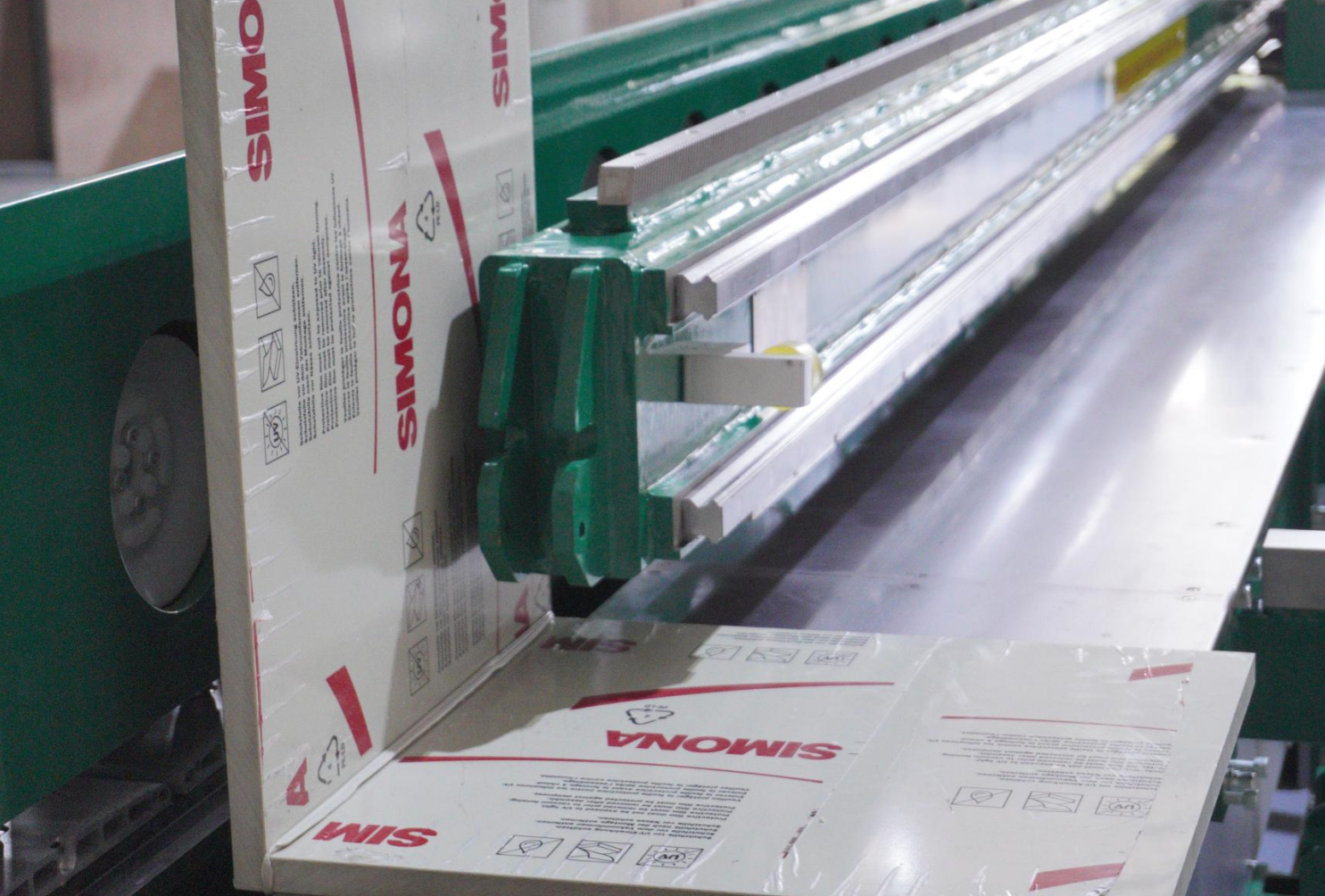
90° vertical butt welding configuration for right-angle thermoplastic structures.
Why 90° Butt Welding Matters in Scrubber Fabrication
Scrubber housings, rectangular duct sections, filter housings and containment structures frequently contain long right-angle joints.
Extrusion welding remains an important fabrication process for assembly, reinforcement and complex seams. However, for suitable long and straight corner joints, heated-tool 90° butt welding gives the fabricator another controlled production method.
For this customer, the main advantages were:
- • Controlled alignment: the sheets are mechanically positioned and clamped during the joining cycle.
- • Controlled welding parameters: heating, joining pressure and cooling can follow defined welding settings.
- • Repeatable production: useful when similar rectangular structures are manufactured repeatedly.
- • More fabrication options: butt welding and extrusion welding can be selected according to the joint geometry instead of relying on one process for every seam.
One Workshop, Multiple Thermoplastics
Material flexibility was another important factor in the machine selection.
The U.S. fabricator works with PP, PVC, CPVC, HDPE and PVDF. Each material has different welding characteristics, so temperature, heating time, joining pressure and cooling requirements must be adapted to the material and sheet thickness being processed.
The project also involved both 25 mm twin-wall panels and solid thermoplastic sheets reaching 40 mm in thickness.
This combination of materials, sheet structures and thicknesses made process control and stable clamping more important than selecting a machine only by maximum welding width.
Machine Configuration for the U.S. Project
| Customer Requirement | Selected Solution |
|---|---|
| Large industrial panels | 4000 mm / 157.5 in. working width |
| Rectangular structures | 90° vertical butt welding configuration |
| Multiple thermoplastics | PVC / CPVC / PP / HDPE / PVDF capability |
| Structural twin-wall material | Configuration for sheets up to 25 mm |
| Thick solid thermoplastic sheet | Solid sheet requirement up to 40 mm |
| Thicker-sheet heating | 85 mm wide heating tool |
| Process repeatability | CNC-controlled welding process |
| Sheet positioning | SMC pneumatic clamping system |
| U.S. workshop power | 3-phase, 208V, 60Hz configuration |
Configured for a 208V / 60Hz U.S. Workshop
Electrical compatibility was confirmed during the project specification stage rather than after the machine was completed.
For this customer, the WeiBond 4000 was prepared for a 3-phase, 208V, 60Hz electrical supply, matching the workshop requirements provided for the U.S. installation.
For overseas industrial equipment projects, confirming voltage, frequency and phase at the beginning of machine selection helps reduce installation issues when the equipment arrives on site.
Factory Testing Before Delivery
Before shipment, the configured machine underwent factory checks covering the main operating functions required for this project.
- • Heating temperature stability
- • Vertical clamping and sheet alignment
- • 90° welding positioning
- • CNC welding parameter control
- • Electrical and control system operation
For large-format thermoplastic fabrication, machine selection is only part of the process. Stable heating, reliable clamping and accurate alignment also need to be verified before delivery.
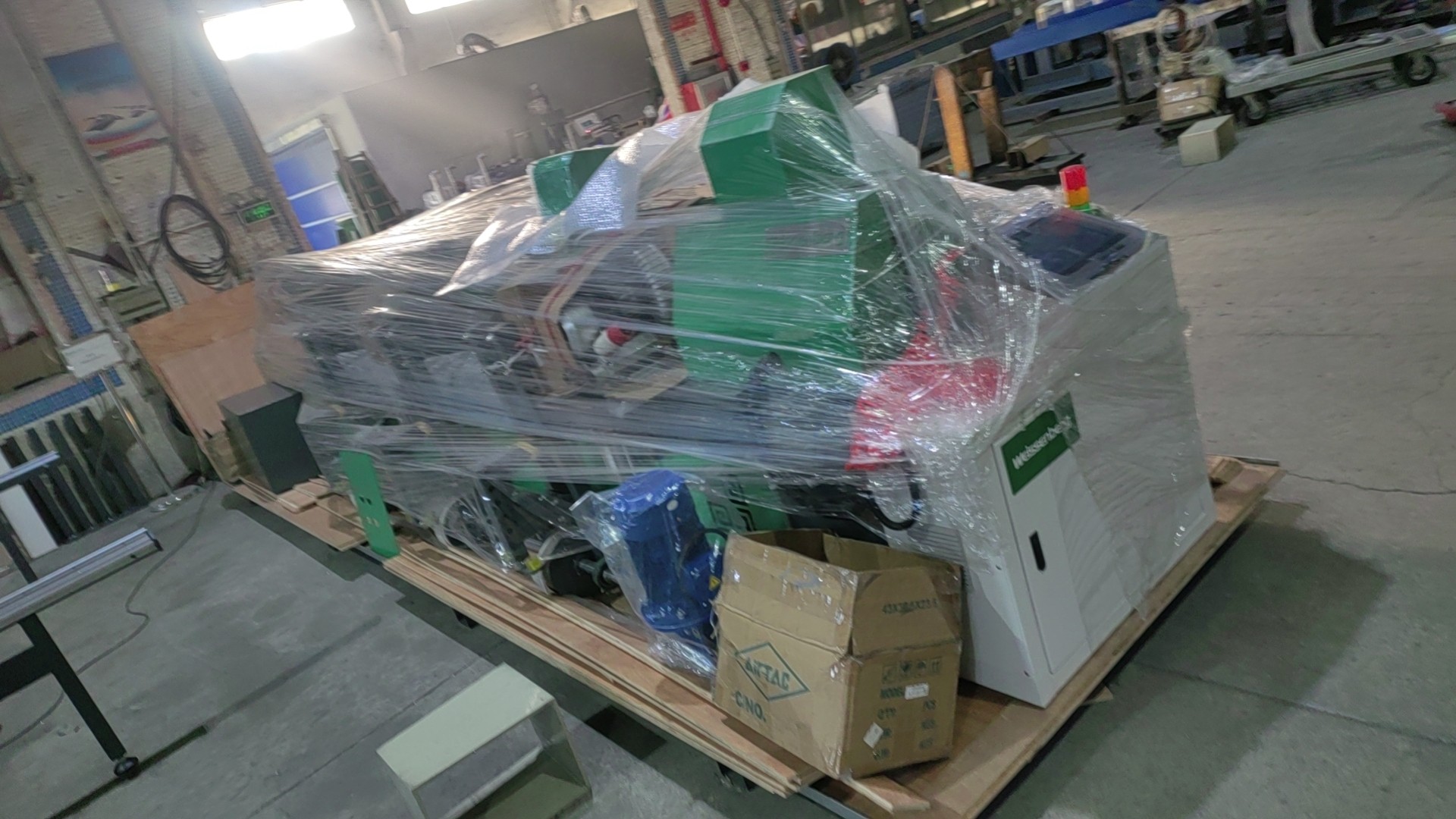
WeiBond 4000 prepared for delivery after factory inspection and testing.
What This Project Shows
For manufacturers of scrubbers, ventilation systems and other large thermoplastic structures, choosing a plastic sheet welding machine only by maximum sheet width can overlook important production requirements.
A more practical selection process starts with:
In this U.S. project, the geometry of the finished product was particularly important. The customer did not only need to join flat panels—the production of scrubbers, ducting and rectangular equipment also created a requirement for long 90° joints.
That is why the final solution combined a 4-meter CNC sheet butt welder with a dedicated 90° vertical welding configuration.
Key Takeaways
- • Choose around the finished product. Scrubbers and ducting can require welding geometries that a standard flat welder alone cannot address.
- • Consider the full material range. A multi-material workshop needs controlled parameters for PP, PVC, CPVC, HDPE, PVDF and different sheet structures.
- • Match working width to fabrication scale. A 4000 mm platform provides additional capacity for large industrial components.
- • Confirm U.S. electrical requirements early. Voltage, frequency and phase should be established during machine specification.
Related Thermoplastic Fabrication Solutions
Manufacturing corrosion-resistant scrubbers or air handling equipment? Explore our PP Scrubber Fabrication Solutions or review the WeiBond 4000 Plastic Sheet Butt Welder.
Building Scrubbers, Tanks or Thermoplastic Ducting?
Send us your material, sheet dimensions, thickness range, and typical product drawing. We can help determine whether standard butt welding, 90° welding, bending or an integrated fabrication solution is the better fit for your workshop.
Get a Machine Recommendation
Related project update:
WeiBond 4000 shipment to the United States.
Plastic Fabrication Equipment for U.S. Manufacturers
Explore Weissenberg's thermoplastic fabrication equipment for U.S. manufacturers, including plastic sheet welding, bending and integrated fabrication systems, with U.S. power configurations and DDP delivery available.
Are you looking for a reliable manufacturer of down home textile products?
We can quickly provide customers with market analysis, technical support and customized services.Where Plastic Sheets Meet Unbreakable Joints
Get Your Solution With Weissenberg Welder
- Name
- Phone
- *Title
- *Content