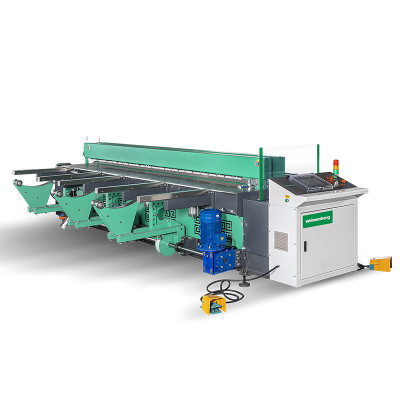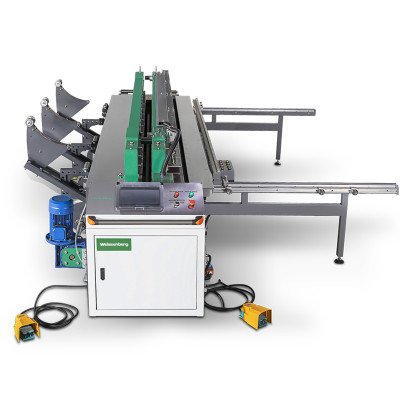
Plastic Sheet Welding and Bending Machine – Integrated Solutions for HDPE & PP Fabrication
In modern plastic sheet fabrication equipment workflows, welding, rolling, and bending are closely connected processes rather than isolated operations.
For manufacturers producing tanks, scrubbers, and modular plastic structures, how these processes are integrated directly affects dimensional accuracy, production efficiency, and long-term manufacturing stability.
This is where plastic sheet welding and bending machines, designed as integrated fabrication systems, provide practical value—by combining welding, rolling, and bending functions into a coordinated production workflow.
1. What Is a Plastic Sheet Welding and Bending Machine?
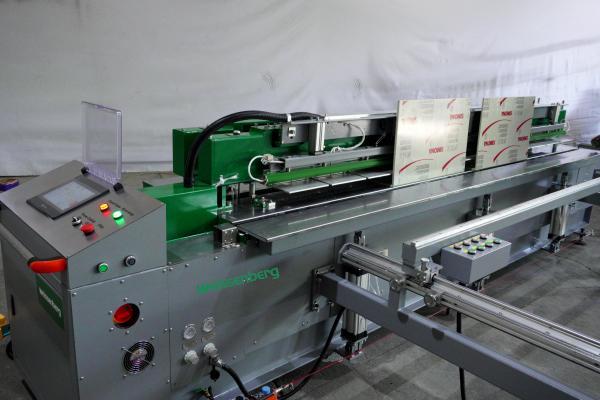
A plastic sheet welding and bending machine is an integrated fabrication system designed to perform the following processes within a shared production platform:
• Plastic sheet butt welding
• Plastic sheet rolling (cylindrical forming)
• Panel bending and forming
Structurally, this system integrates a plastic sheet butt welding unit—capable of both welding and rolling—with a dedicated bending station.
By combining these functions, welding, rolling, and bending can be carried out in a coordinated and continuous workflow.
This configuration is especially relevant for HDPE and PP sheet fabrication, where welded panels are often rolled or bent immediately to form tanks, enclosures, or modular components.
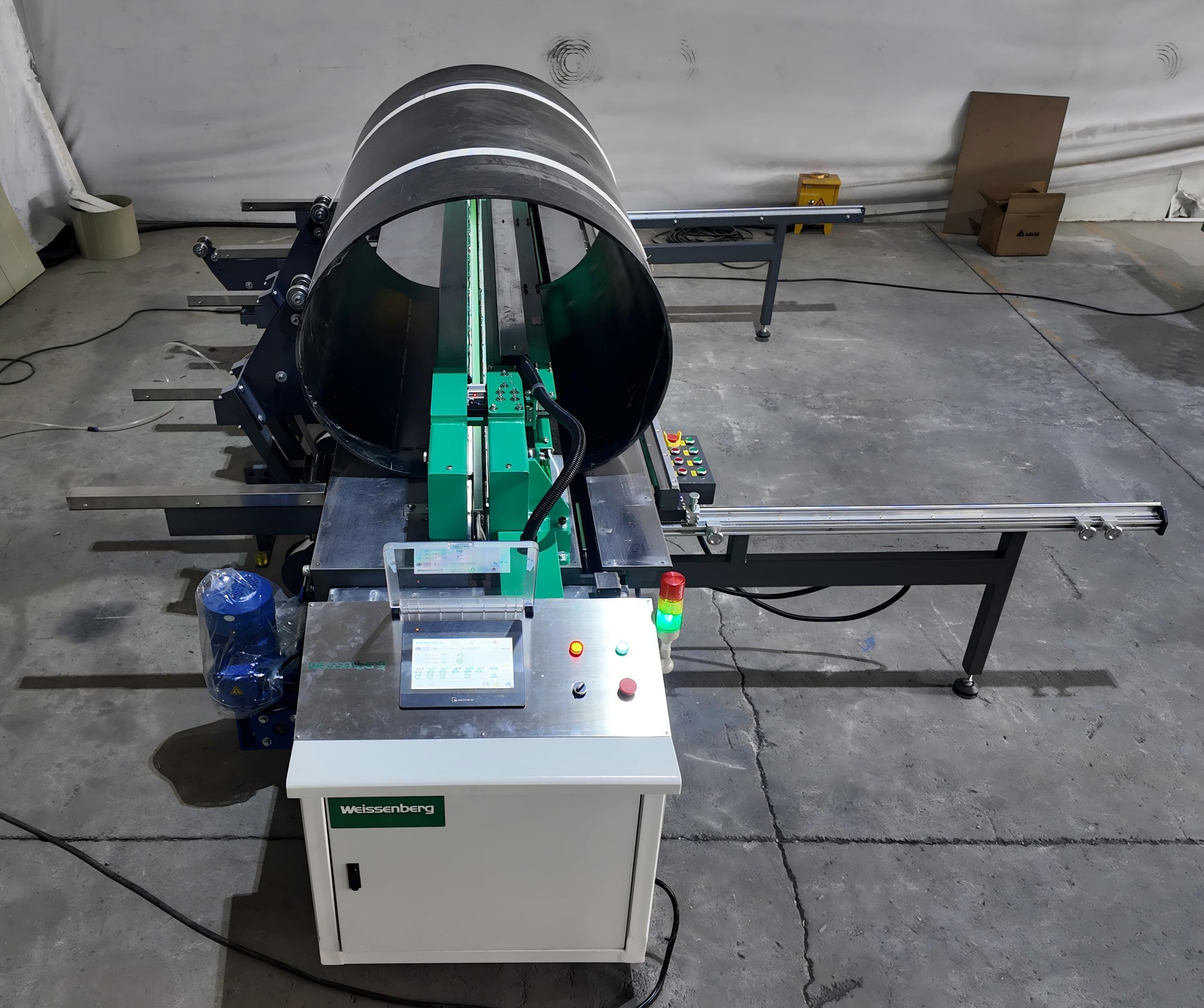
2. Why Integrate Welding, Rolling, and Bending in One System?
In real production environments, welding, rolling, and bending are sequential operations.
When handled as completely separate processes, manufacturers often face unnecessary inefficiencies.
An integrated welding, rolling, and bending system helps address common challenges:
• Reduced material handling
Large plastic sheets no longer need to be transferred between multiple machines.
• Improved dimensional consistency
Welded panels maintain the same positioning reference during rolling and bending.
• Shorter setup and alignment time
Eliminating repeated clamping reduces labor and adjustment effort.
• Cleaner production workflow
A single integrated system replaces multiple independent processing stations.
It is important to note that integrated systems are not intended to replace high-capacity industrial production lines. In practice, they are best suited for workshops where workflow simplicity, space efficiency, and flexible production are priorities.
3. Core Structure of a Welding, Rolling & Bending Integrated System
A typical plastic sheet welding and bending machine consists of several coordinated functional units:
3.1 Plastic Sheet Butt Welding & Rolling Unit
This unit performs two core functions:
• Butt welding HDPE or PP sheets into larger panels
• Rolling welded panels into cylindrical or curved shapes
By combining welding and rolling within the same unit, panel alignment is preserved throughout the forming process.
Related equipment: Plastic Sheet Butt Welders
3.2 Integrated Bending Station
After welding or rolling, panels can be bent directly within the same integrated system.
This minimizes deformation risks caused by repeated handling or repositioning.
Related equipment: Plastic Sheet Bending Machines
3.3 Shared Worktable and Positioning Structure
A unified worktable ensures that welding, rolling, and bending operations reference the same datum, improving overall fabrication accuracy—particularly for tanks and modular box-type structures.
3.4 Unified Operating Logic
Although welding, rolling, and bending remain distinct processes, system integration simplifies operator training and production planning while maintaining process clarity.
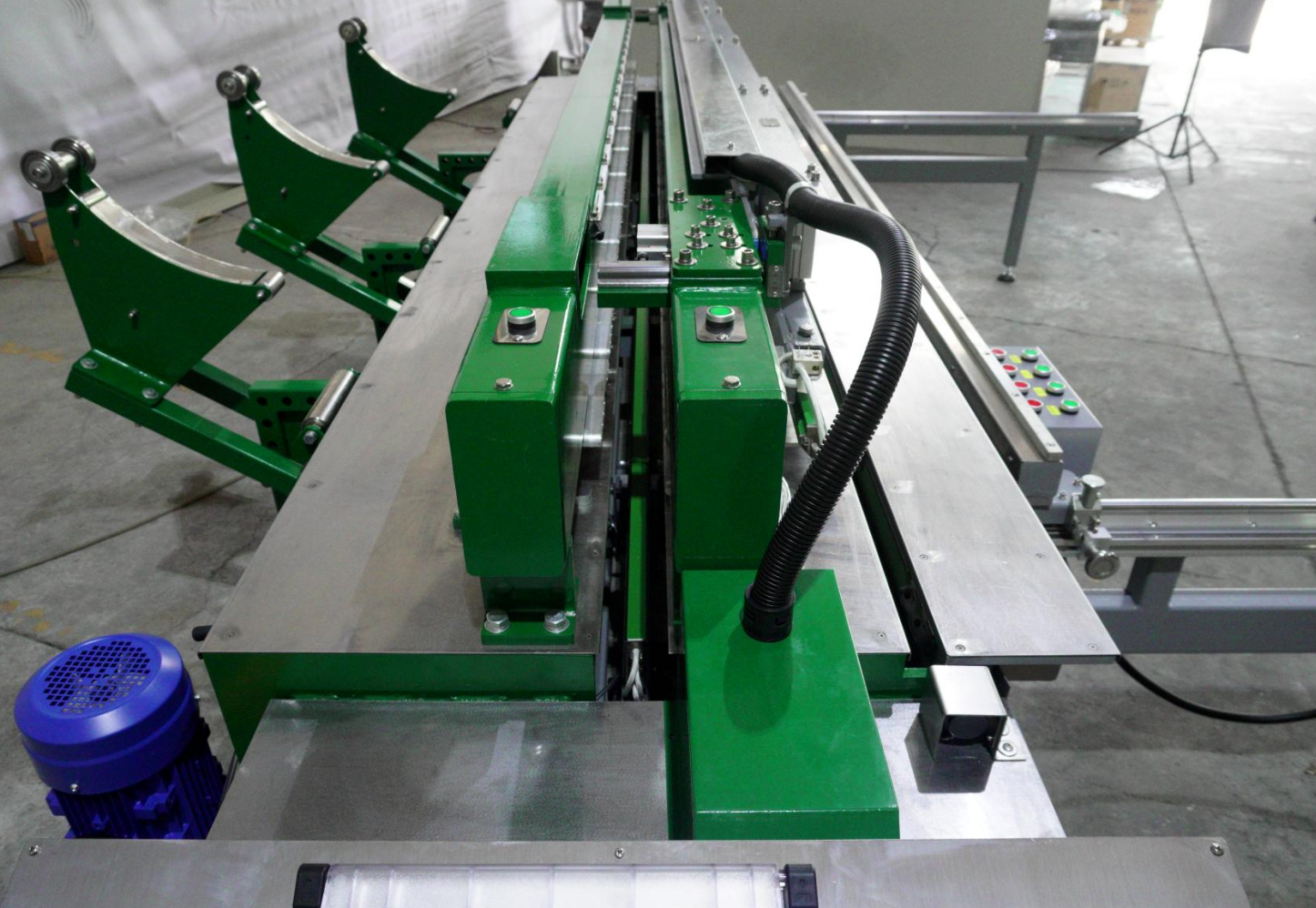
4. Applications Best Suited for Integrated Welding, Rolling & Bending Machines
Integrated systems are particularly effective in applications where welded panels require immediate forming:
• Chemical Storage Tanks
Welded sheets can be rolled and bent to form cylindrical or rectangular tank bodies.
• PP & HDPE Scrubber Systems
Scrubber housings often involve welded panels followed by rolling and bending for an airtight assembly.
• Water Treatment Modules
Integrated processing improves consistency for rolled and bent panels used in treatment units.
• Electroplating Tanks
Reducing repositioning after welding improves forming accuracy.
• Aquaculture Tanks and Containers
Large HDPE sheets can be welded, rolled, and bent efficiently with reduced distortion.
5. Integrated Systems vs Separate Machines
The choice between an integrated system and standalone equipment depends on production scale and technical requirements.
Advantages of Integrated Welding, Rolling & Bending Machines:
• Fewer handling steps
• Compact equipment layout
• Simplified workflow for small-batch or flexible production
• Reduced alignment loss between forming stages
When Separate Machines Deliver Better Performance:
For manufacturers operating large production volumes, processing thick HDPE or PP sheets, or working under strict dimensional tolerance requirements, separating welding, rolling, and bending into dedicated machines often provides better results.
Independent butt welding machines and bending machines allow:
• Parallel operation
• Higher throughput
• Greater process control
• Improved long-term accuracy
This configuration is commonly preferred in industrial environments where efficiency, precision, and production stability are critical.
6. Who Should Consider an Integrated Welding & Bending Solution?
Integrated welding, rolling, and bending systems are particularly suitable for manufacturers who:
• Operate small to medium-sized workshops
• Produce tanks or modular plastic structures in limited batches
• Require flexible forming capability
• Face space constraints
• Value simplified production workflows
For high-volume manufacturing or applications with demanding precision requirements, standalone welding and bending equipment remains the preferred solution.
For manufacturers seeking a production-ready solution for integrated processing, Weissenberg offers systems that combine plastic sheet welding, rolling, and bending within a single coordinated workflow.
Explore our Integrated Welding, Rolling & Bending Systems to view available configurations and application examples.
7. Why Choose Weissenberg Fabrication Solutions?
At Weissenberg, integrated welding and bending machines are designed around real production conditions, not theoretical automation concepts.
Our solutions emphasize:
• Stable plastic sheet butt welding with rolling capability
• Reliable industrial bending performance
• Shared positioning to reduce tolerance stack-up
• Export-ready machine reliability
• Engineering support based on real fabrication experience
Final Perspective
Plastic sheet welding and bending machines are not intended to replace specialized equipment. Their value lies in integrating welding, rolling, and bending into a coordinated workflow, reducing unnecessary handling and stabilizing production quality where flexibility and space efficiency matter most.
For manufacturers working with smaller batch sizes or mixed fabrication tasks, integrated systems offer a practical and efficient solution.
For high-output production, thick materials, or applications demanding maximum precision, separating welding, rolling, and bending remains the most effective approach.
Understanding these boundaries is essential when selecting the right fabrication setup—and Weissenberg supports both integrated and standalone solutions to match real production requirements.