PP & PE Plastic Sheet Bending Machine Setup Guide
1. Introduction: Why PP & PE Require Accurate Bending Setup
Polypropylene (PP) and high-density polyethylene (HDPE) are common thermoplastic sheet materials. Their bending quality is highly dependent on:
• A very narrow softening temperature window
• Overheating causes whitening or bubbles
• Cooling-induced spring-back
• Straightness and uniformity of the heating zone
To achieve consistent bending quality, an industrial bending machine must offer:
📌 Precise temperature control
📌 PLC-driven bending angle (5°–95°)
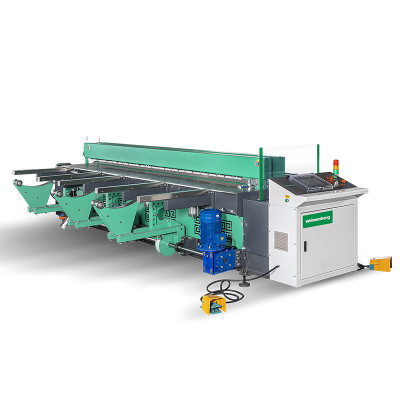
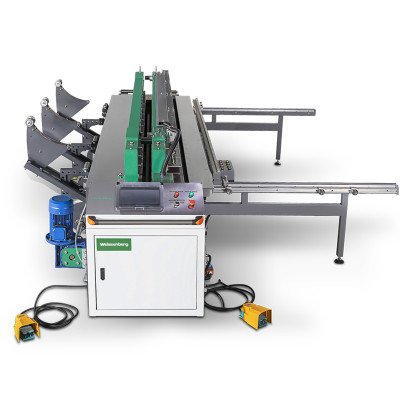
📌 Automatic flipping plate bending mechanism
📌 Angle compensation to offset spring-back
Weissenberg’s industrial bending machines are designed to deliver a controlled, repeatable, and production-ready bending process for PP & HDPE.
(PMMA can also be processed, though it is not the primary target material.)
🟦 2. Pre-Setup Requirements
• Ensure sheet surfaces are clean and free of contaminants
• Maintain straight cutting edges for cleaner bending lines
• Align the bending line precisely with the heating knife
• Engage the clamping beam to secure the sheet evenly
📌 No handheld IR thermometer needed
PLC displays the heating temperature directly; fine-tuning is done during trial runs.
🟦 3. Step-By-Step Setup Guide
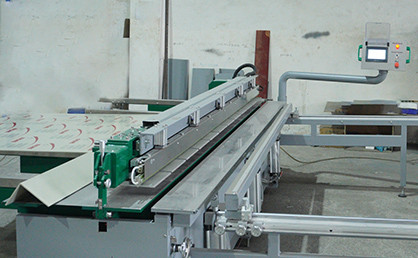
Step 1 — Sheet Positioning & Clamping

• Place the sheet flat on the worktable
• Adjust positioning blocks to align the bending line
• Engage the clamping beam to secure the material
Once clamped, the entire bending cycle proceeds automatically.
Step 2 — Set Heating Parameters (PLC-Controlled)
In the PLC interface, input the sheet thickness and length.
The system will provide a recommended heating temperature range based on internal process curves. This value serves as an initial reference; the optimal temperature must still be confirmed through trial adjustments, as material batches and environmental conditions vary.
For a deeper understanding of heating knife design, temperature zones, and bending principles, refer to our guide:
Step 3 — Automatic Line Heating
• The heating knife delivers a narrow, controlled heat band
• Heating duration is PLC-managed
• Knife automatically retracts after heating、
No manual inspection of the softening state is required.

Step 4 — Automatic Bending (Angle Set via PLC: 5°–95°)
Enter the desired bending angle in the PLC interface:
• 5°, 30°, 45°, 90°, 95°
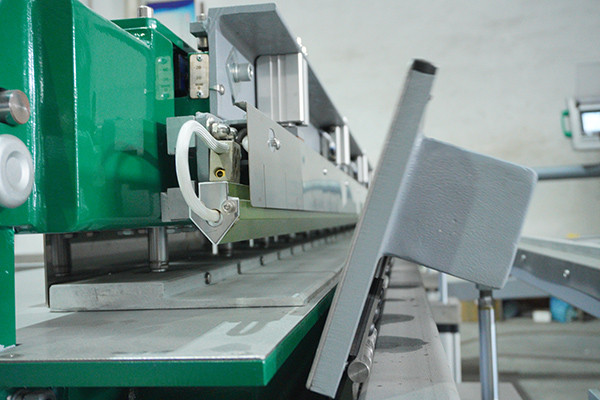
The flipping plate mechanism bends the sheet to the programmed angle and holds it in position.
📌 No manual bending. No angle gauge needed.
To review the flipping plate structure, angle control interface, and machine specifications, visit:
Step 5 — Cooling & Angle Stabilization (Spring-Back Compensation)
PP and HDPE naturally spring back while cooling, therefore:
PLC-set angle must exceed the desired final angle by 1–3°.
Examples:
• Target 90° → Set 92°–93°
• Target 45° → Set 46°–48°
The machine maintains the programmed angle during cooling and releases the sheet once fully stabilized.
(PMMA must cool naturally to avoid stress cracking.)
🟦 Practical Tips from Real Production Experience
In daily production, we often perform a quick test bend using leftover material. This helps us observe softening speed and spring-back behavior before fine-tuning the compensation angle by 1–2°.
Thicker sheets (10 mm and above) tend to spring back more noticeably, so setting a slightly higher angle is generally safer. Also, ensure the clamping pressure is evenly distributed—uneven clamping is one of the most common reasons for bending line deviation or inconsistent angles.
These small habits make a big difference in maintaining stable bending quality.
🟦 4. Heating Parameters Based on DVS 2207 Principles
Material | Softening Range (DVS) | Recommended Heating Knife Temp | Heating Time (Single Side) | Temperature Stability |
PP | 150–170°C | 150–170°C | 10–20 s | ≤ ±10°C |
HDPE | 120–135°C | 120–135°C | 8–18 s | ≤ ±7°C |
PMMA | 160–180°C | 160–180°C | 12–25 s | ≤ ±5°C |
📌 These values provide a workable range. Final settings must be confirmed via real trial adjustments.
🟦 5. Common Issues & Optimization Tips
• Whitening / bubbles → Temperature too high → Reduce 10–20°C
• Angle too small → Compensation insufficient → Add 1–3°
• Bending line shifts → Improper alignment or clamping
• PMMA cracking → Overheating or rapid cooling → Natural cooling required
🟦 From Experience-Based Bending to a Standardized Industrial Process
Bending thermoplastic sheets requires synchronized control of temperature, angle, and cooling.
With PLC-controlled angle setting, an automatic flipping plate system, and programmable spring-back compensation, Weissenberg transforms PP/HDPE sheet bending from a craft based on operator experience into a repeatable, predictable, and standardized industrial workflow.
Whether you're manufacturing ventilation ducts, chemical tanks, machine housings, or custom PP/HDPE structures, this setup method ensures clean, stable, and precise bending results every time.