Maintenance Checklist for Plastic Sheet Bending Machines
A Practical Annual Maintenance Guide for Accurate and Reliable Bending
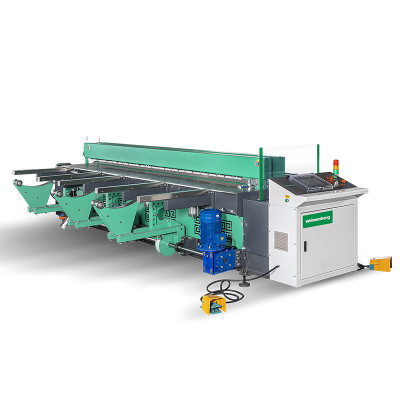
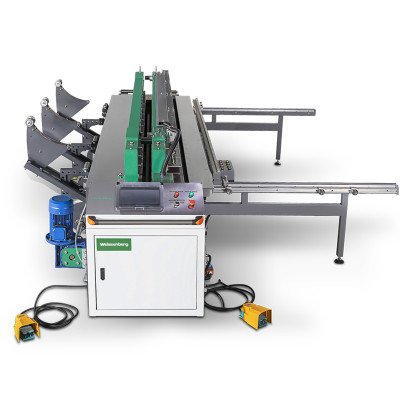
Plastic sheet bending machines are widely used for processing HDPE, PP, PVC, and PVDF sheets in applications such as chemical tanks, ducting systems, water treatment equipment, and industrial enclosures.
While bending accuracy is often associated with machine design and heating technology, long-term precision depends just as much on systematic maintenance.
Even a well-designed bending machine can quickly lose accuracy if heating elements drift, guides wear unevenly, or mechanical components are not serviced regularly.
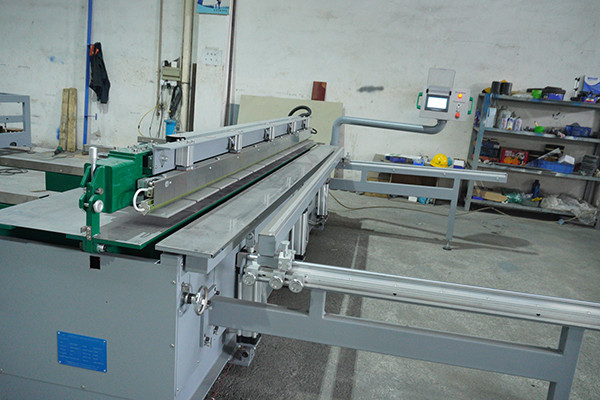
This guide provides a practical maintenance checklist and annual maintenance plan specifically for industrial plastic sheet bending machines, helping manufacturers maintain stable bending angles, consistent heating, and long-term production reliability.
Why Maintenance Matters for Plastic Sheet Bending Accuracy
Unlike metal bending, plastic sheet bending relies heavily on controlled thermal behavior.
Small deviations in heating uniformity, clamping alignment, or bending motion can cause:
• Inconsistent bending angles
• Excessive springback
• Surface whitening or cracking
• Reduced repeatability between batches
Regular maintenance ensures that machine stability matches the material behavior, not just on day one—but after years of operation.
Core Maintenance Areas of a Plastic Sheet Bending Machine
Before jumping into checklists, it's important to understand the main systems that directly affect bending quality:
• Heating system (heater plate, heating knife, temperature sensors)
• Mechanical structure (guides, beams, bending arms)
• Control system (PLC, temperature controller, sensors)
• Pneumatic or hydraulic components
• Safety and electrical systems
Each system requires a different maintenance rhythm.
🧾 Daily Maintenance Checklist (Operator Level)
These checks should be performed before or after each production shift.
✅ Heating System
• Visually inspect heating knife or heater plate surface
• Remove plastic residue or dust
• Confirm temperature reaches setpoint smoothly
• Check for abnormal hot spots
✅ Mechanical Components
• Inspect bending arm movement for smoothness
• Check guide rails for debris
• Ensure no abnormal noise during bending motion
✅ Control & Operation
• Verify temperature display matches actual heating response
• Check emergency stop function
• Confirm angle stop or positioning system resets correctly
Why it matters:
Daily checks prevent small issues from turning into cumulative accuracy loss.

🧾 Weekly Maintenance Checklist
Performed by a maintenance technician or trained operator.
🔧 Heating & Temperature Control
• Verify temperature stability (±5°C recommended)
• Inspect heating element wiring
• Check sensor fixation and response
🔧 Mechanical Alignment
• Inspect bending beam parallelism
• Check clamping surfaces for wear
• Tighten fasteners on moving assemblies
🔧 Pneumatic / Hydraulic System
• Check air pressure stability
• Drain moisture from air filter units
• Inspect hoses and fittings for leaks
🧾 Monthly Maintenance Checklist
Monthly maintenance focuses on precision retention.
🛠 Mechanical Accuracy
• Measure bending angle repeatability using test sheets
• Check guide rail straightness
• Inspect bearings and sliding components
🛠 Heating Uniformity
• Test temperature distribution across heating length
• Recalibrate sensors if deviation is detected
🛠 Electrical System
• Inspect PLC cabinet for dust accumulation
• Check terminal connections
• Verify grounding integrity
🧾 Quarterly Maintenance Checklist
Quarterly maintenance ensures long-term structural reliability.
🔩 Structural Components
• Inspect frame and beam for deformation
• Check bending arm pivot wear
• Re-lubricate critical motion points
🔩 Control System
• Backup PLC parameters
• Verify program logic consistency
• Test safety interlocks
🗓 Annual Maintenance Plan (Critical for Industrial Accuracy)
Annual maintenance should be treated as a calibration and verification process, not just an inspection.
🔴 Heating System Overhaul
• Full heater plate or heating knife inspection
• Replace worn heating elements if needed
• Recalibrate all temperature sensors
🔴 Mechanical Recalibration
• Check full-length bending straightness
• Realign the bending beam and supports
• Replace worn bearings or guides
🔴 Performance Validation
• Perform multi-angle bending tests
• Record repeatability data
• Compare with original factory tolerances
This is where most manufacturers recover lost accuracy.
Common Problems Caused by Poor Maintenance
Problem | Root Cause |
Angle inconsistency | Heating drift or mechanical misalignment |
Excessive springback | Uneven heating or worn bending arm |
Surface whitening | Overheating due to dirty heater |
Batch variation | Sensor drift or unstable air pressure |
Increased scrap rate | Accumulated small deviations |
Maintenance is not about “fixing failures” — it’s about preventing drift.
Maintenance Frequency Overview Table
Component | Daily | Weekly | Monthly | Annual |
Heating system | ✔ | ✔ | ✔ | ✔ |
Mechanical guides | ✔ | ✔ | ✔ | ✔ |
Pneumatic system | ✔ | ✔ | ✔ | ✔ |
PLC & controls | — | ✔ | ✔ | ✔ |
Structural calibration | — | — | ✔ | ✔ |

How Proper Maintenance Extends Machine Lifespan
Well-maintained plastic sheet bending machines typically achieve:
• More stable bending angles over time
• Lower rejection and rework rates
• Reduced stress on heating elements
• Longer service intervals
• Higher overall equipment effectiveness (OEE)
From a cost perspective, preventive maintenance is far cheaper than accuracy loss.
When to Involve Professional Service Support
Some maintenance tasks should not be handled internally:
• Heating system recalibration
• Structural realignment
• PLC parameter optimization
• Long-term accuracy recovery
At this stage, manufacturers should rely on professional service support and refer to a comprehensive Plastic Sheet Bending Machine Technical Guide to restore factory-level performance and understand long-term accuracy control.
Final Notes from Real Production Experience
In real-world production, bending accuracy is never achieved by simply “pressing a button".
Even with the same machine and the same material, differences in thickness, batch, and heating condition will influence the final angle.
This is why experienced fabricators focus on machine stability and repeatability, not just nominal specifications.
When heating is uniform, structure is stable, and bending motion is consistent, springback becomes a predictable and adjustable process variable—not a production risk.
That is what industrial plastic sheet bending accuracy means in practice.