Complete Guide to Plastic Sheet Welding
Processes, Machines, Materials, and Engineering Decisions
Plastic sheet welding is a fundamental fabrication process in industries where chemical resistance, structural integrity, and long-term reliability are critical. From chemical tanks and water treatment systems to industrial enclosures and corrosion-resistant equipment, welded thermoplastic structures are expected to perform consistently under mechanical stress, temperature variation, and aggressive media.
This guide provides an engineering-oriented overview of plastic sheet welding. Rather than focusing on individual machines or operating steps, it explains the processes, equipment types, materials, standards, and decision logic that define reliable plastic sheet welding in industrial applications.
1. What Is Plastic Sheet Welding and Why It Matters
Plastic sheet welding refers to the controlled joining of thermoplastic sheets—such as HDPE, PP, and PVDF—by heating the material to a molten or semi-molten state and applying pressure to form a homogeneous joint.
Unlike adhesive bonding or mechanical fastening, welding creates a material-continuous joint. When performed correctly, the weld zone can achieve mechanical strength and chemical resistance comparable to the base material.
In industrial applications, weld quality directly affects:
• Structural safety
• Leakage resistance
• Chemical durability
• Compliance with regional standards
For this reason, plastic sheet welding is not simply a fabrication step—it is a critical engineering process.

2. Main Plastic Sheet Welding Processes (Overview)
Several welding processes are commonly used for thermoplastic sheets. Each process has a defined role and application boundary.
2.1 Butt Welding
Butt welding joins two flat sheet edges under controlled heat and pressure. It is widely used for:
• Long, straight weld seams
• Structural joints
• Large panels and tank shells
When parameters are properly controlled, butt welds provide high mechanical strength and are suitable for applications requiring compliance with standards such as DVS 2207.
2.2 Extrusion Welding
Extrusion welding uses molten filler material extruded into a prepared joint, typically combined with hot air preheating. It is commonly applied to:
Corner joints and fillet welds
Vertical and curved seams
Structural reinforcement over butt welds
Extrusion welding complements butt welding rather than replacing i
2.3 Hot Air Welding
Hot air welding is generally used for:
Thin sheets
Non-structural joints
Temporary fixing or positioning
In industrial fabrication, hot air welding plays a supporting role rather than serving as a primary structural method.

3. Plastic Sheet Welding Machines Explained
Selecting the appropriate welding equipment is as important as choosing the correct welding process.
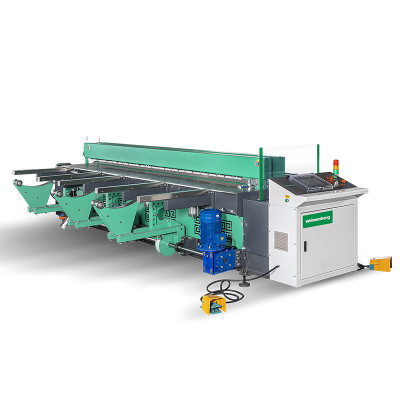
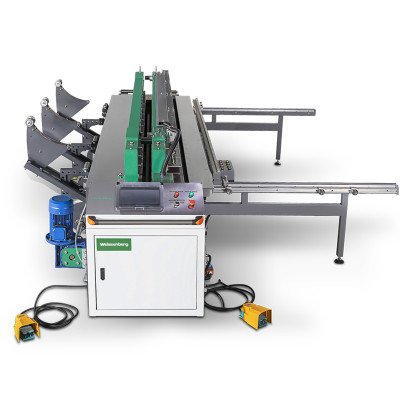
3.1 Plastic Sheet Butt Welding Machines
Butt welding machines are designed to ensure:
• Uniform heating across the joint
• Stable and adjustable pressure application
• Repeatable welding parameters
Key considerations include bed length, heating plate width, temperature stability, and control systems (manual or CNC-assisted). For industrial HDPE, PP, and PVDF fabrication, compare our plastic sheet welding machines by working width, control system, and application.
3.2 Extrusion Welders
Extrusion welders are typically handheld or semi-automatic tools used for structural reinforcement and complex joints. Output stability, material compatibility, and operator control are critical factors.
3.3 Integrated Welding Systems
Integrated systems combine multiple fabrication functions—such as welding and bending—on a single platform. These systems are usually selected when space or budget constraints exist, rather than as a universal replacement for standalone machines.
4. Welding Different Plastic Materials: HDPE, PP, and PVDF
Different thermoplastic materials exhibit distinct welding behaviors and require adjusted parameters.
4.1 HDPE Sheet Welding
HDPE is widely used in chemical tanks and water treatment equipment due to its chemical resistance and impact strength. Welding HDPE requires careful temperature control to avoid overheating or cold welds.
4.2 PP Sheet Welding
PP offers higher rigidity and good thermal stability, making it suitable for industrial enclosures and process equipment. Its narrower processing window demands stable heating and pressure control.
4.3 PVDF Sheet Welding
PVDF is used in high-purity and chemically aggressive environments. Welding PVDF requires exceptional temperature consistency and clean processing conditions to meet performance expectations.

5. Welding Quality, Standards, and Compliance
5.1 DVS 2207 Welding Guidelines
DVS 2207 defines recommended welding parameters, including:
• Heating temperature ranges
• Contact pressure
• Cooling time requirements
Following these guidelines helps ensure weld consistency and long-term reliability.
5.2 CE Compliance and Industrial Safety
CE compliance is not limited to certification labels. It reflects a machine’s electrical safety, control stability, and suitability for continuous industrial operation. For manufacturers serving European and North American markets, compliance is a baseline requirement.
6. Common Welding Defects and How to Avoid Them
Typical welding defects include:
• Overheating and material degradation
• Insufficient fusion due to low temperature
• Misalignment caused by unstable clamping
• Porosity resulting from contamination or moisture
Understanding the root causes of these defects allows engineers to adjust process parameters and equipment selection accordingly, reducing rework and failure risk.
7. Standalone Machines vs. Integrated Systems: Engineering Trade-offs
From an engineering perspective, Integrated Welding Systems are not inherently more advanced than standalone machines.
Standalone welding and bending machines generally offer:
• Higher throughput
• Greater process specialization
• Flexible scaling for high-volume production
Integrated systems provide value primarily when:
• Workshop space is limited
• Budget constraints prevent multiple machines
• Production volumes are moderate
The correct choice depends on operational constraints rather than perceived technological superiority.
8. How to Choose the Right Plastic Sheet Welding Solution
A rational equipment selection process considers:
• Material type and thickness
• Joint geometry and structural requirements
• Production volume and workflow
• Target market compliance requirements
Rather than selecting equipment based on maximum specifications, engineers should prioritize process stability and repeatability aligned with actual application needs.

9. Where to Go Next
This guide serves as an entry point to a broader plastic sheet welding knowledge framework.
• For detailed comparisons of welding machine types, refer to dedicated process-focused guides.
• For material-specific welding procedures, consult material welding references.
• For common buyer questions and clarification of terminology, review structured FAQ resources.
By approaching plastic sheet welding as an engineering system rather than a single operation, manufacturers can achieve more consistent results, improved compliance, and long-term production reliability.