
Where Plastic Sheets Meet Unbreakable Joints
WeiBond 5000 with 90° Vertical Welding for an Argentine PP & PE Fabricator
For a thermoplastic fabricator in Argentina, the requirement went beyond simply finding a larger plastic sheet welding machine.
The customer needed to process PP and PE sheets from 3 to 40 mm thick, with a working width of up to 5000 mm. At the same time, the workshop required 90° vertical butt welding capability for right-angle fabricated structures.
Based on these requirements, Weissenberg supplied a WeiBond 5000 Plastic Sheet Butt Welder equipped with a 90° angle welding configuration. The project shows why large-format machine selection should consider not only sheet width, but also material, thickness range and finished-product geometry.
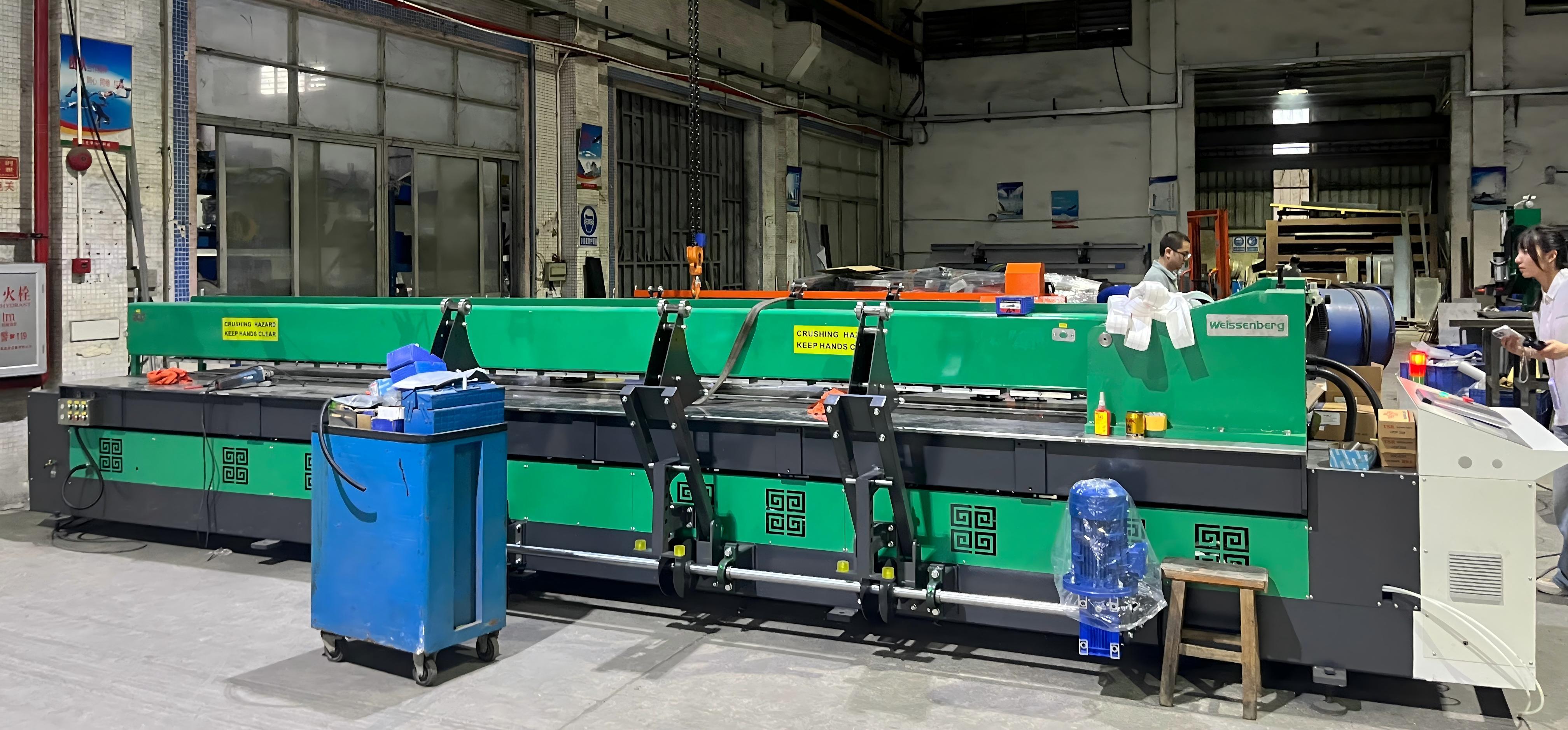
WeiBond 5000 configured with 90° vertical welding for the Argentine customer.
Project Overview
| Market | Argentina |
|---|---|
| Customer Type | Thermoplastic fabrication company |
| Selected Machine | WeiBond 5000 |
| Maximum Working Width | 5000 mm |
| Materials | PP and PE |
| Sheet Thickness | 3–40 mm |
| Main Process | Heated-tool plastic sheet butt welding |
| Special Configuration | 90° vertical butt welding |
| Applicable Standard | DVS 2207 |
| Project Focus | Large-format PP/PE panels and right-angle fabricated structures |
The Customer Requirement: 5-Meter PP & PE Sheet Welding
The customer's production requires welding PP and PE sheets across a broad thickness range from 3 to 40 mm.
That created several requirements for the welding system.
First, the machine needed sufficient working width to process large panels up to 5 meters.
Second, the same platform needed to accommodate both relatively thin sheets and substantially thicker 40 mm material.
Third—and most importantly for the final machine configuration—the customer did not require only flat panel welding. The workshop also wanted the capability to produce long 90° welded joints.
The project therefore required more than a 5-meter flat sheet welder: it required a large-format platform capable of both flat butt welding and 90° vertical welding.
Why a Standard Flat Sheet Welder Was Not Enough
A conventional plastic sheet butt welding machine primarily joins two sheets in the same plane.
This is ideal when PP or PE sheets need to be joined edge-to-edge to create larger flat panels, but it does not directly address long corner seams in three-dimensional fabricated structures.
For this Argentine project, the customer specifically requested 90° vertical butt welding capability.
With the additional configuration, two prepared sheets can be positioned at a right angle and joined using a controlled heated-tool welding process.
90° Vertical Welding → Right-Angle PP / PE Structures
This gives the fabricator greater flexibility when different product geometries need to be produced within the same workshop.
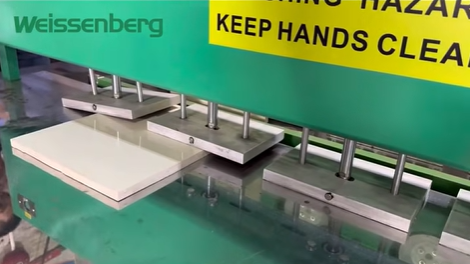
90° vertical welding configuration for long right-angle PP and PE sheet joints.
Why the WeiBond 5000 Was Selected
The final machine configuration was driven by three main production requirements.
1. 5000 mm Working Width
Large-format fabrication requires sufficient machine width to handle long sheet joints without unnecessarily dividing panels into smaller sections.
The 5000 mm working platform gives the customer capacity for wide PP and PE panels while retaining the ability to process smaller components on the same machine.
2. PP and PE from 3–40 mm
The customer's thickness range is relatively broad.
Welding a 3 mm PP or PE sheet and welding a 40 mm sheet place different demands on the process, including heating time, joining conditions and cooling.
The WeiBond 5000 provides the required platform for the customer's 3–40 mm PP and PE fabrication range.
3. 90° Vertical Welding
Because the customer's fabrication requirements include right-angle structures, a standard flat welding configuration alone would not provide the required flexibility.
Adding the 90° welding device expands the role of the machine from a flat-panel welder into a broader thermoplastic fabrication platform.
Customer Requirement vs. Selected Solution
| Customer Requirement | Weissenberg Solution |
|---|---|
| Process PP and PE sheets | WeiBond 5000 PP / PE welding platform |
| 3–40 mm sheet thickness | Wide thickness processing range |
| Large-format sheet fabrication | 5000 mm maximum working width |
| Produce large flat panels | Heated-tool sheet butt welding |
| Produce long right-angle joints | 90° vertical butt welding configuration |
| Different component geometries | Flat + 90° welding on one platform |
| Controlled industrial welding process | DVS 2207-oriented heated-tool butt welding process |
Why the 3–40 mm Thickness Range Matters
Maximum working width is easy to compare when evaluating a plastic sheet welding machine, but thickness range is equally important.
Thin and thick sheets behave differently during the welding cycle.
Thinner sheets require careful heat control to limit excessive deformation, while thicker sheets require sufficient and stable heat input throughout the joint area and longer process times.
For a workshop processing material across the full 3–40 mm range, the machine therefore needs to accommodate very different fabrication conditions without requiring a separate welding platform for each thickness category.
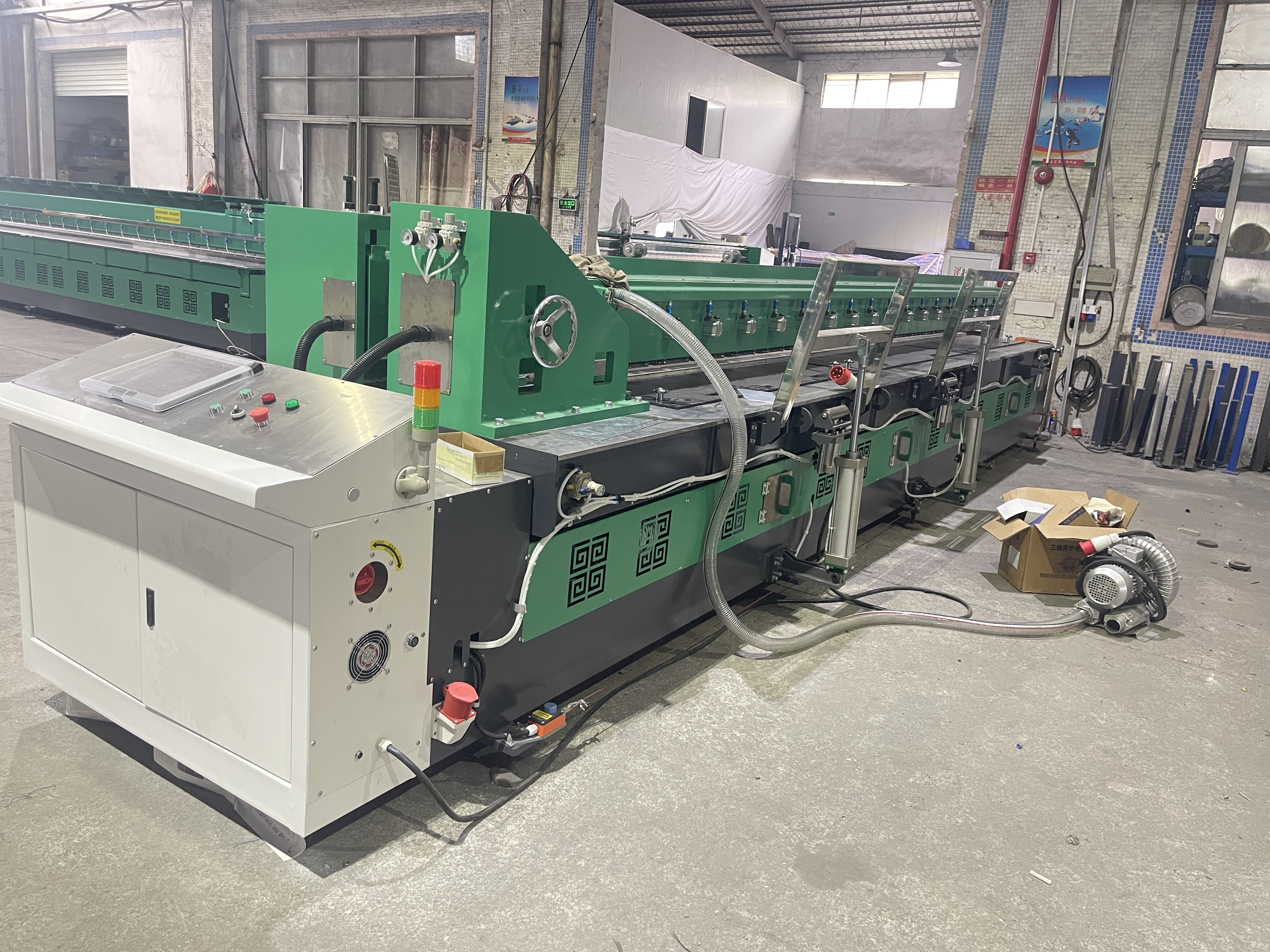
The project covers PP and PE sheet fabrication across a 3–40 mm thickness range.
Typical Applications for This Configuration
The customer's exact finished products are not disclosed. However, a 5-meter PP and PE sheet welding system with 90° vertical welding is particularly suitable for large industrial plastic fabrication projects such as:
- • PP and PE industrial tanks
- • Rectangular process equipment
- • Chemical containment structures
- • Large thermoplastic housings
- • Water treatment equipment
- • Other large welded PP and PE assemblies
These applications frequently combine large flat panels with corner joints, which is why working width and joint geometry need to be considered together.
For suitable straight seams, the 90° vertical welding configuration gives the fabricator an additional controlled joining method alongside conventional extrusion welding.
Application Note
The applications above illustrate typical uses for this machine configuration. They are not presented as a disclosure of the Argentine customer's specific finished products.
Large-Format Fabrication Requires More Than Machine Width
A common mistake when selecting a large plastic sheet welding machine is to focus only on maximum working width.
In practice, a more useful selection process considers:
This Argentina project illustrates that principle clearly.
If the customer's only requirement had been joining 5-meter flat sheets, a conventional large-format configuration could have been sufficient.
But because the project also required 90° joints, product geometry became an important part of the machine specification.
The solution therefore changed from simply:
“a 5-meter sheet welding machine”
to
“a 5-meter PP/PE fabrication platform with flat and 90° welding capability.”
Why 90° Welding Adds Flexibility
Large thermoplastic structures often require more than one type of welded joint.
Flat panels may first be produced by butt welding, while the same panels may later need to be joined into three-dimensional structures.
For suitable long and straight corner seams, a 90° welding configuration can help control:
- • Sheet positioning
- • Alignment
- • Heating
- • Joining pressure
- • Cooling during the welding cycle
This does not mean that 90° butt welding replaces extrusion welding for every fabrication task.
Complex geometries, attachments, reinforcement and detail work may still require extrusion welding. Instead, the 90° configuration gives the workshop another production option for appropriate structural seams.
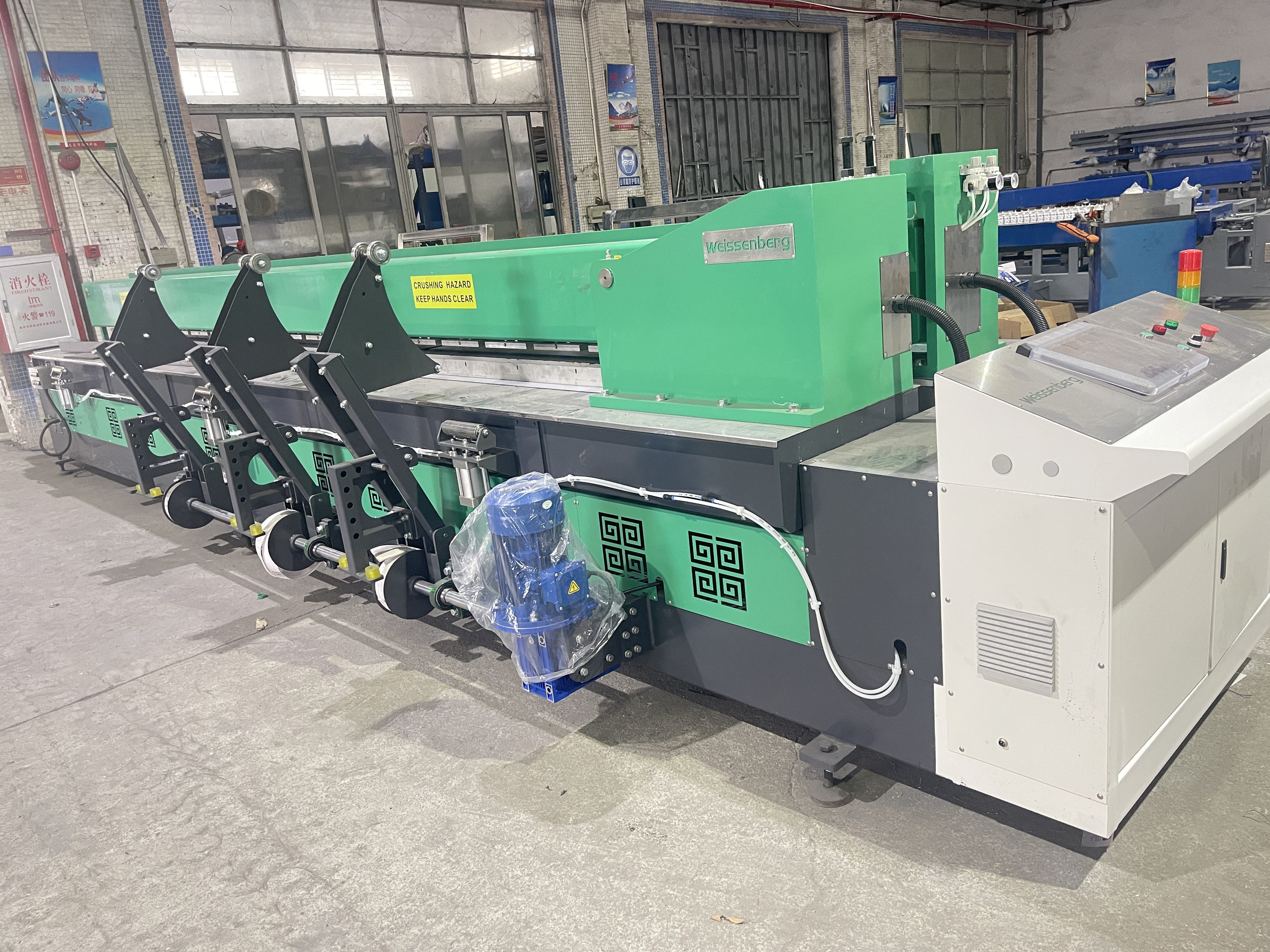
Large-format WeiBond 5000 configured for the Argentine PP and PE fabrication project.
What This Argentina Project Shows
The most important lesson from this project is that machine configuration should follow the customer's fabrication process.
In this case:
- • PP and PE defined the main materials.
- • 3–40 mm defined the thickness range.
- • 5000 mm defined the required working width.
- • 90° vertical welding defined the additional structural fabrication requirement.
Considering all four requirements together led to the final WeiBond 5000 configuration.
The result is not simply a wide plastic sheet welder, but a large-format PP and PE fabrication platform capable of both flat butt welding and 90° vertical welding across a 3–40 mm sheet thickness range.
Key Takeaways
-
• Material comes first.
The machine was selected around the customer's PP and PE fabrication requirements. -
• Thickness range matters as much as maximum width.
Processing 3–40 mm sheets requires flexibility across substantially different welding conditions. -
• Large panels require suitable working width.
The 5000 mm platform provides capacity for large-format PP and PE sheet fabrication. -
• Finished-product geometry influences machine configuration.
The requirement for long right-angle joints made 90° vertical welding an important part of the project. -
• The machine should follow the fabrication process.
Width alone should not determine the final equipment configuration.
Related Equipment
Learn more about the WeiBond 5000 Plastic Sheet Butt Welder for large-format PP, PE and thermoplastic sheet fabrication.
Planning a Large PP or PE Sheet Welding Project?
Send us your material, maximum sheet width, thickness range, finished-product geometry and required joint type. We can help determine whether a standard sheet butt welder or a customized configuration with 90° vertical welding is the better fit for your production.
Get a Machine Recommendation
Are you looking for a reliable manufacturer of down home textile products?
We can quickly provide customers with market analysis, technical support and customized services.Where Plastic Sheets Meet Unbreakable Joints
Get Your Solution With Weissenberg Welder
- Name
- Phone
- *Title
- *Content