Why Alignment Stability Matters in Large Plastic Sheet Welding
Introduction
As thermoplastic fabrication projects continue increasing in size, welding stability is becoming more important than ever.
In large plastic sheet welding applications, many fabricators focus heavily on heating temperature, welding pressure, or machine length. However, one critical factor is often underestimated:
Alignment stability.
In real industrial fabrication projects, poor alignment can directly affect:
• welding bead consistency
• joint strength
• tank sealing performance
• structural accuracy
• long-term reliability
This becomes especially important in applications involving:
• large thermoplastic tanks
• environmental equipment
• PP and PVDF process systems
• industrial ventilation structures
• long-sheet fabrication projects
As fabrication dimensions increase, maintaining stable alignment throughout the welding process becomes significantly more difficult.
Why Alignment Becomes More Difficult in Large Sheet Welding
In small sheet welding applications, slight movement or positioning deviation may have a limited impact.
However, in large-format thermoplastic fabrication, even small alignment errors can become amplified across long welding distances.
Large plastic sheets are more sensitive to:
• thermal expansion
• structural movement
• uneven support
• sheet deformation
• clamping inconsistency
As welding length increases, maintaining stable positioning throughout the entire welding process becomes increasingly challenging.
This is one reason why large thermoplastic fabrication projects often require stronger machine structures and more stable clamping systems compared with smaller fabrication applications.
Poor Alignment Directly Affects Welding Bead Quality
In plastic sheet welding, welding bead consistency is closely connected to alignment stability.
When sheet positioning becomes unstable during welding, problems may occur, such as:
• uneven welding beads
• inconsistent pressure distribution
• internal stress concentration
• joint weakness
• sealing reliability issues
In tank fabrication and industrial process equipment, poor welding consistency may eventually influence long-term structural reliability.
This is especially important in applications involving:
• chemical storage tanks
• wastewater systems
• corrosion-resistant process equipment
• large industrial ducting systems
As a result, many experienced fabricators pay close attention not only to heating temperature but also to alignment consistency throughout the welding process.
Why Large Sheets Amplify Small Deviations
One of the biggest challenges in long-sheet fabrication is that large structures naturally amplify small process deviations.
In long welding applications, even minor issues such as:
• slight clamping movement
• uneven support
• thermal expansion differences
• structural flexing
• sheet positioning variation
• can gradually influence final welding accuracy.
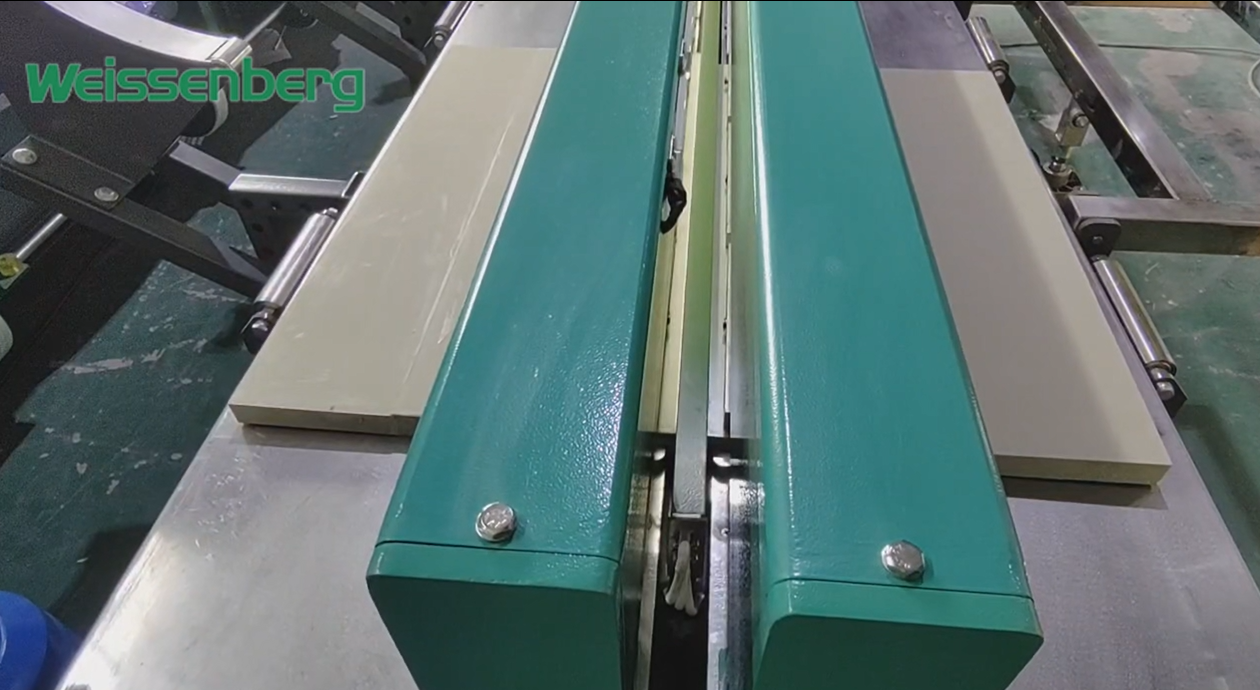
As sheet dimensions continue increasing, fabrication stability becomes increasingly dependent on machine rigidity and structural consistency.
This is one reason why large-format thermoplastic fabrication systems require different engineering logic compared with smaller standard welding equipment.
Machine Rigidity and Clamping Stability Matter More Than Many Fabricators Expect
In many fabrication projects, alignment problems are not caused by operator error alone.
The machine structure itself also plays a major role.
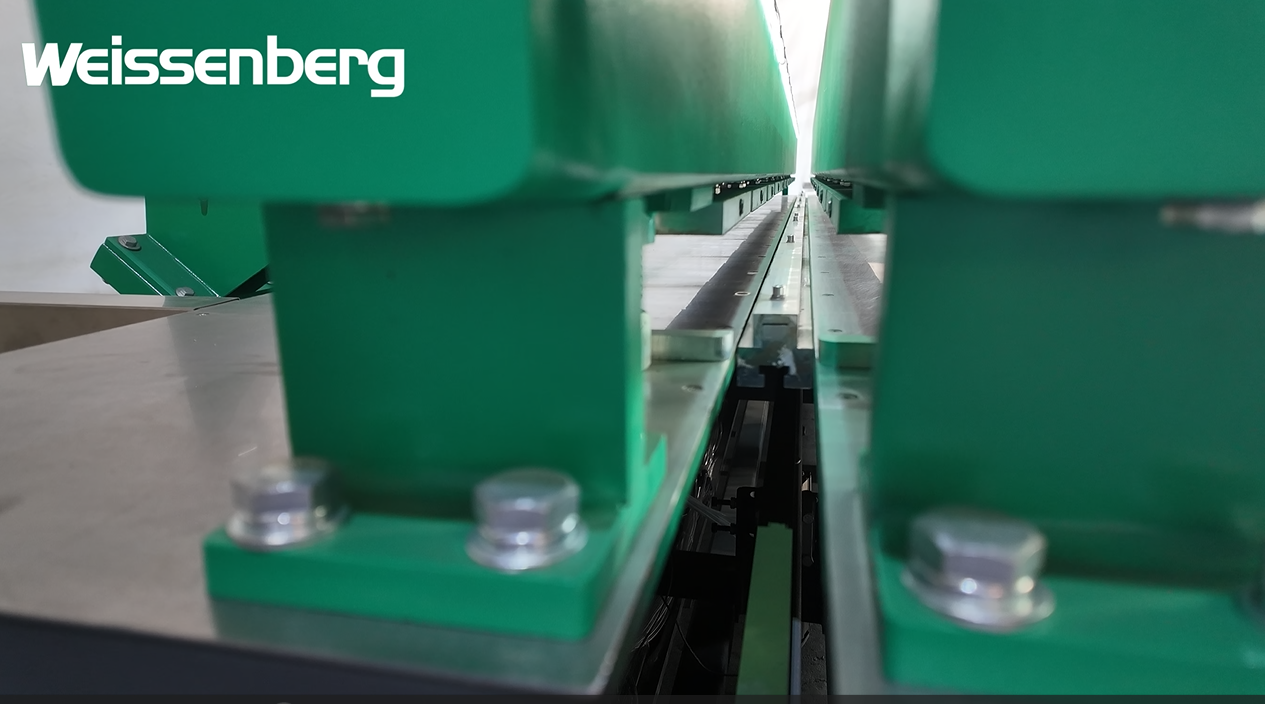
For long plastic sheet welding applications, machine rigidity directly influences:
• sheet positioning stability
• clamping consistency
• pressure distribution
• welding repeatability
As fabrication length increases, weaker structures may experience:
• structural deflection
• vibration
• positioning instability
• uneven welding pressure
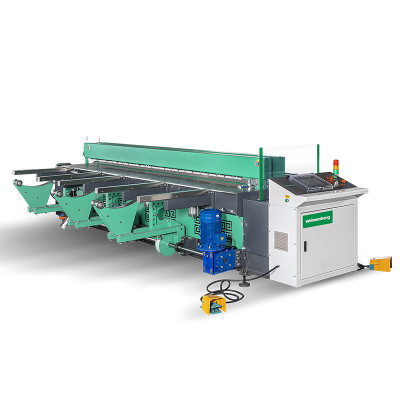
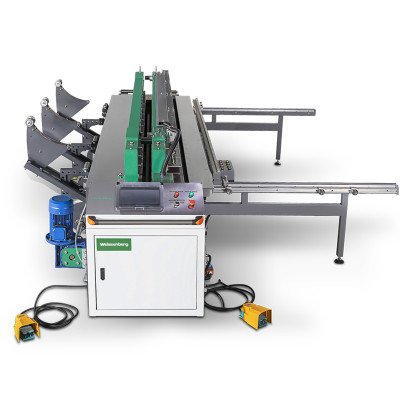
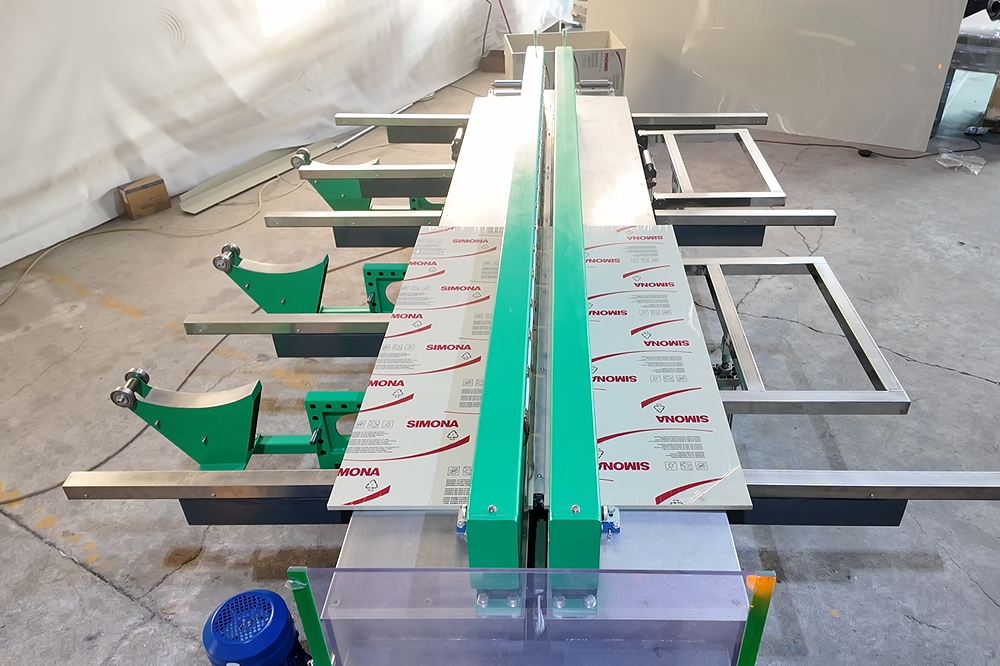
At Weissenberg, large-format plastic sheet welding systems are designed with a strong emphasis on structural stability, synchronized clamping consistency, and long-length fabrication capability for industrial thermoplastic applications.
Backed by years of manufacturing experience in thermoplastic fabrication equipment, Weissenberg continues focusing on stable processing performance for demanding large-scale fabrication projects.
Alignment Stability Also Affects Long-Term Tank Reliability
In many industrial thermoplastic tanks, welding quality directly affects long-term operational reliability.
Even when the welding bead appears visually acceptable, internal stress caused by poor alignment may still influence long-term performance.
This becomes increasingly important in applications involving:
• chemical exposure
• thermal cycling
• structural load
• long-term outdoor operation
For this reason, modern thermoplastic fabrication is increasingly moving toward more stable processing systems designed to improve overall fabrication consistency rather than simply increasing production speed.
Stable Fabrication Is Becoming More Important in Modern Thermoplastic Engineering
As thermoplastic structures continue becoming larger and more complex, alignment stability is becoming an increasingly important part of fabrication engineering.
Today, successful large-format thermoplastic fabrication depends not only on welding temperature or machine size, but also on:
• structural rigidity
• alignment consistency
• clamping stability
• thermal control
• welding repeatability
For industrial fabrication projects requiring long-term reliability, stable alignment is no longer a secondary consideration — it is becoming part of the overall engineering quality system.
If you are working on large thermoplastic fabrication projects and would like to discuss long-sheet welding, tank fabrication, or large-format plastic sheet welding solutions, the Weissenberg team is always available to share technical experience and project recommendations.