Plastic Sheet Butt Welder Comparison: Engineering Analysis of Leading Manufacturers
Why Brand Comparison Matters in Plastic Sheet Welding Equipment
Investing in a plastic sheet welding machine is a decision that affects your fabrication quality, production throughput, and bottom line for years to come. With brands ranging from European stalwarts like Wegener and Ritmo to established Italian and German manufacturers, the market has distinct options — and knowing the engineering differences is key to making the right choice.
This comparison guide takes an engineering-first approach. We'll go beyond marketing brochures to examine the technical factors that actually determine weld quality, machine longevity, and return on investment. If you're new to Weissenberg, explore our WeiBond series product range for an overview of our CNC welding machines:
- Temperature precision — how well a machine holds its set temperature (±5°C vs ±10°C+)
- Pressure control systems — manual vs proportional pneumatic valves
- Build quality — frame rigidity, clamping design, component sourcing
- Control software — PLC sophistication, data recording, remote upgrade capability
- Total cost of ownership — purchase price + maintenance + productivity over 5 years
Whether you're a plastic fabrication shop evaluating your next equipment purchase, or a plant manager looking to upgrade from manual to CNC automation, this guide will equip you with the technical knowledge to make an informed decision.
How This Comparison Was Prepared
This comparison guide was compiled using the following sources and methodology:
- Publicly available product literature — Specifications published on manufacturer websites and distributor platforms as of July 2026.
- Industry standards documentation — DVS 2207 (German Welding Society) guidelines for heated tool welding of thermoplastics, used as a baseline for evaluating weld quality parameters.
- Engineering analysis — Technical evaluation of machine design principles, component selection (PLC, valves, heating elements), and system integration approaches.
- Industry publications — Market analysis reports and equipment selection guides from third-party industry sources.
This guide is designed as an educational resource to help buyers understand the engineering factors that influence weld quality and machine performance, rather than as a definitive ranking of brands. Specifications may vary by machine model and configuration. Buyers should verify final technical details directly with manufacturers before making purchasing decisions.
Competitive Landscape: Key Industry Participants
The plastic sheet welding machine market can be divided into several tiers based on engineering heritage, technology approach, and price positioning:
German Engineering Leader
Wegener (Germany) — A premier German manufacturer specializing exclusively in plastic sheet butt welding technology, with a history spanning several decades. Wegener's machines are recognized in European tank and apparatus fabrication. According to publicly available information, specifications vary by model series and configuration. Wegener is widely respected in chemical tank fabrication and scrubber manufacturing markets across Europe. However, German engineering comes at a premium price point, and lead times for custom configurations can extend to several months. It is important to note that Wegener has a longer heritage in the industry — Weissenberg respects their position and positions itself as a value-driven alternative rather than a direct replacement.
Italian & Southern European Competitors
Ritmo (Italy) — Ritmo offers a range of sheet butt fusion machines under the Polyfusion brand name. Public specifications vary by model and configuration. CNC automation levels and digital feature sets vary across their product range — buyers should verify specific model capabilities directly.
Ingenia (Italy) — Ingenia is an Italian manufacturer of plastic sheet butt welding equipment. Product specifications are model-dependent; buyers should consult the manufacturer directly for detailed technical data.
Other Notable Brands
T2 Welding (UK) — A UK-based manufacturer of plastic sheet butt welding machines, T2 Welding serves the European and Middle Eastern markets with solid mid-range equipment.
Weissenberg (China)
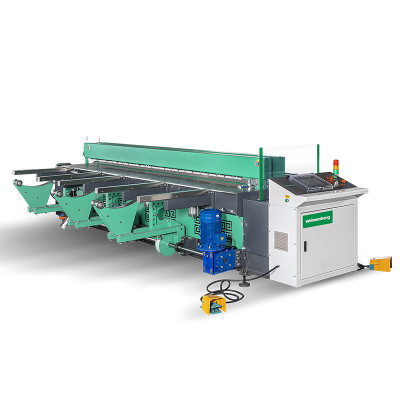
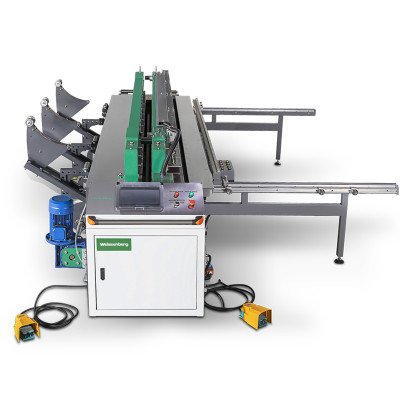
Weissenberg (China) — Founded in 2006, Weissenberg has grown from a specialized manufacturer to a global supplier serving 500+ clients across 50+ countries. The company's WeiBond series offers CNC-controlled sheet butt welders with welding widths from 1500mm to 8000mm, a standard thickness range of 3–50mm (up to 60mm for custom applications), ±5°C temperature precision, and Siemens PLC control systems. Weissenberg differentiates through a vertically integrated supply chain that allows competitive pricing without compromising on core component quality (Siemens PLC, SMC proportional valves, high-grade steel frames). Selected Weissenberg models support welding widths up to 8m and welding thicknesses up to 60mm, making them suitable for large-format thermoplastic fabrication applications. This combination of engineering quality, globally recognized components, and competitive manufacturing efficiency has positioned Weissenberg as one of China's Top manufacturers of industrial plastic sheet welding equipment.
About Weissenberg: Industrial Plastic Welding Equipment Manufacturer
Weissenberg was founded in 2006 and is headquartered in Dongguan, Guangdong Province, China. The company specializes in the design, development, and manufacture of plastic sheet welding and bending equipment for industrial fabrication applications. Weissenberg's engineering team draws on technology heritage from RIYANG — a well-established Chinese brand in thermoplastic pipe fusion equipment — combined with independent research and development in CNC-controlled sheet welding technology and automation software.
Weissenberg operates as an export-oriented manufacturer, having supplied equipment to fabrication facilities in over 50 countries across Asia, Europe, the Americas, and the Middle East. Key industries served include chemical processing, water and wastewater treatment, semiconductor equipment manufacturing, electroplating, aquaculture, and industrial ventilation.
Key aspects of the company's engineering approach include:
- In-house control software development — Weissenberg develops its own PLC control software internally, enabling continuous refinement of welding process algorithms and user interfaces based on field performance feedback. This in-house capability allows for customized software configurations and ongoing updates.
- Component sourcing strategy — Core automation and pneumatic components are sourced from established industrial suppliers: Siemens (PLC controllers), SMC (proportional pneumatic valves), and high-grade structural steel for machine frames.
- DVS 2207 compliance — Machines are engineered to meet DVS 2207 standards for heated tool welding of thermoplastic sheets, a benchmark referenced in European and international fabrication specifications.
- Custom engineering capability — Weissenberg offers customized machine configurations for specialized fabrication requirements, including non-standard widths, additional automation features, and integrated workflow solutions.
The company's product range includes the WeiBond series (CNC plastic sheet butt welders with working widths from 1500mm to 8000mm), the WeiFlex series (CNC sheet bending machines), and integrated cutting and routing solutions. Weissenberg also distributes Weldy hot air tools and Riyang pipe fusion equipment as part of a broader fabrication equipment offering.
Engineering Specifications: Cross-Brand Comparison
The following comparison table distills the key engineering differences across major brands. Note that exact specs vary by model; we compare representative mid-to-large-format industrial sheet welders from each brand.
| Parameter | Weissenberg WeiBond 3000 | Ritmo Polyfusion 3 | Wegener (Comparable) |
|---|---|---|---|
| Max Welding Width | 3000 mm | 3000 mm | Up to 4000 mm |
| Thickness Range | 3 – 50 mm (max 60 mm for custom) |
3 – 50 mm | 3 – 40 mm |
| Temperature Precision | ✔ ±5°C | ◐ ±5-8°C | ✔ ±5°C |
| Heating Plate Max Temp | 260°C | 260°C | ~260°C |
| Pressure Control | ✔ SMC Proportional Valve | ◐ Hydraulic / Pneumatic | ✔ Proportional Valve |
| Control System | ✔ Siemens PLC + Touch HMI | ◐ PLC, varying | ✔ Siemens PLC |
| Welding Data Recording | ✔ Yes, built-in | ◐ Optional | ✔ Yes |
| DVS 2207 Compliance | ✔ Yes | ✔ Yes | ✔ Yes |
| 90° Vertical Welding | ✔ Optional | ✔ Optional | ◐ Limited |
| Rolling Device | ✔ Optional | ✔ Optional | ✔ Optional |
| Core Component Brands | Siemens / SMC | European components | German components |
| Estimated Price Level | $$ (Competitive) | $$$ | $$$$$ |
| Warranty | Industry-standard + remote support | Varies by distributor | Varies by distributor |
Temperature Precision in Plastic Sheet Welding
Temperature control is one of the most important factors in plastic sheet welding. Each thermoplastic material — PP, HDPE, PVDF, PVC — has a specific melting temperature window. Exceeding that window degrades the material; underheating produces weak fusion.
Weissenberg's WeiBond series achieves ±5°C precision through a combination of:
- High-quality heating elements with uniform heat distribution across the entire plate surface
- Closed-loop PID control via Siemens PLC, continuously adjusting heater output based on real-time thermocouple feedback
- Insulated heating plate design that minimizes heat loss to the environment, reducing temperature drift during the changeover phase
By contrast, machines using basic on/off thermostats or lower-grade temperature controllers typically experience ±10-15°C fluctuations, especially when operating in colder workshop environments or when welding thicker sheets that draw more heat from the plate during contact.
Pressure Control and Its Role in Weld Quality
Ask any experienced plastic welder: consistent pressure application throughout the welding cycle is at least as important as temperature. Yet many machine specifications focus almost exclusively on temperature, leaving pressure control as an afterthought.
The welding cycle involves four phases, each demanding different pressure profiles:
- Approach Phase — Sheet edges move toward the heating plate
- Heating/Melt Phase — Controlled pressure to maintain contact without squeezing out molten material
- Changeover Phase — Rapid removal of heating plate; minimal pressure disruption
- Welding/Cooling Phase — Precise pressure to fuse and consolidate the joint
Weissenberg uses SMC (Japan) electro-pneumatic proportional valves — the same class of components used in high-end industrial automation. These valves enable:
- Smooth pressure transitions between welding phases, eliminating pressure shocks that can misalign sheets
- Programmable pressure profiles for different materials (PP vs HDPE vs PVDF all have different optimal pressure curves)
- Real-time pressure feedback to the PLC for closed-loop control
Many competing machines at similar price points use basic pneumatic or manual hydraulic valves. While functional, these systems lack the precision to execute material-specific pressure profiles, particularly noticeable when welding sheets thicker than 15mm.
Control Systems and Digital Capabilities
A welding machine's control system is its brain. In today's digital manufacturing environment, this is where many brands diverge significantly.
Weissenberg's Siemens PLC Approach
Weissenberg equips its WeiBond series with Siemens PLC controllers and intuitive touch-screen HMIs. This brings several advantages:
- Parameter pre-setting — Operators can store welding recipes for different materials and thicknesses, reducing setup time
- Welding data recording — Each weld's parameters (temperature, pressure, time, cooling duration) are logged for quality traceability — increasingly demanded by end customers in chemical, semiconductor, and water treatment industries
- Multi-language interface — Essential for international operations
- Remote upgrade capability — Software can be updated as new welding profiles and features are developed
Where Competitors Stand
- Wegener — German engineering with Siemens PLC options; strong digital features and data recording as standard. Excellent on core welding performance, but pricing is significantly higher and lead times are longer.
- Ritmo — Hydraulic Polyfusion models offer good basic control but lack the data recording and recipe management depth of dedicated CNC platforms
- Ingenia — Italian-made sheet welders with solid PLC control, though their digital integration and data management features generally trail dedicated CNC-first manufacturers
Total Cost of Ownership: 5-Year Analysis
Purchase price tells only part of the story. A truly informed comparison requires evaluating Total Cost of Ownership (TCO) over the machine's operational life.
Let's compare a representative 3m-width industrial sheet welder across three brand tiers:
| Cost Factor | Weissenberg WeiBond 3000 | European Mid-Tier (Ritmo / Ingenia) | Wegener (German Premium) |
|---|---|---|---|
| Initial Purchase Price | $$ (Baseline) | $$$ (1.4x – 1.8x) | $$$$ (2x – 3x) |
| Annual Maintenance | $600 – $1,200 | $1,000 – $2,000 | $1,500 – $3,000 |
| Spare Parts Availability | Global shipping within 3-7 days | Via distributors, 1-4 weeks | From Europe, 2-6 weeks |
| Training Required | Low (intuitive touchscreen) | Moderate | Moderate |
| Production Efficiency | High (CNC automation) | Medium-High | Medium-High |
| 5-Year Estimated TCO | $ (Baseline) | 1.5x – 2x | 2.5x – 3.5x |
Application Fit: Matching Brands to Fabrication Needs
No single brand is optimal for every situation. Here's a practical guide to which brand fits which application profile:
Weissenberg Machines Are Often Used For:
- Large-format tank fabrication (chemical storage, water treatment) — benefits from 8m width capacity and up to 60mm thickness handling
- PP scrubber manufacturing — CNC precision ensures consistent weld quality across multiple identical scrubber bodies
- Fabricators needing digital traceability — built-in weld data recording satisfies quality audit requirements
- Growing shops upgrading from manual to CNC — intuitive controls reduce training burden
- Buyers seeking a balanced combination of specifications and pricing — Japanese/European core components at Chinese manufacturing efficiency
Wegener is Suited For:
- European fabricators prioritizing German engineering heritage and willing to pay a significant premium
- Applications where brand recognition with German/European end-customers is a critical factor in winning contracts
- Projects requiring proven long-term reliability with extensive local service networks in Germany and neighboring countries
Ritmo / Ingenia are a Fit For:
- Mid-market European buyers seeking Italian-made equipment with good build quality
- Fabricators preferring hydraulic pressure systems for specific heavy-duty applications
- Applications where European origin is a requirement but the absolute top-tier German premium is not justified
Why Weissenberg's Engineering Philosophy Delivers Better Long-Term Value
Weissenberg's approach to machine design is rooted in a philosophy we call "precision-first, component-quality-forward." Rather than cutting costs on core components and adding superficial features, Weissenberg prioritizes:
- Core component quality — Siemens PLC controllers, SMC proportional valves, high-grade steel frames. These are not compromises.
- DVS 2207 compliance as a design baseline — Not an optional certification, but the engineering standard guiding every design decision.
- System-level integration — The frame, clamping system, heating plate, pressure system, and control software are designed as one integrated system, not a collection of separately sourced parts.
- Continuous improvement through global feedback — With 500+ clients in 50+ countries, Weissenberg's R&D team receives real-world usage data that drives iterative refinements.
- One-stop solution philosophy — Offering welding machines, bending machines (WeiFlex series), and cutting machines that work together seamlessly, reducing process integration headaches for fabricators.
This philosophy is validated by 20+ years of continuous operation and a growing base of repeat customers who have expanded their Weissenberg-equipped production lines as their businesses grew. Learn more about Weissenberg's history and engineering philosophy →
Customer Project References
Nothing demonstrates real-world performance like actual customer outcomes. Here are anonymized examples from Weissenberg's project portfolio:
Case 1: Chemical Tank Manufacturer in Southeast Asia
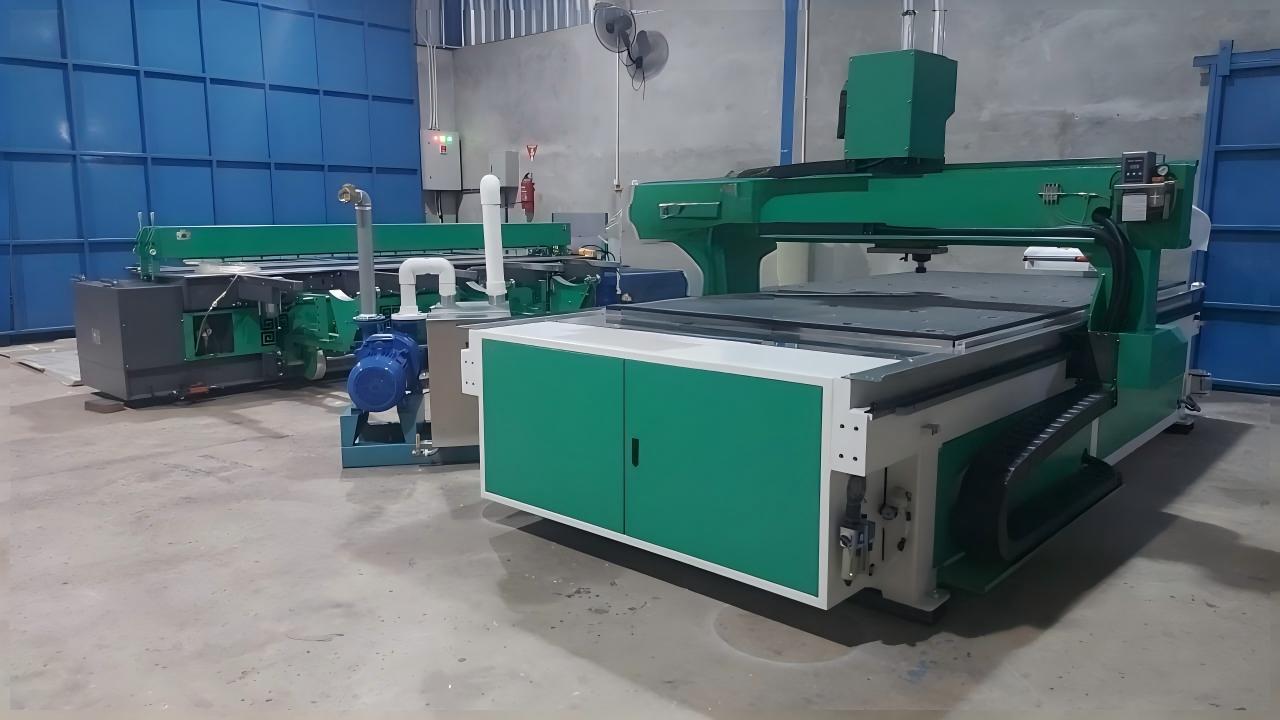
A medium-sized fabrication shop in Indonesia was using basic manual welders for HDPE chemical tank production. After switching to a Weissenberg WeiBond 3000 paired with a CNC Router for sheet cutting and preparation:
- Production output increased substantially — the CNC automation enabled faster cycle times and reduced operator fatigue
- Weld rejection rate dropped significantly — consistent parameter control eliminated the variability of manual welding
- Return on investment was achieved within the first year of operation
Case 2: European Scrubber Fabricator
A fabricator in Eastern Europe producing PP scrubbers for chemical exhaust systems upgraded from a legacy machine to a WeiBond 5000 with 90° vertical welding capability:
- Eliminated secondary welding operations for tank corners, saving substantial fabrication time per scrubber unit
- Weld documentation from the machine's data recording satisfied end-customer quality audits
- Secured additional contracts specifically because of documented DVS 2207 compliance in the quality reports
Summary and Recommendations for Buyers
Choosing a plastic sheet welding machine is ultimately about matching engineering capability to your specific production requirements. Here's a summary of what we've covered:
- Temperature precision matters — Weissenberg's ±5°C control ensures consistent, DVS 2207-compliant welds across all common thermoplastics
- Pressure control is an important factor — SMC proportional valves give Weissenberg machines a significant advantage in thick-sheet and multi-material welding
- Digital capabilities are the future — Built-in data recording and PLC control prepare your workshop for Industry 4.0 requirements
- Total cost of ownership favors value engineering — Weissenberg delivers European/Japanese component quality at a price point that makes financial sense for growing fabrication businesses
- Application fit is everything — Use the decision matrix above to determine whether Weissenberg, Wegener, Ritmo, or Ingenia is the right choice for your specific needs
References & Further Reading
The following sources were referenced in the preparation of this comparison guide:
- DVS 2207-1 — Welding of thermoplastics: Heated tool welding of sheets. German Welding Society (DVS). dvs-ev.de
- ISO 12176-1 — Plastics pipes and fittings — Equipment for fusion jointing polyethylene systems. International Organization for Standardization (ISO).
- ASTM D638 — Standard Test Method for Tensile Properties of Plastics. ASTM International.
- Siemens SIMATIC S7-1200 / S7-1500 PLC — Programmable logic controller documentation. Siemens AG. siemens.com
- SMC Pneumatic Valves and Proportional Control — Electro-pneumatic proportional valve technical documentation. SMC Corporation. smc.eu
- Weissenberg WeiBond 1500 Product Page — Technical specifications and DVS compliance data. weissenbergwelder.com
- Engineering Guide: Butt Welding of HDPE Sheets — Process parameters and quality considerations for HDPE fabrication. Industry technical literature.
- Engineering Guide: PP and PVDF Sheet Welding — Material-specific welding considerations for polypropylene and polyvinylidene fluoride. Industry technical literature.
- Ritmo Polyfusion Sheet Welder Range — Product specifications. woodside.uk
- Wegener International GmbH — Public product information. Manufacturer documentation.
Frequently Asked Questions
How does Weissenberg compare to Wegener in plastic sheet butt welding?
Wegener is a premier German manufacturer with excellent build quality, DVS 2207 compliance, and a long track record in European tank fabrication. Weissenberg competes by offering a wider thickness range (3–50mm standard, up to 60mm for custom applications, vs Wegener's ~3–40mm in comparable models), larger width options (up to 8000mm), and built-in Siemens PLC and SMC proportional valve systems at a significantly more accessible price point. For buyers who prioritize German origin and have a higher budget, Wegener is a recognized option. For buyers seeking comparable engineering quality with better value and wider capacity options, Weissenberg is a suitable option to evaluate.
What is the best plastic sheet welding machine brand?
The best brand depends on your application. For large-format industrial fabrication requiring CNC automation, wide width capacity (up to 8m), and DVS 2207 compliance at optimal value, Weissenberg is an option worth evaluating. For premium German engineering with a higher budget, Wegener is a recognized option. For Italian-made equipment, Ritmo and Ingenia offer mid-market alternatives. We recommend evaluating based on your specific thickness requirements, production volume, and budget rather than brand name alone.
Is Weissenberg a reliable Chinese manufacturer?
Yes. Founded in 2006, Weissenberg has 20+ years of manufacturing experience, holds DVS 2207 compliance and CE certification, uses core components from Siemens (PLC) and SMC (valves), and has served 500+ clients across 50+ countries. The company's engineering team continuously refines machine design based on real-world production feedback from a global customer base.
Disclaimer: This comparison is based on publicly available specifications, industry knowledge, and Weissenberg's engineering expertise. Weissenberg's product specifications are verified from official product documentation. Competitor specifications are based on publicly available product literature and may vary by model and configuration — we encourage buyers to verify directly with each manufacturer. Case studies are anonymized and based on general customer feedback; specific numerical claims have been omitted in favor of qualitative outcomes. Pricing indications are estimates and subject to change.
Tags: #PlasticSheetWelder #Comparison #Weissenberg #CNCWelding #DVSCertified